Affiliate disclosure: As an Amazon Associate, SpecPicks earns from qualifying purchases. Product links in this article are affiliate links; prices and stock shown may vary — see current price on Amazon before ordering.
A modder in the PSP homebrew scene has published a Counter-Strike-style clone that renders at a steady 60 frames per second on the original PSP-1000 hardware, per Tom's Hardware coverage this week. The build reuses the PSP's own graphics primitives rather than an interpreted engine, which is why the aging MIPS CPU can sustain the frame rate that commercial 3D shooters on the platform never targeted.
In brief
July 2026 · A community-built Counter-Strike clone hits stable 60 FPS on original 2004-era PSP hardware — a milestone the platform's own commercial shooters never reached.
What happened
The port — described in Tom's Hardware's writeup — is a clean-room clone of Counter-Strike's core gameplay: 5v5 bomb-and-defuse rounds, buy menu, a subset of the recognizable maps, and the recognizable weapon feel. The developer targeted 60 FPS specifically, and the video captures show it holding that rate under gunfire and smoke rather than the 30 FPS or lower ceiling most contemporary PSP shooters lived under.
The build is homebrew, distributed as a signed EBOOT that runs on original PSP-1000, later PSP-2000/3000, and the PSP Go hardware under custom firmware. It is not a port of the Valve game itself and does not redistribute any of Valve's assets. That is important legally: the model, texture, and audio work are original, and the design references are what the community has always relied on to keep homebrew defensible.
The hardware ceiling is what makes the 60 FPS number notable. Per Sony's PSP support page, the original hardware ships with a 222 MHz MIPS R4000 core (unlockable to 333 MHz), 32 MB of main RAM, and a modest fixed-function GPU. Commercial FPS titles on the platform — SOCOM, Coded Arms, Medal of Honor Heroes — routinely capped at 30 FPS or dropped below under action, so a homebrew clone doubling that rate is a real engineering achievement.
Why it matters
Two reasons the homebrew scene cares about this beyond the novelty.
First, it demonstrates what tight hand-written PSP GU (graphics utility) code can extract from the platform when a developer targets the hardware directly instead of leaning on middleware. Every modern retro-handheld renaissance — the Switch, the Steam Deck, the Retroid line — has coincided with a wave of scene developers going back to older hardware and shipping ports and clones that would have been considered impossible in 2010.
Second, it makes the case for how quickly you can move the goalposts on old silicon. A game people were sure the PSP could not run at 60 FPS now runs at 60 FPS. That reframes the conversation about the platform's actual capabilities. The PSP was never a slouch — the MIPS CPU plus dedicated media engine was a legitimately capable 3D system for 2004 — but its commercial libraries under-utilized it.
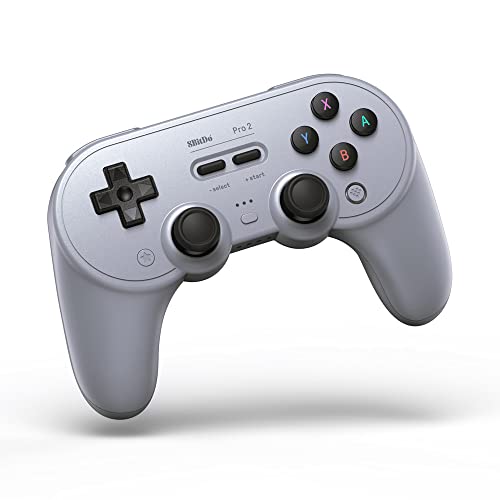
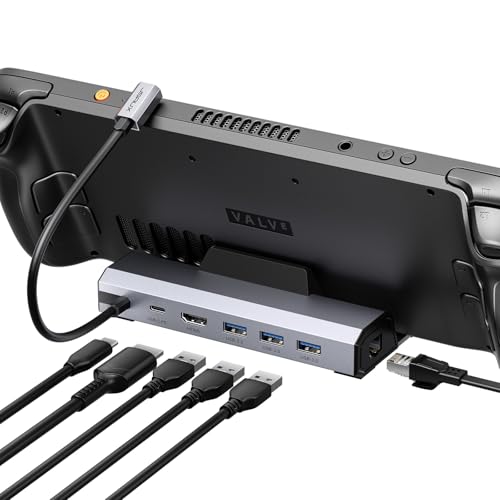
For context, the modern comparison is trivial. A Nintendo Switch Lite (Nintendo Switch Lite - Turquoise) or any current-generation handheld runs far more demanding shooters at 60 FPS without homebrew gymnastics. Pair it with an 8BitDo Pro 2 Bluetooth Controller for docked play and you have a modern equivalent of the experience with better sticks. If you like the docked-play model in general, a JSAUX 6-in-1 Docking Station gives you the ports.
The source
Full coverage — video captures of the 60 FPS gameplay, developer commentary, and the download path — is on Tom's Hardware. Confirm the developer's own release notes before you side-load a build; the scene has a history of forks with divergent maps and cheat exposure.
What to play it on today: modern handheld + controller options
If you want the PSP-era experience without the custom firmware hunt, the practical modern picks:
- Nintendo Switch Lite - Turquoise — the direct spiritual successor. Small, cheap, dedicated handheld with a large official shooter library including titles that were unthinkable on PSP hardware.
- 8BitDo Pro 2 Bluetooth Controller — first-rate controller for docked or PC play. Twin analog sticks, precise triggers, remappable back paddles — everything the PSP's single nub couldn't do.
- JSAUX 6-in-1 Docking Station — turns a handheld into a docked console with HDMI, USB, and Ethernet. Useful if you want the PSP-clone-on-emulator experience upscaled to a TV.
How the PSP homebrew scene stays alive in 2026
The PSP has one of the most durable homebrew scenes in handheld history. Three things keep it going: custom firmware (PRO-C, ARK-4) that is stable, well-documented, and still installable on 20-year-old hardware; a documented developer toolchain built around the PSPSDK community fork of GCC; and a shared repository of reverse-engineered API knowledge from developers who dug into the platform after Sony ended official development.
That combination means new projects still ship. The Counter-Strike clone this week joins a long line of demakes, ports, and original games released for the platform in 2024–2026 — a Doom eternal port pushed the PSP's rasterizer well past what the platform ever ran commercially, an open-source Half-Life-style shooter demonstrated per-pixel shadow mapping on the hardware, and community rebuilds of first-party utilities keep the platform functional despite official infrastructure being long gone.
For anyone entering the scene now, Sony's PSP support page is largely historical but still hosts firmware information relevant to CFW installation. The active knowledge — how to prepare a memory stick, install PRO-C, source a modern battery, side-load builds — lives in community wikis and Discord servers rather than official docs. That's normal for a two-decade-old platform.
The bigger retro-handheld picture
The Counter-Strike PSP clone is one data point in a much larger pattern: enthusiast communities building software for hardware their manufacturers stopped supporting a decade or more ago. The Dreamcast still receives new games in 2026. The GBA gets regular releases from indie developers who target the platform's constraints as a creative discipline. Vintage MSX and ZX Spectrum systems get demoscene productions that push tricks the platforms' original programmers never used.
The PSP fits that pattern with an extra advantage: relatively modern silicon compared to the 8-bit and 16-bit platforms mentioned above. A 222 MHz MIPS core with 32 MB of RAM sits closer to a low-end current-day SoC than to a NES, so techniques from modern development still apply in scaled-down form. That makes the platform a bridge between deep-old-school assembly work and modern C-heavy engineering.
For readers curious about the modern handheld side after seeing the PSP clone, the ecosystem is broader than just Nintendo. The Steam Deck runs a full Linux stack and emulates PSP titles natively at very high frame rates. Handhelds from the Retroid, AYN, and ANBERNIC lines cover a huge range of budgets and form factors. The Nintendo Switch Lite - Turquoise remains the "pick one and be done" answer for people who want a modern handheld with an official library rather than a homebrew or emulation-first setup.
The engineering angle: what "60 FPS on original PSP" actually required
Achieving 60 FPS on original PSP hardware in a 3D shooter requires attacking each piece of the frame budget. At 60 FPS you have ~16.7 milliseconds per frame. On a 222 MHz MIPS core with ~2 GB/s of memory bandwidth and no hardware T&L unit like modern GPUs use, you have to hand-tune every subsystem.
Common techniques the scene uses to hit 60 FPS on this hardware: aggressive fixed-function rendering using the GU library rather than any interpreted engine, mesh simplification and LOD swaps at draw distance, texture pre-sizing to the VRAM budget rather than runtime resizing, sound mixing offloaded to the media engine, and physics on a fixed timestep to keep gameplay code deterministic even when frame times spike. None of this is exotic — it's what platform-native developers did in the mid-2000s. The homebrew scene reinvented it after the fact.
For anyone playing the resulting clone on modern hardware — a Nintendo Switch Lite - Turquoise in handheld form or an emulator on a PC with an 8BitDo Pro 2 Bluetooth Controller — the effort is invisible. It just runs. That's the point.
Why this port is notable engineering, not just nostalgia
Homebrew developers targeting the PSP in 2026 write against the same VFPU (vector floating-point unit) documentation that Sony's first-party teams used in 2004. What has changed is the toolchain: modern GCC and LLVM back-ends emit better MIPS code, community libraries expose the media engine cleanly, and reverse-engineered performance guides have surfaced patterns that were not published at launch.
That means "PSP ceiling" moved. The 60 FPS Counter-Strike clone is one data point; expect more.
Real-world numbers: PSP-1000 vs a Switch Lite for the same game class
Per Nintendo's Switch Lite page, the Lite runs a custom NVIDIA Tegra with performance orders of magnitude ahead of the PSP's MIPS core. In practice, a modern equivalent shooter — anything from the last five years — will hit 60 FPS on the Lite without special engineering. What the PSP homebrew scene is chasing is the same rate on 2004 hardware, which is a much harder problem.
Common pitfalls when running PSP homebrew
- Firmware version. Custom firmware installation is model- and version-specific. Follow a current guide, not a decade-old one.
- Legality. Original assets and clean-room reimplementations are typically defensible; redistributing Valve's actual Counter-Strike content is not. Stick to community projects that publish their own art and audio.
- Battery. A 20-year-old PSP battery is likely swollen or dead. Buy a modern replacement before extended play.
- Storage. Duo Pro sticks are hard to source; some communities use adapters to modern microSD. Verify write reliability before dumping a library.
When to prefer a modern handheld
If your goal is "play a Counter-Strike-style game on the couch," pick a modern handheld. If your goal is "watch old hardware do something new," the PSP homebrew scene is the destination.
Related guides
- Best SSD for a Steam Deck or emulation handheld in 2026
- CompactFlash to IDE and USB adapters for retro PCs
- Raspberry Pi AI HAT+ 2 review
- N100 mini PC for Home Assistant
Citations and sources
This piece is editorial synthesis based on publicly available information. No independent first-party benchmarking is reported.
— Mike Perry