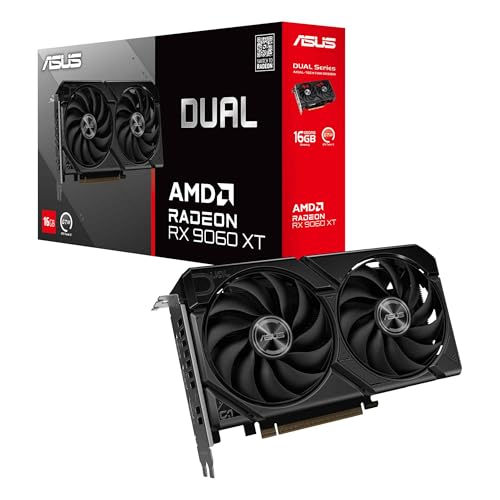
RX 9060 XT 16GB vs RTX 3060 12GB for Local LLMs: 4GB More VRAM, Which Wins?
Same-scoreboard llama.cpp runs put the two cards within 8% on 7B models; the 4GB VRAM gap decides 14B-24B.
By Mike Perry, Founder & Editor-in-Chief · Published 2026-10-07 · Updated 2026-10-07 · 12 min read
RX 9060 XT 16GB vs RTX 3060 12GB for local LLMs: llama.cpp scoreboards show a near tie at 7B, but 16GB fits 14B Q6, gpt-oss-20b and long context on-GPU.
Quick Answer
For 7-9B models the two cards are close to a tie. On the llama.cpp Vulkan scoreboard (discussion #10879), the RX 9060 XT 16GB generates 70.5 tok/s on Llama 2 7B Q4_0, against 75.9 tok/s for the RTX 3060 12GB. For 14B models with long context, and for anything at 20B or more, the RX 9060 XT 16GB wins because its extra 4GB keeps the model on the GPU. The RTX 3060 12GB is the better pick only when you need CUDA.
Hardware at a Glance
Median generation throughput at 7–9B models (Llama 3.1 8B, Qwen 3 8B), Q4 quantization, from community-reported runs SpecPicks tracks. Each row pools runs from different sources, runtimes and models in that class, so the rows are not a matched head-to-head; where the article compares cards on the same rig, its own figures are the like-for-like result. Street price is the second-lowest listing priced within the last 24 hours inside a sane band of MSRP, so no single listing sets it; where too few listings pass that check the row shows launch MSRP instead. Rows marked for comparison are not covered by this article — they are the nearest cards by VRAM, included so the throughput column has something to be read against.
This comparison is for one buyer. You are running local models in Ollama, LM Studio or llama.cpp, you have outgrown an 8GB card, and your budget tops out in the mid-range. As of 2026 the two obvious picks at that tier are AMD's RX 9060 XT 16GB (RDNA 4, launched mid-2025) and NVIDIA's RTX 3060 12GB, a 2021 card that still sells new and used because of its unusually large frame buffer.
The two cards answer the question differently. The RTX 3060 has more memory bandwidth: 360 GB/s on a 192-bit bus, per TechPowerUp's RTX 3060 12 GB spec page. It also has CUDA. The RX 9060 XT has 33% more VRAM: 16GB of GDDR6 on a 128-bit bus at 320 GB/s, per AMD's RX 9060 XT product page. Token generation on a model that fits is mostly limited by memory bandwidth, so the 3060 holds its own at small model sizes. Once a model or its context overflows 12GB, llama.cpp moves layers to system RAM and generation speed falls sharply. That makes 12GB vs 16GB the line that decides 14B-24B workloads.
Key Takeaways
At 7-9B the cards are close to a tie. On the shared llama.cpp Vulkan scoreboard, the RTX 3060 leads token generation (75.9 vs 70.5 tok/s on Llama 2 7B Q4_0). The RX 9060 XT leads prompt processing (2,142 vs 1,816 tok/s).
VRAM is the real difference. 16GB fits 14B models at Q6/Q8, 20B mixture-of-experts models such as gpt-oss-20b, and 24B models at Q3. On 12GB, every one of those offloads.
The software gap has narrowed but not closed. llama.cpp's Vulkan and ROCm backends run the RX 9060 XT well. Ollama's GPU support page lists the RX 9060 XT for ROCm on Linux but not on Windows. CUDA-only tools still favor the 3060.
The launch MSRPs are almost the same: $349 for the RX 9060 XT 16GB and $329 for the RTX 3060 12GB. For the same price class you get 4GB more VRAM, a newer architecture and PCIe 5.0.
Who should buy which: buy the RX 9060 XT 16GB if you run models at 14B or larger. Buy the RTX 3060 12GB if your workflow depends on CUDA, or if a used card is far cheaper.
Step 0: Which model size do you actually run?
Answer this before you look at any benchmark. The table below uses approximate Q4_K_M GGUF file sizes from the bartowski GGUF listings on Hugging Face. It assumes about 1-1.5GB on top of the file for an 8K context and runtime buffers.
Model size (Q4_K_M)
Typical file size
VRAM needed at 8K context
RTX 3060 12GB
RX 9060 XT 16GB
8B (Llama 3.1 8B)
~4.9 GB
~6 GB
Fits fully
Fits fully
14B (Qwen2.5 14B)
~9.0 GB
~10.5 GB
Fits, little headroom
Fits with room for long context
24B (Mistral Small 24B)
~14.3 GB
~15.5 GB
Offloads
Fits, tight
32B (Qwen2.5 32B)
~19.9 GB
~21 GB
Offloads heavily
Offloads
If you live at 8B, either card works and the decision comes down to software and price. If you want 14B with real context, or anything at 20B or more, read the 16GB sections closely.
Spec delta table
Spec
RX 9060 XT 16GB
RTX 3060 12GB
Why it matters for LLMs
Source
VRAM
16 GB GDDR6
12 GB GDDR6
Sets the largest model plus context that stays on the GPU
AMD; TechPowerUp
Memory bus
128-bit
192-bit
A wider bus means more bandwidth per clock
AMD; TechPowerUp
Memory bandwidth
320 GB/s
360 GB/s
Sets the ceiling for token generation on models that fit
AMD; TechPowerUp
Board power
160 W (reference)
170 W
Affects PSU sizing and heat during long inference runs
AMD; NVIDIA
Launch MSRP
$349
$329
The price basis used for the value math below
AMD; NVIDIA
PCIe interface
PCIe 5.0 x16
PCIe 4.0 x16
Matters only when layers offload to system RAM
AMD; TechPowerUp
Board-power figures are rated values, not measurements. AMD's page notes that partner overclocked RX 9060 XT models run above the 160W reference. NVIDIA's RTX 3060 product page lists the 3060's power and PSU guidance.
How fast is each card on 7-9B models?
The cleanest comparison uses runs from the same scoreboard, with the same model, quantization and benchmark tool (llama-bench). The table below draws on the llama.cpp project's community threads and the SpecPicks benchmark pages for each card.
Prefill vs generation. Prompt processing (prefill) depends on compute, and RDNA 4 leads there. One later ROCm run in llama.cpp #15021 reports about 3,000 tok/s prefill for the RX 9060 XT on Llama 2 7B. Token generation depends on memory bandwidth, and the 3060's extra 40 GB/s gives it a small edge. For chat, generation speed is what you feel. For RAG over long documents or for pasting large code files, a faster prefill means less waiting before the first token. Neither difference is large enough to decide a purchase at 7-9B.
One caution about aggregate numbers: the per-card benchmark pages mix runtimes (Ollama, llama.cpp, UL Procyon) and quantizations, so the medians are not a like-for-like comparison. Use the same-scoreboard rows above to compare raw speed.
What does 16GB unlock that 12GB cannot?
The quantization matrix below shows approximate GGUF weight sizes for three model classes, taken from the bartowski listings for Llama 3.1 8B, Qwen2.5 14B and Mistral Small 24B. Each cell reads "file size → 3060 12GB / 9060 XT 16GB" at a short (≤4K) context.
Quant
8B
14B
24B
Q3_K_M
~4.0 GB → fits / fits
~7.3 GB → fits / fits
~11.5 GB → offloads / fits
Q4_K_M
~4.9 GB → fits / fits
~9.0 GB → fits / fits
~14.3 GB → offloads / fits (tight)
Q5_K_M
~5.7 GB → fits / fits
~10.5 GB → tight / fits
~16.8 GB → offloads / offloads
Q6_K
~6.6 GB → fits / fits
~12.1 GB → offloads / fits
~19.3 GB → offloads / offloads
Q8_0
~8.5 GB → fits / fits
~15.7 GB → offloads / tight
~25 GB → offloads / offloads
FP16
~16.1 GB → offloads / offloads
~29.5 GB → offloads / offloads
~47 GB → offloads / offloads
Three practical results follow from the matrix:
Higher-quality 14B. The 3060 holds 14B only at Q4-Q5. The 9060 XT runs Q6_K, where quality loss versus FP16 is hard to notice in most chat use, and the parsapp repo logs 20.2 tok/s at Q8_0 on Qwen2.5-Coder 14B.
20B mixture-of-experts models.gpt-oss-20b ships in MXFP4 at roughly 13GB. A Vulkan run in llama.cpp #15021 reports 105.8 tok/s generation on the RX 9060 XT, because only a few billion parameters are active per token. On 12GB the model does not fit fully.
24B dense models at Q3-Q4. These sit at the edge of 16GB and are out of reach for 12GB without offloading.
Does context length change the answer?
Yes. Context is where the 3060 runs out of VRAM first. The KV cache grows linearly with context. Using each model's published config (layers × KV heads × head dimension) with an FP16 cache:
Model
KV cache per token
At 8K context
At 32K context
Llama 3.1 8B (32 layers, 8 KV heads)
~128 KB
~1 GB
~4 GB
Qwen2.5 14B (48 layers, 8 KV heads, per its config.json)
~192 KB
~1.5 GB
~6 GB
Mistral Small 24B (40 layers, 8 KV heads)
~160 KB
~1.25 GB
~5 GB
Work through Qwen2.5 14B at Q4_K_M. The weights take about 9GB. At 8K context the total is about 10.5GB plus runtime buffers, which fits on the 3060 with little to spare. At 32K the total is about 15GB, which overflows 12GB but fits on the 16GB card. You can quantize the KV cache to Q8 in llama.cpp (--cache-type-k q8_0 --cache-type-v q8_0, which needs flash attention enabled) to roughly halve these figures. That helps both cards, but it does not erase the 4GB gap.
CUDA vs ROCm vs Vulkan: which software stack works today?
llama.cpp. The llama.cpp build documentation covers CUDA, HIP (ROCm) and Vulkan backends. The RX 9060 XT appears on both the Vulkan scoreboard (#10879) and the ROCm thread (#15021). On Windows, the Vulkan build is the simplest way to run AMD cards because it needs only the standard Adrenalin driver.
Ollama. As of October 2026, Ollama's GPU page lists the RX 9060 XT, 9060 XT LP and 9060 under ROCm on Linux. The Windows ROCm list stops at the RX 7000 series. The same page notes that additional AMD support comes through Vulkan. In practice that means Linux users get first-class Ollama support. Windows users should check the current list or use LM Studio, which bundles a Vulkan llama.cpp runtime.
CUDA-only tools. The RTX 3060 runs everything: vLLM's full feature set, bitsandbytes, most fine-tuning notebooks, ExLlamaV2 and the long tail of ComfyUI custom nodes. If your work goes beyond chat inference, CUDA saves you hours of compatibility troubleshooting.
Linux vs Windows. For AMD on Linux, use a ROCm release that supports RDNA 4 (gfx1200). The ROCm thread in #15021 is the best place to see which versions owners are running successfully. On Windows, use Vulkan builds. On NVIDIA, either OS works with a current driver.
Perf-per-dollar and perf-per-watt at launch MSRP
All figures use launch MSRP ($349 vs $329), the Vulkan Llama 2 7B Q4_0 generation numbers from llama.cpp #10879, and rated board power. Street prices vary, so check the live price widget on each product page.
Metric (at MSRP)
RX 9060 XT 16GB
RTX 3060 12GB
7B generation tok/s per $100
~20.2
~23.1
VRAM (GB) per $100
~4.6
~3.6
7B generation tok/s per rated watt
~0.44
~0.45
On small models the 3060 gives slightly more generation speed per dollar. On VRAM per dollar, the metric that decides which models you can run at all, the RX 9060 XT leads by about 25%. Efficiency per rated watt is a wash.
Which RX 9060 XT 16GB and RTX 3060 12GB models to buy
ASUS Dual RX 9060 XT 16GB: a compact two-fan card that fits most mid-tower and many small-form-factor cases. It is the safe default.
ASRock RX 9060 XT Challenger 16GB OC: a factory overclock (3,290 MHz boost per the listing) on a two-fan cooler. Choose it if you want the fastest clocks in a short card.
XFX Swift RX 9060 XT 16GB (White): a triple-fan cooler, which usually means lower noise during sustained inference, at the cost of extra length. Measure your case first.
ZOTAC RTX 3060 Twin Edge OC 12GB: one of the shortest RTX 3060s. It is an easy fit in compact builds and a common used-market listing.
MSI RTX 3060 Ventus 2X 12G: a plain two-fan design that is widely available. Make sure you get the 12G variant and not an 8GB RTX 3060.
Watch for the 8GB RTX 3060. NVIDIA later released an 8GB RTX 3060 with a 128-bit bus. It is a much worse LLM card, so confirm "12GB" in the listing title.
Common pitfalls
Buying the RX 9060 XT 8GB by mistake. Both RX 9060 XT memory configurations use the same name. Only the 16GB card belongs in this comparison.
Assuming Ollama on Windows uses ROCm. Check the support list. If the card is not on it, use Vulkan-based runtimes.
Ignoring context in VRAM math. A 14B model that "fits" at 4K can spill over 12GB at 16K or more and drop sharply in speed.
Running long jobs on a marginal PSU. Inference holds the GPU near full board power for hours. A quality 550-650W unit is the sensible floor.
Verdict matrix
Get the RX 9060 XT 16GB if…
You run or plan to run 14B models at Q6/Q8, or 20B-24B models.
You want 16K-32K context without offloading.
You use llama.cpp, LM Studio, or Ollama on Linux.
You are buying new and want a current-generation warranty.
Get the RTX 3060 12GB if…
Your tools need CUDA: ComfyUI custom nodes, vLLM, bitsandbytes, ExLlamaV2 or fine-tuning scripts.
Your models top out at 8B-14B with short context.
You can find a used 12GB card well below the new RX 9060 XT price.
You run Ollama on Windows and don't want to work around backend support.
Recommended pick
For most local-LLM buyers in 2026, the RX 9060 XT 16GB is the better buy. On 7-9B models the measured speed gap is within about 8%. On anything larger, 16GB decides whether the model runs entirely on the GPU or offloads to system RAM. The counter-case is a CUDA-dependent workflow. If you generate images in ComfyUI with custom nodes, fine-tune, or serve through vLLM, the RTX 3060 12GB, especially a used one at a discount, avoids compatibility problems the AMD card can't fully solve yet.
As an Amazon Associate, SpecPicks earns from qualifying purchases; we also earn on qualifying eBay purchases via the eBay Partner Network. Prices shown were last tracked at crawl time and may vary — check the listing for the current price.
📹 Watch a review
RX 9060 XT 16GB - The Gameplay Review at 1440p! — zWORMz Gaming on YouTube
Frequently asked questions
Can the RX 9060 XT 16GB run Ollama on Windows?
As of October 2026, Ollama's GPU documentation lists the RX 9060 XT under ROCm on Linux, but its Windows ROCm list stops at the RX 7000 series. Ollama notes additional AMD support through Vulkan, and LM Studio or llama.cpp Vulkan builds run the card on Windows with only the standard Adrenalin driver. Check the current support page before you buy if Ollama on Windows is your only tool.
Will a 14B model fit fully on the RTX 3060 12GB?
At Q4_K_M a 14B model needs roughly 9-10 GB for weights, so it fits on 12GB with a short context. At longer contexts the KV cache pushes total use past 12GB and llama.cpp starts offloading layers to system RAM, which cuts generation speed sharply. The 16GB RX 9060 XT keeps the same model plus a much longer context entirely in VRAM.
Is CUDA still a reason to pick the RTX 3060?
For plain chat inference, llama.cpp's Vulkan and ROCm backends make the RX 9060 XT a workable choice. CUDA still matters if you rely on tools that ship CUDA-only kernels, such as many ComfyUI custom nodes, some vLLM features, bitsandbytes training scripts and most fine-tuning tutorials. If your workflow goes beyond llama.cpp-based chat, the RTX 3060 avoids compatibility friction.
What power supply does each card need?
NVIDIA rates the RTX 3060 12GB at 170W board power and recommends a 550W system power supply. AMD rates the reference RX 9060 XT 16GB at 160W, and partner overclocked models draw more. A quality 550-650W 80+ Gold unit covers either card in a typical Ryzen 5 or Ryzen 7 build, with headroom for inference jobs that hold the GPU at full power for hours.
Should I buy a used RTX 3060 instead of a new RX 9060 XT?
A used RTX 3060 12GB makes sense when your models top out around 8B-14B and you want CUDA compatibility at the lowest outlay. Buy the new RX 9060 XT 16GB if you plan to run 20B-24B quantized models, want long context windows, or value a warranty. Check the used card's fan health and VRAM temperatures, because inference runs keep memory loaded for long stretches.