Searches for "Gemini Intelligence hardware requirements" usually stem from a mix-up: shoppers assume Google's Gemini needs a beefy GPU rig the same way a self-hosted open-weight model does. It doesn't — at least not in the way that assumption implies. Gemini spans a spectrum from a fully cloud-hosted model that runs on Google's own infrastructure to a small on-device model, Gemini Nano, that powers specific features inside Chrome and select Pixel phones. The actual hardware bar depends entirely on which one is meant.
Cloud Gemini: Your Hardware Barely Matters
When someone uses the Gemini app, Gemini Advanced, or calls the Gemini API through Google AI Studio or Vertex AI, the model itself runs on Google's data-center infrastructure, not the user's device. Per Google's own developer documentation, the client-side requirement is simply a modern browser or the Gemini mobile app plus an internet connection. There is no GPU, VRAM, or CPU-core minimum to check, and no particular processor changes how fast a response streams back beyond ordinary network and browser performance.
That is the opposite of the resource math involved in running an open-weight model like Llama or Qwen locally, where VRAM capacity directly gates which parameter-count model can be loaded and CPU/RAM absorb any layers that spill off the GPU.
Gemini Nano: The Actual On-Device Hardware Bar
The one place a real, published hardware requirement exists is Gemini Nano, the compact model Google ships for offline, on-device inference inside Chrome's built-in AI APIs (the Prompt API, Summarizer API, and related features) and on select Pixel hardware.
Per Chrome's built-in AI developer documentation, the desktop requirements for downloading and running Gemini Nano locally are:
| Requirement | Minimum |
|---|---|
| Operating system | Windows 10/11, macOS 13+, or Linux (the desktop build is not supported on ChromeOS, Android, or iOS) |
| Storage | More than 22 GB free space on the volume holding the Chrome profile |
| GPU | Strictly more than 4 GB of VRAM |
| Network | A non-metered connection for the initial model download |
Source: Chrome for Developers, "Built-in AI."
Two things stand out. First, the CPU is not the gating factor — GPU VRAM and free disk space are. Second, that 22 GB figure trips up a surprising number of laptops running lean SSDs, which is why on-device Gemini Nano features can silently fail to activate on machines that otherwise look capable.
Freeing Up the Storage Headroom Gemini Nano Wants
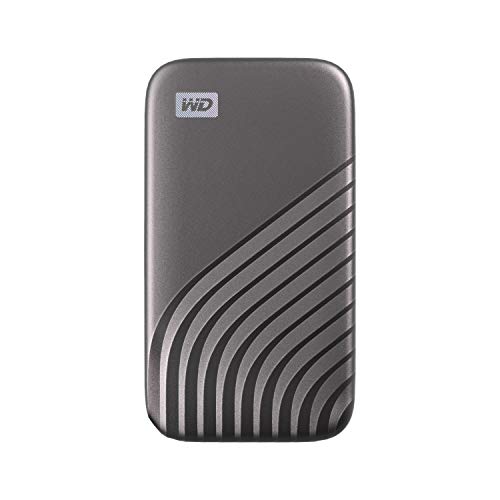
Because the 22 GB-plus free-space floor is measured on the same volume as the Chrome profile, the simplest fix on a storage-constrained laptop is external storage rather than a full drive swap. Options at a range of capacities and price points include the WD 6TB My Passport ($293.42) and Seagate One Touch 4TB ($214.71) for bulk archival that clears space without deleting anything, or a portable SSD like the WD 2TB My Passport SSD ($350.99) or the WD 2TB My Passport SSD in blue ($325.95) if the goal is also moving active project files off the boot drive. None of these change the GPU-VRAM requirement, but they resolve the storage-floor failure mode that quietly blocks Gemini Nano from downloading in the first place.
Pixel Phones and On-Device Gemini Nano
Google has extended on-device Gemini Nano support across Pixel handsets starting with the Pixel 8 Pro and continuing through later Pixel 9 and Pixel 10 generations, powering features like Recorder summaries, Magic Compose in Messages, and offline summarization. Per Google's own feature pages, availability is tied to the phone's Tensor chip generation and Google's software rollout rather than an open spec sheet a consumer can check the way they would with a discrete GPU. If a feature description mentions Gemini Nano and a device sits outside Google's supported Pixel list, no aftermarket component swap changes that — it's SoC and software gating, not a parts list.
Gemini vs. Self-Hosting a Local LLM: The Hardware Calculus Is Different
If the actual goal is not to use Google's Gemini but to build a general local AI rig — for chatbots, coding assistants, or 3D and image generation workflows — the GPU-VRAM-first math from local LLM hosting genuinely applies, and it's covered in depth in SpecPicks' 2025 local LLM hardware guide. For a sense of where a cloud-tier model like one of Gemini's smaller Flash variants stacks up against something run locally, see Gemini 3.6 Flash vs 3.5 Flash-Lite vs local, which lays out when the cloud tier is simply the better call than buying GPU hardware.
| Cloud Gemini (app/API) | Gemini Nano (Chrome/Pixel) | Self-hosted local LLM | |
|---|---|---|---|
| Where inference runs | Google data center | Local device | Local device |
| GPU requirement | None | More than 4 GB VRAM (desktop) | Model-dependent, often 12 GB+ VRAM |
| Storage requirement | None | More than 22 GB free | Tens of GB per model, often more |
| Works offline | No | Yes, once downloaded | Yes |
| Main cost driver | Subscription/API usage | None — bundled with Chrome/Pixel | Upfront hardware |
Related Builds Worth Reading
For a similar reality check on what "on-device AI" hardware actually requires versus marketing framing, see how Apple Intelligence's China rollout swaps in Alibaba's Qwen rather than Apple's own on-device models — another case where model routing, not a GPU spec sheet, determines the experience.
If the actual project is a home-lab or workshop build that needs a genuinely documented spec sheet, SpecPicks' PiKVM hardware guide and its companion PiKVM hardware requirements breakdown show what a real, verifiable minimum spec looks like, board by board. The same discipline applies to a RetroPie handheld build: every requirement traces to an actual component list, not an unverifiable claim about inference speed.
Citations and sources
- Chrome for Developers — Built-in AI
- Google AI for Developers — Gemini API docs
- Google — Introducing Gemini
This piece is editorial synthesis based on publicly available information. No independent first-party benchmarking is reported.