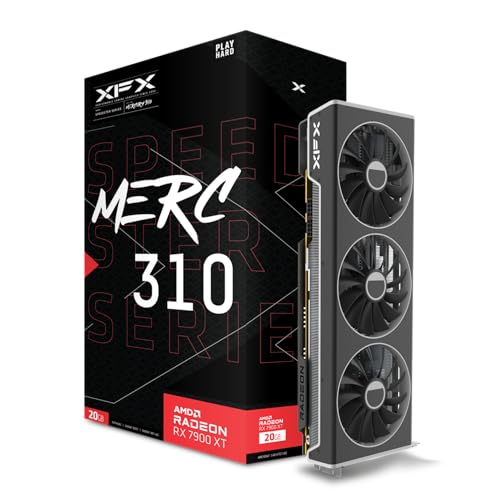
Training a large language model from scratch — as opposed to fine-tuning an existing open-weight model — is a materially different project than most home-lab AI builds. It requires enough VRAM to hold model weights, optimizer states, and activations simultaneously, a distributed-training framework that can shard that memory load across multiple accelerators, and a realistic budget for either cloud compute or a multi-GPU rig. This synthesis pulls together publicly documented hardware specifications, open-source tooling, and reporting on what pretraining, fine-tuning, and parameter-efficient adaptation actually require in 2026.
What Hardware Do I Need to Train an LLM From Scratch?
Model size dictates the hardware floor. A dense transformer's parameters, gradients, and optimizer states (in mixed precision with Adam) typically need on the order of 12-20 bytes of GPU memory per parameter during training, before accounting for activations — which is why full from-scratch pretraining of anything past a few billion parameters quickly outgrows a single consumer card.
Publicly listed specs for the accelerators most often discussed for LLM work:
| Accelerator | Memory | Memory bandwidth | Segment |
|---|---|---|---|
| AMD Instinct MI300X | 192GB HBM3 | ~5.3 TB/s | Data center |
| NVIDIA H100 SXM | 80GB HBM3 | ~3.35 TB/s | Data center |
| NVIDIA RTX 4090 | 24GB GDDR6X | ~1 TB/s | Consumer/prosumer |
| AMD Radeon RX 7900 XTX | 24GB GDDR6 | ~960 GB/s | Consumer |
(Specs per AMD's and NVIDIA's product pages, cited below.)
The practical takeaway: a single 24GB consumer GPU — an RTX 4090, RTX 3090, or RX 7900 XTX — can train models in the 1B-3B parameter range from scratch, or fine-tune larger open-weight models using parameter-efficient methods like LoRA/QLoRA that avoid holding a full optimizer state in memory. Anything larger, including the 7B-70B range most "build your own GPT" tutorials reference, needs either multiple pooled GPUs or a data-center-class accelerator like the MI300X or H100. For a concrete multi-GPU consumer build, see SpecPicks' dual RTX 3090 LLM training benchmarks and the broader best GPU for LLM training and inference roundup; for a look at how a 5090 compares to a dual-3090 pool specifically for training workloads, see dual RTX 3090 vs RTX 5090.
CPU choice matters less than GPU choice for the training loop itself, but it affects the data pipeline — tokenization, shuffling, and dataset preprocessing are CPU-bound stages that run in parallel with GPU training and can become a bottleneck if under-provisioned. A modern multi-core desktop CPU (Ryzen 7000/9000-series or equivalent Intel parts) with fast NVMe storage is generally sufficient to keep a single- or dual-GPU training run fed.
Choosing a Training Framework and Toolchain
Nearly every publicly documented LLM training workflow in 2026 is built on the same open-source stack:
- PyTorch — the near-universal training framework for LLM work.
- Hugging Face Transformers — model architectures, tokenizers, and training utilities; see Hugging Face's Transformers documentation.
- DeepSpeed — Microsoft's distributed-training library, implementing ZeRO memory-partitioning stages that let training split optimizer states, gradients, and parameters across multiple GPUs instead of replicating them on each one; see DeepSpeed's documentation.
- Megatron-LM — NVIDIA's library for large-scale model- and pipeline-parallel training, used as a reference implementation for many open frontier models; see the Megatron-LM repository.
- Axolotl and LLM Foundry — higher-level training wrappers aimed at fine-tuning and continued pretraining with less boilerplate; see the Axolotl repository and the LLM Foundry repository.
On AMD hardware, the equivalent stack runs through ROCm, AMD's open compute platform. AMD's ROCm documentation lists official PyTorch support and a growing set of validated configurations for Instinct-class accelerators; see ROCm's documentation. ROCm compatibility on consumer Radeon cards is narrower than on Instinct data-center parts — check AMD's current supported-GPU list before assuming a given Radeon SKU works with a given ROCm release, since support has changed across versions.
Step-by-Step: A Realistic From-Scratch Training Workflow
- Define the model size against available memory. Work backward from VRAM, not forward from an arbitrary parameter count — a 1B-3B model is a realistic from-scratch target on a single 24GB card; a 7B+ model needs multi-GPU sharding via DeepSpeed ZeRO or PyTorch FSDP.
- Assemble and clean a training corpus. Deduplication and quality filtering matter more than raw token count; most public reporting on open pretraining runs (Llama, Pythia, OLMo) describes multi-stage filtering pipelines rather than using raw scraped text as-is.
- Tokenize and shard the dataset. Hugging Face's
datasetslibrary and memory-mapped, Arrow-backed formats let large corpora stream from disk instead of loading fully into RAM. - Configure the distributed-training backend. DeepSpeed ZeRO Stage 2 or 3 (or FSDP) is the standard approach for splitting optimizer state across GPUs when a single accelerator can't hold the full model.
- Train with checkpointing and evaluation loops. Save checkpoints frequently — from-scratch runs on rented or home hardware are far more exposed to interruption than hyperscaler jobs with automatic failover.
- Evaluate against standard benchmarks (MMLU, HellaSwag, or task-specific held-out sets) rather than eyeballing sample generations, since small-model behavior can look deceptively good on cherry-picked prompts.
Cost: What Training Actually Requires vs. What Fine-Tuning Requires
Precise end-to-end training costs are difficult to state reliably in public because they depend on dataset size, token budget, cloud spot pricing at the time of the run, and how many failed or restarted runs get absorbed along the way — vendor and community cost claims for from-scratch training vary widely and are hard to independently verify. Rather than quoting a single number, it's more useful to separate what's realistic on different budgets:
- Home consumer GPU (single or dual RTX 3090/4090/7900 XTX): parameter-efficient fine-tuning (LoRA/QLoRA) of existing 7B-70B open-weight models, or from-scratch pretraining of small (under roughly 3B parameter) models. This is the path most hobbyists and small teams actually take instead of full pretraining.
- Rented cloud data-center GPUs (H100/MI300X-class, hourly rental): from-scratch pretraining of models in the multi-billion-parameter range becomes feasible, but hourly rental rates fluctuate by provider and region — check current pricing directly with the provider rather than relying on a fixed figure.
- Owned multi-GPU cluster: the highest up-front cost, but avoids recurring rental fees for teams doing many training runs.
For most people asking how to train their own LLM, the honest answer is that fine-tuning or continuing pretraining on an existing open-weight model (Llama, Qwen, Mistral, or similar) delivers a usable custom model at a small fraction of the cost of pretraining from random initialization — see SpecPicks' coverage of how quickly open-weight models have closed the gap with frontier models for context on why starting from an open checkpoint is now the default strategy rather than the exception.
Open-Source Tools and Validation Suites
Beyond the core frameworks above, a few tools are specifically useful for validating a training setup before committing a multi-day run:
- MLPerf Training benchmarks provide standardized, third-party-audited comparisons across GPU vendors for large-scale training workloads; see MLCommons' MLPerf Training results.
- Hugging Face's Accelerate library provides a lighter-weight alternative to raw DeepSpeed configuration for multi-GPU launches.
- Community-maintained ROCm compatibility trackers are useful for confirming a specific Radeon or Instinct SKU is validated against the ROCm version a given framework expects, since AMD's supported-hardware matrix changes across releases.
Is Home-Built From-Scratch Training Realistic?
For most hobbyists, the more common — and better-supported — path is a dual-GPU workstation used for fine-tuning and small-model experimentation rather than pretraining a frontier-scale model. SpecPicks' dual RTX 3090 LLM training benchmarks covers what that kind of build can realistically handle, and the best GPU for LLM training and inference guide compares current options across budgets. Builders repurposing older homelab hardware for this kind of project may also find it useful to check what a downsized homelab is worth before buying new GPUs outright, and those choosing between an integrated AI-focused platform and a discrete consumer GPU should see Ryzen AI Max vs RTX 4060. Outside the GPU-training space entirely, makers experimenting with smaller edge or hobbyist AI projects on a tighter budget may find Raspberry Pi 4 8GB vs Pi Zero W a useful starting point for non-training inference workloads — and those who'd rather point spare compute at emulation instead of model training can see browser-based retro game emulation for an unrelated but popular use of the same hardware.
FAQs
How much does it cost to train an LLM from scratch?
Cost depends heavily on model size, dataset size, and whether compute is rented or owned; publicly reported figures vary too widely across providers and time periods to state a single reliable number. Fine-tuning an existing open-weight model is dramatically cheaper than pretraining from random initialization.
What GPU do I need to train an LLM?
For small (under roughly 3B parameter) from-scratch models or LoRA/QLoRA fine-tuning of larger open-weight models, a single 24GB consumer GPU (RTX 3090/4090, RX 7900 XTX) is workable. Larger from-scratch runs need multiple pooled GPUs or data-center accelerators like the MI300X or H100.
Can I train an LLM on a single GPU?
Yes, within limits — a single high-VRAM consumer GPU can pretrain small models or fine-tune larger ones with parameter-efficient methods. Full pretraining of a 7B+ parameter model from scratch generally requires multi-GPU memory sharding via DeepSpeed or FSDP.
Is ROCm ready for LLM training on AMD GPUs?
AMD's ROCm platform officially supports PyTorch on Instinct data-center accelerators, per AMD's documentation. Consumer Radeon support is narrower and version-dependent, so it's worth checking AMD's current supported-hardware list against the ROCm and framework versions a given project needs.
Do I need to train from scratch, or can I fine-tune an existing model?
Most projects that describe themselves as wanting to train their own LLM are better served by fine-tuning or continuing pretraining on an existing open-weight checkpoint, which requires far less compute than pretraining from random initialization while still producing a customized model.
How long does training take?
Training time depends on model size, dataset size, hardware, and token budget, and public reporting on end-to-end run times varies too much by configuration to generalize into a single figure. Framework documentation for DeepSpeed and Megatron-LM includes throughput benchmarks on specific hardware configurations that are a more reliable reference point than aggregate claims.
Citations and sources
- https://www.amd.com/en/products/accelerators/instinct/mi300/mi300x.html
- https://www.nvidia.com/en-us/data-center/h100/
- https://rocm.docs.amd.com/
- https://huggingface.co/docs/transformers/index
- https://www.deepspeed.ai/
- https://github.com/NVIDIA/Megatron-LM
- https://github.com/OpenAccess-AI-Collective/axolotl
- https://github.com/mosaicml/llm-foundry
- https://mlcommons.org/benchmarks/training/
This piece is editorial synthesis based on publicly available information. No independent first-party benchmarking is reported.