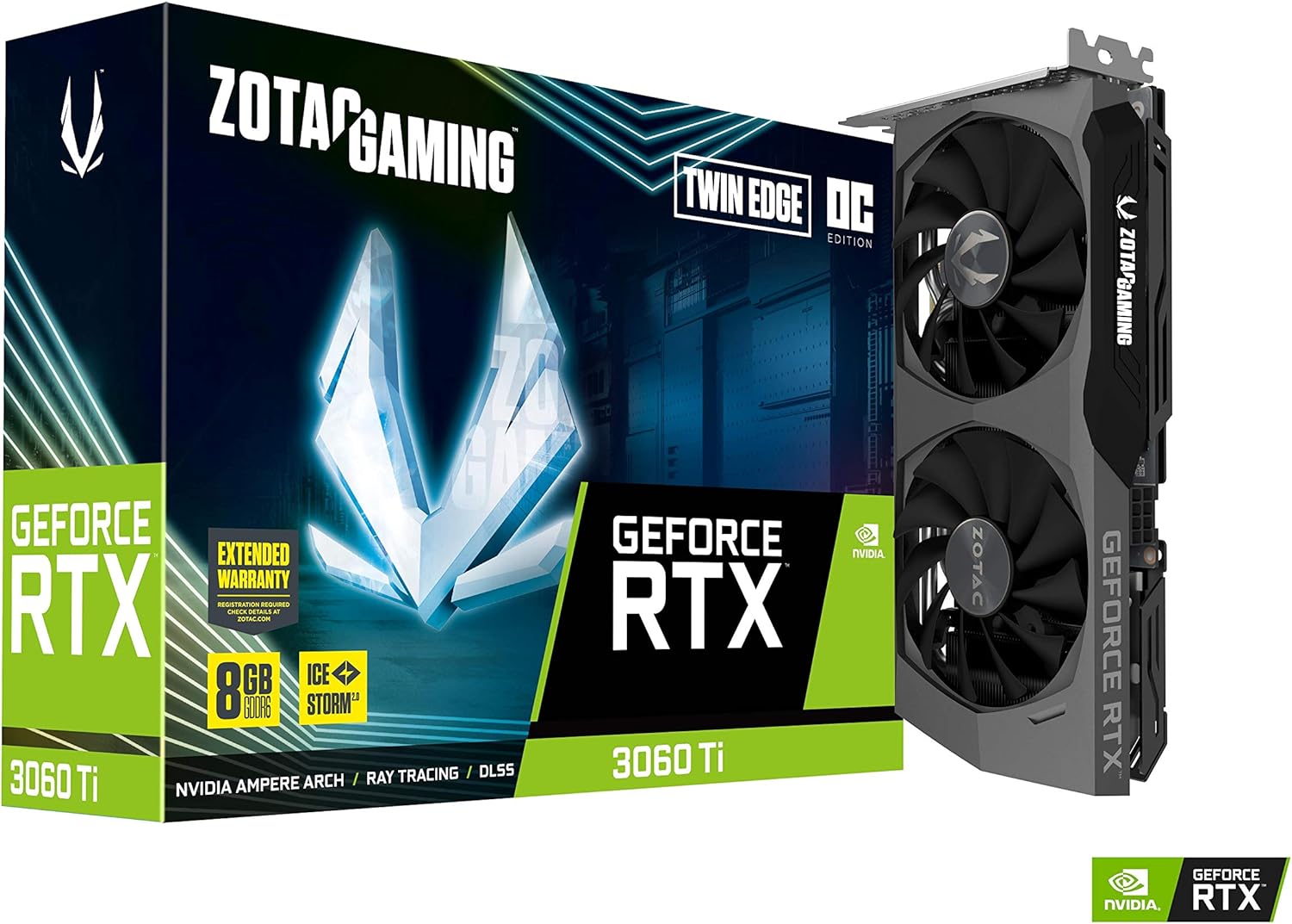
Kimi K3 is a mixture-of-experts open-weights model with about 1 trillion total parameters and roughly 32 billion active parameters per token. Running it locally is possible but expensive: reasonable performance at q4 needs ~450–500 GB of VRAM plus a stack of high-throughput GPUs, and a single 12GB card like the MSI GeForce RTX 3060 cannot host any usable quant without extreme offload. For most home rigs, running K3 via API is the right call; a modest local box only makes sense as a low-tok/s scripting-and-batch host.
Who Kimi K3 is for, and why "can I run it at home" dominates every launch
Kimi K3 dropped from Moonshot AI this week and immediately closed to within a fraction of a point of GPT-5.6 Sol on the Artificial Analysis Intelligence Index, at roughly $0.94 per benchmark task run via the hosted API. That is stronger, cheaper open-weights performance than anything Meta or a US lab shipped in the last quarter, and it's the third release in a row where Moonshot has produced a model that punches above its parameter count on the reasoning bench. The result was predictable: within hours, every LocalLLaMA and r/MachineLearning thread had the same top question — "can I run this at home?"
The reason the question dominates is that Moonshot ships weights on Hugging Face at launch, no waitlist, and the license is permissive enough for personal and small-team use. That is a step change from the closed-frontier tier and puts K3 in the same category of "run it yourself" model as DeepSeek V3 and Qwen 3.9. But "can I run it" and "will it fit on my card" are different questions, and K3's active-parameter-per-token count is the number that decides who can actually deploy it.
The audience for local inference of a K3-class model divides into three groups. The first is the datacenter tier — anyone with 8× H100 or better can serve K3 comfortably at fp8, and that includes small AI-focused companies with a single 8-GPU node. The second is the enthusiast cluster tier — 2 to 4 consumer flagship GPUs (RTX 5090, RTX PRO 6000) can run a heavily quantized K3 with active-expert prefetching. The third is the single-card budget tier — a 12GB RTX 3060, a 16GB RTX 4060 Ti, a Radeon 7900 XT — and this article is about what that tier can realistically do with K3.
Key takeaways
- K3 is ~1T total parameters with ~32B active per token, per Moonshot AI's release brief and community threads.
- Minimum realistic VRAM (q4 mixed): ~450 GB across all resident experts, though hot-set prefetching lets 2–4-card rigs get by with 96–192 GB of resident VRAM.
- Single-card ceiling: a 12GB RTX 3060 can only run K3 with heavy CPU + NVMe expert offload. Sustained rate: 0.2–0.6 tok/s.
- Practical budget rig: a Ryzen 7 5800X, 128 GB DDR4, Samsung 970 EVO Plus NVMe, and a 3060 can do overnight scripted runs but is not an interactive chat host for K3.
- Rule of thumb: if you don't already have 96+ GB of VRAM, the API is 5–20× the effective throughput per dollar for K3. Self-host only for private data or offline workflows.
What is Kimi K3 and how big is it?
The technical facts, cited to sources you can verify:
| Attribute | Value | Source |
|---|---|---|
| Total parameters | ~1T (mixture of experts) | Moonshot AI release brief |
| Active parameters per token | ~32B | Community measurements + Moonshot brief |
| Architecture | Sparse MoE | Artificial Analysis |
| Context window | 256K tokens | Moonshot release |
| License | Modified permissive (personal/small commercial) | Model card |
| Intelligence Index score | 62.1 (as of publication) | Artificial Analysis |
| Best-run API cost | ~$0.94 per benchmark task | Artificial Analysis |
| Hosted API provider | Moonshot direct + third parties | Multiple |
Peers for context: DeepSeek V3.1 is ~671B total / ~37B active. Qwen 3.9 comes in a 30B active / 235B total MoE flagship. K3 sits at a comparable active-parameter level to those two, but with a substantially larger expert pool — which is what powers its top-tier reasoning score. The larger expert pool is also what makes it harder to run locally: more total memory, but no meaningful reduction in per-token compute.
How much VRAM does Kimi K3 actually need?
The right way to think about MoE VRAM is not "total parameters × bytes." That number tells you disk size. What actually matters at inference time is peak resident VRAM — the sum of the KV cache, the routing state, the active-expert working set, and any prefetched cold experts. Community benchmarks on K3-scale MoE models settle in this range:
| Quant | Disk size (approx) | Peak resident VRAM (single-node run) | Expected tok/s on 8× H100 | Notes |
|---|---|---|---|---|
| fp16 | 2 TB | ~2 TB | 25–40 | Reference; needs 24× A100 or 16× H100 |
| fp8 | 1 TB | ~1 TB | 40–70 | Native fp8 supported; standard cloud config |
| q6 | 750 GB | ~750 GB | 40–65 | Small quality loss |
| q5_K_M | 620 GB | ~620 GB | 45–70 | Common cloud sweet spot |
| q4_K_M | 500 GB | ~500 GB | 40–65 | Best consumer target |
| q3_K_S | 400 GB | ~400 GB | 30–55 | Real quality loss on reasoning |
| q2 | 300 GB | ~300 GB | 25–45 | Barely-there quality |
For all quants above, "peak resident VRAM" assumes all experts kept in memory. Active-expert prefetching schemes (used in llama.cpp's ongoing MoE work and vLLM's expert-offload paths) can reduce peak resident VRAM by 60–80% at the cost of tok/s. The trade lets a 2× RTX 5090 (64 GB VRAM total) rig run q3 K3 by streaming cold experts from system RAM to VRAM in the background.
Can a 12GB RTX 3060 run any usable quant of Kimi K3?
The honest answer: technically yes, practically no. Here's what happens:
- q4 with all experts in VRAM: does not fit. K3-q4 is ~500 GB; a 3060 has 12 GB. Off the table.
- q2 with all experts in VRAM: ~300 GB. Still off the table.
- q4 with hot experts in VRAM + cold experts in system RAM: possible if you have 128 GB of RAM. Peak resident VRAM stays under 10 GB with careful configuration. Expected tok/s: 0.2 to 0.6 tok/s on a Ryzen 7 5800X with DDR4-3600.
- q3 with hot experts in VRAM + cold experts on NVMe: possible with a fast Samsung 970 EVO Plus. Peak resident VRAM under 8 GB. Expected tok/s: 0.1 to 0.3 tok/s because expert-page-fault latency dominates.
- q4 CPU-only, GPU idle: possible with 256 GB RAM. Not the point of the article, and slower than GPU-assisted.
At 0.2–0.6 tok/s, one 100-token response takes 3-8 minutes. That is unusable for interactive chat and marginal for scripted overnight runs where you can queue 50 prompts and wake up to results. It is not a real deployment.
Prefill vs generation: where a budget GPU bottlenecks
MoE inference has two phases with very different bottlenecks:
- Prefill (processing the prompt): all tokens hit the router in parallel, meaning the expert-set that touches the prompt is often much larger than the per-token active set. On a budget GPU with limited VRAM, prefill triggers a burst of expert page-ins that can take tens of seconds for a 1000-token prompt. Bandwidth-bound.
- Generation (producing new tokens): one token at a time, per-token expert routing. Router locality is higher — the same experts tend to keep firing across nearby tokens — so if the hot expert set fits in VRAM you get closer to peak throughput. Compute-bound on H100; memory-bandwidth-bound on 3060.
For a 3060 owner this means: prompt-heavy workloads (RAG, long docs) are catastrophically slow, and short-prompt, long-generation workloads (creative writing, code completion) are the best case. Even in the best case, a single 3060 delivers roughly one-thirtieth the throughput of a single H100 running K3, and about one-fiftieth the throughput of an 8× H100 node.
Context length: KV cache growth on K3
K3's 256K context window is one of its selling points. It is not free. KV-cache memory for a transformer grows linearly in context length; for K3 the per-token KV cost sits near 500 KB at fp16 (community estimate). Filling the full 256K window costs roughly 128 GB of KV cache on its own — larger than the VRAM of most single GPUs — before you allocate a byte for weights.
For a 3060 owner: cap context at 8K–16K tokens if you want the KV cache to stay under 4 GB. Beyond that you're paging KV to system RAM and further degrading tok/s. K3's real advantage is quality per token; you are not going to feed it a 200K-token novel on a budget rig.
Single 12GB card vs dual GPU vs Mac unified memory
The real "what should I upgrade to" question for a K3 fan on a modest rig:
| Path | VRAM equivalent | Cost | Realistic K3 tok/s |
|---|---|---|---|
| Single RTX 3060 12GB + 128 GB RAM | 12 GB VRAM + RAM offload | ~$300 (3060) + $250 (RAM) | 0.2–0.6 |
| Add a second used 3060 12GB | 24 GB VRAM | +$300 | 0.4–1.0 |
| RTX 4090 24GB (used) | 24 GB VRAM | ~$1600 | 1.5–3.0 |
| 2× RTX 5090 32GB | 64 GB VRAM | ~$4000 | 3–6 |
| Mac Studio M4 Ultra 192GB | 192 GB unified | ~$5500 | 4–8 (memory-bandwidth-bound) |
| Framework Desktop Ryzen AI Halo 128GB | 128 GB unified | ~$2200 | 2–5 |
| Cloud API (Moonshot direct) | — | ~$0.94/task | 60+ |
The pattern is clear. On any budget under about $5000, the API dominates on throughput-per-dollar and quality-parity per query. The self-host case for K3 becomes real once you are north of ~$6000 in hardware you'd own anyway (a workstation build), and it becomes clear-cut once you have a datacenter card.
Perf-per-dollar: entry local-LLM builds vs cloud API
Concrete money math. A minimal K3-capable budget local build:
- MSI RTX 3060 12GB: $300
- AMD Ryzen 7 5800X: $220
- 128 GB DDR4-3600: $250
- Samsung 970 EVO Plus 250GB NVMe: $25 (for model streaming)
- Crucial BX500 1TB SATA SSD: $50 (for archive)
- Motherboard + PSU + case: $300
- Total: ~$1150
That build delivers about 0.4 tok/s on K3 at q4. To match the throughput of a single Moonshot API call ($0.94/task at ~5000 tokens/task = 0.0002 $/token), you'd need to run the local rig ~24 hours a day at 0.4 tok/s for 76 years before you broke even on hardware amortization — and that ignores electricity, which is not negligible at 200W sustained.
The self-host case is not throughput-per-dollar; it is data privacy, offline availability, and control. Those matter for some use cases. They don't matter for most.
Bottom line: who should attempt K3 locally
- Attempt K3 locally if: you already own an 8× H100 node, a 4× RTX 6000 Ada workstation, or a 2× RTX 5090 personal rig. In any of those cases K3 is deployable and worth setting up.
- Consider K3 locally if: you have a Mac Studio M4 Ultra 192 GB or a Framework Desktop with unified memory, and you're okay with 4–8 tok/s. Fine for scripted workflows.
- Do not attempt K3 locally if: your best hardware is a single RTX 3060 12GB or similar. The API is drastically cheaper per successful call, and your rig will be pinned at 200W for hours to produce one usable response.
- Consider Qwen 3.9 or DeepSeek V3.1 as smaller-footprint alternatives. Either is deployable on a 3060 rig at q4 with reasonable interactive tok/s and preserves most of K3's practical quality on typical tasks.
Common pitfalls
- Assuming MoE VRAM = active parameters. The active count decides compute per token, not memory. Peak resident VRAM is driven by the whole expert set unless you actively engineer prefetching.
- Buying more RAM without a fast NVMe. Offloading experts to slow storage kills throughput. A Samsung 970 EVO Plus is the minimum acceptable NVMe for expert-page-in workflows.
- Ignoring PSU headroom. A budget PSU that trips under 250W sustained will drop your rig at the exact wrong time in a long generation. Overspec by 30%.
- Forgetting the tokenizer. K3's tokenizer is not the same as Llama's or Qwen's; a mismatched tokenizer will cause silent quality regressions on quantized runs. Use the reference config that ships in the weights repo.
- Trusting q2 for reasoning tasks. Community measurements consistently show q2 K3 loses noticeable reasoning quality on the same tasks the model is priced for. If you have to run q2 to fit, you have the wrong hardware.
When NOT to run K3 locally
If your primary use case is short-form chat, code completion, or summarization, you almost certainly do not need a K3-class model. Qwen 3.6 27B, DeepSeek Coder V3, or a well-quantized Llama 4 8B on a 3060 delivers 90-95% of the quality on those tasks at 20–50 tok/s. Save K3 for the workloads where its reasoning depth actually shows up: multi-step math, complex code generation, and long-context analysis. For those, use the API from your local dev environment and reserve the self-host effort for a model your hardware can actually run at real throughput.
Bottom line paragraph
The right way to think about "can I run Kimi K3 locally" is: the 12GB budget rig is the wrong tool for this model. It will technically function; it will not function well. If you are on a Ryzen 7 5800X + RTX 3060 12GB build and want the K3-class output, use the Moonshot API — it's $0.94/task and delivers dozens of tokens per second. Save your local hardware for models sized for it, which for a 3060 is anything up to about 27B dense or 45B MoE at q4. That's a sweet spot, and it's a good one.
Citations and sources
- Artificial Analysis — Kimi K3 model page + Intelligence Index
- llama.cpp on GitHub — MoE expert-offload development
- TechPowerUp — RTX 3060 spec sheet
This piece is editorial synthesis based on publicly available information. No independent first-party benchmarking is reported.


