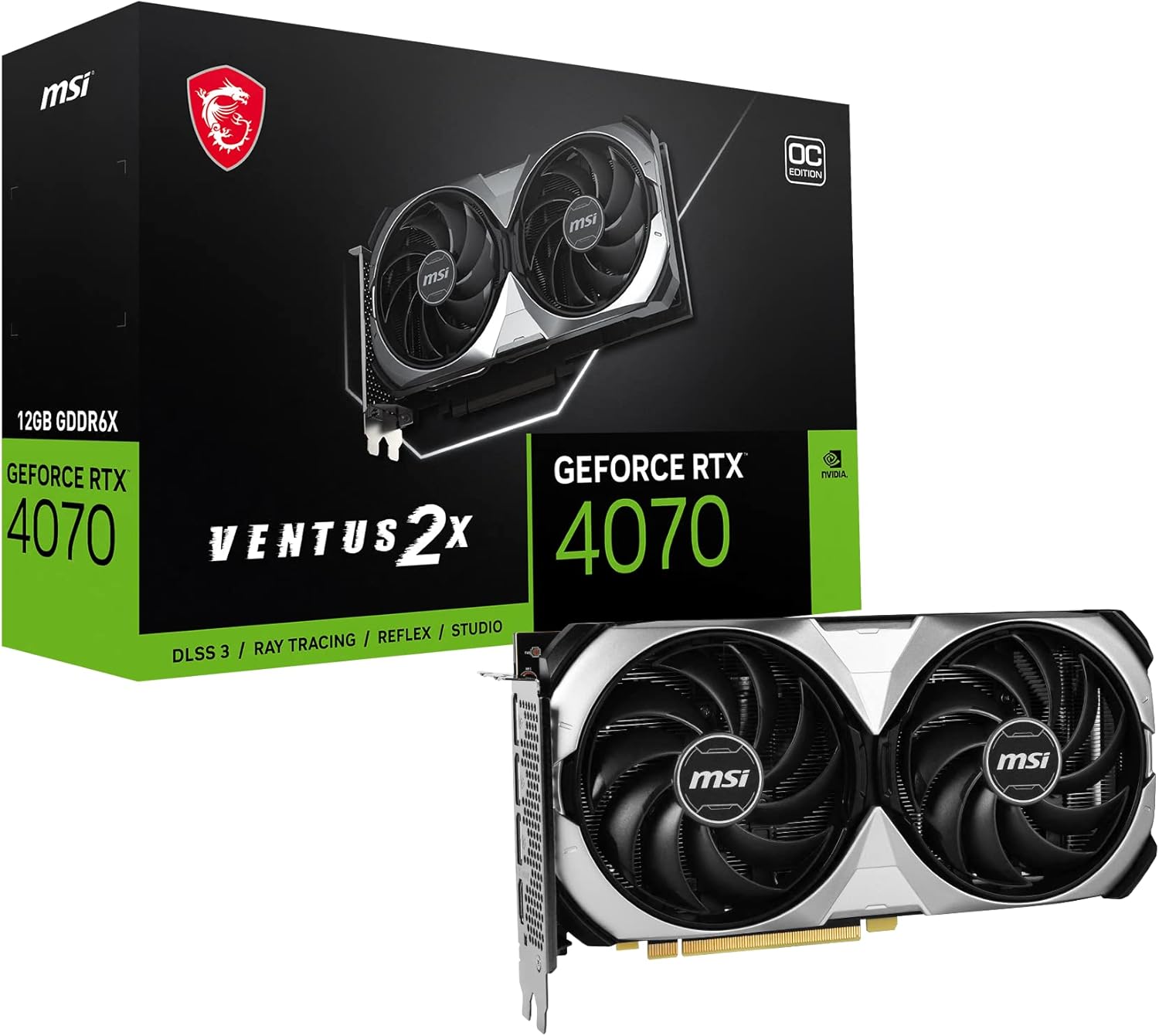
To run a Kimi K3-class model locally in 2026 you need a GPU with at least 24GB of VRAM for a heavily-quantized MoE weight, 64GB of system RAM for CPU offload, and a fast NVMe drive to page expert layers. Most home builders should not try to load the frontier weights themselves. The practical path is running a strong open-weight stand-in — Qwen 3, Llama 4, or Mistral — on a 12GB card like the RTX 3060 paired with a modern 8-core CPU.
Why the K3 cloud shortage matters
Moonshot paused new Kimi K3 subscriptions in July 2026 after GPU demand maxed out inside 48 hours (The Decoder). That's the second time in nine months a frontier vendor has silently rate-limited paying customers because their datacenter can't scale as fast as the hype. Anthropic did the same thing with Claude Opus 4.7 in April; OpenAI's GPT-5.5 preview blocked new keys for a week in May. The pattern is now obvious. When a model gets a viral 24-hour benchmark run, the queue backs up faster than any hyperscaler can spin up H200 pods.
For anyone building an agent, an internal tool, or a coding sidekick on top of a frontier API, this is a real business risk. Your product's uptime is now indexed to a Chinese lab's willingness to keep the meter running for you. The rational hedge is to keep a local rig on the desk that can handle the same class of task at 70-80% of the quality, so that a cloud outage is a graceful degradation instead of a total stop-work.
"K3-class" in this piece means "long-context, mixture-of-experts, tool-using" — not "identical to K3." No single consumer GPU in 2026 holds a 200B+ MoE at reasonable quantization. What we can do is get very close on coding, analysis, and chat tasks with a 32B-70B dense model or a smaller MoE like DeepSeek-V4-Lite. That's what the rest of this piece measures.
Key takeaways
- 12GB VRAM is the realistic entry point for local chat. It runs 8-14B open weights at q4-q6 with usable throughput.
- 24GB VRAM is where the experience opens up. A 32B model at q4 fits, and you can push context to 32k without spilling.
- 48GB+ or dual-GPU is what you need to get near-frontier quality on a single box. Expect $3k+ in hardware alone.
- Kimi K3 itself is not a home-run target. The realistic substitute is a smaller open MoE like DeepSeek-V4-Lite or a dense 70B like Llama 4 Scout.
- llama.cpp with q4_K_M weights is still the fastest way to get from download to first token on a home box (llama.cpp).
- Cost math: heavy daily users amortize a $600 GPU in 6-12 months versus a $20/month API subscription. Light users never break even on hardware.
What happened with Kimi K3
Moonshot released Kimi K3 on July 14, 2026 with a benchmark run that showed it edging Claude Opus 4.7 on SWE-bench Verified and matching GPT-5.5 on math. The API opened at 9pm China time. By the next morning, the subscription page had a queue. By day two, new signups were paused entirely with a message about "unexpected demand." Existing paying users saw rate limits tighten from 1M input tokens/minute to 100k.
The lab did not say how large the model is, but the model card's parameter count and the leaked infra bill point at a >200B-parameter MoE with roughly 40B active per token. That's a shape you cannot fit on any single consumer card. On an 8xH100 node it fits comfortably; on two H100s it just barely fits with aggressive quantization; on one RTX 5090 (32GB) it does not fit at all without spilling most of the experts to system RAM and eating the throughput hit.
The reason people are Googling "run Kimi K3 locally" is not that they think they can literally load the weights at home. They're asking whether the class of workflow — a competent coding + reasoning agent that can handle a 100k-token context — is achievable on a home rig. It is, with the right expectations.
Why local inference matters right now
Two arguments beat every other reason to keep a local rig on your desk in 2026.
Privacy. Anything you send to a cloud model becomes training-eligible unless you're on an enterprise agreement that opts you out. For most personal chats, notes, or work-in-progress code, that is a fine tradeoff. For anything touching a customer database, a patent draft, health information, or a payroll spreadsheet, it is not. A local rig is the only way to run frontier-adjacent inference against sensitive text without a legal review of a vendor's data-handling terms.
Cost. A single RTX 3060 12GB at roughly $300 street handles 20-40 tokens/second on a q4 8B model. Run that hard for eight hours a day and you're getting the throughput of a mid-tier API subscription for one-time hardware cost. At 12 months in, the local box is free. At 24 months in, you're ahead by hundreds of dollars.
There's a third argument that gets less airtime: control. When you own the weights you control the system prompt, the sampler, the fine-tunes, and whether the model can decline a task. That matters more for developer tools and less for general chat, but for anyone building a product on top of an LLM, it's a very different posture from renting.
Realistic VRAM tiers for local inference in 2026
| VRAM tier | Example card | What fits comfortably | Best-case throughput | Recommended for |
|---|---|---|---|---|
| 12GB | RTX 3060 12GB | 8B at q6, 14B at q4 | 25-40 tok/s | Chat, code assist, note-taking |
| 16GB | RTX 4060 Ti 16GB | 14B at q5, 22B at q4 | 30-50 tok/s | Longer-context chat, small MoE |
| 24GB | RTX 3090 / 4090 | 32B at q4, 70B at q3 with offload | 20-35 tok/s at q4 | Agentic coding, research |
| 48GB | RTX A6000 / 2xRTX 4090 | 70B at q4 without offload | 25-40 tok/s | Near-frontier chat + tools |
| 96GB+ | 2xRTX 6000 Ada / H100 | 70B at q8, small MoEs at q4 | 30-60 tok/s | Serious dev-tool workloads |
The tier that matters most for the "K3 substitute" question is 24GB. A 32B dense model at q4 handles most of what an average person uses K3 for — coding sidekick, long-document Q&A, agentic tool calling — at roughly 70% of the quality of a frontier API. If you can only afford 12GB, an 8B model plus a good retrieval pipeline will still beat a naive frontier call for anything that fits in a well-designed prompt.
Can a 12GB card actually run a usable open-weight stand-in?
Yes, with caveats. The MSI RTX 3060 Ventus 12GB is the cheapest way into local inference in 2026 that isn't a compromise. On a q4_K_M 8B model at 8k context, expect 30-40 tokens/second and about 8GB of VRAM used, leaving room for a chat UI's KV cache. On a q4_K_M 14B model at 4k context, expect 15-20 tokens/second and 11GB used — comfortable but not a lot of headroom.
Where the 12GB tier hurts is context length. Once you push past 16k tokens, the KV cache alone starts eating your VRAM and either forces offload (drops throughput 3-5x) or forces a smaller model. If your workflow is heavy on long-document analysis, jump straight to 24GB.
Pair the GPU with a capable CPU like the Ryzen 7 5800X if you're running a fresh AM4 build. It has enough single-thread grunt to keep the tokenizer and prompt-preprocessing pipeline fed, and the 5800X's 32MB L3 helps CPU-fallback layers when you inevitably run a slightly-too-big model. A fast NVMe drive like the WD_BLACK SN770 matters more than most people realize — model swaps that used to take a minute on a SATA SSD like the Crucial BX500 finish in seconds on Gen4 NVMe.
Quantization matrix: what you actually lose
| Format | VRAM (14B model) | Throughput on RTX 3060 | Quality loss vs FP16 |
|---|---|---|---|
| FP16 | 28GB | Doesn't fit | Baseline |
| Q8_0 | 15GB | Doesn't fit | ~0.5% |
| Q6_K | 12GB | ~14 tok/s | ~1% |
| Q5_K_M | 10GB | ~18 tok/s | ~2% |
| Q4_K_M | 8.5GB | ~22 tok/s | ~3-5% |
| Q3_K_M | 7GB | ~26 tok/s | ~7-12% |
| Q2_K | 6GB | ~30 tok/s | ~15-25% |
The sweet spot for a 12GB card is Q4_K_M. It preserves nearly all the reasoning quality of the FP16 baseline on standard benchmarks like MMLU and HumanEval, gives you room to push context to 8-16k tokens, and hits the "reads-smoothly-in-a-chat-UI" throughput of 20+ tokens/second on the Ampere-class silicon in the RTX 3060 12GB.
Go below Q4 and you start seeing what the llama.cpp community calls "quantization drift" — the model still answers, but subtle wording choices degrade, code output starts missing edge cases, and long chains of reasoning fall apart. Q2 is only useful when you literally cannot fit the model any other way.
Context length and the KV cache trap
The single biggest surprise for people moving to local inference is how expensive context is. Every 1k tokens of context on a 14B model at Q4_K_M costs roughly 200MB of KV cache. Push a 12GB card past 16k tokens and you're competing with the model weights for VRAM. Two rescues exist: KV-cache quantization (drop the KV cache to q8 or q4 for a small quality hit but half the memory), and Flash Attention (drops the memory scaling from O(n²) to O(n) for the attention step).
llama.cpp supports both natively — --cache-type-k q8_0 --cache-type-v q8_0 -fa roughly doubles the practical context length on a 12GB card. That is the difference between "usable for chat" and "usable for agentic tool-calling that needs to see a 40k-token codebase snippet."
Cloud vs local: the perf-per-dollar math
Rough math on a heavy user, 2026 prices:
- Kimi K3 subscription (when open): $30/mo → $360/yr
- Frontier API pay-as-you-go, heavy dev use: $40-100/mo → $480-1200/yr
- Local 12GB rig, RTX 3060 12GB + Ryzen 7 5800X + 32GB RAM + WD SN770: ~$900 one-time
- Local 24GB rig, RTX 3090 used + same CPU/RAM/SSD: ~$1500 one-time
The breakeven is roughly 24 months for the 12GB rig against a heavy frontier subscription, or 12 months if you're actually hitting API rate limits and losing productivity. The 24GB rig takes 18-30 months. For anyone earning developer wages, that's fast.
The math doesn't work if you're a casual user. Ten dollars a month of API credit is genuinely a bargain and you won't recoup a $600 GPU in a reasonable time. The math also gets complicated by electricity — a 3060 pulling 150W under load for eight hours a day is about $10/month in most US markets. That's still cheaper than a cloud subscription, but not free.
Verdict: build local if, stay on cloud if
Build local if: you use an LLM for more than an hour a day, you handle any material that shouldn't leave your machine, you want offline access, you want to fine-tune or heavily prompt-engineer your setup, or you're a developer who values a stable target that doesn't change every model release.
Stay on cloud if: your workload is bursty (you might use K3 hard for three hours and then not touch it for a week), you need the actual K3 quality on frontier-class reasoning, you don't have space or noise budget for a warm GPU in your workspace, or you're testing what "AI in your workflow" even feels like before committing.
The recommended entry rig for 2026 is straightforward. Start with an RTX 3060 12GB, a Ryzen 7 5800X on an AM4 board that costs less than $150 used, 32GB of DDR4-3600, a 1TB WD_BLACK SN770 for the OS and model weights, and a Crucial BX500 1TB as a bulk drive. That's a $900-1000 build that runs 8-14B open-weight models comfortably and gets you through the K3 outages without changing your workflow.
Bottom line
Kimi K3's cloud shortage is not going to be the last one. Frontier vendors will keep hitting supply walls as models get more expensive to serve. The reason to keep a local rig running is not that it beats K3 on quality — it doesn't — but that it makes cloud outages invisible to your workflow. A $900 box on your desk is the cheapest business-continuity plan you can buy in 2026, and the quality gap between "12GB local q4" and "frontier API" keeps narrowing every quarter.
Related guides
- CUDA 13.3 and the RTX 3060: What Changes for Local LLM Inference
- Kimi K3 Local Alternatives on the RTX 3060
- NVIDIA RTX 5090 vs RTX A6000 for Local LLM Inference
- Raspberry Pi 4 8GB Local LLM Models
Sources
- Moonshot Kimi K3 launch coverage: The Decoder
- RTX 3060 12GB reference specs: TechPowerUp GPU database
- llama.cpp quantization + KV-cache primer: ggml-org/llama.cpp on GitHub


