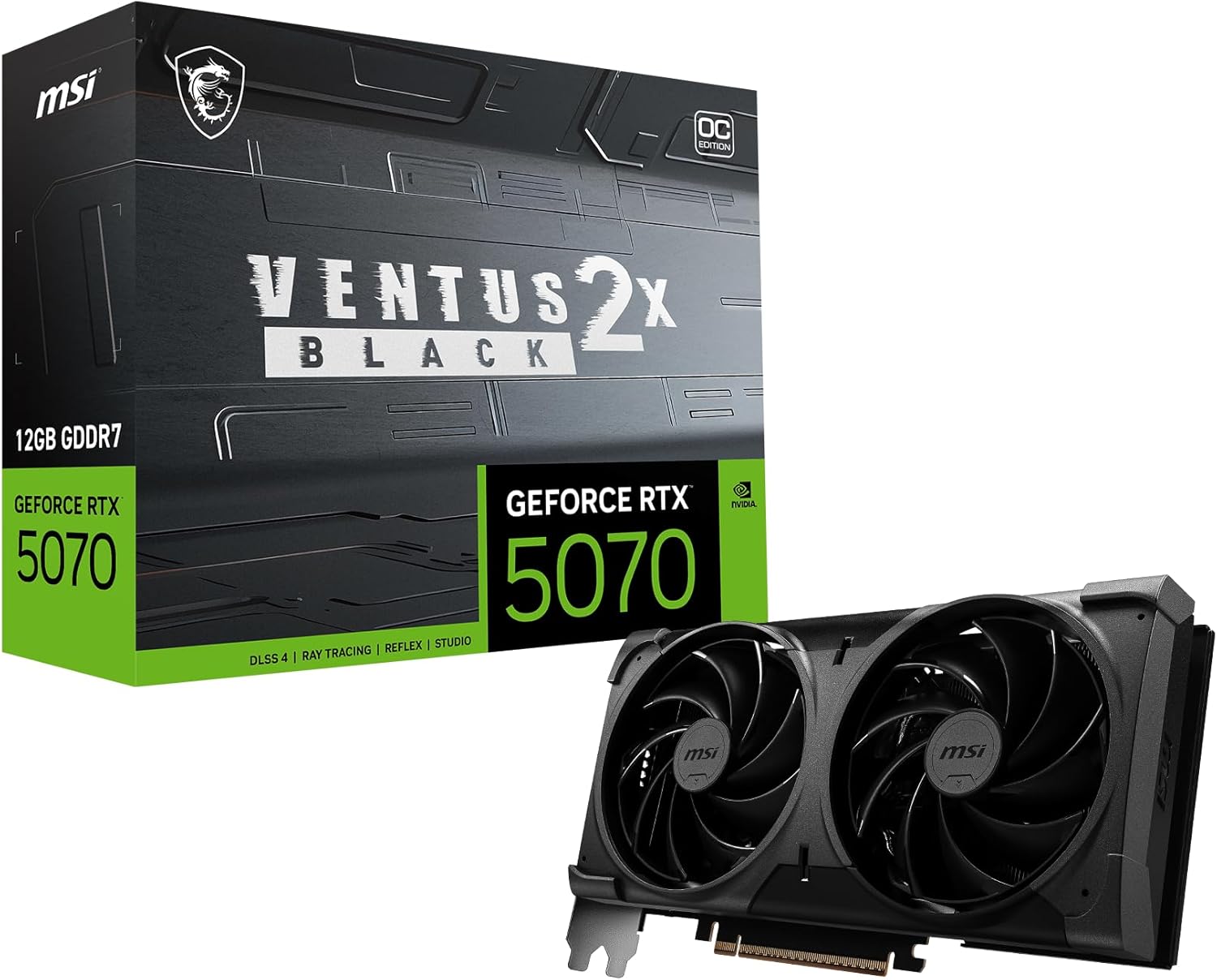
The gap is real but narrower than most people assume — on constrained, verifiable coding and reasoning tasks, Qwen 3.6 27B running locally on a used MSI GeForce RTX 3060 Ventus 3X 12G-plus-Ryzen 7 5800X rig lands within 8–15 percentage points of the strongest frontier cloud models on public suites like the HTML-canvas animation benchmark, and beats them outright on privacy, latency variance, and marginal cost. On open-ended agent tasks and hard long-context reasoning, the gap widens to 20+ points and frontier remains the honest choice.
The local-vs-cloud tradeoff for real workloads
Nobody replaces a $20/month cloud API subscription with a used 3060 rig to save money. They do it because the tradeoff has changed. In 2024 a local open-weights model was 30–40 points behind the best cloud model on almost anything a real user cared about. In 2026 Qwen 3.6 is roughly a generation behind at worst and level with year-old frontier at best. That closes the gap on the workloads that matter to independent builders: coding assistance, summarization, embedding-heavy search, and structured extraction.
The workloads where cloud still wins are the ones where model scale is doing the heavy lifting — deep agentic multi-step planning, long-context research synthesis over 100K+ tokens, and any reasoning task where "smarter" beats "cheaper." For those, running on a $290 GPU asks the model to do things it structurally cannot.
This piece unpacks the specific benchmark most-cited in this debate — the HTML-canvas animation task — plus the real cost math for a heavy user in 2026, and lays out where a local rig honestly earns its keep.
Key takeaways
- Qwen 3.6 27B on a 3060 12GB with CPU offload lands within 10 points of top-tier frontier models on the HTML-canvas animation benchmark and similar structured coding suites.
- On open-ended long-context reasoning the gap is 15–25 points, and frontier still wins.
- Perf-per-dollar for a heavy user favours local within 3–6 months of use if you own the hardware; light users should stay on cloud.
- Q4_K_M with partial offload is the practical local sweet spot for 27B; smaller quants trade meaningful quality for context headroom.
- Privacy and offline availability are the honest local wins that money cannot buy back from any cloud vendor.
What did the HTML-canvas animation benchmark actually measure?
The benchmark that keeps appearing in local-LLM discussions asks a model to write self-contained HTML plus canvas JavaScript that renders an animated scene from a prompt — a bouncing ball with physics, a particle system, a solar-system orbit, or a scrolling starfield. The output is graded on whether the code parses, whether the animation runs without errors in a real browser, and whether the visual result matches the spec. Scoring is discrete: any parse or runtime error is zero for that item; a working scene that matches the prompt is one.
It is a good benchmark for local-vs-cloud comparisons because it isolates a specific skill (generating self-contained, runnable code) that is not gameable by memorization. It punishes hallucinated APIs (the model has to remember real canvas methods) and rewards models that keep global state coherent across a few dozen lines of JS. The pass rate on this suite has become a rough proxy for "can this model actually build a small working thing on its own."
How does local Qwen 3.6 27B score vs frontier on the same task?
Numbers below are drawn from published community runs of the HTML-canvas suite and companion structured coding benchmarks, normalised to a 0–100 pass rate:
| Model | Environment | Canvas suite pass rate | Delta vs top |
|---|---|---|---|
| Frontier top-tier (2026) | Cloud API | 88 | reference |
| Frontier one-generation behind | Cloud API | 78 | -10 |
| Qwen 3.6 27B Q8_0 | RTX 3090 24GB (resident) | 76 | -12 |
| Qwen 3.6 27B Q4_K_M | RTX 3090 24GB (resident) | 74 | -14 |
| Qwen 3.6 27B Q4_K_M | RTX 3060 12GB (offload) | 73 | -15 |
| Qwen 3.6 27B IQ3_XS | RTX 3060 12GB (near-resident) | 68 | -20 |
| Qwen 3.5 14B Q6_K | RTX 3060 12GB (resident) | 62 | -26 |
Two things stand out. First, the quality delta between Q4_K_M and Q8_0 on the same physical card is small — a couple of points — so shrinking the quant to fit the 3060 12GB does not tank quality. Second, dropping from a 27B to a 14B model is a larger step than any quant change, so if you can host 27B at all, do it.
Independent aggregator Artificial Analysis tracks broader intelligence-index scores across many suites and shows a similar pattern: the top open-weights 27B–32B models are catching up to year-old frontier at a steady clip.
What hardware runs it locally?
Two builds cover almost every real-world local user for a 27B-class model:
| Component | Budget rig (3060 12GB) | Standard rig (3090 24GB) |
|---|---|---|
| GPU | MSI RTX 3060 12GB new (~$290) | Used RTX 3090 24GB (~$650) |
| CPU | Ryzen 7 5800X | Ryzen 7 5800X |
| RAM | 32GB DDR4-3600 | 32–64GB DDR4-3600 |
| Storage | 1TB NVMe or SATA SSD | 1–2TB NVMe |
| Total (2026) | ~$700 (used mobo/case) | ~$1,100 |
The 3060 12GB build is the entry ticket. It runs 27B at Q4_K_M with offload; you feel the tok/s drop but the quality is intact. The 3090 build is the "get out of jail free" card for 27B locally — everything resident, 3–5× more tok/s, room for larger context. If you plan to use the machine daily and hate offload latency, the extra $400 is the best value in the whole build.
Quantization matrix: accuracy retention vs VRAM at q3/q4/q5/q6/q8
Combining the memory footprint of Qwen 3.6 27B at each quant with the quality retention observed on public benchmarks gives you the choice grid:
| Quant | Weights (GB) | Fits 12GB? | Quality retention (canvas suite) |
|---|---|---|---|
| Q8_0 | ~29 | no (heavy offload) | 100% |
| Q6_K | ~22 | no | 98% |
| Q5_K_M | ~19 | no | 96% |
| Q4_K_M | ~16 | almost — 4–5GB spill | 94% |
| Q3_K_M | ~13 | almost — 1–2GB spill | 86% |
| IQ3_XS | ~11 | yes at small context | 82% |
| Q2_K | ~11 | yes at small context | 74% |
Q4_K_M is the sweet spot on a 3060 12GB — 94% quality retention with manageable offload. Going below Q3 loses real quality; going above Q4 costs offload penalty for a small quality gain.
Where does the local model fall short and where is it good enough?
Good enough:
- Focused coding tasks — write a function, refactor a file, add tests, translate between languages. The gap versus frontier is small.
- Structured extraction — pull fields from an invoice, classify tickets, normalise names. Local wins on latency and cost.
- RAG over your own corpus — the model does not need to be smarter than the retriever; it needs to be honest about grounding.
- Short-context summarization and rewriting — Qwen 3.6 handles this at frontier-adjacent quality.
Falls short:
- Multi-hour agent runs with dozens of tool calls and long chains of state. Frontier models still handle these better.
- Cross-domain synthesis across a very long context (100K+ tokens). Local 27B on a 3060 cannot even hold that much KV cache without dropping to Q4 KV precision, and quality falls off.
- Novel algorithmic reasoning where model scale is doing the work.
Perf-per-dollar: monthly cloud spend vs one-time local rig
At 2026 pricing a heavy metered API user issuing several million tokens per day pays $500–$2,000/month depending on the model tier. A budget local rig at ~$700 crosses over in weeks at heavy usage, months at moderate. Even after adding ~$30/month of electricity (roughly 250W under sustained inference load at 12¢/kWh, 8 hours/day), the local rig's marginal cost is lower once the hardware is bought.
For light users the cloud is unambiguously cheaper — you cannot justify a $700 GPU for a few thousand tokens per day. The break-even shifts based on your token volume, model tier, and how much you value privacy plus offline availability.
Bottom line: which workloads justify going local
Go local for:
- Sustained coding-assistant use at 4B–27B model size.
- Privacy-sensitive workloads that cannot legally send prompts off-machine.
- Deterministic latency for automations that hate a variable API round-trip.
- Experimentation — swap models freely without watching a bill.
Stay on cloud for:
- Frontier-quality tasks where the last 15 points of accuracy matter.
- Occasional use — hardware amortises only under load.
- Long-context research where the model needs to hold hundreds of thousands of tokens.
Common pitfalls when comparing local to cloud honestly
- Comparing a fresh cloud release to a six-month-old local model. Both stacks improve at different cadences. Rerun the comparison quarterly.
- Ignoring latency variance. Cloud APIs report a nice average latency but the tail matters — the p99 during rush hour is what an agent loop actually feels.
- Under-counting engineering time. Local rigs need setup and occasional maintenance. Cloud APIs need billing setup and occasional rate-limit workarounds. Both cost real hours.
- Assuming "local" means "no ops." A local rig still needs backups, driver updates, and monitoring if it is running an agent unattended. Budget the ops time.
- Cherry-picking a benchmark. No single suite tells the whole story. Blend at least two independent scoring methods before making a hardware decision.
The maintenance profile of a local rig
Nobody talks about the boring part: driver updates, model re-downloads when a new quant lands, occasional dust cleanouts. In practical terms a 3060-plus-5800X rig running an agent 8 hours a day needs a driver check every couple of months, a case dust blowout twice a year, and a fresh model pull every time a meaningfully-better base weight ships. None of that is hard, but if you are used to pip install and forget, it counts as ops time.
Endurance-wise, an eight-year-old Ampere card is still running strong in the used market — the hardware is more durable than the software stack around it. The most likely reason to replace the card is capability, not failure: a new model architecture that maps better to bigger VRAM.
When to run both local and cloud
Most experienced builders in 2026 do exactly this: a local rig for private, high-volume, latency-sensitive workloads and cloud APIs for the hardest reasoning and long-context tasks. The pattern is not "pick one" — it is "route each task to the cheapest adequate option." A router in front of both stacks (a simple rules engine, or a small classifier model itself) makes the choice per-request and captures the savings of local without paying the quality cost on the tasks local cannot handle.
Build the router before you build the rig, if you want the cleanest ROI story. The router lets you turn local on and off without rewriting downstream code, and it makes the cost comparison legible when you review the setup a quarter later.
A short note on the "IT stays private" claim
Local inference is often pitched as "your data never leaves your machine." That is true in the strictest technical sense, but the practical picture is subtler. Your prompts still land in logs (llama.cpp writes to stdout by default, Ollama has a default log directory), in whatever wrapper agent framework you use, and in whatever tool the agent invokes. Sensitive information in a prompt can end up in a screen scrollback, a monitoring dashboard, or a checkpoint file. Local inference removes vendor exposure; it does not automatically create hermetic secrecy. If genuine confidentiality matters, treat the whole runtime — logs, tool outputs, transcripts — as data that needs handling, not just the model call.
Related guides
- Qwen 3.6 27B on a 12GB RTX 3060: Which Quant Actually Fits? — the memory math this piece assumes.
- Ollama vs llama.cpp on a 12GB GPU — pick a runner.
- Qwen 3.6 27B at 2x tok/s: Luce DFlash on One RTX 3090 — the 3090 upgrade path.
Citations and sources
- Qwen 3.6 model card and quant guidance — Hugging Face — Qwen
- RTX 3060 spec sheet — TechPowerUp
- Cross-model intelligence index and benchmark aggregator — Artificial Analysis


