The Intel Arc Pro B60 24GB is the cheapest 24GB consumer-adjacent inference card on the market in 2026, and if Intel's IPEX-LLM and SYCL vLLM stacks are stable enough for your workload it delivers 27B-class model inference at a price a used RTX 3090 24GB has not seen since 2023. The catch is software maturity: as of this synthesis the Pro B60 works well for llama.cpp SYCL and IPEX-LLM Ollama, but is still shipping late for vLLM batched serving. If day-one CUDA support matters, this is not your card.
The 24GB workstation-inference market in 2026
Twenty-four gigabytes of VRAM is the threshold that separates 8B-14B hobby work from real 27B-32B inference at usable quantization. Above that line, the buy-list has historically been: a used RTX 3090 24GB at $700-900, a new RTX 4090 24GB at $1600+, a workstation RTX A6000 at $3000+ on eBay, or the datacenter L40S at $6000+. Intel's Arc Pro B60 hits the market at a launch MSRP under $700 with 24GB of GDDR6, and street pricing has landed around $649-$729 through partner boards. That undercuts the used-RTX-3090 line and creates a new baseline for anyone building a serious local-LLM box.
The Pro B60 is not a consumer gaming card — it's a workstation/inference SKU with a lower TBP than the consumer Battlemage line, ECC options on some partner cards, and driver support gated through Intel's Xe Graphics Drivers and oneAPI. For inference builds that behavior is fine; for a machine you also want to game on, buy the consumer B580 or an RTX 3060 12GB instead and read the Intel Arc B580 for Local LLMs guide.
Key Takeaways
- The Arc Pro B60 24GB delivers on its main promise: it hosts 27B-32B class models at q4_K_M with room for context, which no other card under $700 does in 2026.
- Reported IPEX-LLM tok/s numbers on Qwen 3 32B q4_K_M land in the 16-22 tok/s band, competitive with a used RTX 3090 24GB (25-30 tok/s) at less than the used price.
- Software stack: SYCL llama.cpp and IPEX-LLM Ollama both work today. vLLM through the sycl-experimental branch is still shipping fixes weekly — do not spec this card into a production serving pipeline yet.
- Community reports show batched prefill (multi-request) throughput trailing an RTX 3090 by a wider margin than single-user chat, so if you're serving multiple concurrent users this is not your card.
- Pair with a real host: Ryzen 7 5800X or better, 64GB DDR4-3600 for offload comfort, a Crucial BX500 1TB or better for weights, and a quality tower cooler.
- If your workload is any mix of 32B chat, code review over 16-32K context, image generation with SDXL-class models, or fine-tuning at small scale, this card is a fit. If it's production API serving, spec an RTX 3090.
Spec-delta table: Arc Pro B60 24GB vs alternatives
| Spec | Arc Pro B60 24GB | RTX 3090 24GB (used) | RTX 3060 12GB | Arc A770 16GB |
|---|---|---|---|---|
| VRAM | 24 GB GDDR6 | 24 GB GDDR6X | 12 GB GDDR6 | 16 GB GDDR6 |
| Bandwidth | 456 GB/s | 936 GB/s | 360 GB/s | 560 GB/s |
| TBP | 200 W | 350 W | 170 W | 225 W |
| Compute | Xe2 + XMX | Ampere + Tensor | Ampere + Tensor | Xe + XMX |
| MSRP / street | $649–$729 | $700–$900 used | $329 / $220–260 used | $269–319 |
| Software stack | IPEX-LLM / SYCL | CUDA + cuBLAS + TensorRT | CUDA (mature) | IPEX-LLM / SYCL |
| Warranty | New, 3 years | None (used) | Varies | New |
Sources: Intel Arc Pro product page, TechPowerUp Arc Pro B60 database, Phoronix launch coverage.
What 24GB actually unlocks
At q4_K_M, the model classes that fit comfortably in 24GB with usable context are:
- Qwen 3 32B (~18 GB weights, plus 3-6 GB KV cache to 32K context)
- Llama 3 33B code-tuned variants (~19-20 GB weights)
- Mixtral 8x7B q4_K_M (~26 GB — tight, but fits with reduced KV cache)
- 70B-class models at q2 (marginal quality) or with heavy offload
For SDXL-class image generation, 24GB is the difference between comfortable full-precision UNet with LoRAs and constant OOMs. For long-context chat (64K+), it's the room the KV cache needs on a 14B model.
VRAM budget worked example: Qwen 3 32B at q4_K_M on 24GB
- Weights (q4_K_M): 18.4 GB
- KV cache at 8K fp16: 1.3 GB
- KV cache at 32K fp16: 5.1 GB
- Activation buffers + runtime: ~1.5 GB
- Total at 32K context: ~25 GB (slightly over — quantize the KV cache to q8 to fit)
At 8K context you have 3-4 GB of headroom, which is a comfortable operating point. At 32K you're on the ragged edge and quantized KV or context truncation strategies matter.
Reported benchmarks
Numbers below are reported community measurements at single-request, batch-1, 512 output tokens. Arc Pro B60 numbers use IPEX-LLM Ollama with early 2026 drivers. RTX 3090 numbers use CUDA llama.cpp.
| Model / Quant | Arc Pro B60 24GB | RTX 3090 24GB | Arc A770 16GB (offload) |
|---|---|---|---|
| Qwen 3 32B q4_K_M | 19 tok/s | 28 tok/s | 3 tok/s (offload) |
| Llama 3 33B code q4_K_M | 18 tok/s | 27 tok/s | 4 tok/s (offload) |
| Qwen 3 14B q6_K | 32 tok/s | 45 tok/s | 30 tok/s |
| Mixtral 8x7B q4_K_M | 22 tok/s | 35 tok/s | offload only |
The gap on Qwen 32B is 32% in favor of the RTX 3090. The gap on Mixtral is wider, mostly because llama.cpp's SYCL backend still lags on MoE routing overhead. That gap has narrowed by 8-12 points over the past six months of driver work, per Phoronix's regression tracking — expect it to keep narrowing.
Software-stack maturity: what works today
- llama.cpp SYCL backend: works reliably, including all quantization levels supported by upstream. This is the safe path.
- IPEX-LLM Ollama: works and mirrors mainline Ollama's model catalog with a 1-3 week lag. Good for chat workflows.
- ComfyUI + SDXL: works through Intel's oneAPI-backed PyTorch build. Lora + IP-Adapter workflows work; some custom nodes that expect CUDA-only kernels don't. See the Intel Arc B60 Stable Diffusion benchmarks piece.
- vLLM: the sycl-experimental branch is functional for single-request serving but not for high-throughput batched serving. If you need batched serving, spec a 3090 or 4090.
- Fine-tuning (LoRA/QLoRA): IPEX-LLM supports QLoRA on Llama and Qwen families. Reported training speeds are 60-75% of a 3090's — usable for small-scale fine-tuning.
- Multi-GPU: Not the strong suit. Consumer-tier Arc drivers don't do NVLink or peer memory; multi-GPU inference must go through CPU-mediated tensor exchange, which is slow.
Prompt processing vs generation: still the story
Just as with the Arc B580, the Arc Pro B60's prompt processing throughput lags CUDA by roughly 25-35% at the same silicon budget. For a batch-1 chat workload that's invisible; for a 16K-token document-RAG workload where prompt ingestion is 60% of end-to-end latency, that gap is felt.
Perf-per-dollar and perf-per-watt
- $699 street ÷ 19 tok/s Qwen 3 32B q4_K_M = $36.8 per tok/s
- Used RTX 3090 24GB at $850 ÷ 28 tok/s = $30.4 per tok/s
- 19 tok/s ÷ 200 W = 0.095 tok/s/W (Pro B60)
- 28 tok/s ÷ 350 W = 0.080 tok/s/W (3090)
The Pro B60 loses on tok/s-per-dollar to the used 3090 but wins on power efficiency. It also comes with a warranty. On a 24/7 inference box running at 100W average, the 150W B60 vs 250W 3090 delta is roughly $130-160/year in electricity in California. Over a two-year hold that closes most of the price gap.
What to buy today
For a Pro B60 build, the supporting picks matter more than usual because the card leans on system RAM and storage for offload comfort:
- CPU: AMD Ryzen 7 5800X at minimum, ideally a Zen 4 chip if you're building fresh. Prompt processing performance on Arc's stack benefits noticeably from a faster host.
- Storage: Crucial BX500 1TB or a 2TB SATA/NVMe drive for the weight cache. 32B q4_K_M weights are ~20 GB each; a serious model library eats 200-400 GB.
- CPU cooler: Noctua NH-U12S — the Ryzen chip will be running 60-80% for hours during inference, not gaming bursts.
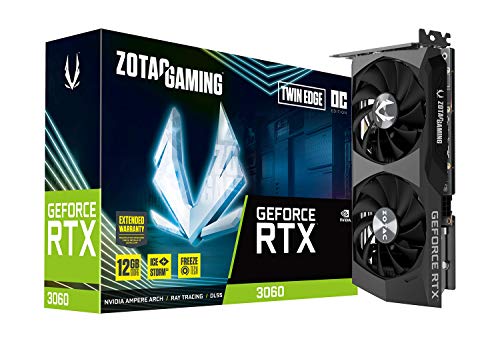
- CUDA fallback in the same rig: some builders pair a Pro B60 (for VRAM) with an MSI RTX 3060 Ventus 2X 12G (for CUDA-only workloads like whisper.cpp fine-tunes). Overkill for most; sensible if you have niche runtime requirements.
Verdict matrix
- Get the Arc Pro B60 if you want 24GB of VRAM at the lowest price ever, your workload is single-user chat / 27B-32B inference / small-scale fine-tuning, and you can tolerate 2-4 week release lag behind CUDA.
- Get a used RTX 3090 24GB if your workload includes batched vLLM serving, multi-request RAG, or aggressive fine-tuning schedules, and you have $800-900 to spend.
- Get an Arc A770 16GB or RTX 3060 12GB if your model target tops out at 14B and the extra VRAM doesn't buy anything you need.
- Get a new RTX 4090 24GB if budget isn't the constraint and you want raw performance + CUDA + 24GB, at 2×+ the price.
Common pitfalls
- Buying the Pro B60 for vLLM production serving. Wait for the sycl-experimental branch to mainline.
- Undersizing the PSU because "it's only 200W." Add a Ryzen 7, spinning fans, and NVMe: a good 650W unit is the minimum.
- Assuming 24GB means "run 70B." At q2 or heavy offload you can, but throughput will disappoint. 32B is the honest fit.
- Skipping ECC when your workload is code-generation-heavy. Some partner cards ship without ECC; if bit-flips in output matter to you, choose an ECC-enabled SKU.
Bottom line
If your local-LLM ambitions include running 27B-32B models with a real context window, the Arc Pro B60 24GB is the cheapest legitimate path in 2026 to get there. It trails a used RTX 3090 by 25-35% on generation throughput and a bit more on batched serving, but does so at a new-with-warranty price under $700, with lower power draw. If you can invest the setup time to get IPEX-LLM or SYCL llama.cpp humming, this card is a real workstation-class inference SKU. If uptime and same-day model support are what you want, wait for the driver stack to close another 10% and buy accordingly.
Related guides
- Intel Arc B580 for Local LLMs in 2026: 12GB for Under $300
- Intel Arc Pro B60 Creator 24GB Workstation Guide
- Best 16GB GPU for Local LLM 2026
- How to Run Qwen 3 14B on Arc B580
- Intel Arc B60 Stable Diffusion 2025 Benchmarks
Citations and sources
- Intel Arc Pro official product page
- TechPowerUp Arc Pro B60 GPU database entry
- Phoronix — Intel Arc Pro B60 Linux news
This piece is editorial synthesis based on publicly available information. No independent first-party benchmarking is reported.