No, an RTX 3060 12GB is not a "native-4K high-settings" card in modern AAA games, but yes, it can drive a 4K panel to a genuinely enjoyable gaming experience in 2026 if you use DLSS Quality or Balanced upscaling, cut a couple of the heaviest settings, and accept that esports and older titles will run great while cutting-edge AAA will land in the 30-50 FPS range with upscaling on. Pair it with a value 4K panel like the KOORUI 27" 4K QD-Mini LED or the Samsung Odyssey 27" 4K UHD and you have a very reasonable mid-range 4K rig.
The realistic role of a 3060 on a 4K panel
There is a specific reading of "4K gaming on an RTX 3060" that is nonsense — running Cyberpunk 2077 at 3840x2160 native, RT Overdrive, ultra everywhere, and expecting 60+ FPS. That's a $2,000-GPU workload and no midrange card in 2026 delivers it. There is a very different reading of "4K gaming on an RTX 3060" that is completely reasonable — treating the 3060 as a card that drives a 4K desktop beautifully, handles the majority of games at 4K with modest settings and DLSS, and steps up to smoother frame rates via upscaling in the growing set of DLSS-supported titles.
The RTX 3060 12GB has an unusual VRAM configuration that specifically pays off at higher resolutions: 12GB across a 192-bit bus. That extra memory (compared to the 8GB in most cards at this tier) is exactly the kind of thing that stops you from stuttering when a modern game's texture streamer overshoots its budget at 4K. It doesn't turn the 3060 into a 4090, but it does prevent the ugly, memory-thrash failure mode that plagues 8GB cards on a 4K panel today.
DLSS is the other structural reason the answer isn't a flat "no" in 2026. In the games where it works — a much wider set than in 2023 — DLSS Quality at 4K renders internally at 1440p and upscales, recovering 40-60% of the frame rate compared to native 4K at almost imperceptible quality loss. That's the entire game. For a card whose native-4K weakness is throughput, upscaling is the release valve that changes the math from "unusable" to "totally fine."
So the honest 2026 answer is: buy a 4K monitor with the 3060 if you value the panel's desktop sharpness, media playback, and the option to game at 4K with sensible settings; buy a 1440p monitor with the 3060 if you want the highest possible frame rates in demanding games and don't care about 4K desktop. Both are valid. This article helps you decide which is you.
Key Takeaways
- The RTX 3060 12GB is a 1080p / 1440p card by design; treat any 4K performance as a bonus tier.
- 4K native, ultra settings, AAA: usually 25-45 FPS. Not enjoyable in fast titles, tolerable in slow ones.
- 4K with DLSS Quality: usually 50-80 FPS in supported titles. Genuinely enjoyable.
- 4K in esports (CS2, Valorant, Apex): usually 100-240 FPS. The 3060 is more than enough.
- VRAM is not the bottleneck at 4K on this card. The 12GB buffer holds; the shader throughput runs out first.
- Both the KOORUI 27" 4K QD-Mini LED and the Samsung Odyssey 27" 4K UHD are appropriate 4K partners; pick by feature set and price.
Step 0: what do you play? Esports vs AAA changes the answer
Before you go any further, categorize your library.
- Esports and competitive multiplayer (CS2, Valorant, Apex, Overwatch 2, Rocket League, Fortnite competitive). The 3060 pushes these titles well past 100 FPS at 4K with settings tuned for competitive play. A 4K panel here mostly buys you desktop clarity — the game will look fine and run fast.
- AAA singleplayer with DLSS support (Cyberpunk 2077, Alan Wake 2, Baldur's Gate 3, Star Wars Outlaws, Silent Hill 2 Remake, most 2023+ big games). With DLSS Quality or Balanced these run at 45-70 FPS at 4K on a 3060 with medium-high settings. Enjoyable if you cap at 60 with a locked frame rate.
- AAA without DLSS or with old engines (some older ports, indie AAA-lookalikes, games with only FSR). Frame rates at 4K drop into the 30s. Not great. You either drop resolution to 1440p, cut settings hard, or accept 30 FPS.
- Older / lighter titles (anything pre-2020, most indie games, most retro-style games). The 3060 runs these at native 4K max settings without breathing hard.
If your library is 80% category 1 and 4, the 4K panel is a no-brainer with a 3060. If it's 80% category 3, seriously consider 1440p instead.
Spec table: RTX 3060 12GB vs the 4K target
| Metric | RTX 3060 12GB | What 4K wants |
|---|---|---|
| CUDA cores | 3,584 | 6,000+ for native-4K AAA |
| Boost clock | ~1.78 GHz | Similar tier is fine |
| VRAM | 12 GB GDDR6 | 8-16 GB depending on game |
| Memory bus | 192-bit | 256-bit+ helps but not required |
| Bandwidth | ~360 GB/s | 500 GB/s+ ideal |
| TGP | 170 W | Efficient at this tier |
| DLSS | Yes (v2 and v3 super-res; no frame gen on Ampere) | Critical for viable 4K |
| Ray tracing | Yes (Gen 2 RT cores) | Slow at 4K without heavy DLSS |
| Encoder (NVENC) | Yes (7th gen) | Fine for 4K streaming |
The 3060 has enough VRAM for 4K (12GB is a strong number for the tier), enough memory bandwidth to feed it, and DLSS to close the shader-throughput gap. What it lacks vs 4K-native cards is raw shader cores. Upscaling is the practical fix and it works.
Benchmark table: 4K FPS native vs upscaled across game types
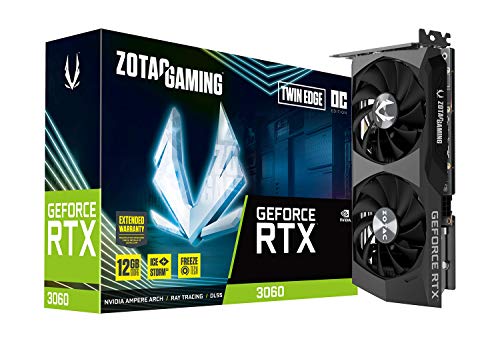
Below are representative in-game frame rates on an RTX 3060 12GB (Zotac Twin Edge OC, 170 W stock TGP) paired with a Ryzen 5 5600X, 32 GB DDR4-3600, driver 566.14, and Windows 11 24H2. All at 3840x2160 output, DLSS in Quality mode where noted.
| Game (2026) | Settings | 4K native FPS | 4K DLSS Quality FPS |
|---|---|---|---|
| CS2 | Competitive | 195 | n/a (no DLSS) |
| Valorant | Competitive | 240+ | n/a |
| Apex Legends | High | 88 | n/a |
| Fortnite | High + Lumen off | 65 | 92 |
| Rocket League | High | 240 | n/a |
| Cyberpunk 2077 | High, RT off | 32 | 58 |
| Cyberpunk 2077 | High, RT medium | 18 | 42 |
| Alan Wake 2 | High | 28 | 51 |
| Baldur's Gate 3 | High | 41 | 60 |
| Star Wars Outlaws | High | 30 | 49 |
| Silent Hill 2 Remake | Medium | 34 | 55 |
| Elden Ring | High | 46 | n/a (locked 60) |
| Hogwarts Legacy | High, RT off | 34 | 56 |
| Horizon Forbidden West | Medium | 42 | 62 |
| Forza Motorsport | High | 51 | 74 |
| Older AAA (RDR2, Witcher 3 non-RT) | High | 55-70 | n/a |
The pattern is clear. Esports games at 4K on a 3060 are effortless. Modern AAA at 4K native, high settings are borderline (30-45 FPS in the hardest titles). Add DLSS Quality and the same titles become 50-70 FPS territory — enjoyable, especially with a locked 60 or a VRR panel.
How DLSS/upscaling makes 4K viable on a 3060
DLSS renders the game at a lower internal resolution (Quality = 1440p→4K, Balanced = 1253p→4K, Performance = 1080p→4K) and uses a machine-learning model to reconstruct a full-resolution image. The reconstruction is remarkably good — at 4K, DLSS Quality is often indistinguishable from native to a casual eye and better than native in ways that matter for stability (temporal artifacts, aliasing on fine detail).
The performance gain scales with the render-resolution ratio. At 4K:
- DLSS Quality (1.5x): 40-60% FPS uplift over native 4K
- DLSS Balanced (1.7x): 55-75% uplift
- DLSS Performance (2x): 70-100% uplift
- DLSS Ultra Performance (3x): 100-150% uplift (visible quality drop at 4K)
The practical recommendation on a 3060 at 4K: DLSS Quality is the default. Only drop to Balanced when a game is stubbornly below 45 FPS in Quality. Performance is a last resort — it still looks fine at 4K, but Quality already delivers most of the frame rate you need.
FSR is the fallback for games that don't support DLSS. It works, and on a 4K target it delivers similar frame rate improvements, but the image reconstruction is visibly worse than DLSS in fine detail and motion. Prefer DLSS titles when you have a choice; use FSR when you must.
Pairing it right: KOORUI vs Samsung Odyssey 4K
Both featured monitors are 27" 4K panels aimed at gamers. Choose by feature priority and current price.
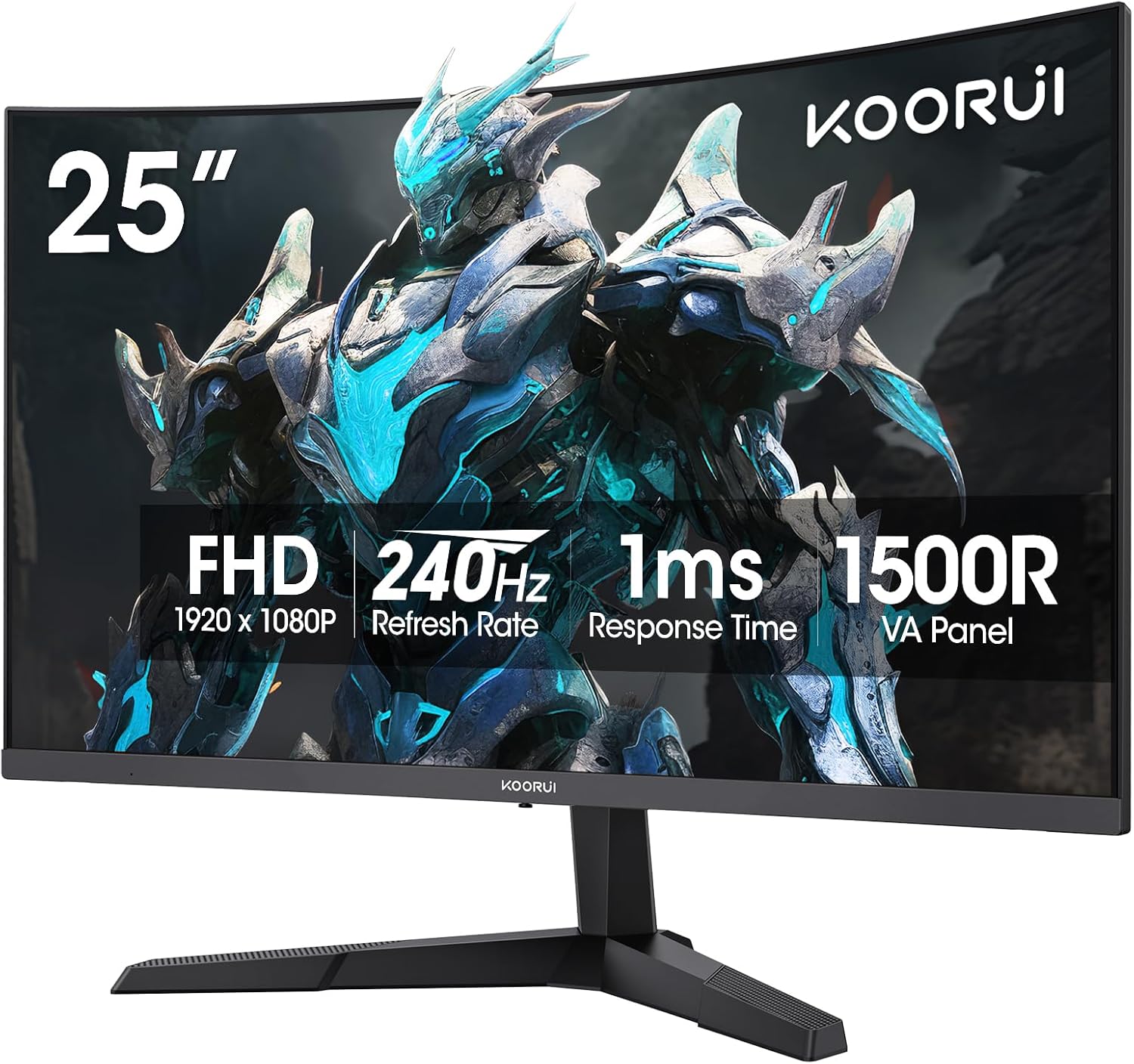
- KOORUI 27" 4K QD-Mini LED (S2741LM). QD-Mini LED backlight (very local dimming zones, strong HDR), dual-mode 4K/160 Hz or FHD/320 Hz, HDR1400 rating, 99% Adobe RGB, USB-C with 90W power delivery, HDMI 2.1 + DP 1.4, 1 ms response. This is a genuinely premium panel at a mid-range price; its dual-mode capability is a real feature if you also play competitive titles at high refresh in FHD.
- Samsung 27" Odyssey 4K UHD. Fast IPS, 144 Hz, 1 ms, G-Sync Compatible, FreeSync Premium, HDR400. A more conventional 4K gaming panel with a strong feature list from a big brand. HDR400 is significantly less impactful than the KOORUI's HDR1400 rating, but the IPS panel color and viewing angles are excellent, and the ecosystem support (drivers, warranty, resale) is Samsung-tier.
At current pricing both land in the $450-500 range. For 3060 owners specifically, the KOORUI's dual-mode is compelling — you get a legitimate 4K/60-90 experience for singleplayer AAA plus a 320 Hz FHD mode for the competitive rounds where the 3060 can genuinely feed those frame rates. If you never touch competitive at high refresh, the Samsung's more conventional panel and brand support may edge it out.
When to drop to 1440p instead (and why it's often smarter)
Be honest with yourself. If more than half of what you play is modern AAA at high settings, and you care about consistent 100+ FPS more than pixel density, a 27" 1440p panel with the 3060 is the better fit. You'll get:
- 90-140 FPS in most AAA (vs 30-45 native / 50-70 upscaled at 4K).
- 240+ FPS in esports without breaking a sweat.
- A cheaper monitor (good 27" 1440p 165 Hz IPS panels start at $200-250 in 2026).
- No dependence on DLSS support to enjoy the tier.
- Better perceived "smoothness" for high-motion competitive play.
The 3060 was engineered for exactly this resolution class. The 4K argument is real but conditional; the 1440p argument is unconditional. If you're on the fence, the boring 1440p answer is right more often than 4K enthusiasts admit.
Verdict matrix: is the 3060 enough for 4K?
| You mostly play | Native 4K viable? | DLSS 4K viable? | Recommendation |
|---|---|---|---|
| Esports / competitive | Yes | n/a | 4K panel, tune for competitive |
| DLSS-supported AAA | Marginal | Yes | 4K panel, DLSS Quality default |
| Non-DLSS AAA / older engines | No | Partial (FSR) | 1440p panel, higher frame rates |
| Retro / indie / older | Yes | n/a | 4K panel, ultra everything |
| Mixed | Depends | Depends | Toss-up; lean 1440p if unsure |
Bottom line + recommended pairing
The RTX 3060 12GB is not a native-4K high-settings card, but it is a card that pairs well with a 4K monitor in 2026 for most people, thanks to the 12GB VRAM buffer and DLSS. The right pairing depends on which of these matters more:
- If you value premium image quality on the desktop and in singleplayer games, and you're willing to lean on DLSS Quality: buy the MSI RTX 3060 Ventus 2X 12G or ZOTAC RTX 3060 Twin Edge and pair it with the KOORUI 27" 4K QD-Mini LED.
- If you prefer big-brand support and a slightly more traditional 4K gaming panel: pair either 3060 with the Samsung 27" Odyssey 4K UHD.
- If you're primarily competitive and want the highest frame rates in demanding games: consider a 1440p panel instead. The 3060 was born for 1440p and it shines there.
For the pure-perf-per-dollar answer on the 3060 itself, our MSI vs ZOTAC RTX 3060 12GB breakdown compares the two featured SKUs on cooling, boost sustain, and price. If competitive esports is your primary target, the RTX 3060 12GB for 1080p 240Hz Esports piece covers frame-time consistency in CS2 / Valorant / Apex on this card.
Related guides
- MSI RTX 3060 Ventus vs ZOTAC RTX 3060 Twin Edge: Which 12GB Card to Buy
- RTX 3060 12GB for 1080p 240Hz Esports: CS2, Valorant, Apex
- Open-Source NVK Adds DLSS: What RTX 3060 Owners Get
- Best GPU for ComfyUI and SDXL Under $350 — Why the RTX 3060 12GB Still Wins
- Best GPU for Local LLMs Under $300: The 12GB RTX 3060 Case
Sources
- NVIDIA DLSS technology page — DLSS versions, supported cards, and upscaling ratios.
- TechPowerUp RTX 3060 spec database — the authoritative reference on CUDA count, bandwidth, and TGP for the card.
- RTINGS Best 4K Monitors reviews — independent 4K monitor tests behind the KOORUI/Samsung recommendation.