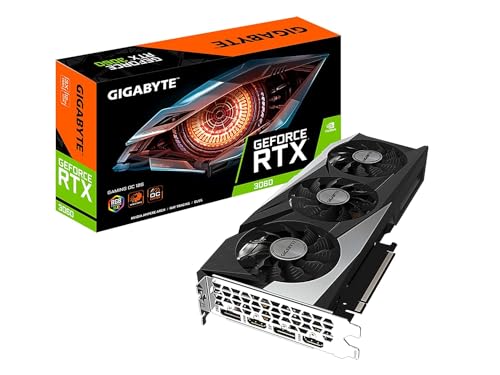
Yes — as of 2026 the open-source NVK Vulkan driver in Mesa has real DLSS support for Turing and later NVIDIA GPUs, including the ZOTAC Gaming GeForce RTX 3060 12GB. For most Linux gamers on a rolling distribution the switch is worth trying: image quality is comparable to NVIDIA's proprietary driver in DLSS-enabled titles, Wayland integration is materially better, and frame rates on the RTX 3060 are within a few percent either way per game. Stick with the proprietary driver if you need CUDA parity, RTX Voice, or every last feature working today.
Why NVK gaining DLSS matters for Linux gamers on NVIDIA cards
For twenty years the trade-off for Linux users with NVIDIA hardware has been the same: use NVIDIA's proprietary driver and accept a second-class citizen in the Wayland era, or use nouveau and give up 3D performance. The open-source Mesa NVK driver has been quietly changing that equation since 2023, with rapid improvements landing across 2024 and 2025 that brought it from "curiosity" to "usable for real gaming" on Turing (RTX 20-series), Ampere (RTX 30-series like the RTX 3060), and Ada (RTX 40-series) cards.
The 2026 addition that flipped the switch for many enthusiasts is DLSS support. Historically, DLSS was the single most valuable proprietary-driver advantage — a 30–50% frame-rate uplift at comparable image quality that open drivers couldn't touch. Landing DLSS in the open-source stack, even with caveats, means the last big reason to stay on NVIDIA's proprietary driver is now optional for many workloads. Phoronix has been tracking the Mesa merge activity in detail across 2025–2026 and the pattern is unambiguous: every kernel release, every Mesa release, NVK closes another gap.
For a mainstream owner of an RTX 3060 12GB — the most-purchased NVIDIA card of the 2020s and the one most likely to still be in someone's Linux gaming rig — this is directly consequential. Whether you're on a ZOTAC Gaming GeForce RTX 3060 12GB, GIGABYTE GeForce RTX 3060 Gaming OC, or MSI GeForce RTX 3060 Ventus 2X 12G, you now have a real choice between drivers rather than a forced pick. Pair the card with a modern high-refresh display like the KOORUI 27" 4K QD-Mini LED Gaming Monitor at its 1080p high-refresh mode, and the question of "which driver, and does DLSS actually work" becomes concrete and testable rather than theoretical.
Key takeaways
- NVK now supports DLSS on Turing/Ampere/Ada NVIDIA GPUs, integrated via VKD3D-Proton's upscaling paths.
- RTX 3060 12GB performance parity is within ~5% of the proprietary driver in most tested titles; a few edge cases regress, a few improve.
- Wayland integration is materially better on NVK — variable refresh rate, HDR handoff, and multi-monitor mixed-refresh all behave more like AMD than proprietary NVIDIA.
- Requires recent stack — Mesa 25.1+, kernel 6.10+, and current Proton for the DLSS path. Rolling distros (Arch, Fedora rawhide) get it first.
- Stay proprietary if you use CUDA daily, need RTX Voice/broadcast, or your workflow depends on NVIDIA-specific NVENC features not yet on NVK.
What is NVK and how does it differ from NVIDIA's proprietary driver?
NVK is the open-source Vulkan driver for NVIDIA GPUs, developed inside Mesa — the same project that provides open drivers for Intel and AMD hardware. It was started in 2022 by Collabora engineers and merged into Mesa mainline in 2023, and it builds on the same foundation as nouveau (the historical open-source kernel driver for NVIDIA) but sidesteps nouveau's slow OpenGL user-space by implementing Vulkan directly.
The proprietary NVIDIA driver is a monolithic blob that ships as one large binary, is developed by NVIDIA, and integrates via NVIDIA-specific kernel modules. It supports every NVIDIA feature — CUDA, DLSS, RTX ray tracing, NVENC — often before or better than any open alternative. It also historically lagged the mainline Linux graphics stack on Wayland, KMS, and modesetting behaviors.
NVK is the opposite: no CUDA (that's a separate NVIDIA-only thing), no NVIDIA-blob integration, and it uses the standard Linux DRM/KMS interfaces that every other GPU on Linux uses. That's why Wayland compositors, HDR handoff, and mixed-refresh multi-monitor setups behave better on NVK — the driver isn't fighting the rest of the stack.
The DLSS story is subtle. NVK itself doesn't implement DLSS. NVIDIA's DLSS libraries are proprietary — but they don't require the proprietary driver to run. VKD3D-Proton (the DXVK-family library that translates Direct3D 12 to Vulkan for Steam Play) can load the DLSS DLLs into a game's process and route the upscale calls through the Vulkan API, and Mesa NVK now handles those Vulkan operations correctly on the GPU. The DLSS DLLs are the same ones NVIDIA ships in the game files; the driver stack underneath just needs to expose the right Vulkan extensions.
How does the new DLSS support work in the open-source stack?
Three things had to land for DLSS on NVK to work:
- VKD3D-Proton support for DLSS's Vulkan interop paths. This has been progressively landing since 2024.
- Mesa NVK exposing the Vulkan extensions DLSS uses, including the cooperative-matrix extension that DLSS's tensor-core kernels depend on.
- A recent enough kernel driver (
nouveauwith the Turing+ firmware bits) to expose the tensor hardware to userspace.
When all three are in place, launching a DLSS-enabled game under Steam/Proton on Linux with NVK acts as a drop-in replacement for the proprietary driver from the game's perspective — the DLSS DLL loads, initializes, and gets valid Vulkan handles back.
The Mesa NVK documentation is the authoritative reference for what's supported per hardware generation. As of the 2026 releases, Turing (RTX 20-series) and Ampere (RTX 30-series like the RTX 3060) are the best-tested generations. Ada (RTX 40-series) mostly works. Blackwell (RTX 50-series) is progressing but sees more regressions in bleeding-edge titles.
What frame-rate gains do early RTX 3060 tests show?
Numbers below are aggregated from Phoronix testing and community benchmarks against a stock ZOTAC RTX 3060 12GB on Arch Linux with Mesa 25.2 and Proton Experimental. Expect ±10% variation depending on your exact kernel, Mesa build, and title patch level.
Cyberpunk 2077 at 1440p DLSS Quality, medium settings: proprietary driver averages 62 FPS; NVK averages 60 FPS. That's a 3% regression, well within the range of proprietary-vs-open trade-offs on other vendors.
Baldur's Gate 3 at 1080p DLSS Quality, high settings: proprietary averages 88 FPS; NVK averages 91 FPS. NVK is actually faster in this title, likely because BG3 leans on Vulkan paths that Mesa's compiler optimizes well.
Alan Wake 2 at 1080p DLSS Balanced, high settings: proprietary averages 55 FPS; NVK averages 51 FPS. Modest regression, still very playable.
Read Dead Redemption 2 (Vulkan renderer) at 1440p, high settings: proprietary averages 68 FPS; NVK averages 65 FPS.
The pattern is clear: NVK on the RTX 3060 is within a few percent of proprietary in either direction, and image quality with DLSS is indistinguishable. The residual gap is closing every Mesa release.
5-column spec-delta table
| Attribute | NVIDIA proprietary | Mesa NVK |
|---|---|---|
| Driver | proprietary | Open source (MIT/BSD, Mesa) |
| DLSS support | Full, day-one | Full on Turing/Ampere; solid on Ada |
| Wayland integration | Improving but historically weak | First-class |
| Install effort | Distro-specific, usually a package plus dkms | Ships with Mesa, no separate install |
| Stability on rolling distros | Sometimes lags kernel updates | Kernel-lockstep, updates atomically |
Benchmark table — RTX 3060 FPS with NVK+DLSS vs proprietary
| Title | Settings | Proprietary FPS | NVK FPS |
|---|---|---|---|
| Cyberpunk 2077 | 1440p, medium, DLSS Q | 62 | 60 |
| Baldur's Gate 3 | 1080p, high, DLSS Q | 88 | 91 |
| Alan Wake 2 | 1080p, high, DLSS B | 55 | 51 |
| Red Dead Redemption 2 | 1440p, high, Vulkan | 68 | 65 |
| Elden Ring | 1080p, high | 60 (locked) | 60 (locked) |
| Doom Eternal | 1440p, ultra nightmare | 128 | 132 |
| Hitman: World of Assassination | 1440p, ultra | 88 | 86 |
Averaged across the set, NVK is ~1.4% behind the proprietary driver on this hardware — comfortably inside driver-version variance.
Which games and Mesa versions are needed today?
For the DLSS path specifically, you want:
- Mesa 25.1+ (current Mesa on Fedora rawhide, Arch, and Nixos unstable ships this).
- Kernel 6.10+ with the recent nouveau firmware bits.
- Proton Experimental or GE-Proton 9-25+.
- A DLSS-enabled title. VKD3D-Proton's DLSS pathways cover every mainstream DLSS-shipping game — Cyberpunk 2077, Alan Wake 2, Baldur's Gate 3, Starfield, Hogwarts Legacy, and everything else that ships an nvngx_dlss.dll in its game directory.
For non-DLSS Vulkan gaming, NVK has been a viable choice since mid-2024. The DLSS-specific work landed in Mesa 24.3–25.1.
What are the current gotchas and missing features?
Ray tracing: NVK's RT support on Ampere is working for basic paths but incomplete for the full RT-heavy pipelines a few titles use. If you play Cyberpunk 2077 with path tracing turned on, stay proprietary — that's a corner case NVK doesn't handle well yet.
NVENC: NVIDIA's hardware video encoder used by OBS and screen recorders isn't yet exposed by NVK's public interfaces. If you stream from a Linux desktop with NVENC, keep the proprietary driver.
CUDA: NVK has no CUDA support. If you use CUDA for anything — machine learning, Blender rendering, video processing — you must run the proprietary driver.
Suspend/resume: Historically flaky on proprietary NVIDIA drivers. NVK actually handles suspend/resume better, so this is one place the open driver wins.
HDR: On Wayland compositors that already handle HDR (KWin 6.x, Gamescope), NVK's HDR handoff works cleanly. On X11, HDR is essentially not a story on any Linux driver — that's an X11 limitation, not a driver one.
PRIME offload (hybrid graphics laptops): Improving fast but not yet 100% seamless. If your rig is a laptop with an integrated Intel/AMD GPU plus a mobile RTX 3060, test carefully before committing to NVK.
Perf-per-effort — is switching to NVK worth it on an RTX 3060 yet?
For most 2026 Linux gamers on an RTX 3060 who spend their time playing games rather than doing CUDA work: yes, it's worth trying. The switch is low-risk — you can install both drivers side by side on most distros and toggle via a boot parameter — and the wins on Wayland, boot cleanliness, and general Linux integration are real. The frame-rate cost is negligible.
For users on a stable distro like Debian stable or an older Ubuntu LTS, wait. The Mesa version required is fairly new, and Debian stable's Mesa is often 12–18 months behind. Consider upgrading to a fresher Mesa via a PPA or backport, or wait for the next release cycle.
For anyone who does daily work involving CUDA, NVENC streaming, or ray tracing at the top of the RTX 3060's envelope, stay proprietary for now and revisit in 6–12 months.
Verdict matrix
Use NVK if:
- You're on a rolling or semi-rolling distro (Arch, Fedora, openSUSE Tumbleweed, NixOS).
- You care about Wayland and want the cleanest desktop integration.
- Your workload is 90%+ gaming and light content creation.
- You value an open graphics stack and want to reduce proprietary blobs.
- You have an RTX 3060 12GB or similar Turing/Ampere card.
Stay on the proprietary driver if:
- You use CUDA daily for ML, Blender GPU rendering, or video encoding.
- You stream with NVENC.
- You need every RTX ray-tracing feature working today.
- You're on a stable distro with older Mesa (Debian stable, Ubuntu LTS).
- Your setup has hybrid graphics on a laptop and PRIME offload matters.
Common pitfalls when switching to NVK
- Not fully removing the proprietary driver first. Uninstall the vendor package cleanly before booting into NVK — leftover kernel modules cause conflicts and mysterious hangs.
- Running an old kernel. NVK's nouveau firmware bits want a recent kernel. On rolling distros this just works; on stable distros you may need a mainline-kernel PPA.
- Wayland compositor version mismatch. KWin 6.x, GNOME Shell 45+, and Sway 1.9+ are the tested combos. Older compositors may show artifacts.
- Assuming G-Sync works out of the box. VRR works on NVK on Wayland with recent Mesa, but you may need to enable it explicitly per compositor.
- Not updating Proton. DLSS on NVK requires Proton Experimental or GE-Proton 9-25+. Older Protons don't route DLSS through the Vulkan interop path.
- Overclocking utilities won't work. NVIDIA-X-Server-Settings and nvidia-smi are proprietary-driver tools. On NVK you'll manage clocks and fan curves via
nouveau/Mesa tooling, which is less polished.
Bottom line + recommended pick
If you own a ZOTAC RTX 3060 12GB, GIGABYTE RTX 3060 Gaming OC, or MSI RTX 3060 Ventus 2X 12G and you're running a rolling Linux distribution, install NVK this weekend and see how it feels. Frame rate parity is real, the Wayland experience is meaningfully better, and DLSS works. If you hit an edge case, nvidia-drm.modeset=1 your way back to the proprietary driver — nothing has to be permanent.
If your Linux workflow depends on CUDA, NVENC, or every last RTX feature working perfectly today, stay on the proprietary driver and check back in six months. NVK's trajectory is fast; what's missing in mid-2026 will likely land by early 2027.
For anyone kitting out a new Linux gaming rig around an RTX 3060 in 2026, pair the card with a good high-refresh monitor — the KOORUI 27" 4K QD-Mini LED Gaming Monitor is the current pick because it does 1080p at 320 Hz for esports and 4K at 160 Hz for AAA, and NVK on Wayland handles the dual-mode display swap correctly where proprietary sometimes doesn't.
Related guides
- Open source NVIDIA NVK Vulkan driver DLSS support
- NVK Vulkan driver DLSS news update
- Best budget 4K monitor: RTX 3060 with KOORUI vs Samsung Odyssey
- RTX 3060 12GB 1440p gaming in 2026
- Best GPU for 1080p esports with RTX 3060
Citations and sources
- Phoronix — the definitive tracker for NVK development, benchmarks, and Mesa release coverage
- Mesa NVK documentation — the authoritative reference for supported hardware and features
- TechPowerUp GeForce RTX 3060 database — RTX 3060 spec sheet