Is the RTX 4090 Still AI-TOPS Relevant in 2026?
Short answer: yes, with caveats. NVIDIA's own spec sheet lists the GeForce RTX 4090 at 1,321 AI TOPS (INT8, tensor cores with structured sparsity enabled), backed by 24GB of GDDR6X memory and 4th-generation Tensor Cores. That figure made the RTX 4090 the highest-throughput consumer GPU of its generation, and it remains a capable card for local inference, image generation, and small-to-mid-size model fine-tuning through 2026 — even as NVIDIA's own RTX 5090 and AMD's newer Instinct accelerators have pushed the ceiling higher. For anyone shopping a workstation build, the more useful question isn't "is the 4090 fast" (it is) but "does 24GB of VRAM and its AI TOPS ceiling still fit the workloads I actually run."
What "AI TOPS" Actually Measures
AI TOPS (Tera Operations Per Second) is a tensor-core throughput figure, typically quoted at INT8 precision with structured sparsity enabled — a best-case number, not a real-world one. Actual throughput for a given workload depends heavily on precision (FP16, BF16, INT8), whether the model architecture supports sparsity, batch size, and how well the framework (PyTorch, TensorRT, llama.cpp) maps onto the card's Tensor Cores. Treat the headline AI TOPS figure as a ceiling for comparing GPUs within the same architecture generation, not a promise of throughput in a specific pipeline.
RTX 4090 Official AI Performance Specs
| Spec | RTX 4090 |
|---|---|
| Architecture | Ada Lovelace |
| VRAM | 24GB GDDR6X |
| CUDA cores | 16,384 |
| Tensor Cores | 512 (4th-gen) |
| AI TOPS (INT8, sparse) | 1,321 |
| TDP | 450W |
| Launch MSRP | $1,599 |
Source: NVIDIA's official RTX 4090 specification page.
RTX 4090 vs RTX 5090: How Much Did AI TOPS Actually Improve?
NVIDIA's next-generation Blackwell flagship, the RTX 5090, raises the same INT8-sparse AI TOPS figure to roughly 3,352 — about 2.5x the RTX 4090's number — alongside a jump to 32GB of GDDR7 memory. Whether that gap matters depends entirely on the workload: for inference on models that already fit inside 24GB, the RTX 4090's real-world disadvantage against the 5090 shrinks; for anything VRAM-constrained (larger LLM context windows, bigger diffusion batches), the 5090's extra memory and bandwidth matter more than the raw TOPS delta. SpecPicks' companion piece on the RTX 5090's AI TOPS number breaks down what that official figure does and doesn't tell you.
| RTX 4090 | RTX 5090 | |
|---|---|---|
| Architecture | Ada Lovelace | Blackwell |
| VRAM | 24GB GDDR6X | 32GB GDDR7 |
| AI TOPS (INT8, sparse) | 1,321 | 3,352 |
| Launch MSRP | $1,599 | $1,999 |
Source: NVIDIA official RTX 40-series and RTX 50-series product pages.
Best Alternatives to the RTX 4090 for AI Workloads
The RTX 4090 isn't the only card worth considering for a local AI build, and VRAM capacity is usually the deciding factor before raw TOPS enters the conversation:
| Card | VRAM | Positioning |
|---|---|---|
| RTX 4090 | 24GB GDDR6X | Best all-round consumer AI card; strongest CUDA ecosystem support |
| RTX 4080 | 16GB GDDR6X | Lower VRAM ceiling but meaningfully cheaper; fine for smaller quantized models |
| AMD Radeon Pro W7900 | 48GB GDDR6 | Double the RTX 4090's VRAM for large-context inference or bigger batch sizes |
| AMD Instinct MI210 | 64GB HBM2e | Data-center-class memory capacity at a lower price than newer Instinct parts; ROCm-only |
Exact throughput deltas between these cards vary by framework, precision, and driver version — treat any single benchmark result as a snapshot, not a universal ranking. VRAM capacity is the more durable signal: it determines what model sizes and context lengths can even load, regardless of which card wins a given synthetic benchmark. SpecPicks' deeper comparisons cover this in more detail: RTX 4090 AI Workstation vs AMD MI300X and RTX 4090 AI Server vs AMD Instinct GPUs.
CUDA vs ROCm: The Software Gap Still Favors NVIDIA
Raw hardware TOPS numbers only matter if the software stack can use them. NVIDIA's CUDA, cuDNN, and TensorRT stack remains the default target for the majority of published AI frameworks, inference servers, and fine-tuning tooling — a meaningful part of why the RTX 4090 stays a default recommendation despite AMD's Instinct and Radeon Pro lines offering more VRAM per dollar. AMD's ROCm has closed much of that gap over the past two years, particularly for PyTorch-based training, but day-one framework support and community tooling still skew toward CUDA hardware. For most buyers building a single-GPU local AI workstation, that ecosystem maturity is as important as the AI TOPS spec-sheet number.
RTX 4090 AI TOPS in Practice: Use Cases
Local LLM inference. The RTX 4090's 24GB of VRAM comfortably fits quantized 13B–34B parameter models, and smaller quantizations of 70B-class models. Larger unquantized models exceed the card's memory and force CPU offload, which erases most of the AI TOPS advantage — a limit that shows up in any local-inference setup, not just this card.
Image and video generation. Diffusion pipelines benefit directly from Tensor Core throughput and the 24GB of headroom for larger batch sizes and higher resolutions. SpecPicks covers AI video generation workloads specifically in RTX 4090 AI Video Generation: 2026 Performance Guide.
Edge AI, by contrast. At the opposite end of the power envelope, accelerators like the Raspberry Pi AI HAT+ and the lower-power Raspberry Pi AI HAT+ 2 trade the RTX 4090's raw TOPS for single-digit-watt power draw — a reminder that "AI TOPS" isn't a single-axis leaderboard. A 450W desktop GPU and a sub-2W edge accelerator solve different problems, and the right pick depends on whether a workload needs desktop-class throughput or always-on efficiency at the edge.
Building an AI Workstation Around the RTX 4090
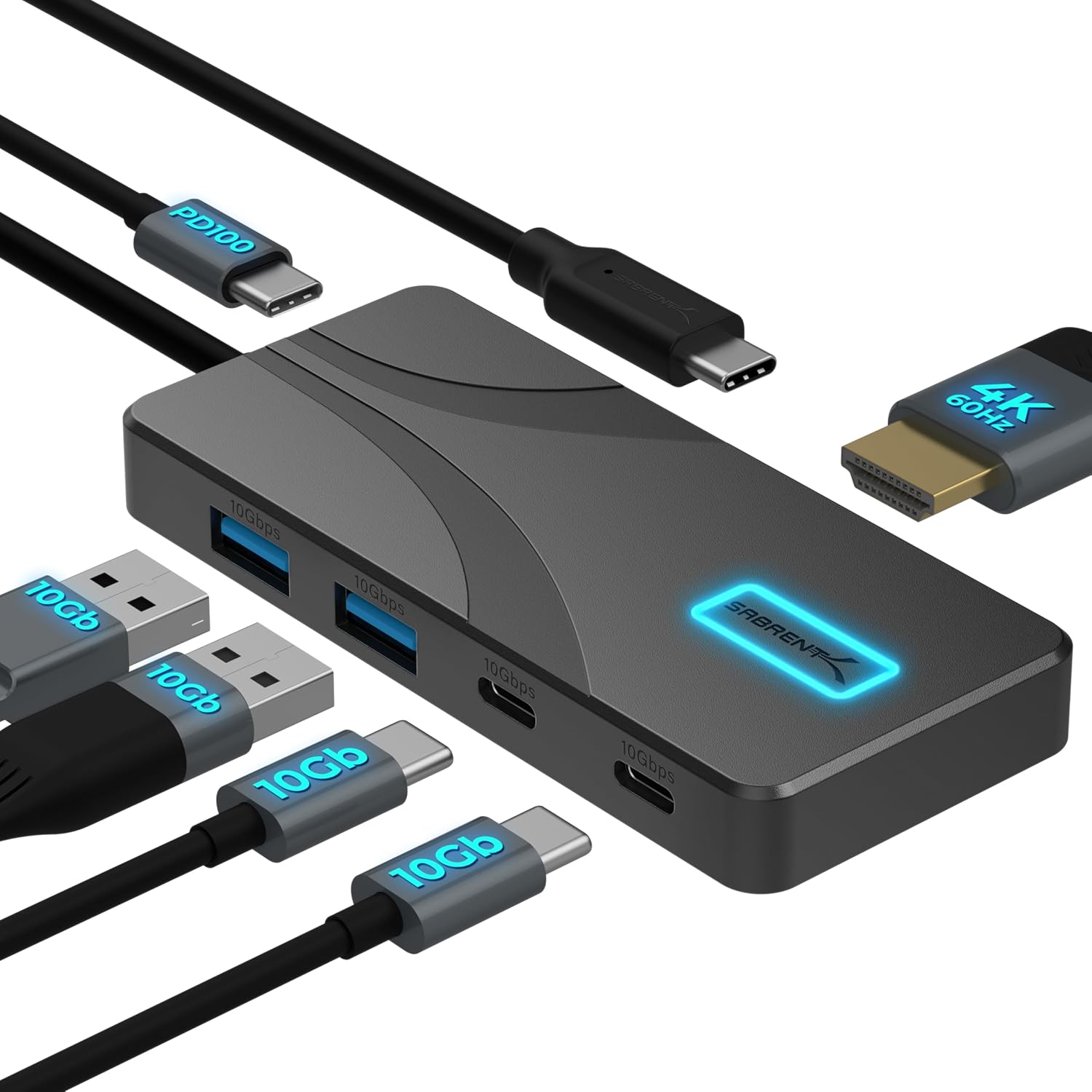
A 450W, 24GB card needs a build around it, not just a slot to sit in. Case airflow and a cooling solution sized for sustained Tensor Core load matter more for AI workloads than for gaming, since training runs and batch inference sustain near-100% utilization for far longer than a typical gaming session — SpecPicks' RTX 4090 AIO Kit 2025 buying guide covers cooling options specifically for this card. On the peripheral side, a dataset-heavy workstation also benefits from simple expansion accessories: a USB-C hub adds the display and storage ports a compact motherboard often lacks, and a SATA-to-USB adapter is a low-cost way to mount an extra drive for model checkpoints and datasets without opening the case.
Bottom Line
The RTX 4090's 1,321 AI TOPS figure still holds up as a strong consumer-GPU ceiling in 2026, and 24GB of VRAM covers a wide range of local inference and generation workloads. Buyers who need more headroom — larger context windows, bigger batches, larger unquantized models — should weigh the RTX 5090's extra VRAM or the higher-capacity AMD workstation and Instinct cards against NVIDIA's deeper CUDA ecosystem support before deciding the AI TOPS number alone.
Citations and sources
- NVIDIA GeForce RTX 4090 official specifications
- NVIDIA GeForce RTX 5090 official specifications
- TechPowerUp GeForce RTX 4090 GPU database entry
This piece is editorial synthesis based on publicly available information. No independent first-party benchmarking is reported.
