NVIDIA lists the GeForce RTX 5090's tensor-core AI throughput at 3,352 AI TOPS, a marketing figure measured in 4-bit floating point (FP4) precision with structured sparsity enabled, per NVIDIA's official RTX 5090 product page. That's well above the RTX 4090's published 1,321 AI TOPS, but the two numbers use different precision modes, so the headline ratio overstates the real-world gap. This synthesis breaks down what the RTX 5090's AI TOPS rating actually measures, how it stacks up on paper against AMD's Radeon Pro W7900 and Instinct MI300X, and which AI workloads the card's 32GB of GDDR7 and Blackwell tensor cores are actually suited for.
For the card's raw 4K gaming numbers alongside these AI figures, see the RTX 5090 benchmark roundup. For a full local-AI build around it, see the RTX 5090 AI build guide and parts list with VRAM sizing.
What Does "AI TOPS" Actually Measure?
TOPS stands for trillions of operations per second, and it's a compute-throughput figure, not a benchmark score. Two variables make vendor-published TOPS numbers hard to compare across products:
- Precision. Lower-precision math (FP4/INT4) packs more operations per clock than FP16 or FP32, so a card's TOPS rating changes dramatically depending on which precision the vendor chose to quote.
- Sparsity. Modern tensor cores support "structured sparsity," which skips zeroed-out weights in a pruned model and can roughly double throughput versus dense math. Vendors typically quote the sparse number.
NVIDIA's 3,352 AI TOPS figure for the RTX 5090 is the FP4-sparse number. Most local inference tooling (llama.cpp, vLLM, Ollama) runs at INT8, FP16, or BF16 by default, where actual throughput sits well below the headline figure. That gap is real, and it's the main reason two GPUs with similar TOPS ratings can feel very different in practice.
RTX 5090 vs. RTX 4090: The AI-Relevant Spec Sheet
| Spec | RTX 5090 | RTX 4090 |
|---|---|---|
| Architecture | Blackwell | Ada Lovelace |
| CUDA cores | 21,760 | 16,384 |
| Tensor cores | 680 (5th-gen) | 512 (4th-gen) |
| Memory | 32GB GDDR7 | 24GB GDDR6X |
| Memory bandwidth | ~1.79 TB/s | ~1.01 TB/s |
| TDP | 575W | 450W |
| Official AI TOPS | 3,352 (FP4, sparse) | 1,321 (FP8, sparse) |
| Launch MSRP | $1,999 | $1,599 |
Specs per NVIDIA's official RTX 5090 and RTX 4090 product pages. The 8GB memory bump and roughly 77% higher bandwidth are arguably more consequential for local AI work than the raw TOPS increase, since they directly determine how large a model — and how large a batch — fits on the card. See the RTX 5090 AI desktop build guide for how that plays out in a full system.
RTX 5090 vs. AMD Radeon Pro W7900 and Instinct MI300X
These three parts don't really compete in the same market, which is easy to lose track of when TOPS/TFLOPS numbers get compared side by side.
| Spec | RTX 5090 | Radeon Pro W7900 | Instinct MI300X |
|---|---|---|---|
| Segment | Consumer / prosumer | Workstation | Datacenter accelerator |
| Memory | 32GB GDDR7 | 48GB GDDR6 | 192GB HBM3 |
| Memory bandwidth | ~1.79 TB/s | Vendor-published, GDDR6 | ~5.3 TB/s |
| TDP | 575W | 295W | 750W |
| Vendor AI TOPS figure | 3,352 (FP4, sparse) | Not published in NVIDIA-style TOPS terms | Published as TFLOPS by precision, not TOPS |
Specs per AMD's official Instinct MI300X and Radeon Pro W7900 pages. AMD markets compute throughput in TFLOPS by precision tier rather than a single "AI TOPS" headline number, which is part of why cross-vendor TOPS comparisons circulating online (including some claiming a fixed multiplier over specific AMD parts) don't hold up to scrutiny — the underlying methodologies aren't the same.
The MI300X isn't something most builders can buy as an add-in card for a desktop; it targets server deployments, and its 192GB of HBM3 exists specifically to hold very large models entirely in memory for training and high-throughput inference. The Radeon Pro W7900's main selling point against the RTX 5090 is its 48GB of memory at a lower power draw, which suits some workstation and rendering workloads better than raw tensor throughput does.
Why Memory Capacity Often Matters More Than TOPS for Local AI
For local large-language-model inference specifically, the community consensus tracked in forums like r/LocalLLaMA is that VRAM capacity and memory bandwidth — not peak TOPS — set the ceiling on what you can actually run. A model that doesn't fit in VRAM either won't load or falls back to slow CPU/system-RAM offload, at which point compute throughput becomes irrelevant. The RTX 5090's jump to 32GB over the 4090's 24GB is what lets meaningfully larger quantized models fit entirely on-card, independent of the TOPS rating gap between the two.
This is also why builders comparing local inference against cloud-hosted models weigh VRAM headroom heavily — see the Qwen-Audio-3.0-TTS-Plus local-RTX build and the Grok 4.5 cloud-vs-local comparison for how that trade-off plays out in practice on smaller and larger cards respectively.
What AI Workloads Actually Benefit From the RTX 5090
- Local LLM inference. 32GB of VRAM accommodates larger quantized models (into the 30B–70B parameter range depending on quantization) than the 4090's 24GB allows.
- Diffusion / image generation. Larger memory headroom supports bigger batch sizes and higher-resolution generation without offloading.
- Fine-tuning smaller models. The extra memory and bandwidth help with LoRA-style fine-tuning workflows that would otherwise be VRAM-constrained on a 24GB card.
- Software ecosystem. NVIDIA's CUDA and TensorRT stack remains the default target for most local AI tooling, which matters as much as raw hardware throughput for day-to-day usability. AMD's ROCm has closed ground but still has narrower framework coverage.
For low-cost alternatives at the edge of the AI-hardware spectrum, see the Raspberry Pi AI HAT+ 26 TOPS review — a useful reference point for how differently "TOPS" scales at the embedded end versus a 575W desktop GPU.
The Gap Between Headline TOPS and Real-World Throughput
Because vendor TOPS figures combine the lowest supported precision with sparsity assumptions, the practical rule of thumb repeated across GPU review outlets like Tom's Hardware's GPU hierarchy and TechPowerUp's GPU database is to treat headline AI TOPS as a ceiling, not a prediction. Real throughput for a given workload depends on the precision it actually runs at, whether the model is pruned for sparsity, memory bandwidth at that batch size, and driver/framework optimization — none of which show up in a single spec-sheet number.
Buyers weighing an RTX 5090 against a heavily discounted prebuilt should also check what other components come bundled — the Alienware Area-51 RTX 5090 discount is one recent example where the GPU is only part of the value equation.
Practical Accessories for an RTX 5090 AI Workstation
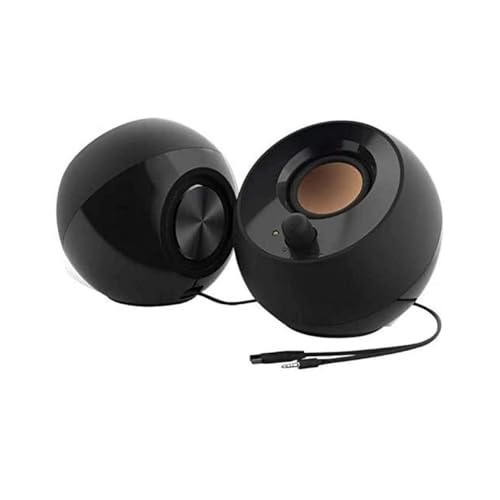
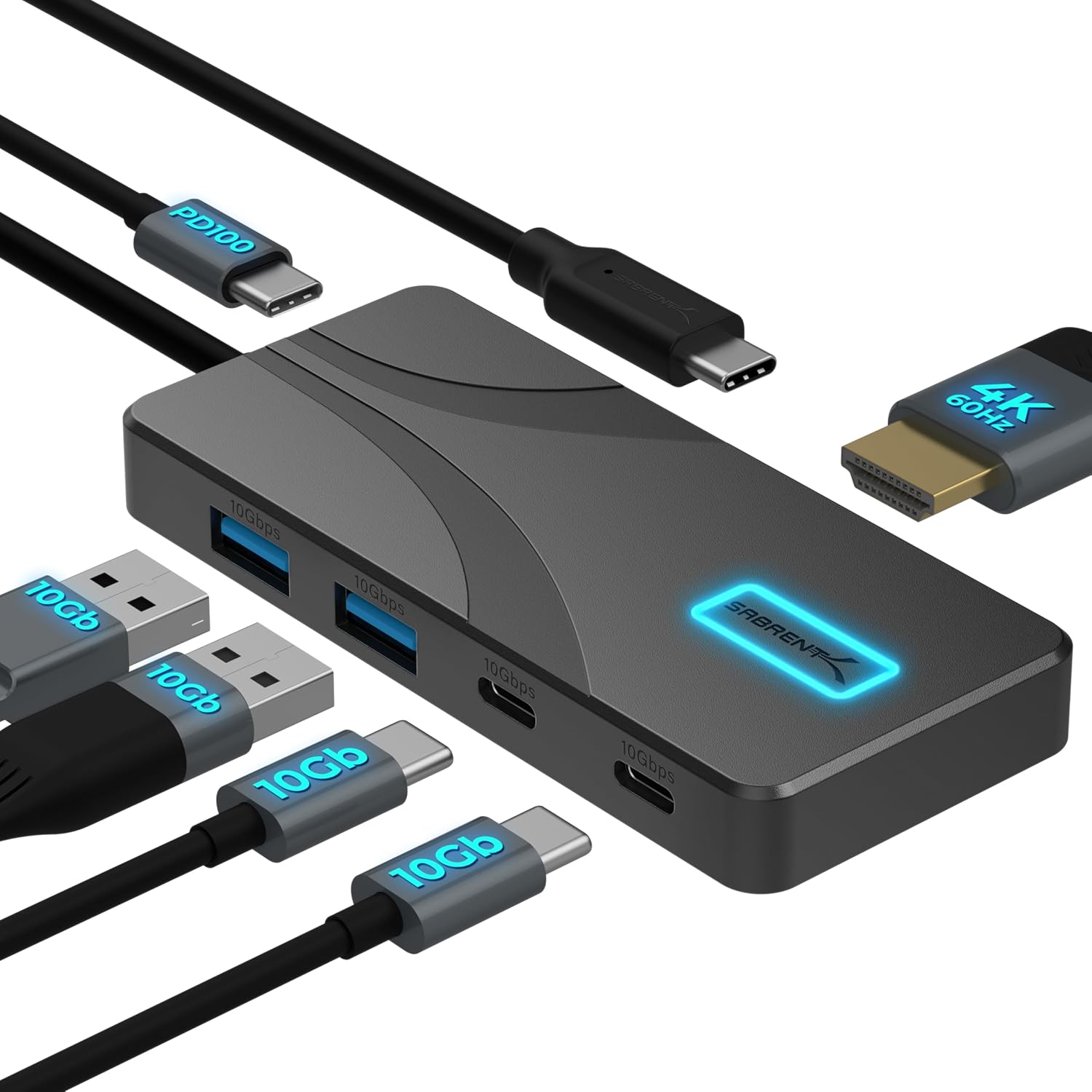
A few lower-cost pieces round out a dedicated AI rig without touching the GPU budget: a USB-C hub adds display and storage ports when the case's rear I/O is tight, a high-capacity USB flash drive is handy for moving model checkpoints between machines, and a compact pair of USB-powered desktop speakers covers audio monitoring during long training or inference sessions without adding another PCIe card to the build.
Frequently Asked Questions
What is the RTX 5090's official AI TOPS rating? NVIDIA lists the GeForce RTX 5090 at 3,352 AI TOPS on its official product page, measured in FP4 precision with structured sparsity enabled — a marketing figure, not a guaranteed real-world throughput number.
Is the RTX 5090 faster than AMD's MI300X for AI? They aren't really comparable products: the MI300X is a datacenter accelerator with 192GB of HBM3 built for large-scale training and inference clusters, while the RTX 5090 is a consumer/prosumer card. For memory-bound large-model inference, the MI300X's far larger capacity can matter more than either card's peak TOPS/TFLOPS figure.
Does higher AI TOPS always mean faster real-world AI performance? No. Vendor TOPS figures are typically quoted at the lowest supported precision with structured sparsity, which can double the number versus dense FP16/BF16 math. Most local workloads don't run at that precision, so actual throughput is usually a fraction of the headline figure.
How does the RTX 5090 compare to the RTX 4090 for AI workloads? NVIDIA's own figures show 3,352 AI TOPS (FP4 sparse) for the RTX 5090 versus 1,321 AI TOPS (FP8 sparse) for the RTX 4090, alongside a jump from 24GB GDDR6X to 32GB GDDR7 — the extra VRAM is often the more practical upgrade for running larger local models.
Is the Radeon Pro W7900 a good alternative to the RTX 5090 for AI? AMD doesn't publish a directly comparable TOPS marketing figure for the W7900. Its main advantage is 48GB of GDDR6 memory for fitting larger models, but NVIDIA's CUDA/TensorRT stack remains more mature for most local AI tooling.
Can the RTX 5090 run large language models locally? Its 32GB of VRAM lets it hold quantized models in the 30B–70B parameter range locally depending on quantization level, a topic the community tracks closely in venues like r/LocalLLaMA.
Citations and sources
- https://www.nvidia.com/en-us/geforce/graphics-cards/50-series/rtx-5090/
- https://www.nvidia.com/en-us/geforce/graphics-cards/40-series/rtx-4090/
- https://www.amd.com/en/products/accelerators/instinct/mi300/mi300x.html
- https://www.amd.com/en/products/graphics/workstations/radeon-pro/w7900.html
- https://www.tomshardware.com/reviews/gpu-hierarchy,4388.html
- https://www.techpowerup.com/gpu-specs/
- https://www.reddit.com/r/LocalLLaMA/
This piece is editorial synthesis based on publicly available information. No independent first-party benchmarking is reported.