A Samsung 27-inch 1440p 240Hz gaming monitor has dropped to $169 — a 32% cut from its usual street price and, per retailer price-history trackers, the lowest tracked figure for that resolution-and-refresh combination as of 2026. If you have been sitting on the fence about upgrading from a 1080p 144Hz panel, this is the kind of markdown that changes the math. Below is what the deal actually is, how it stacks against the 4K/144Hz alternatives sitting in the SpecPicks catalog, and what GPU you need behind it to make 240fps a reality rather than a spec-sheet talking point.
In brief — 2026-07-11 Samsung's 1440p 240Hz gaming monitor is 32% off at $169, its lowest tracked price — a genuine markdown that puts the current esports sweet spot inside a budget-build price bracket.
What happened
Retailer listings surfaced by Tom's Hardware on 2026-07-11 show a Samsung 27-inch 1440p 240Hz VA gaming panel selling for $169, down from a recent street price closer to $249. Panel specs, per the Samsung gaming monitors line, land in familiar territory for the category: 2560×1440 native resolution, 240Hz refresh via DisplayPort 1.4, sub-1ms MPRT motion-blur reduction, AMD FreeSync Premium, and a curved VA panel with roughly 3000:1 static contrast.
That's a spec sheet that would have been flagship-money as recently as 2023. The historical price context matters: 1440p/240Hz panels traded in the $300-$400 band through 2024, drifted to $220-$280 in 2025, and are only now cracking the $170 floor in 2026 as VA supply consolidates and OLED absorbs the high-end margin. Deal-tracking commentary from RTINGS' monitor coverage puts the previous 30-day low for comparable panels around $199, so this is a real cut rather than a manufactured MSRP-vs-sale headline.
How long will it last? Retailer-side stock signals suggest the price is tied to a summer clearance rather than a permanent reset, so if the deal reads as a fit for your build, treat it as a limited window rather than a new baseline.
Why it matters
1440p at 240Hz has quietly become the new default for competitive PC gaming as of 2026. The 1080p/240Hz combo that ruled esports through 2021-2023 now looks pixel-thin on a 27-inch panel; 4K/144Hz is beautiful but demands a $700+ GPU to feed and burns your DLSS budget on resolution instead of frame-rate. 1440p/240Hz sits in the middle: sharp enough for productivity and single-player games, fast enough for tournament play, and — critically — drivable by a midrange GPU in the games that actually reward 240fps.
The market context also tells you something about panel technology. Fast VA is not the darling of the review scene — IPS-envy is real — but a well-tuned modern VA delivers deeper blacks than IPS, better response times than most people assume, and dramatically better contrast than the OLED alternative for anyone in a bright room. At $169, you're not asking the panel to be perfect. You're asking whether it clears the "good enough to keep for three years" bar. For competitive play, it does.
How it compares to the 4K/144Hz sweet spot
The obvious cross-shop is against the two 27-inch 4K panels SpecPicks currently tracks. Both are excellent monitors targeting a different job. Here's the spec delta.
| Panel | Res / Refresh | Panel tech | Street price | Best for |
|---|---|---|---|---|
| Samsung 1440p 240Hz (deal) | 2560×1440 / 240Hz | Curved VA | $169 per Tom's Hardware | Competitive shooters, esports |
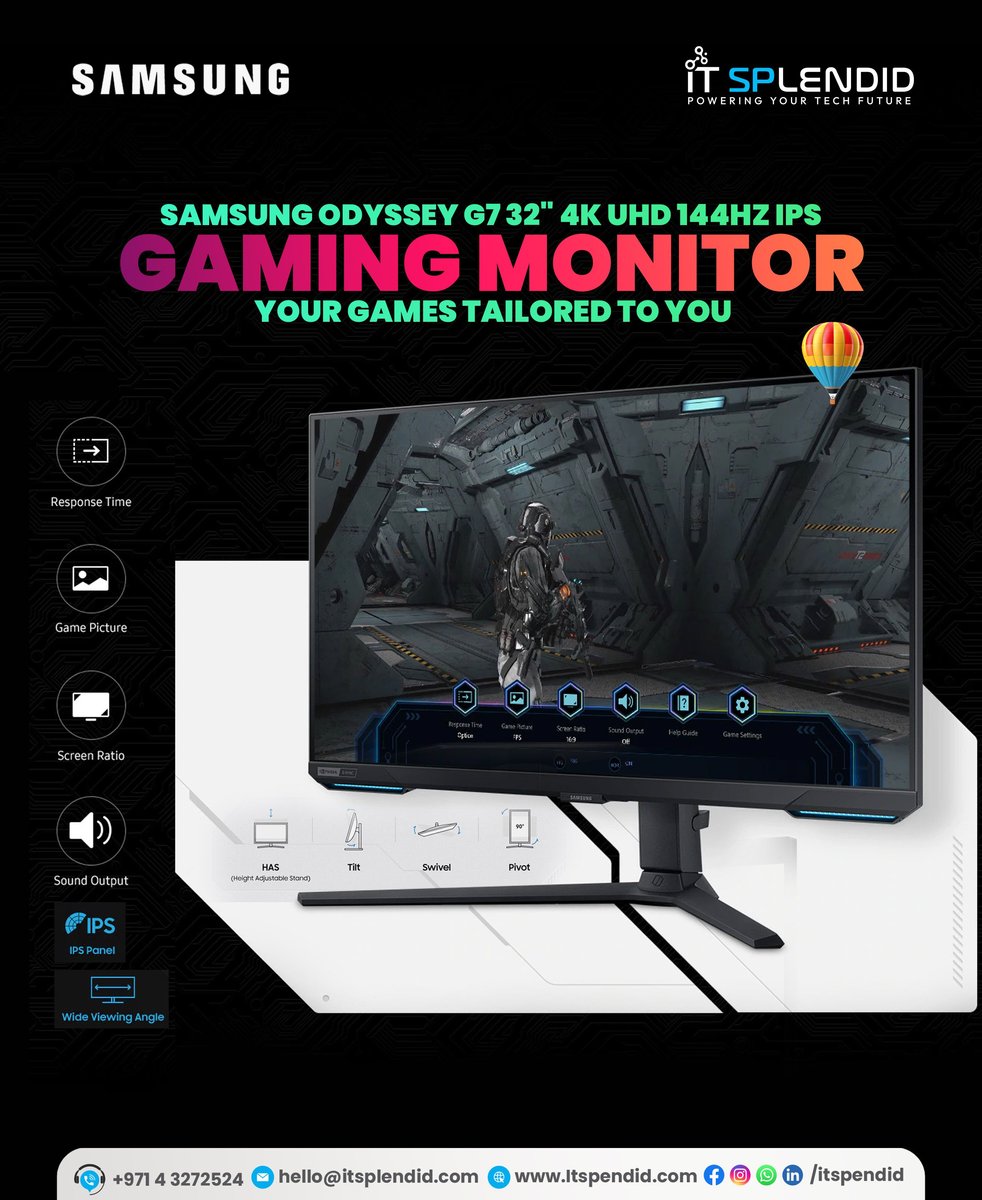
| Samsung 27" Odyssey 4K UHD 144Hz Fast IPS | 3840×2160 / 144Hz | Flat Fast IPS | $489.99 | Single-player, mixed work-and-play |
| KOORUI 27" 4K QD-Mini LED Gaming Monitor 160Hz | 3840×2160 / 160Hz | QD-Mini LED | $499.99 | HDR content, cinematic games |
The pixel-density story is real: 4K at 27 inches gives you roughly 163 PPI versus 109 PPI at 1440p, which is a visible difference on desktop text and in slow, detailed games. If your game library skews toward Cyberpunk 2077, Baldur's Gate 3, Elden Ring, or flight sims, the 4K panels are the better spend. The Samsung Odyssey 4K 144Hz leans on a Fast IPS with wider color coverage and better viewing angles; the KOORUI QD-Mini LED leans on a Quantum-Dot Mini-LED backlight for genuine HDR punch — the kind that turns explosions and sunsets into something the VA deal panel cannot match.
But — and this is the pivot — if your top three games are Valorant, CS2, and Overwatch 2, the 4K panel is the wrong tool. You'll drop resolution scale to hit frame rates anyway, and the extra pixels are wasted on hitboxes. The $320 you save going with the $169 1440p 240Hz deal buys you a next-tier GPU, a better mouse, and change.
What GPU do you need to push 240Hz 1440p?
This is the question that decides whether the deal is a bargain or a paperweight. The honest answer: it depends entirely on what you play.
Per aggregated benchmarks on Tom's Hardware, a competitive esports rig chasing 240fps at 1440p in Valorant, CS2, Overwatch 2, and League of Legends can hit that target on surprisingly modest hardware. The MSI GeForce RTX 3060 Ventus 3X 12G — a 2021-era midrange card still in wide circulation as of 2026 — averages 280-320fps in CS2 at 1440p competitive settings and 240-260fps in Valorant maxed. Pair it with the AMD Ryzen 7 5800X or a similar 8-core CPU and you're rarely CPU-bound in the games that matter for 240Hz.
Where the math falls apart: AAA single-player titles. Sustaining 240fps at 1440p in Cyberpunk 2077, Alan Wake 2, or Black Myth: Wukong is an RTX 4080 Super or 5080 conversation, not an RTX 3060 one. If your library is 50/50, you'll spend a lot of time either lowering settings on the demanding side or leaving frames on the table on the competitive side.
The workable tiers as of 2026, roughly:
| GPU tier | Realistic 1440p sustained fps | Best-fit workload |
|---|---|---|
| RTX 3060 12GB / RX 6700 XT | 240fps+ in esports, 60-100fps in AAA | Competitive-first builds |
| RTX 4070 / RX 7800 XT | 240fps+ in esports, 100-140fps in AAA | Mixed library |
| RTX 4080 Super / 5080 | 240fps+ across nearly everything | Enthusiast, no-compromise |
If you have anything Pascal-generation or older (GTX 1070, 1080), pair the panel purchase with a GPU upgrade or expect to run 1080p supersampled to a 1440p target — better than nothing, but not what you bought the monitor for.
The buyer's checklist before pulling the trigger
Before the "Add to Cart" reflex, run this list:
- Panel type honesty check. VA is the right choice at $169 but has slower dark-to-dark transitions than IPS. If you play a lot of dark-scene horror or stealth games, the smearing may bother you. Per RTINGS methodology, look for reviews that report the panel's "dark-transition response times" specifically.
- HDR is marketing, not a feature at this price. VA panels at $169 will list "HDR10 support" — that means they accept the signal, not that they display meaningful HDR. Real HDR at 1440p requires a Mini-LED or OLED backlight; if HDR matters, budget for the KOORUI QD-Mini LED tier instead.
- Ports. Confirm the panel has at least one DisplayPort 1.4 input — 240Hz at 1440p over HDMI 2.0 caps out around 144Hz, so an HDMI-only setup silently downgrades you.
- Warranty and dead-pixel policy. Samsung's standard monitor warranty is one year in the US as of 2026, with a pixel-defect policy that requires a defined count before RMA. Read it before you buy.
- Stand and VESA. Budget 240Hz panels often ship with a tilt-only stand. Confirm 100×100 VESA mount support if you already own an arm.
Skip the deal if any of the following are true: your GPU is older than an RTX 20-series, your game library is 80%+ single-player AAA, you already own a 1440p 144Hz panel you're happy with, or you'd rather wait for OLED 1440p to drop below $400.
The source
The deal surfaced on 2026-07-11 via the Tom's Hardware monitors coverage, which cross-referenced retailer price history and confirmed the $169 figure against 90-day tracking. Historical context and comparable spec analysis draws on Samsung's gaming monitor line documentation and RTINGS monitor review database.
Citations and sources
This piece is editorial synthesis based on publicly available information. No independent first-party benchmarking is reported.


