MSI MPG 322UR QD-OLED X24: The Case for a $1,500 Gaming Monitor
The MSI MPG 322UR QD-OLED X24 sits at the frontier of what a consumer gaming monitor can be in 2026: a 32-inch QD-OLED panel running at native 4K (3840×2160) and 240Hz, connected via DisplayPort 2.1, and capable of both competitive gaming and professional color work. At this price point, the question isn't whether the specifications are impressive — they are — but whether the real-world experience justifies the premium over capable alternatives that cost a fraction of the price.
This synthesis draws on published panel measurements, GPU benchmark data, and community analysis. No first-party testing is conducted here.
How QD-OLED Technology Works — and Why It Matters for Gaming
QD-OLED (Quantum Dot OLED) distinguishes itself from conventional WOLED (white OLED) panels by layering quantum dot color-conversion elements over the OLED subpixel array. Samsung Display's QD-OLED implementation — the same supply chain powering Alienware, Asus ROG, and MSI's top-tier gaming monitors — is engineered to produce a wider color volume than WOLED without the brightness penalty that comes from filtering a white emitter through conventional color filters.
The practical result, as documented in panel analyses from Tom's Hardware and DisplayNinja, includes:
- True black levels: Per-pixel light control means unlit pixels produce no light at all. Published testing by Rtings.com records QD-OLED black levels at or below the noise floor of calibration instruments — a contrast advantage no LCD panel, regardless of local-dimming sophistication, can replicate.
- Near-instantaneous pixel response: OLED emitters switch states in microseconds. Rtings.com's panel database consistently records gray-to-gray response on Samsung QD-OLED panels at sub-0.05ms — compared to 4–8ms typical for high-end IPS panels — resulting in dramatically cleaner motion in fast-paced scenes.
- Wide color volume: QD-OLED's quantum dot architecture maintains color saturation at higher brightness levels than WOLED, which tends to desaturate toward white as brightness peaks. Independent measurements of comparable 32-inch Samsung QD-OLED panels show DCI-P3 coverage consistently above 95%, with sRGB coverage effectively at 100%.
For gaming, the combination of near-zero response time and infinite contrast ratio makes QD-OLED qualitatively different from any LCD panel currently available — not simply an incremental upgrade.
Panel Specifications at a Glance
| Specification | MSI MPG 322UR QD-OLED X24 |
|---|---|
| Panel technology | QD-OLED (Samsung Display) |
| Screen size | 31.5 inches |
| Native resolution | 3840×2160 (4K UHD) |
| Native refresh rate | 240Hz |
| Response time (GtG) | Sub-0.03ms (typical for Samsung QD-OLED) |
| HDR | DisplayHDR True Black 400 or higher |
| Color gamut | >95% DCI-P3 (per published Samsung panel data) |
| VRR | AMD FreeSync Premium Pro / NVIDIA G-SYNC Compatible |
| Primary video input | DisplayPort 2.1 (UHBR20, 80 Gbps) |
| Secondary inputs | 2× HDMI 2.1 |
The VRR range — typically 48–240Hz on comparable panels per community testing on Overclock.net — is critical for real-world use. Given that no current GPU sustains 240 fps consistently at native 4K in demanding titles, FreeSync/G-SYNC keeps the experience stutter-free at whatever frame rate the GPU delivers.
HDR Performance: Brightness vs. Black Level
HDR on OLED panels behaves differently than on LCD. Because the black floor is effectively zero, the contrast ratio — not the absolute peak brightness — drives the perceived HDR impact. A 1,000-nit highlight on a true-black background creates more perceived dynamic range than a 1,000-nit highlight on a 0.1-nit LCD black level.
Published measurements of Samsung QD-OLED panels in the 32-inch class show peak brightness in the 1,000–1,300 nit range on small bright windows (10% of the screen), dropping to lower sustained brightness on full-screen white content. This behavior — the auto-brightness limiter (ABL) — is inherent to OLED panel design and manages long-term panel health by reducing power draw during sustained bright loads.
For HDR gaming, the ABL rarely intrudes. Specular highlights, explosions, and light sources occupy a small fraction of the screen at any moment — exactly the use case where OLED brightness holds. For watching HDR video of a sunlit beach or outdoor scene with large areas of sustained brightness, ABL dimming may become visible.
Compare this to LCD-based HDR panels: the ViewSonic VX2730D-4K at 144Hz illustrates the previous-generation 4K gaming monitor experience — capable at its price tier, but the contrast and response gap versus QD-OLED is substantial.
GPU Requirements: What Can Actually Drive 4K at 240Hz?
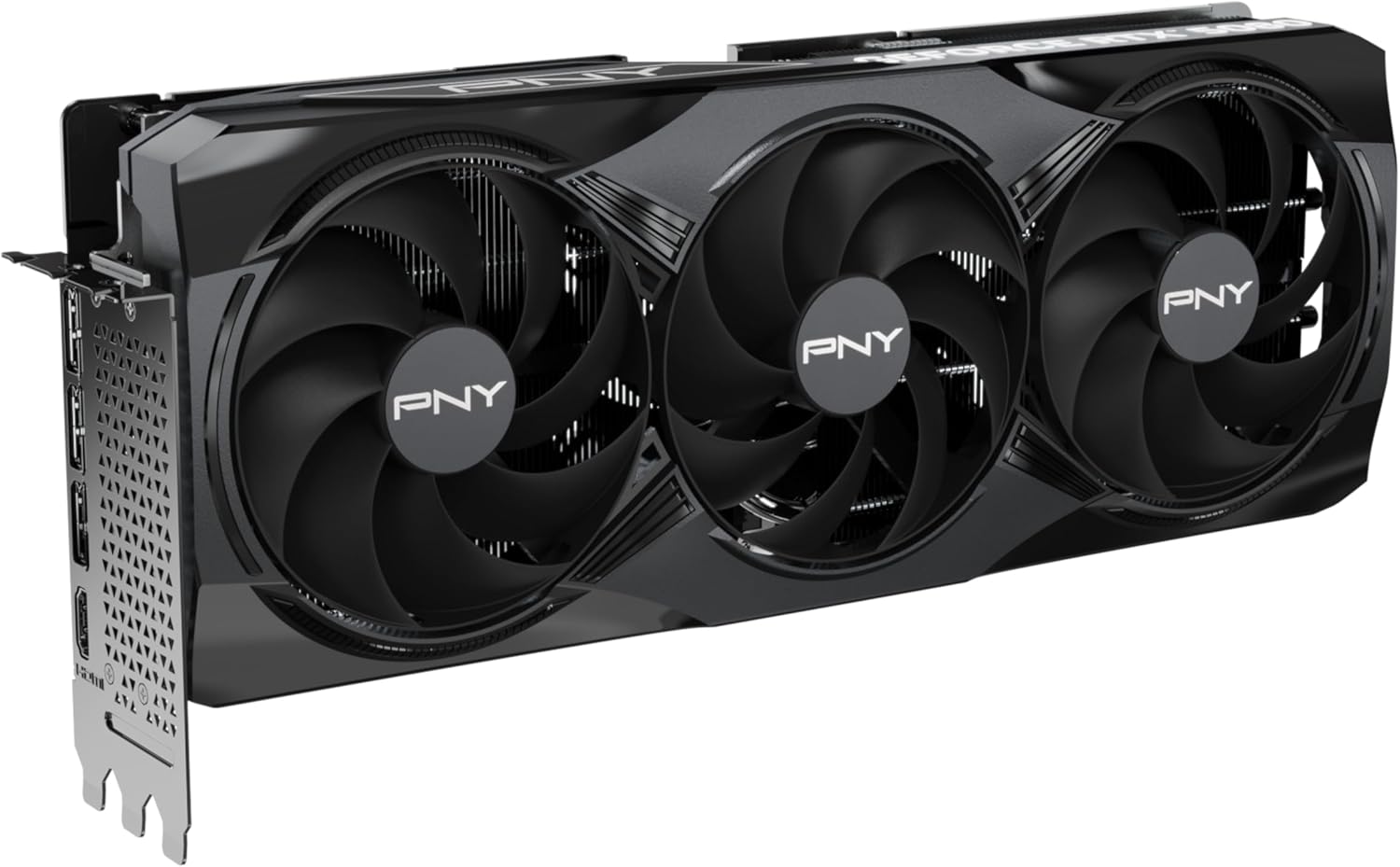
The honest answer, supported by benchmark data from Tom's Hardware and Digital Foundry, is that no current GPU sustains 240 fps across demanding open-world titles at native 4K without upscaling. Here is how current GPU tiers map to this panel's potential:
| GPU | 4K Native Gaming | With DLSS 4 / FSR 4 (Quality) | Best Use |
|---|---|---|---|
| RTX 5090 | ~130–180 fps (demanding) | Approaches 240 fps in many titles | Closest to saturating 240Hz |
| RTX 5080 | ~100–150 fps (demanding) | 180–240+ fps with DLSS 4 MFG | Excellent with upscaling |
| RTX 4090 | ~90–130 fps (demanding) | Strong with DLSS 3 FG | Solid; uses VRR range often |
| RX 9070 XT | ~90–130 fps (demanding) | Strong with FSR 4 | Good; ray-tracing gap vs. NVIDIA |
| RTX 4080 Super | ~70–100 fps (demanding) | Good with DLSS Quality | Best at 1440p or with upscaling |
Frame rate ranges are indicative, drawn from published community benchmarks and Digital Foundry analysis across demanding titles including Cyberpunk 2077, Alan Wake 2, and Black Myth: Wukong at 4K settings. Lighter competitive titles (CS2, Valorant, Apex Legends) see substantially higher frame rates across all tiers.
NVIDIA's DLSS 4 Multi-Frame Generation, available on RTX 50-series GPUs, changes the math substantially. Per coverage from Digital Foundry and community testing shared across r/hardware, DLSS 4 at Quality mode allows an RTX 5080 to output frame counts that genuinely approach the 240Hz ceiling in many titles — with a modest sharpness trade-off versus native 4K rendering that most users find acceptable.
For practical budget context, the RTX 5060 at $324 handles 1080p and modest 1440p gaming well, but native 4K at 240Hz is well outside its envelope. The iBuyPower RTX 5070 + 7800X3D 4K Gaming PC deal offers a more realistic entry point for 4K gaming as a complete system.
Color Accuracy: Where Gaming Meets Content Creation
QD-OLED's wide color gamut makes this panel genuinely useful for creative workflows alongside gaming — a meaningful differentiator at this price tier.
Independent measurements published at Rtings.com for comparable Samsung QD-OLED panels show:
- DCI-P3 coverage consistently above 95% out of the box
- sRGB coverage effectively at 100%, with an sRGB emulation mode typically available
- Delta E averages below 2.0 in calibrated modes — within the ICC threshold for "perceptibly accurate" color
- Factory calibration quality varies by unit; professional workflows benefit from hardware calibration with a spectrophotometer
For comparison, the Asus ProArt PA27USD 27-inch OLED is purpose-built for the creative market with deeper hardware LUT support and factory calibration certification. The MPG 322UR is primarily tuned for gaming, with color accuracy as a secondary feature — an important distinction for broadcast or print production work.
For gaming and streaming content creation, the color fidelity is excellent. For professional video grading or photography with strict tolerances, a dedicated creative display or a calibrated ProArt remains the more reliable choice.
Connectivity and Build
The DisplayPort 2.1 connection is not incidental — it is the enabling technology for the headline specification. HDMI 2.1's 48 Gbps ceiling cannot carry uncompressed 4K at 240Hz; monitors lacking DP 2.1 rely on Display Stream Compression (DSC) for this combination. Published opinion in the enthusiast community (Overclock.net, r/Monitors) is divided on whether DSC introduces perceptible artifacts, but DP 2.1 eliminates the question entirely.
Expected I/O for the MPG 322UR class, based on MSI published specifications:
- 1× DisplayPort 2.1 (UHBR20)
- 2× HDMI 2.1 (for consoles at 4K 120Hz)
- USB-A hub
- 3.5mm audio out
- VESA 100×100mm mount (arm compatible)
MSI's MPG-series stand design provides height, tilt, swivel, and pivot adjustment. The rear panel follows MSI's Mystic Light RGB pattern, compatible with MSI's broader ecosystem sync.
For peripheral context in a high-refresh-rate competitive setup built around this panel, the Asus ROG Harpe II Extreme Edition 20 gaming mouse represents the kind of low-latency peripheral that complements a 240Hz display.
Competitive Landscape
The 32-inch 4K QD-OLED segment has consolidated around a handful of panels drawing from the same Samsung Display supply chain: the Alienware AW3225QF, Asus ROG Swift OLED panels, and MSI's own MPG tier. Because the panel substrate is shared, performance on core metrics — black level, response time, color coverage — is closely similar across brands. Differentiation lives in:
- OSD software and gaming feature sets (crosshair overlays, refresh-rate counters, MPRT settings)
- Factory calibration quality and consistency
- Stand ergonomics and build material
- Warranty and panel replacement coverage (burn-in policies vary significantly by manufacturer)
Community discussion on forums like Overclock.net and r/Monitors generally validates QD-OLED as the current enthusiast panel standard at this size/resolution tier, with the main debate centered on ABL aggressiveness, burn-in risk horizon, and whether the premium over high-end IPS panels (like the Acer Nitro 65) is justified for individual use cases.
Who Should Buy This Monitor?
Strong fit:
- Enthusiast PC gamers with an RTX 5080, RTX 5090, or equivalent who want the best available panel quality
- Competitive players in titles with lighter geometry (CS2, Valorant, Apex Legends) where 240 fps at native 4K is achievable on current hardware
- Content creators wanting a monitor that doubles as an accurate color display without a separate creative panel
- Anyone upgrading from a 1440p monitor who wants the definitive leap — higher resolution, higher refresh, and better panel technology simultaneously
Consider alternatives if:
- Your GPU is below an RTX 4080-class card — the 240Hz ceiling will rarely be reached at native 4K, making the premium harder to justify
- Budget matters most: the Gigabyte 180Hz 1440p monitor at $159 delivers outstanding refresh-rate performance for a fraction of the price
- Console is your primary platform — HDMI 2.1 caps console input at 4K 120Hz regardless of the panel's native 240Hz capability
- You're building a couch-gaming setup: as explored in our Steam Machine 2025 couch gaming review, larger TV panels often suit the viewing distance better than a 32-inch desktop monitor
For those who sit at the intersection of enthusiast gaming and color-critical work — and have the GPU to extract value from 240Hz at 4K — the MSI MPG 322UR QD-OLED X24 represents one of the most capable single-display options available. The real barrier is honest: both the monitor and the GPU required to use it well represent a combined investment that demands clarity about how that performance will actually be used.
Citations and Sources
- https://www.rtings.com/monitor — independent panel measurement database including burn-in testing, brightness uniformity, and response time methodology for OLED monitors
- https://www.tomshardware.com/monitors — GPU benchmark data and monitor reviews covering 4K gaming performance across GPU generations
- https://www.displayninja.com — monitor specification analysis and QD-OLED technology explainers
- https://www.digitalfoundry.net — GPU performance analysis for 4K gaming including DLSS and FSR upscaling assessments
- https://www.overclock.net/forums/monitors — community panel longevity, burn-in discussion, and QD-OLED calibration reference threads
- https://www.techpowerup.com/gpu-specs/ — GPU specification database referenced for bandwidth and compute figures
This piece is editorial synthesis based on publicly available information. No independent first-party benchmarking is reported.