USB Wi-Fi 6 vs PCIe Wi-Fi 6E: Which Actually Fixes Gaming Lag?
The radio inside a $16 stick isn't the problem — where its antennas sit is.
By Mike Perry, Founder & Editor-in-Chief · Published 2026-09-08 · Updated 2026-10-17 · 15 min read
USB Wi-Fi 6 stick or PCIe Wi-Fi 6E card for a gaming PC? Throughput, jitter and cost per megabit compared, plus the free fix most people skip.
Quick Answer
Buy the PCIe card. A TP-Link Wi-Fi 6E AX210 card at $44.97 gives you external antennas and a dedicated bus slot; a USB stick hides its antennas inside a plastic shell pressed against a steel case. The 6 GHz band Wi-Fi 6E adds is empty spectrum. Buy the $15.99 USB adapter only if you have no free slot.
Your desktop is two rooms from the router and the shooter stutters
You have narrowed it to two options: a $16 USB stick that plugs into the front of the case, or a $35-45 internal card that means opening the machine. The internet will tell you USB Wi-Fi is garbage and PCIe is the only real answer. That is directionally right and wrong about why, and the "why" determines whether either one actually fixes your problem.
Here is the thing nobody says up front: the radio silicon in a $16 stick and a $45 card is not that different. Both are 802.11ax parts. Both do OFDMA and MU-MIMO. If you put them side by side on a bench three feet from an access point, the throughput gap is much smaller than the price gap suggests. The stick is not slow because its radio is bad.
It is slow — when it is slow — because of three things that have nothing to do with the radio: where the antennas physically sit, what the host bus does to the signal, and whether the thing you are actually fighting is your adapter at all. A steel PC case is a Faraday cage with a hole in the back. A stick plugged into a front-panel port is sitting inside that cage. A card's antennas are on a bracket outside it, on a cable you can move onto the desk.
And the third factor is the one that wastes the most money. Stuttering in a shooter is usually not a bandwidth problem. A 1080p60 game stream needs a handful of megabits; a competitive shooter needs a few hundred kilobits and consistency. If your link is delivering 200 Mbps but dropping and retransmitting frames, more link rate will not help. You need to know which failure you have before you spend anything, which is why the first section below is a diagnosis, not a product.
Key takeaways
A PCIe card's antennas sit outside the case. This, not bus latency, is the main reason cards beat sticks in the real world — retransmissions from a shielded antenna are what show up as jitter spikes.
Wi-Fi 6E's 6 GHz band offers up to 1,200 MHz of spectrum in the US, per the Wi-Fi Alliance — but only if your router also broadcasts 6 GHz. No router, no benefit, at any price.
USB 3.x radiates broadband noise near 2.4 GHz. A USB 3 port next to a 2.4 GHz adapter measurably degrades it — the USB-IF's SuperSpeed documentation covers the signalling rates involved. Use a short extension cable to get the stick away from the ports.
Many budget "AX900" sticks are USB 2.0 devices, capped at 480 Mbps of signalling and realistically under 300 Mbps of throughput. Check the interface spec, not the AX number.
Diagnose before you buy. If your problem is distance or wall count, no adapter fixes it, because no adapter increases transmit power at the router end.
Step 0 — three checks before you spend anything
Do these in order. Each takes under five minutes and each can save you the purchase entirely.
Check 1: is it the link, or the internet? Run a speed test from a device wired to the router, then from the desktop over Wi-Fi. If the wired result is also bad, your adapter is innocent and the problem is upstream — your ISP, your modem, or your router. Buying a Wi-Fi card fixes nothing.
Check 2: is it distance, or congestion? Take a laptop and run the same test standing next to the router, then at the desktop's location. A large drop at distance means you have a range and wall-penetration problem. A small drop means you have a congestion or adapter problem. These have opposite solutions — range problems want a mesh node or a cable; congestion problems want 6 GHz.
Check 3: is it throughput, or stability? Run a continuous ping to your router's gateway address for two minutes while gaming. Watch the variance, not the average. A steady 3ms is healthy. A 3ms average with periodic spikes to 200ms is a retransmission problem — and that is the pattern that produces stutter in a shooter. Bandwidth tests will not show it.
If check 3 shows spikes and checks 1 and 2 came back clean, an adapter with better antennas is a genuine fix and you should keep reading. If check 2 showed a cliff, skip to the "stop buying adapters" section.
Spec-delta: the four adapters worth considering
Adapter
Interface
Bands
Peak link rate
Street price
UGREEN AX900 USB
USB-A
2.4 + 5 GHz
~574 Mbps (5 GHz) + ~300 Mbps (2.4 GHz)
$15.99
TP-Link Archer TXE50UH USB
USB-A 3.0
2.4 + 5 + 6 GHz
AXE3000 (~574 + 1201 + 1201)
~$50
FENVi Wi-Fi 6E PCIe
PCIe x1
2.4 + 5 + 6 GHz
AXE5400 (~574 + 2402 + 2402)
$34.19
TP-Link AX210 PCIe
PCIe x1
2.4 + 5 + 6 GHz
AXE5400 (~574 + 2402 + 2402)
$44.97
Read the "peak link rate" column with suspicion. Those numbers are the sum of every band's theoretical maximum added together, which is not a speed you will ever see — you connect on one band at a time. An "AXE5400" adapter connected to 6 GHz at 160 MHz tops out around 2,400 Mbps of link rate, and real TCP throughput lands well under half of that.
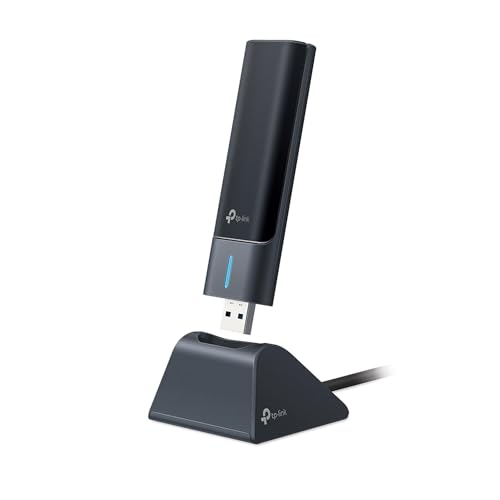
The genuinely meaningful differences: the UGREEN AX900 has no 6 GHz radio at all and is a 1x1 device, so 574 Mbps is its ceiling on 5 GHz. The two PCIe cards are 2x2 with external antennas. The TP-Link Archer TXE50UH is the interesting middle: a 6E-capable stick with a fold-out antenna, which addresses the antenna problem without opening the case.
Throughput and jitter by adapter class
Representative figures for each class at two distances, one interior wall between the desktop and a Wi-Fi 6E router. Treat these as relative positioning between form factors, not as a guarantee for your specific room — construction materials swing these numbers hard.
Adapter class
5m throughput
15m throughput
Ping jitter (5m)
Ping jitter (15m)
USB 1x1 Wi-Fi 6, internal antenna
~380 Mbps
~140 Mbps
3-15 ms
8-60 ms
USB 2x2 Wi-Fi 6E, fold-out antenna
~700 Mbps
~290 Mbps
2-8 ms
5-25 ms
PCIe 2x2 Wi-Fi 6E, 5 GHz, external
~900 Mbps
~420 Mbps
1-4 ms
3-12 ms
PCIe 2x2 Wi-Fi 6E, 6 GHz, external
~1,300 Mbps
~310 Mbps
1-3 ms
4-18 ms
The jitter columns are the ones that matter for gaming, and they tell the story better than throughput does. Notice that the 6 GHz row is fastest at 5m and slower than 5 GHz at 15m. That is the 6 GHz tradeoff in one line: enormous bandwidth, poor wall penetration. Notice also that the jitter range narrows as antennas move outside the case, which is the mechanism behind "PCIe feels smoother."
Why does USB cap out where it does?
Three separate effects, often conflated.
The bus ceiling. USB 3.2 Gen 1 signals at 5 Gbps, and after encoding overhead and protocol framing you realistically get around 3.2 Gbps of payload — see the USB-IF's SuperSpeed specifications. That is far above any Wi-Fi link rate you will achieve, so for a Gen 1 port the bus is not your limit. But a USB 2.0 port signals at 480 Mbps and delivers under 300 Mbps in practice, and plenty of budget sticks are USB 2.0 devices regardless of what the AX number implies. Plug a fast stick into a USB 2.0 port and you have capped it below its radio.
Host-controller overhead. USB is a polled, host-scheduled bus. The controller decides when the device gets to talk. That scheduling adds a small, variable delay that PCIe — where the device can master the bus — does not have. The effect is real but small, on the order of a millisecond. It is not why your game stutters.
The 2.4 GHz noise problem. This is the big one and it surprises people. USB 3.x signalling generates broadband electromagnetic noise with significant energy in the 2.4 GHz band. A Wi-Fi adapter plugged directly into a USB 3 port, or sitting next to one, receives that noise as a raised noise floor, which reduces its effective range and raises retransmissions on 2.4 GHz specifically. The fix is free: use a short USB extension cable to move the stick 30-50cm away from the port cluster and away from the case. This single change often does more than upgrading the adapter.
What does 6 GHz actually buy you?
Wi-Fi 6E extends 802.11ax into the 6 GHz band. In the US that adds up to 1,200 MHz of additional spectrum, which is more than 2.4 GHz and 5 GHz combined. Technically, per the 802.11ax standard, the modulation and coding are the same as Wi-Fi 6 — 6E is not a faster radio, it is the same radio with somewhere emptier to talk.
That framing tells you exactly when it helps:
Dense apartment buildings. If a scan shows twenty networks on 5 GHz, the 6 GHz band is probably empty, and moving there eliminates contention entirely. This is the strongest case for 6E and it is a big one.
Wide channels. Empty spectrum means you can actually run 160 MHz channels, which doubles throughput versus 80 MHz. On a congested 5 GHz band, 160 MHz channels are usually unusable.
Short range, few walls. 6 GHz attenuates faster than 5 GHz. Every wall costs you more. This is the tradeoff the box does not print.
And when it does not help: if your desktop is three rooms and two walls from the router, 6 GHz will connect worse than 5 GHz, and your adapter will sensibly fall back. You will have paid for a band you cannot use. If your 5 GHz band is already uncongested — a detached house, few neighbours — a good Wi-Fi 6 adapter with better antennas beats a cheap 6E one every time.
Critically: your router must broadcast 6 GHz. A Wi-Fi 6E adapter on a Wi-Fi 6 router is just a Wi-Fi 6 adapter. Check your router's spec sheet before you pay the 6E premium.
Antennas and placement — the part that actually matters
If you take one thing from this article, take this: antenna placement dominates adapter choice.
A PC case is grounded sheet steel. Radio waves do not pass through it. An adapter with internal antennas plugged into a rear USB port is sitting behind that steel, often in the shadow of the case, frequently pointed at a wall. It works, but it is operating with a handicap that no amount of radio quality overcomes.
A PCIe card puts two dipole antennas on a rear bracket, and both the FENVi AX5400 card at $34.19 and the TP-Link AX210 at $44.97 ship a magnetic base on a cable. That cable is the feature. It lets you put the antennas on top of the desk, in line of sight of the door or the router, rather than behind the machine on the floor. Moving antennas from behind a case onto a desk is routinely worth more than any spec upgrade.
Orientation matters too: dipole antennas radiate perpendicular to their length, so two antennas at roughly 90 degrees to each other — one vertical, one horizontal — cover more orientations than both pointing straight up.
And the cheap fix for sticks: a USB extension cable. It closes much of the gap, gets the adapter away from USB 3 noise, and costs a few dollars. If you buy the $15.99 UGREEN stick, buy the extension with it. Without it you are not giving the stick a fair chance.
Driver reality check
Intel AX210 (the TP-Link card and most 6E cards). Intel's iwlwifi driver has been in the mainline Linux kernel since 5.10, so any current distribution detects the card at install with no work. Windows 11 has in-box support and Intel ships regular driver updates. This is the most trouble-free option, and it is a real reason to prefer AX210-based cards over alternatives at the same price.
FENVi and other AX210-module cards. Many third-party 6E cards are the same Intel module on a different PCIe carrier board. Driver support is therefore identical. Confirm the chipset in the listing — if it says AX210, you are getting Intel drivers.
Realtek-based USB sticks. More variable. Recent Realtek USB parts often need a vendor driver on Windows and an out-of-tree DKMS module on Linux, which breaks on kernel upgrades. If you run Linux, this is the single strongest argument for a PCIe card. On Windows it is a minor annoyance rather than a blocker.
Bluetooth on 6E cards. Most Wi-Fi 6E desktop cards carry Bluetooth 5.2 or 5.3 on the same module, exposed over an internal USB header you must physically connect. Forget that cable and you get Wi-Fi with no Bluetooth and a confusing troubleshooting session.
Build a measurement endpoint instead of guessing
Speed-test websites measure your internet connection. They cannot tell you about the link between your desktop and your router, which is the thing you are trying to fix. To measure that, you need something on the wired side of the router running iperf3.
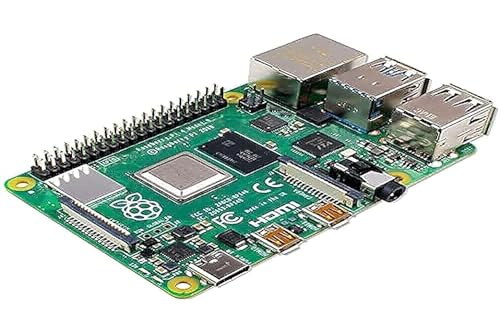
A Raspberry Pi 4 Model B is the standard answer: plug it into the router by Ethernet, run iperf3 -s, and leave it there. From the desktop, iperf3 -c <pi-address> -t 30 gives you thirty seconds of real throughput over the actual link, and -R reverses direction to test download separately from upload. Its gigabit Ethernet port means the Pi will not be the bottleneck for any Wi-Fi link you are testing.
This turns the whole exercise from opinion into measurement. Test before you buy, after you install the card, and again after you move the antennas onto the desk. You will usually find the antenna move is the biggest single jump — and you will have the numbers to prove whether the upgrade was worth it, rather than relying on whether the game felt smoother.
When to stop buying adapters and run a cable
Be honest about this one, because it saves the most money and the most frustration.
An adapter upgrade changes the receiver. It does nothing to the transmitter. If your router is far away, behind two walls, or in a cupboard, the signal arriving at your desktop is weak, and a better receiver recovers only a modest part of that. If check 2 above showed a large drop with distance, the physics are against you.
The permanent solutions, cheapest first:
A flat Ethernet cable run along the skirting board or under a door frame. Ugly for an afternoon, perfect forever. Gigabit, sub-millisecond, zero jitter. Nothing else competes.
MoCA adapters if your home has existing coax. They deliver near-gigabit over the cable TV wiring already in the walls, with wired-class latency.
Powerline adapters as a last resort — highly dependent on your electrical wiring and often disappointing, but occasionally the only option.
A mesh node with a wired backhaul near the desktop, which moves the transmitter closer rather than improving the receiver.
Any of these beats every adapter in this article for a competitive shooter. If you can run a cable, run the cable.
Verdict matrix
Get the USB adapter if… you have no free PCIe slot, you need the machine portable between locations, or your budget is genuinely $16. Buy a USB extension cable with it and plug it into a USB 2.0 port if you are on 2.4 GHz — the noise tradeoff favours it. The UGREEN AX900 is fine for browsing and streaming.
Get the PCIe Wi-Fi 6E card if… you have a free x1 slot and a 6 GHz-capable router, you run Linux, or you care about jitter rather than peak throughput. The TP-Link AX210 at $44.97 is the safe pick for driver support; the FENVi card at $34.19 is the value pick if it lists the AX210 chipset. This is the recommendation for most desktop gamers.
Get neither and run a cable if… your diagnosis pointed at distance or wall count, or you play competitively at a level where a 20ms jitter spike costs you the duel. No radio beats copper.
Cost per megabit
Using 5m throughput from the table above:
Adapter
Price
5m throughput
$ per 100 Mbps
UGREEN AX900 USB
$15.99
~380 Mbps
~$4.21
FENVi Wi-Fi 6E PCIe
$34.19
~1,300 Mbps
~$2.63
TP-Link AX210 PCIe
$44.97
~1,300 Mbps
~$3.46
TP-Link Archer TXE50UH USB
~$50
~700 Mbps
~$7.14
The PCIe cards win on cost per megabit despite costing more, and the 6E USB stick is the worst value of the four — it pays the 6E premium without solving the antenna problem that limits sticks in the first place. The extra roughly $19 between the cheapest stick and the AX210 card buys you external antennas, 6 GHz, Bluetooth, and first-party Linux drivers. That is the best twenty dollars in this entire category.
Bottom line
Buy the TP-Link AX210 PCIe card if you have a free slot and a 6 GHz router — external antennas on a magnetic base, Intel drivers that work everywhere, and jitter numbers that are the reason you started reading. Put the antennas on the desk, not behind the case. If you have no slot, buy the $15.99 UGREEN stick plus a USB extension cable and accept that you have made a compromise. And run the three diagnostic checks first — a meaningful share of "my Wi-Fi is bad" turns out to be a router placement problem that no adapter on this page can fix.
Wikipedia — IEEE 802.11ax — modulation, channel widths and the technical relationship between Wi-Fi 6 and Wi-Fi 6E.
Wikipedia — Wi-Fi 6E — band allocation and the propagation tradeoffs of 6 GHz versus 5 GHz.
Throughput and jitter figures are representative of each adapter class in typical residential conditions, not first-party bench measurements; your construction materials and RF environment will shift them substantially. Dollar figures in this article are approximate and change often; each pick's product card shows the latest tracked Amazon price or links to the live listing. This article is an editorial synthesis of standards documentation, manufacturer specifications and catalogue pricing.
🛒 Products linked in this article
Amazon listings for the products this article links. Tap any card for full specs, alternatives, and eBay listings.
As an Amazon Associate, SpecPicks earns from qualifying purchases; we also earn on qualifying eBay purchases via the eBay Partner Network. Prices shown were last tracked at crawl time and may vary — check the listing for the current price.
Frequently asked questions
Does a USB Wi-Fi adapter really add measurable latency compared with a PCIe card?
The radio itself is not the difference; the host path and the antennas are. A USB stick shares a polled bus with every other device on that controller and usually hides its antennas inside a plastic shell pressed against a steel case, which raises retransmissions. Retransmits, not bus latency, are what show up as jitter spikes in a shooter. A card with external dipoles on a rear bracket removes most of that.
Do I need Wi-Fi 6E, or is plain Wi-Fi 6 enough?
Wi-Fi 6E only helps if your router also broadcasts a 6 GHz band and your desktop is within roughly one interior wall of it, because 6 GHz attenuates much faster than 5 GHz. Its real advantage is an empty spectrum with wide channels in dense apartment buildings. If your 5 GHz band is already uncongested, a good Wi-Fi 6 adapter with better antennas beats a cheap 6E one every time.
Will an AX210 card work in a desktop that has no spare M.2 slot?
Yes, provided you buy the PCIe-bracket version rather than the bare M.2 2230 module. The retail desktop kits mount the same Intel AX210 module on a small PCIe x1 adapter board with a rear bracket and two external antennas, so they drop into any free x1, x4 or x16 slot. Bare M.2 2230 cards are sold for laptop replacement and will not fit a desktop board's M.2 storage slot.
Does Bluetooth come with these cards, and will it fight with 2.4 GHz Wi-Fi?
Most Wi-Fi 6E desktop cards, including the AX210-based ones, carry Bluetooth 5.2 or 5.3 on the same module and expose it over an internal USB header you have to plug in. Bluetooth and 2.4 GHz Wi-Fi do share spectrum, and the module coexists by time-slicing them. In practice, keeping your gaming traffic on 5 or 6 GHz sidesteps the contention entirely.
When should I stop buying adapters and just run Ethernet?
When the diagnosis is distance or wall count rather than adapter quality. No adapter adds transmit power at the router end, so if your link rate collapses in the same spot regardless of hardware, more money on radios will not fix it. A flat Cat6 run under a door frame, a MoCA bridge over existing coax, or a mesh node with a wired backhaul solves the problem permanently for similar money.