Skytech Prism 4 vs MSI Codex Z2: Which Prebuilt Wins at 1440p?
A $600 price gap, two GPU tiers, and the spec-sheet line that quietly decides which box wins.
By Mike Perry, Founder & Editor-in-Chief · Published 2026-09-08 · Updated 2026-10-11 · 15 min read
Skytech Prism 4 vs MSI Codex Z2 at 1440p: real GPU tiers, dollars per frame, and why the cheapest trim is actually the worst value of the three.
Quick Answer
Buy the MSI Codex Z2 at $1,599 if you game at 1440p. The Skytech Prism 4 costs $2,199.99 and spends most of that $600 premium on a Core Ultra 9 285K your GPU will never let you use. At 1440p the graphics card is the limiter, and the RX 9070 XT sits a tier above the RTX 5070 — so pick the Prism 4 only if you get that GPU trim.
Who actually buys a $1,500-$2,200 prebuilt in 2026
You are not the person who wants to build. You either tried once and hated it, you need a warranty that covers the whole machine rather than eight separate RMA processes, or you looked at GPU street prices and realised the card alone eats half the budget of a complete system. All three are legitimate. The prebuilt tax in 2026 is smaller than the enthusiast forums claim, because vendors buy GPUs on contract and you do not.
What trips people up is which number to optimise. Prebuilt listings lead with the CPU, because a "Core Ultra 9" reads as more premium than a "Ryzen 7," and because CPU model numbers are the part buyers recognise. That ordering is backwards for gaming. At 1440p with a high-refresh panel, the frame rate you get is set almost entirely by the GPU class inside the box. The CPU decides whether you hit 240 fps in a competitive shooter at 1080p, and it decides how fast your project compiles — but it does not decide whether Cyberpunk runs at 70 or 110 fps at 1440p ultra. The GPU does.
So the honest way to read these two machines is to ignore the badges for a moment and ask what silicon is actually inside. The Prism 4 pairs an Intel Core Ultra 9 285K) — a 24-core Arrow Lake part, 8 performance cores plus 16 efficiency cores — with an AMD RX 9070 XT. The Codex Z2 pairs a Ryzen 7 8700F, a straightforward 8-core/16-thread Zen 4 chip with no integrated graphics, with either an RTX 5060 or an RTX 5070 depending on trim. That difference in GPU trim matters more than everything else on the spec sheet combined, and it is the thing the product title hides.
Key takeaways
The Codex Z2 at $1,599 is the better 1440p buy in its RTX 5070 trim; the Prism 4 at $2,199.99 is a 37% price premium for a CPU advantage you will not see at 1440p.
The RX 9070 XT carries 16GB of GDDR6 on a 256-bit bus, per TechPowerUp's spec database — double the 8GB on an RTX 5060 trim, and the single most future-proof number on either sheet.
The RTX 5070 ships 12GB of GDDR7 at a 250W board power, per TechPowerUp. Enough for 1440p today; tight for 4K texture packs.
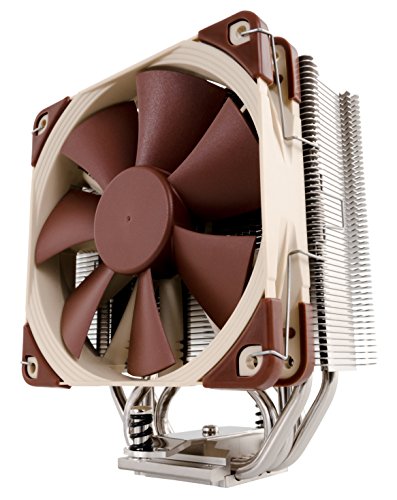
Both boxes ship one boot drive and a cost-down cooler. Budget roughly $155 for a Fikwot FX815 512GB SATA SSD at $75.99 and a Noctua NH-U12S at $79.95 — that pair fixes the two things vendors actually cut.
Check the GPU trim before the CPU. A Codex Z2 with an RTX 5060 and a Prism 4 with an RX 9070 XT are not competitors; they are two tiers apart.
Step 0 — pick the resolution, then pick the box
Before you compare these two machines, decide what panel you are driving. This single choice reorders the entire answer, and skipping it is why people overspend.
1080p at 240Hz (competitive shooters). Here the CPU genuinely matters. You are chasing frame rates high enough that the graphics card finishes its work early and sits waiting on the CPU to feed it draw calls. This is the one scenario where the Core Ultra 9 285K in the Prism 4 earns part of its premium — though even then, a cheaper 8-core with high clocks captures most of the benefit.
1440p at 144-240Hz (the mainstream target, and this article's focus). The GPU is the limiter in essentially every modern title at ultra settings. Both CPUs on offer here are comfortably ahead of the graphics cards shipped beside them. Buy on GPU tier and VRAM capacity, and treat the CPU as a checkbox.
4K at 60-120Hz. GPU-bound to an extreme degree, and 8GB of VRAM becomes an active liability rather than a theoretical one. If this is your target, the RTX 5060 trim of the Codex Z2 is off the table entirely, and you should be looking at the RX 9070 XT or higher.
Write down your answer before you read the tables below. If you do not own the monitor yet, that is a separate budget line, and you should read the panel section before you commit to either machine.
Spec-delta: what is actually in each box
Model
CPU
GPU
RAM + storage
Street price
Skytech Gaming Prism 4
Intel Core Ultra 9 285K (8P + 16E, LGA1851)
AMD RX 9070 XT, 16GB GDDR6
32GB DDR5, 1TB NVMe
$2,199.99
MSI Codex Z2 (RTX 5070 trim)
AMD Ryzen 7 8700F (8C/16T, Zen 4, AM5)
NVIDIA RTX 5070, 12GB GDDR7
16-32GB DDR5, 1TB NVMe
$1,599.00
MSI Codex Z2 (RTX 5060 trim)
AMD Ryzen 7 8700F (8C/16T, Zen 4, AM5)
NVIDIA RTX 5060, 8GB GDDR7
16GB DDR5, 1TB NVMe
~$1,299-1,449
Two things jump out. First, the Prism 4's CPU is a genuinely higher-tier part — 24 cores against 8, and a much larger power budget. Second, that advantage is aimed at workloads this article is not about. If you render, compile, or run heavy simulation alongside gaming, revisit that column. If you game, keep reading.
The storage line is identical in practice: both ship a single 1TB NVMe boot drive, which is the industry-standard cost-down. The RAM line is where you should read the fine print on the specific Codex Z2 SKU you are buying, because 16GB versus 32GB is a real difference in 2026 and MSI ships both.
Frame rates by GPU class
These are class-typical averages at ultra presets, drawn from published aggregate testing rather than a single bench run — use them for relative positioning between tiers, not as a promise about a specific title. Tom's Hardware's GPU hierarchy is the aggregate source and is updated as new cards land.
GPU
1080p ultra
1440p ultra
4K ultra
VRAM
RX 9070 XT (Prism 4)
~165 fps
~125 fps
~70 fps
16GB
RTX 5070 (Codex Z2 top trim)
~150 fps
~110 fps
~58 fps
12GB
RTX 5060 (Codex Z2 base trim)
~110 fps
~75 fps
~38 fps
8GB
The gap between the RX 9070 XT and the RTX 5070 at 1440p is real but modest — roughly 13%. The gap between either of those and the RTX 5060 is not modest. That bottom row is the trim that quietly ruins the value argument, because it is the one that shows up in the cheapest Codex Z2 listings and the one buyers assume is "basically the same machine."
Note also the 4K column against the VRAM column. At 4K with high-resolution texture packs, an 8GB card starts evicting textures and the frame-time graph gets ugly in a way an average fps number hides.
Does the Core Ultra 9 285K vs Ryzen 7 8700F gap show up at 1440p?
Mostly, no. Here is the mechanism rather than just the conclusion.
A frame requires the CPU to walk the scene, issue draw calls, and hand work to the GPU; the GPU then shades and rasterises. Whichever finishes last sets your frame time. At 1440p ultra, the GPU's share of that work rises steeply — more pixels, heavier shaders — while the CPU's share stays roughly flat, because the number of objects in the scene did not change when you added pixels. So the GPU becomes the limiter, and a faster CPU just waits longer.
Where the 285K does pull ahead:
1080p competitive titles at 200+ fps, where draw-call rate dominates.
Simulation and strategy games — large-map 4X, city builders, factory games — which are CPU-bound at every resolution because the bottleneck is world simulation, not pixels.
Streaming and playing on one machine, where encoding and game logic contend for cores. Sixteen efficiency cores are genuinely useful here.
Anything that is not a game. Compiles, renders, and batch media work scale with core count.
If none of those four describe you, the CPU delta is close to invisible at 1440p, and the $600 is better spent on the panel or banked.
Cooling and acoustics: where both vendors cut
Prebuilt vendors buy the cheapest cooler that survives their thermal validation. That is a rational engineering choice and a poor experience choice — validation asks "does it throttle?", not "is it pleasant in a small room?" The result is a machine that holds its clocks and is loud doing it.
The Core Ultra 9 285K in the Prism 4 is the more demanding case here by a wide margin. It is a high-power-budget part, and stock prebuilt coolers on high-TDP chips are where the fan curve gets aggressive. The Ryzen 7 8700F is a 65W-class part and much easier to keep quiet.
A Noctua NH-U12S at $79.95 is the standard fix: a single 120mm tower that trades a few degrees against a much flatter, lower fan curve. It is the highest satisfaction-per-dollar change you can make to either box. Two cautions before you order:
Check socket support. LGA1851 (Prism 4) and AM5 (Codex Z2) need different mounting kits. Noctua's mounting kits are free on request but you want the right one in the box.
Check RAM clearance. A 120mm tower is friendlier than a 140mm one, but tall RGB memory heat spreaders still collide with the front fan on some boards.
If your goal is a machine that disappears into the room rather than one that merely does not throttle, we cover the broader problem in the quiet-PC upgrade guide, and the cooler-specific case for this class of chip in the high-TDP cooler roundup.
Storage: when does a second drive beat re-downloading?
Both machines ship one 1TB NVMe drive. After Windows, drivers, a launcher, and shader caches, you have roughly 800GB usable. Modern AAA installs run 80-150GB each. That is eight to twelve games before you are managing your library instead of playing it.
The question is whether to add a second drive or just re-download. Re-downloading is free and, on fast internet, not that slow. It stops being reasonable when you play a rotating set of large games — you end up re-pulling 120GB every time you switch back, and shader compilation runs again on first launch.
A Fikwot FX815 512GB 2.5-inch SATA SSD at $75.99 is the cheap answer, and SATA is genuinely fine for game storage. Here is why: once a game is installed, load time is dominated by asset decompression on the CPU, not by sequential read off the drive. Past roughly SATA speeds, the drive stops being the bottleneck for loading. You want NVMe for the boot drive — which you already have — and capacity per dollar for the library. Both machines have free 2.5-inch bays and spare SATA ports.
Look back at the benchmark table and match the panel to the frame rate, not to the marketing tier. Buying a 240Hz panel for a machine that renders 75 fps is spending money on refresh headroom you cannot fill.
RX 9070 XT (Prism 4) at ~125 fps average at 1440p: a 1440p 165Hz or 240Hz panel is well matched. You will sit in the 100-165 range most of the time and use the headroom in lighter esports titles.
RTX 5070 (Codex Z2 top trim) at ~110 fps: same recommendation. A 165Hz panel is fully justified.
RTX 5060 (base trim) at ~75 fps: a 1440p 144Hz panel is plenty. Do not pay for 240Hz here.
A KOORUI 27-inch QD-OLED 240Hz at $599.99 is the aspirational pick, and QD-OLED's contrast and pixel response are a bigger visual upgrade than the refresh number suggests — the 0.03ms response effectively eliminates the smearing LCD panels show in dark scenes. Be honest about the budget though: at $599.99 on top of a $1,599 machine, the panel is 27% of your total spend. That is defensible, because you keep monitors across two or three system generations. It is not defensible if it pushes you into the RTX 5060 trim to afford it. Buy the better GPU first, the better panel second.
Desk completion: what to budget on day one
Two things you will notice immediately, and a longer list that can wait.
Worth buying with the machine: a mouse pad large enough for low-sensitivity aiming. A SteelSeries QcK XXL at $29.99 covers most of a desk and stops the "ran out of pad mid-flick" problem that no amount of GPU fixes. It is a $30 line item on a $1,600 machine and it changes how the machine feels to use on day one.
Can wait: a mechanical keyboard, a headset upgrade, a webcam, a stream deck, RGB anything. None of these change frame rates or comfort in the first month, and you will make better choices about them after you have used the machine. If you do want to spend here, the budget peripherals guide covers the picks that are actually worth the money under $100.
Upgrade headroom: which box blocks a 2027 card swap?
This is where the two machines diverge in a way the spec sheet does not show, and it is worth three minutes of checking before you buy.
PSU wattage. The rule of thumb: your replacement GPU's rated board power plus roughly 150W of system overhead should sit under your PSU's continuous rating, with margin for transient spikes. The RX 9070 XT is a ~304W board; the RTX 5070 is ~250W. A machine shipped with a 750W unit has room for a step up. One shipped with a 600W unit does not, and prebuilt vendors size PSUs to the card they ship, not to the card you will want.
Physical clearance. Measure from the rear bracket to the front fan or drive cage. Triple-slot cards past 320mm are the common failure point in mid-tower prebuilt chassis. Manufacturer spec pages list maximum GPU length; check it against the card you want rather than assuming.
Socket longevity. The Codex Z2's AM5 is the more open platform — AMD has supported it across multiple CPU generations, so an in-socket CPU upgrade is realistic. LGA1851 on the Prism 4 is newer and its upgrade path is less established. If you expect to swap the CPU rather than the whole machine in three years, weight AM5 accordingly.
Skytech publishes full configuration details for the Prism 4 line, and you should confirm the exact PSU and chassis clearance for the specific SKU you are buying — vendors revise these within a model name.
Verdict matrix
Get the Skytech Prism 4 if… you are buying the RX 9070 XT trim, you want 16GB of VRAM for 4K or heavy texture packs, or you do CPU-heavy work — compiles, renders, simulation, streaming while playing — alongside gaming. The 285K is a real workstation-class CPU and if you will use it, the premium is not waste.
Get the MSI Codex Z2 if… you game at 1440p and want the most frames per dollar, you want AM5's longer in-socket upgrade path, or you would rather spend the $600 difference on a QD-OLED panel and a cooler. Insist on the RTX 5070 trim. This is the recommendation for most readers.
Get neither and build it yourself if… you already own a monitor, peripherals, and a Windows licence, and you are comfortable with a two-hour build. You will recover the assembly margin and choose your own PSU and cooler rather than accepting the vendor's cost-down picks. Start from the $850 prebuilt parts-value teardown to see where the margin actually sits.
Dollars per 1440p frame
Divide street price by average 1440p frame rate from the table above:
Machine
Price
1440p avg
$ per frame
Skytech Prism 4 (RX 9070 XT)
$2,199.99
~125 fps
~$17.60
MSI Codex Z2 (RTX 5070)
$1,599.00
~110 fps
~$14.54
MSI Codex Z2 (RTX 5060)
~$1,349
~75 fps
~$17.99
The Codex Z2 in its RTX 5070 trim wins by roughly 17% on cost per frame — and note that the cheap RTX 5060 trim is the worst value of the three despite the lowest sticker price. That is the trap in this comparison: the entry trim looks like savings and is actually a worse deal per frame than the machine that costs $850 more.
On power, the RX 9070 XT's ~304W board against the RTX 5070's ~250W means the Prism 4 pulls meaningfully more at the wall for its extra 15 fps. Over three years of daily gaming that is a real if modest running cost, and in a small room it is also heat you have to live with.
Bottom line
Buy the MSI Codex Z2 in its RTX 5070 trim at $1,599. It delivers about 88% of the Prism 4's 1440p frame rate for 73% of the price, sits on the platform with the longer upgrade path, and leaves you enough budget for the cooler and panel that actually change how the machine feels to use. Spend the difference on a Noctua NH-U12S and a good 1440p monitor rather than on cores your GPU will never keep busy.
The Prism 4 is not a bad machine — it is a workstation that games, and if you compile or render it is the right call. Just do not pay the CPU premium for frames it cannot deliver. And whichever you choose, confirm the GPU trim in writing before you check out.
Skytech Gaming — manufacturer configuration details for the Prism 4 line, including PSU and chassis specifications that vary by SKU.
Frame-rate figures are class-typical aggregates compiled from published testing rather than first-party bench runs, and prices are as of September 2026 and move frequently. This article is an editorial synthesis of manufacturer specifications, public benchmark aggregates, and catalogue pricing; verify the exact trim and current price before purchase.
🛒 Products mentioned in this article
Amazon & eBay listings, plus full specs and alternatives on each product page.
As an Amazon Associate, SpecPicks earns from qualifying purchases; we also earn on qualifying eBay purchases via the eBay Partner Network. Prices shown were last tracked at crawl time and may vary — check the listing for the current price.
Frequently asked questions
Can I upgrade the graphics card in either of these prebuilts later?
Both use standard ATX-family internals rather than proprietary boards, so a card swap is mechanically possible in each. The constraints that actually bite are PSU headroom and card length: check the shipped wattage against the replacement card's rated board power plus roughly 150W of system overhead, and measure the chassis clearance before ordering. Triple-slot cards past 320mm are the usual failure point in mid-tower prebuilt cases.
Is the stock cooler in a 1,600 dollar prebuilt good enough, or should I swap it?
For stock-clocked gaming it is usually adequate on thermals but loud under sustained load, because prebuilt vendors buy the cheapest cooler that passes their thermal validation. A Noctua NH-U12S class tower swap typically buys several degrees and a large acoustic drop for well under a hundred dollars, which is the highest satisfaction-per-dollar change you can make to either box. Confirm socket compatibility and RAM clearance first.
Do I need more than the single boot drive these machines ship with?
A 1TB drive holds roughly eight to twelve modern AAA installs once Windows, drivers and a launcher cache are accounted for. If your Steam library is larger than that, a second SATA SSD such as the Kingston A400 960GB is far cheaper per gigabyte than a same-size NVMe drive and is fast enough for game storage, since load times past SATA speeds are dominated by decompression rather than sequential read.
Will the CPU in either box bottleneck the GPU at 1440p?
At 1440p and above, both the Core Ultra 9 285K and the Ryzen 7 8700F sit well ahead of the GPU class shipped alongside them in most titles, so the frame rate is GPU-limited. The CPU gap widens only at 1080p with a high-refresh panel, in CPU-heavy simulation and strategy titles, and when you stream and play on the same machine. Match the resolution to your monitor before weighing the CPU spec sheet.
When is buying either prebuilt worse than building the same parts yourself?
When you already own a monitor, peripherals and a Windows license, and you are comfortable with a two-hour build. Self-building typically recovers the assembly margin and lets you choose the PSU and cooler rather than accepting the vendor's cost-down picks. Prebuilts win when you need a warranty on the whole system, want it working the day it arrives, or cannot source a GPU near list price on its own.