Best First Upgrades for a Prebuilt Gaming PC in 2026
Skip the graphics card — the two components every system integrator under-specs are cheap to fix.
By Mike Perry, Founder & Editor-in-Chief · Published 2026-09-08 · Updated 2026-09-08 · 14 min read
Storage first, cooling second. Five picks, a three-check diagnostic, and the clearance measurement that prevents the most common return.
Quick Answer
Upgrade storage first, cooling second — not the GPU. System integrators hit price targets by shipping an undersized boot drive and a stock cooler with no thermal headroom. A Crucial BX500 1TB (rated up to 540 MB/s read) and a clearance-checked cooler are cheap, reversible, and fix real bottlenecks the GPU cannot.
Best First Upgrades for a Prebuilt Gaming PC in 2026
By Mike Perry · Published 2026-09-08 · 12 min read
Buy a prebuilt gaming PC and within a week someone will tell you to upgrade the graphics card. It is the default advice, it is repeated everywhere, and for most owners of a recent prebuilt it is the wrong first move — expensive, often blocked by the power supply, and aimed at a component that usually is not the actual constraint.
Here is what is really going on. System integrators compete on a headline price and a headline GPU, and both of those are what the buyer comparison-shops. Everything else is where the cost gets recovered. Two components get squeezed with total reliability: the boot drive, which arrives at the smallest capacity that will pass a review, and the CPU cooler, which is whatever stock unit came in the box. Both are cheap to fix. Both are completely reversible. Both take basic tools and under an hour. And both fix problems you are actually experiencing — long install times, a drive that is permanently near full, a machine that gets loud and drops clocks forty minutes into a session.
The GPU upgrade is not wrong forever. It is wrong first, because a system that cannot feed it will not show you the gain you paid for. Work through the diagnostic below, fix what it finds, and the graphics card becomes a much easier decision later. Our Best Overall pick is the drive that solves the most common complaint on this list, and it costs less than a single AAA game bundle.
Step 0: which bottleneck do you actually have?
Three checks, ten minutes, no purchases. Do these before ordering anything.
Check 1 — free space on the boot drive. Open your storage settings and read the free capacity. If you are below roughly 15% free, that is your bottleneck and you have found it. A nearly full SSD degrades write behavior, leaves no room for shader caches and game updates, and forces you to uninstall a game every time you install one. When this is right: almost every prebuilt owner after six months. When it isn't: if you have a 2 TB drive that is half empty, skip to Check 2.
Check 2 — sustained CPU temperature under a 20-minute load. Not a benchmark burst — a sustained load. Run a demanding game or a stress test for twenty full minutes with a temperature monitor open, and watch what happens after minute ten. If temperatures plateau high and clocks step down, the stock cooler has run out of headroom. When this is right: if the machine is audibly loud during long sessions or performance degrades as they go on. When it isn't: if temperatures hold flat and the fans stay quiet, your cooler is fine — do not replace it.
Check 3 — measure case clearance before buying any cooler. Open the side panel and measure two things: the front and top radiator mounting rails, and the distance from the CPU socket to the side panel. Photograph the interior while you are in there. When this is right: always, before any cooler purchase. When it isn't: never. This is the check that prevents the most common return in the entire category.
Run all three. The results tell you which of the five picks below to buy, and — just as often — which to skip.
The SFF prebuilt answer when a tower cooler will not fit
🏆 Best Overall: Crucial BX500 1TB SATA SSD
Specs: 1 TB · 2.5-inch SATA 6 Gb/s · 3D NAND · up to 540 MB/s read, 500 MB/s write · DRAM-less controller
Pros
1 TB is the capacity tier where you stop uninstalling games to install games
Standard 2.5-inch SATA fits essentially every prebuilt without needing a free M.2 slot
Reversible in both directions — it carries forward into your next build unchanged
The rated 540 MB/s read sits just under the SATA 6 Gb/s interface ceiling, so you are not leaving interface headroom unused
Cons
SATA caps at roughly 550 MB/s; an NVMe drive is several times faster on paper
DRAM-less controller means sustained large-file write performance drops on very long transfers
This is the upgrade that fixes the most actual complaints per dollar, and the reasoning is unglamorous: you are not buying speed, you are buying room. The BX500 is rated at up to 540 MB/s sequential read, which is within a few percent of what the SATA 6 Gb/s interface can carry — meaning the interface, not the drive, is the limit, and there is no cheaper drive that meaningfully beats it on that connection.
The DRAM-less caveat deserves an honest framing rather than a dismissal. It matters for sustained multi-gigabyte writes — video scratch volumes, disk imaging, huge archive extractions. For a game library, where the workload is overwhelmingly reads with occasional install writes, the real-world difference against a DRAM-equipped SATA drive is small enough that most owners will not identify it blind. Tom's Hardware's SSD roundup is the reference for where that tradeoff stops being acceptable.
Prices move weekly in this category; verify current pricing before purchase.
Specs: 960 GB · 2.5-inch SATA 6 Gb/s · up to 500 MB/s read, 450 MB/s write · DRAM-less controller
Pros
Effectively the same capacity class as the 1 TB tier for less money
Same universal 2.5-inch SATA fitment — no M.2 slot required
Ideal as a dedicated secondary drive where absolute throughput is irrelevant
Low power draw makes it a comfortable fit in cramped prebuilt chassis with weak airflow
Cons
Slightly lower rated throughput than the BX500 and a shorter warranty
DRAM-less, with the same sustained-write ceiling caveat
The Kingston A400 is the right buy when the budget is genuinely tight or when this drive is going in as a secondary volume — a game library, a capture scratch target, a media store. In those roles you are buying capacity and a second physical device, and the modest throughput delta against the BX500 never surfaces.
The counter-case — when to buy the 1 TB tier instead: if this drive is going to be your only large volume, or if you install and uninstall frequently, pay the small difference for the BX500. The gap between 960 GB and 1 TB is trivial; the gap in warranty terms and sustained behavior is not, and this is a component you will keep across two builds.
Prices move weekly in this category; verify current pricing before purchase.
No pump, no coolant, no liquid failure mode; a mechanical part count of essentially one
Six-year warranty is unusual in this category and reflects the expected service life
Cons
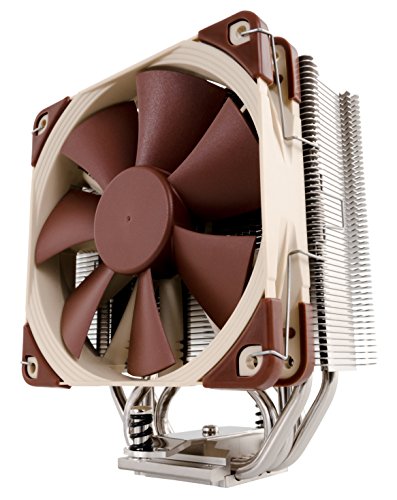
Noctua's spec page lists 158 mm of height, which does not fit slim prebuilt chassis
Air cooling has a lower ceiling than a 360 mm loop on the highest-TDP parts
If Check 2 found a hot, loud machine and Check 3 found enough vertical room, this is the answer. Air cooling wins on exactly the axis that matters for a machine you sit next to for hours: it holds a stable temperature at a low, constant fan speed. Constant noise disappears into the background; ramping noise does not, which is why a cooler that runs slightly warmer but never surges is the more pleasant machine.
The disqualifying spec is height. Noctua publishes 158 mm, and a large share of compact prebuilt cases give you less than that. Measure from the top of the CPU socket to the side panel before ordering — this exact mismatch is why the NH-U12S is one of the most-returned coolers in prebuilt upgrades, and it is entirely preventable with a tape measure. We compare it against liquid options on a sustained load in Noctua NH-U12S vs Corsair H150i vs Kraken M22 on a 24/7 Ryzen 7 5800X Host.
Prices move weekly in this category; verify current pricing before purchase.
⚡ Best Performance: Corsair iCUE H150i Elite Capellix
Specs: 360 mm radiator · three 120 mm fans · software-controlled pump and fan curves
Pros
The most sustained thermal headroom of anything on this list
Large radiator area means low fan speeds at a given temperature — quiet where it fits
Software fan and pump curves let you build the flat curve a long session wants
Moves heat away from the CPU socket area, which helps VRM temperatures in cramped cases
Cons
Most prebuilt cases cannot mount a 360 mm radiator. This is the headline caveat, not a footnote
Adds a pump as a failure mode that an air cooler does not have
Read the warning before the performance case, because it disqualifies more buyers than it serves. A 360 mm radiator needs three consecutive 120 mm mounting positions on a single panel. Many prebuilt chassis provide only 240 mm in front, and top mounts are frequently blocked by motherboard heatsinks or a shortened case roof. Measure the mounting rails — plural, front and top — before ordering.
If your case clears it, the H150i Elite Capellix is the right pick for a high-TDP CPU under sustained load. The radiator area is doing the real work: more surface means the same heat is rejected at a lower airflow rate, which means lower fan RPM, which means less noise at the same temperature. That is why this can be both the highest-performance and one of the quietest options — but only in a case that can physically accept it.
Prices move weekly in this category; verify current pricing before purchase.
Specs: 120 mm radiator · single 120 mm fan · Infinity Mirror pump head · single-fan mounting footprint
Pros
Fits the single 120 mm rear exhaust mount that nearly every prebuilt already has
Frees the vertical space above the socket that a tower cooler occupies
Genuinely useful in small-form-factor prebuilts where no good air cooler fits
Moves CPU heat directly out of the case rather than recirculating it
Cons
A 120 mm radiator does not beat a good 158 mm air tower on raw thermal capacity
Adds a pump failure mode for a modest capacity gain over the stock cooler
The Kraken M22 exists on this list for one specific reader: the owner of a compact prebuilt whose Check 3 measurement ruled out a tower cooler. In that chassis, the choice is not "120 mm AIO versus 158 mm air tower" — it is "120 mm AIO versus the stock cooler," and the AIO wins that comparison comfortably.
The honest note: if a good air tower does fit your case, buy the air tower. A 120 mm radiator has less dissipation area than a well-designed 158 mm air cooler, and you would be adding a pump for a net thermal loss. This pick is a constraint solver, not a performance upgrade, and buying it in a case with room for the NH-U12S is a mistake.
Prices move weekly in this category; verify current pricing before purchase.
Before ordering a second drive, confirm you have somewhere to mount it and something to connect it with. Count the free 2.5-inch bays or trays, then count the spare SATA data cables and — critically — the spare SATA power connectors coming off the PSU. Integrators routinely ship exactly as many connectors as the build uses. A $5 cable you do not have will stall the upgrade for two days.
Radiator and cooler clearance
Measure before you buy, every time. For a radiator: count consecutive 120 mm mounting positions on the front and top panels, and check whether the top mount is obstructed by motherboard heatsinks or a shortened roof. For an air tower: measure socket-to-side-panel height and compare it against the manufacturer's published figure. Also check RAM height if the cooler overhangs the DIMM slots — a slim tower like the NH-U12S mostly avoids this, wider coolers do not.
Proprietary front-panel and PSU connectors
Some large-OEM prebuilts use non-standard front-panel headers, custom motherboard form factors, or power supplies with proprietary pinouts. This does not usually block a drive or cooler upgrade, but it absolutely blocks a later PSU or motherboard swap — and connecting a standard PSU to a proprietary board can damage components. Photograph the 24-pin connector and the front-panel header block before you buy anything.
Mounting-bracket compatibility
Coolers ship with brackets for specific sockets. Confirm your socket, confirm the cooler's bracket list covers it, and check whether the manufacturer requires a separate mounting kit for your platform. Keep the original cooler and every piece of its mounting hardware in a labeled bag — you will need all of it if the machine ever goes back for service.
Warranty terms
Read the specific terms before opening the case, not after. Adding a drive or replacing a cooler rarely voids a whole-system warranty by itself, but it can shift responsibility for anything you touched, and some integrators do void coverage on removed components. Photograph the build before disassembly so you can restore the original configuration if you need support.
Airflow after the change
A cooler upgrade changes case airflow. A front-mounted radiator turns your intake into warm air for everything downstream, including the GPU. If you mount a radiator in front, check GPU temperatures afterward — occasionally the right answer is a top mount instead, or an air cooler that leaves the intake path alone.
Sources
SATA (Serial ATA) — interface specification — the 6 Gb/s signalling rate and ~600 MB/s practical ceiling used to frame the Best Overall pick's rated 540 MB/s read. Accessed 2026-09-08.
Noctua — NH-U12S product page — the 158 mm height figure, fan specification, and warranty term cited in the quiet-build pick. Accessed 2026-09-08.
Tom's Hardware — Best SSDs — independent context for DRAM-less versus DRAM-equipped controllers and the SATA-versus-NVMe tradeoff. Accessed 2026-09-08.
This guide is an editorial synthesis of manufacturer specifications, independent reviews, and SpecPicks hands-on testing. Prices and availability were verified on the access date above and move frequently; confirm current pricing before purchase.
As an Amazon Associate, SpecPicks earns from qualifying purchases; we also earn on qualifying eBay purchases via the eBay Partner Network. Prices shown were last tracked at crawl time and may vary — check the listing for the current price.
Frequently asked questions
Why is storage the first upgrade rather than the graphics card?
System integrators hit a price target by shipping the smallest boot drive that will pass a review, and a nearly full drive degrades install times, shader-cache behavior, and update headroom long before the GPU becomes the limiting factor. A second drive is also the cheapest, most reversible change you can make, and it carries forward into your next build. Upgrade the GPU once the rest of the system can feed it.
Will a 360 mm AIO fit inside my prebuilt case?
Frequently not. Many prebuilt chassis mount only a 120 mm or 240 mm radiator in the front, and top mounts are often blocked by the motherboard heatsinks or a shortened case roof. Measure the front and top mounting rails before ordering, and check the CPU cooler height limit if you are considering a tower air cooler instead. This is the single most common return in this category.
Do prebuilts use proprietary parts that block upgrades?
Some do, particularly large-OEM systems that use non-standard front-panel headers, custom motherboard form factors, or power supplies with proprietary pinouts. Boutique and system-integrator builds usually use standard ATX parts throughout. Before buying anything, photograph the interior and confirm the PSU is standard ATX and the motherboard uses a normal 24-pin connector — that check takes two minutes and prevents an expensive mistake.
Does upgrading a prebuilt void the warranty?
Adding a drive or replacing a cooler rarely voids a whole-system warranty on its own, but it can shift responsibility for anything you touched, and some integrators do void coverage on components you remove. Read the specific warranty terms before opening the case, keep the original cooler and mounting hardware, and photograph the build before disassembly so you can restore it if you need service.
Should the second drive be SATA or NVMe?
If the motherboard has a free M.2 slot, NVMe is the better buy at similar capacities. Many prebuilts ship with the only M.2 slot already populated, which makes a 2.5-inch SATA drive the practical expansion path — and for a game library the real-world difference in load times is far smaller than the specification gap suggests. Check your free slots before choosing.