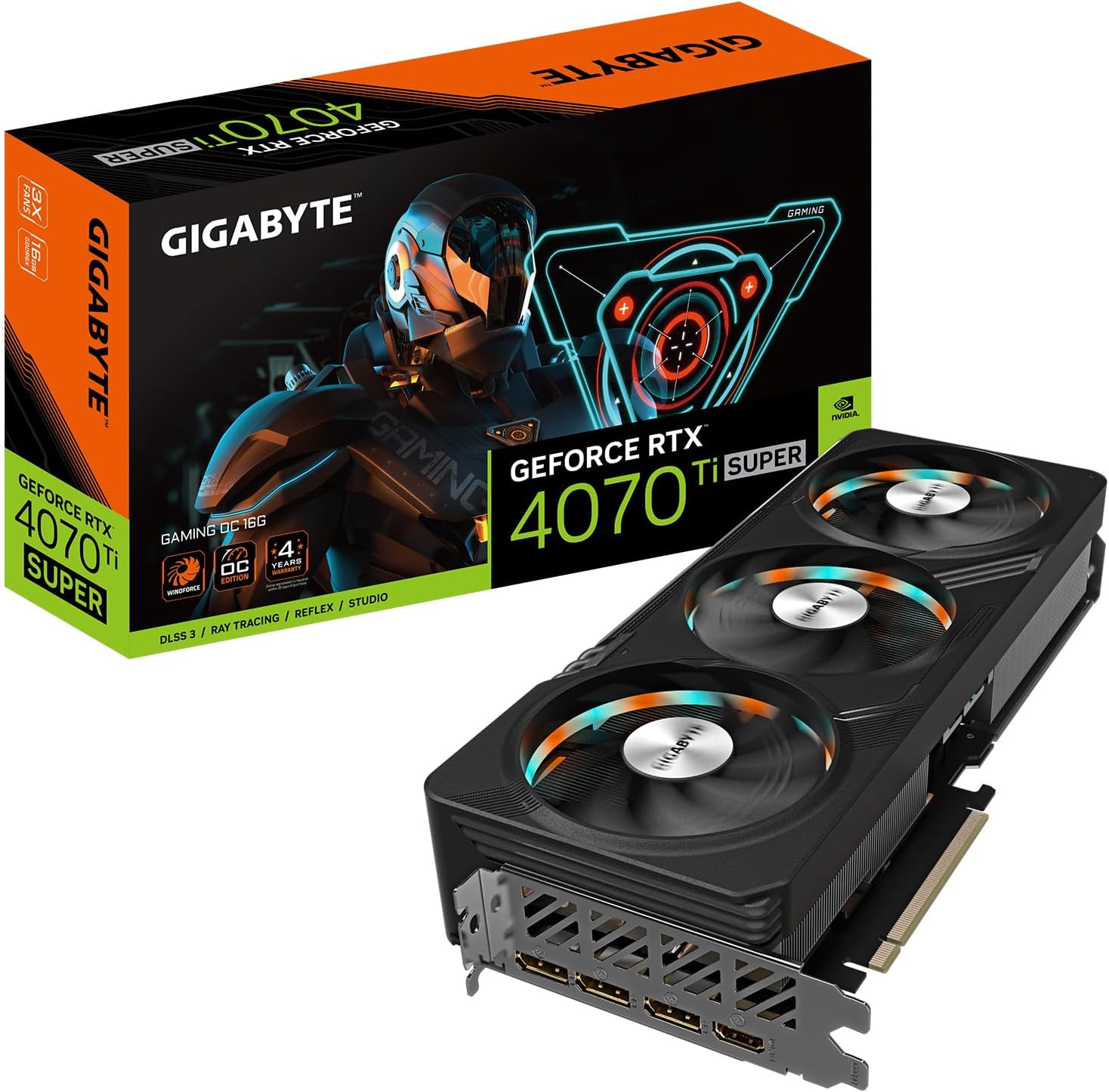
Mistral AI has become one of the most consequential challengers to OpenAI's dominance in large language models. Founded in 2023 by researchers who previously built technology at DeepMind and Meta AI, the Paris-based company has established a distinct identity around open-weight models that can be deployed locally, via API, or in hybrid cloud environments. For developers, researchers, and organizations building on AI infrastructure, Mistral's releases have repeatedly reset expectations about what compact, openly distributed models can achieve.
What Is Mistral AI? Company Background
Mistral AI was incorporated in April 2023 by three co-founders: Arthur Mensch, formerly a research scientist at DeepMind; and Guillaume Lample and Timothée Lacroix, both formerly at Meta AI Research, where they contributed to early large language model work. The founding team brought direct experience building frontier models at two of the field's most influential labs.
The company secured a €105M seed round in June 2023, led by Lightspeed Venture Partners—one of the largest European tech seed rounds on record at the time. A follow-on raise in December 2023 brought approximately $415M at a reported $2B valuation, with Andreessen Horowitz (a16z) leading and General Catalyst and Salesforce Ventures also participating, per reporting by TechCrunch. That capitalization positioned Mistral as the most heavily funded European AI lab, competing directly with OpenAI's installed enterprise base.
Headquartered in Paris, Mistral operates under EU regulatory frameworks—a positioning that has attracted customers in European markets where data residency requirements and GDPR govern AI procurement decisions.
The Mistral AI Model Lineup
Mistral 7B — The Open-Weight Foundation
Released in September 2023, Mistral 7B was the company's debut model. Per Mistral's published technical report (arXiv:2310.06825), the 7-billion-parameter model achieves 60.1% on the MMLU benchmark (5-shot), outperforming Llama 2 13B on the same suite despite having roughly half the parameter count. The model ships under the Apache 2.0 license, enabling commercial use without royalty payments or usage restrictions.
Distribution was deliberately frictionless: a plain Hugging Face download and a public torrent link, no registration required. That approach seeded fast community adoption and established a template Mistral has largely carried forward.
Mixtral 8x7B — Mixture-of-Experts at Scale
Mixtral 8x7B arrived in December 2023 and introduced a mixture-of-experts (MoE) architecture to the open-weight ecosystem at meaningful scale. The model has eight expert sub-networks, each with approximately 7B parameters, but only two are activated per forward pass. That design gives Mixtral 8x7B the inference compute cost of a roughly 13B dense model while extracting accuracy from a much larger effective parameter count.
Per the model card maintained on Hugging Face and independent evaluations referenced in community benchmarking threads, Mixtral 8x7B scores approximately 70.6% on MMLU (5-shot)—broadly competitive with GPT-3.5 on that benchmark. On multilingual tasks and code benchmarks, community analyses have placed it above Llama 2 70B with lower inference latency, though results vary by quantization level and hardware platform.
For operators evaluating the economics of open-weight inference at scale relative to paid API services, the broader picture of what proprietary API costs look like long-term is explored alongside OpenAI's revenue and burn trajectory.
Mistral NeMo 12B — NVIDIA Collaboration
In July 2024, Mistral and NVIDIA co-announced Mistral NeMo, a 12-billion-parameter open-weight model developed using NVIDIA's NeMo framework and released under the Apache 2.0 license. NeMo was positioned as a performance upgrade over Mistral 7B, with a 128k-token context window that makes it substantially more capable for long-document analysis and multi-turn instruction following.
Codestral and Commercial Models
Codestral, launched in May 2024, is a 22-billion-parameter model specialized for code generation and completion. Per Mistral's release post, it supports over 80 programming languages and was evaluated on HumanEval and code completion benchmarks. Codestral carries more restrictive licensing than the Apache 2.0 models.
On the commercial side, Mistral's API platform (La Plateforme at api.mistral.ai) offers Mistral Small, Medium, and Large at per-token pricing. Mistral Large is the company's closed flagship, positioned against GPT-4 class systems. Le Chat, Mistral's consumer chatbot, provides free-tier access alongside a paid subscription with Mistral Large and image generation features.
Mistral AI vs. OpenAI: Key Differences
| Dimension | Mistral AI | OpenAI |
|---|---|---|
| Model weights | Open-weight (Apache 2.0 for most models) | Fully proprietary |
| Deployment options | Local on-prem, cloud API, managed endpoints | Cloud API; limited on-prem enterprise |
| Headquarters | Paris, France | San Francisco, USA |
| Smallest usable model | Mistral 7B (~4–5GB VRAM, quantized) | GPT-4o mini (API only) |
| Hardware stack | Multi-platform: NVIDIA, AMD, CPU | NVIDIA-centric at data-center scale |
| Regulatory posture | EU-based, EU AI Act alignment | US-based, NIST AI RMF alignment |
The most consequential difference for practitioners is deployability. OpenAI's models are accessible only via paid API; every token processed transits OpenAI's infrastructure. Mistral's open-weight models can run entirely on operator-owned hardware, eliminating per-token costs and keeping data on-premises—a hard requirement in healthcare, legal, and financial services contexts where regulated data cannot traverse third-party systems.
The EU regulatory angle is increasingly material: as the EU AI Act takes effect, Mistral's Paris domicile and compliance posture simplify procurement for European enterprises navigating data residency mandates.
Hardware Requirements for Running Mistral Locally
Resource requirements scale with model size and quantization format. The figures below are derived from documented model parameter counts and community benchmarking of GGUF quantization levels:
| Model | Precision | Approx. VRAM Required |
|---|---|---|
| Mistral 7B | FP16 | ~14GB |
| Mistral 7B | Q4_K_M (GGUF) | ~4–5GB |
| Mistral NeMo 12B | FP16 | ~24GB |
| Mistral NeMo 12B | Q4_K_M (GGUF) | ~7–8GB |
| Mixtral 8x7B | FP16 | ~90GB+ |
| Mixtral 8x7B | Q4_K_M (GGUF) | ~24–26GB |
A single RTX 3060 12GB handles Mistral 7B and NeMo 12B comfortably at Q4 quantization—the real-world performance dynamics of that setup are covered in Mistral Leanstral 1.5: Running the New Open Math Model on a 12GB RTX 3060 and Running Mistral Leanstral 1.5 Locally on an RTX 3060 12GB. For full Mixtral 8x7B at higher precision, a multi-GPU setup or a single card with 24GB+ VRAM is typically required.
The cost-versus-capability trade-off at the high end—including whether a flagship GPU meaningfully changes throughput for local LLM workloads—is analyzed in RTX 5090 Prebuilt vs a $700 RTX 3060 Local-LLM Box.
AMD Hardware and ROCm
Mistral's models run on AMD hardware via ROCm, AMD's open-source GPU compute stack. AMD Instinct data-center accelerators (MI300X, MI355X series) support Mistral inference in enterprise deployments. Consumer Radeon RX 7900 series cards can run Mistral 7B and NeMo 12B on Linux with ROCm, though driver maturity for consumer ROCm builds varies by distribution. The NVIDIA CUDA path remains more uniformly supported across inference runtimes for most operators.
Deployment: How to Run Mistral Models
Ollama
Ollama provides the lowest-friction local deployment path. A single command—ollama pull mistral—downloads a quantized Mistral 7B and exposes it at localhost:11434 with an OpenAI-compatible REST API, making it a drop-in backend for applications already targeting the OpenAI SDK. NeMo, Mixtral, and Codestral variants are also available in the Ollama library.
llama.cpp
For maximum hardware flexibility, llama.cpp supports GGUF-format Mistral models across CPU, CUDA, ROCm, Metal (Apple Silicon), and Vulkan backends. Community-maintained GGUF conversions of all major Mistral releases are hosted on Hugging Face under the mistralai organization.
vLLM
vLLM is the standard choice for production-grade serving. It supports Mistral 7B and Mixtral 8x7B with continuous batching and PagedAttention, delivering high-throughput token generation suitable for multi-user API deployments. CUDA support is mature; ROCm support is available and actively developed.
Containerized Workloads
Docker Hub base images for both Ollama and vLLM simplify reproducible deployments across development and production environments. For a dedicated inference workstation, a reliable wireless peripheral setup—such as a KNOWSQT Wireless Keyboard and Mouse Combo ($36.99)—keeps the physical workspace manageable alongside GPU-heavy hardware.
Benchmark Context: What the Numbers Mean
Aggregate scores like MMLU measure model knowledge across academic subjects and are useful for cross-model comparison, but they are not always the most predictive signal for production deployments. As analyzed in A New Benchmark Says AI Fails at Real Knowledge Work — Does a Bigger Local Rig Fix It?, structured reasoning tasks that reflect real enterprise workloads often reveal different capability profiles than headline academic scores suggest.
Mixtral 8x7B's ~70.6% MMLU result places it in the competitive tier with GPT-3.5-class models on knowledge-recall tasks. For code generation, tool use, and multi-step reasoning, community evaluations on platforms like LMSYS Chatbot Arena provide live human-preference data that complements static benchmark suites. Neither Mistral nor any third-party has published head-to-head comparisons against GPT-4o using independently reproducible first-party methodology—any such claims in secondary sources should be verified against primary benchmark disclosures.
Strengths and Limitations
| Strength | Limitation |
|---|---|
| Open-weight models allow full on-prem deployment | Mistral Large is closed-weight, API-only |
| Apache 2.0 license permits royalty-free commercial use | Mixtral 8x7B needs ~24–26GB VRAM even quantized |
| MoE architecture improves inference efficiency at quality | Consumer AMD ROCm support lags NVIDIA CUDA maturity |
| EU headquarters simplifies GDPR compliance narrative | Frontier performance still trails GPT-4 / Claude class |
| Active Hugging Face community and broad toolchain support | Training data and code are not fully published |
FAQs
Is Mistral AI free to use? The open-weight models—Mistral 7B, Mixtral 8x7B, and Mistral NeMo 12B—are free to download under Apache 2.0. La Plateforme and Mistral Large carry per-token pricing. Le Chat has a free tier with rate limits.
How does Mistral compare to GPT-4? On publicly reported benchmarks, Mixtral 8x7B is broadly competitive with GPT-3.5. Mistral Large is positioned against GPT-4 class models. Third-party evaluations on the LMSYS Chatbot Arena and the Open LLM Leaderboard on Hugging Face provide publicly accessible comparisons without relying on first-party claims.
Can I run Mistral locally without a GPU? Yes. Mistral 7B runs on CPU via llama.cpp, though generation is significantly slower—typically a few tokens per second on a modern desktop CPU versus tens of tokens per second on a mid-range GPU.
What is the difference between Mistral 7B and Mixtral 8x7B? Mistral 7B is a dense transformer with 7 billion active parameters. Mixtral 8x7B is a mixture-of-experts model: it routes each token through two of eight sub-networks, giving it the inference cost of roughly a 13B dense model while achieving benchmark accuracy near GPT-3.5.
Is Mistral AI truly open source? Mistral's models are open-weight—trained weights are publicly released under Apache 2.0 for most models, enabling commercial use. Training code and data are not fully published, so researchers often distinguish the term from fully open development.
Who founded Mistral AI, and when? Mistral AI was incorporated in Paris in April 2023 by Arthur Mensch (formerly DeepMind), Guillaume Lample (formerly Meta AI Research), and Timothée Lacroix (formerly Meta AI Research).
Citations and sources
- https://mistral.ai/news/announcing-mistral-7b
- https://mistral.ai/news/mixtral-of-experts
- https://arxiv.org/abs/2310.06825
- https://huggingface.co/mistralai
- https://ollama.com/library/mistral
- https://techcrunch.com/2023/12/11/mistral-ai-a-paris-based-openai-rival-closed-a-415-million-funding-round/
- https://mistral.ai/news/mistral-nemo
This piece is editorial synthesis based on publicly available information. No independent first-party benchmarking is reported.
