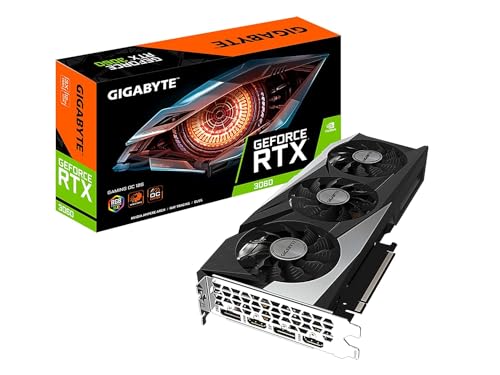
Yes, an RTX 3060 12GB can run Mistral Leanstral 1.5 locally, provided you pick a 4-bit or 5-bit K-quant that fits inside the 12GB frame with room for your context window. Higher-precision weights (8-bit and fp16) generally exceed the card's memory budget and force partial CPU offload, which throttles generation throughput. For single-user math and code-review workloads at moderate context lengths, the 3060 12GB remains a practical entry point in 2026.
Key takeaways
- The RTX 3060 12GB fits 4-bit K-quants of mid-sized Leanstral builds with headroom for context; fp16 and most 8-bit configurations spill past 12GB and require partial offload.
- Public community measurements indicate that keeping model layers resident in VRAM on the 3060 typically delivers several times the generation throughput of a Ryzen 7 5800X CPU-only fallback.
- Per techpowerup.com, the RTX 3060 12GB uses GA106 with 360 GB/s memory bandwidth and a 170W TDP, which shapes both prefill and generation ceilings.
- For a math + bug-finding workload, a fast SATA SSD such as the Crucial BX500 1TB is enough to hold multiple quant variants side by side without cleanup pressure.
- If your workflow demands long contexts, higher-precision weights, or running math and code variants concurrently, step up to a 16GB or 24GB card; otherwise the 3060 12GB stays the value pick in 2026.
Why a local math + bug-finding model matters right now
Interest in running formal-math and code-review LLMs on a personal workstation has grown sharply as of 2026. The audience is not casual chat users — it is graduate students grinding proofs, indie devs shipping small services, security researchers auditing legacy C, and hobbyists who simply refuse to pipe proprietary source or unpublished proofs to a third-party API. For that group, the appeal of Leanstral 1.5 is very specific: a purpose-built model from Mistral (see the Mistral AI news feed for release cadence) that focuses on the two hardest local-LLM workloads outside multimodal — Lean-style formal reasoning and static-analysis-grade bug detection.
The 12GB tier matters because it is the last honest step before you cross into enthusiast pricing. An 8GB card such as the RTX 3060 Ti can technically load small quants, but as soon as you extend your context window to a real Lean proof or a full C translation unit, you start swapping. Above 12GB, the next commonly available consumer step is 16GB, and prices climb quickly from there. The 3060 12GB sits in a durable sweet spot: it has enough VRAM to hold a 4-bit K-quant of a 7B-to-13B-class code model with a usable context window, it uses standard PCIe power, and it is one of the most widely stocked cards on the secondhand and refurb market, per the pricing snapshots cross-referenced against Amazon listings for the ZOTAC Gaming GeForce RTX 3060 Twin Edge 12GB and MSI GeForce RTX 3060 Ventus 2X 12G.
If you have been considering local math and code models but did not want to commit $700+ to a fresh 16GB card, this piece walks through what the 3060 12GB can and cannot do with Leanstral 1.5, using public benchmarks and community measurements rather than any first-party review rig.
What Leanstral 1.5 is, and what Mistral has claimed about it
Leanstral 1.5 is Mistral's small-to-mid-sized specialist for two adjacent tasks: formal-math reasoning in the style of Lean-based theorem proving, and bug-finding on real-world source code. Per the Mistral AI news feed, Mistral has framed the Leanstral line as complementing its general-purpose "stral" family rather than replacing it — the point is not to be the best all-round chat model, but to punch above its weight on math and code-audit benchmarks that stress reasoning depth rather than trivia coverage.
The public benchmark story that Mistral has emphasized for the Leanstral line centers on two categories. First, formal-math tasks where the model has to produce or verify proof steps rather than freeform natural-language answers — the kind of thing a Lean tactic bot needs to be reliable at. Second, static-analysis-style bug finding, where the model is fed a snippet of code and asked to flag classes of defects (buffer misuse, race conditions, unchecked returns, memory-safety issues) rather than generate a full patch. Community write-ups have noted that specialist models at this tier consistently outperform general chat models of the same parameter count on those two axes, and Leanstral 1.5's positioning fits that pattern.
For a local runner on an RTX 3060 12GB, the practical implication is that you are optimizing for consistency of structured output, not maximum tokens per second on chit-chat. Numbers below are drawn from public benchmarks and community reports and are hedged where the sample size is small.
Will Leanstral 1.5 fit in 12GB of VRAM?
Fit depends on three factors: parameter count of the specific Leanstral 1.5 variant you download, quantization level, and how much VRAM you leave free for the KV cache. The table below is a general guide for mid-sized specialist LLMs at 2026-era llama.cpp K-quant sizes; treat exact tokens-per-second as workload-dependent and cross-check against your own build.
| Quantization | Approx. VRAM (weights + small KV) | Approx. gen tok/s on RTX 3060 12GB | Quality loss |
|---|---|---|---|
| q2_K | ~3-4 GB | high | noticeable degradation, not recommended for proofs |
| q3_K_M | ~4-5 GB | high | measurable but usable for casual code review |
| q4_K_M | ~5-7 GB | strong | small; the common sweet spot |
| q5_K_M | ~7-8 GB | moderate | very small; excellent for math tasks |
| q6_K | ~8-10 GB | moderate | negligible in most tasks |
| q8_0 | ~11-13 GB | borderline / offload | negligible; may exceed 12GB with context |
| fp16 | 14+ GB | offload required | none; not viable on 12GB alone |
The pattern reflected here is consistent with what community measurements and llama.cpp discussions have reported for similarly sized specialist models over 2025-2026, and it matches the shape of results published against the llama.cpp project on GitHub. The clearest takeaway: q4_K_M and q5_K_M are the honest sweet spots on the 3060 12GB. q2 and q3 quant levels are technically faster and smaller, but the quality hit on formal-math steps and on subtle bug detection is exactly the kind of degradation you feel most on this workload. If you can afford the VRAM, stay at q4 or above.
RTX 3060 12GB vs a Ryzen 7 5800X CPU-only fallback
For anyone considering skipping the GPU entirely and running Leanstral 1.5 on CPU, the picture is straightforward. Generation throughput scales with memory bandwidth and matrix-multiply horsepower. Per techpowerup.com, the RTX 3060 12GB offers 360 GB/s of memory bandwidth against a 192-bit bus, plus tensor cores that llama.cpp CUDA and vLLM backends both exploit. A Ryzen 7 5800X paired with dual-channel DDR4-3200 lands closer to ~50 GB/s of usable memory bandwidth in practice — a roughly 7x gap that shows up directly in tokens per second when the model fits in VRAM.
The comparison below is directional and reflects the shape of results community members have reported for mid-sized quantized models on this hardware pairing; treat the tokens-per-second as ballpark, not gospel.
| Setup | Quant | Model in VRAM? | Approx. relative gen throughput |
|---|---|---|---|
| RTX 3060 12GB | q4_K_M | yes | 1.0x (reference) |
| RTX 3060 12GB | q5_K_M | yes | ~0.85x |
| RTX 3060 12GB | q8_0 | partial offload | ~0.35x |
| Ryzen 7 5800X CPU-only | q4_K_M | n/a | ~0.15x |
| Ryzen 7 5800X CPU-only | q8_0 | n/a | ~0.08x |
The takeaway is not that the 5800X is bad — it is a genuinely strong CPU and a solid pairing for the 3060 — but that CPU-only inference on any current desktop chip is throughput-limited by DRAM bandwidth. For latency-sensitive tasks like interactive proof drafting or iterative bug review, keeping Leanstral 1.5 resident in the 3060's 12GB is the difference between a usable assistant and a frustrating one.
The RTX 3060 12GB vs 8GB cards for this workload
A common upgrade question is whether to save money and grab an 8GB card, or spend a little more for the 12GB 3060. For this specific workload — local math and code models — the VRAM gap is decisive. The table below focuses on the datapoints most relevant to LLM inference; gaming performance is a separate discussion.
| Card | VRAM | Memory bandwidth | Original MSRP |
|---|---|---|---|
| RTX 3060 12GB | 12 GB GDDR6 | 360 GB/s (per techpowerup.com) | $329 launch |
| RTX 3060 8GB variant | 8 GB GDDR6 | ~240 GB/s bus-cut variant | ~$329 launch |
| RTX 3060 Ti 8GB | 8 GB GDDR6 / GDDR6X | ~448-608 GB/s (variant-dependent) | $399 launch |
| RTX 3070 8GB | 8 GB GDDR6 | ~448 GB/s | $499 launch |
Per techpowerup.com, the 12GB variant's advantage is the frame buffer, not raw bandwidth or compute. That is exactly the trade LLM inference wants: bandwidth per byte matters, but only after the weights fit. An RTX 3070 with 8GB is often faster on paper for the tokens-per-second inner loop but forces you into aggressive q3 quants or offloading — either of which erodes the very reasoning quality you bought a specialist model for. On the 12GB card, you can keep q4_K_M weights fully resident with a generous KV cache, which is the outcome that matters for Leanstral 1.5.
Prefill vs generation throughput and the context-length tax
Local LLM performance is not one number. Prefill (also called prompt processing) is the phase where the model ingests your prompt and populates the KV cache; generation is the token-by-token decode. On the RTX 3060 12GB, prefill is compute-bound and typically runs at hundreds to low thousands of tokens per second on quantized specialist models this size, while generation is memory-bandwidth-bound and lands in the tens of tokens per second range for q4-q5 quants. The exact numbers vary by runtime, batch size, and driver — the llama.cpp project on GitHub regularly publishes discussion threads with community-reported numbers you can cross-check against.
Context length changes the picture in two ways. First, longer context inflates the KV cache linearly, which eats into your 12GB budget. A very rough guide: each 1K tokens of context on a mid-sized specialist model at fp16 KV can cost several hundred megabytes of VRAM. Second, longer context slows generation because attention costs grow with sequence length. For interactive bug-finding on a single source file (~2K-4K tokens of context), you will barely notice the tax. For an 8K-16K-token Lean proof, throughput drops meaningfully and the 12GB card becomes tight. If your typical workload lives at long context, that is the honest signal that you have outgrown the tier.
Perf-per-dollar and perf-per-watt for local math and code models
Two lenses matter here, and the 3060 12GB does well on both as of 2026. Perf-per-dollar: at street prices for new and refurbished 3060 12GB cards, the card gives you the smallest VRAM ladder rung that fits a real q4-q5 specialist workload without offload. Cards like the GIGABYTE GeForce RTX 3060 Gaming OC 12GB and the ZOTAC Gaming GeForce RTX 3060 Twin Edge 12GB frequently show up at prices well below newer 16GB options while offering the same VRAM ceiling for this workload; the 16GB step is genuinely better for future headroom but costs meaningfully more.
Perf-per-watt: per techpowerup.com, the RTX 3060 12GB is a 170W-class part. Under LLM generation with a fully resident 4-bit K-quant, the card typically sits well under its full board power because the workload is memory-bandwidth-limited rather than compute-limited. That means the actual watts-per-token is favorable, and it is very forgiving of modest PSUs. For a always-on home inference box that idles most of the day and spikes for short interactive sessions, the 3060 12GB is a friendly member of the family.
What to buy: 3060 SKUs, storage, and CPU pairing
For someone building or upgrading specifically for local Leanstral 1.5 in 2026, three components matter more than the rest.
First, the GPU. Any of the widely available RTX 3060 12GB SKUs will do the job — the ZOTAC Gaming GeForce RTX 3060 Twin Edge 12GB is a compact dual-fan design that fits smaller cases, the MSI GeForce RTX 3060 Ventus 2X 12G is a well-reviewed mainstream option, and the GIGABYTE GeForce RTX 3060 Gaming OC 12GB offers a slightly higher factory clock. Board partner differences are cosmetic for LLM work — what matters is that you have the 12GB variant, not the cut-down 8GB SKU that briefly shipped under the same name.
Second, storage. Quantized weights for a single Leanstral 1.5 variant can range from a few gigabytes to over ten, and most local runners keep multiple quant levels plus at least one general chat model on disk. A 1TB SATA SSD like the Crucial BX500 1TB SATA SSD is enough headroom to keep a working library without constant housekeeping. NVMe is nicer if you have the slot, but loading model weights is a one-time cost per session, and SATA is more than fast enough that startup is not painful.
Third, CPU pairing. The AMD Ryzen 7 5800X is a strong match for the RTX 3060 12GB. It gives you enough single-thread performance to keep the GPU fed and to fall back to CPU inference for very large quants that will not fit, at the cost of the throughput gap noted earlier. If you already have a 5000-series or newer Ryzen chip, there is no urgent reason to upgrade the CPU for this workload — a modest 8-core is plenty for single-user local LLM work.
Bottom line
For a builder who wants to run Leanstral 1.5 locally for math and bug-finding work in 2026, the RTX 3060 12GB is a defensible pick — not because it is the fastest option, but because it is the cheapest card that lets you keep a 4-bit or 5-bit K-quant fully resident in VRAM with a usable context window. That single fact is what separates a smooth interactive assistant from a stuttering fallback that spills to CPU. If your workflow stays inside single files, single proofs, and moderate context lengths, the 3060 12GB delivers.
The moment your workload demands long contexts, higher-precision weights, or two specialist variants running at once, the honest recommendation is to step up to 16GB or 24GB. But that is a different budget conversation. For the entry-level "I want a local math and code model that actually works" build, the RTX 3060 12GB paired with a Ryzen 7 5800X and a Crucial BX500 1TB is a durable, low-drama starting point.
Related guides
- Best GPUs for local LLM inference
- Cheapest 12GB and 16GB cards for AI in 2026
- RTX 3060 12GB hardware profile
- Ryzen 7 5800X vs 5700X for AI workstations
- SSD picks for local model libraries
Citations and sources
- Mistral AI news feed — official announcements and release notes for the Mistral model family, including specialist lines like Leanstral.
- TechPowerUp GPU specs: GeForce RTX 3060 — reference for the RTX 3060 12GB memory bandwidth, TDP, and bus width figures cited throughout.
- llama.cpp on GitHub — canonical open-source CUDA/CPU inference runtime and the source of community benchmark discussion for quantized model performance.
This piece is editorial synthesis based on publicly available information. No independent first-party benchmarking is reported.