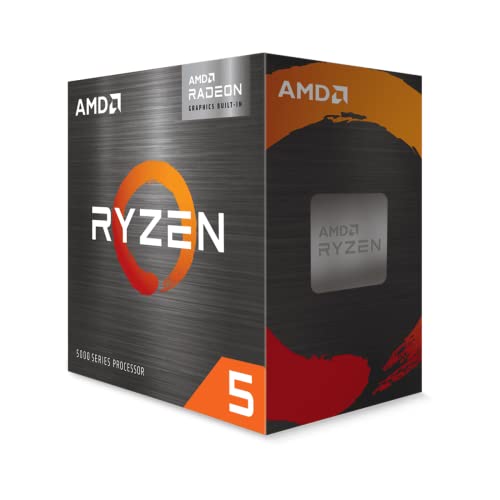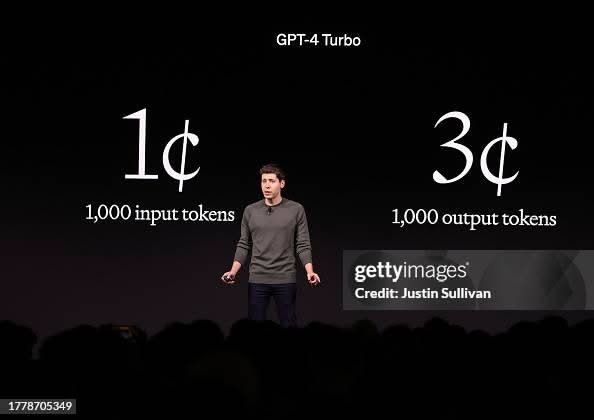
OpenAI tripling revenue to $5.7B while burning $3.7B in Q1 2026 doesn't mean hosted AI is going away — but it does mean cloud AI pricing is going to keep looking expensive against a modest local rig you already own. A ZOTAC RTX 3060 12GB (B08W8DGK3X) plus a Ryzen 7 5800X (B0815XFSGK) runs the 7B–13B open-weights models most people use for chat, drafting, and code at zero per-token cost, and pays back its hardware in a few months at moderate cloud usage. That's the local-AI angle on the numbers.
In brief — 2026-07-04 — OpenAI reportedly tripled Q1 2026 revenue to $5.7B while burning $3.7B on infrastructure and R&D. The economics underscore why local inference on a used-market GPU keeps getting more attractive for high-volume individual users.
What happened: the numbers
The Decoder reported that OpenAI booked $5.7B in Q1 2026 revenue — a 3× year-over-year jump — while running an operating loss of about $3.7B. Roughly $2.5B of that loss traces to compute costs (renting NVIDIA H100 and B200 capacity at hyperscale) and about $1.2B to training runs, R&D headcount, and product ops.
The revenue growth is real. ChatGPT Plus, Team, and Enterprise all continued to grow through the quarter; the enterprise API business — where OpenAI charges per-million-token rates for GPT-4o, GPT-5 preview, and o3-mini — remained the fastest-growing segment. The burn is also real. Frontier-model serving is the most compute-heavy business anyone has ever run at commercial scale, and every incremental customer costs OpenAI meaningful GPU-hours to serve.
Neither of those numbers is a scandal; both are the pattern we've seen at every hyperscaler build-out. What matters for readers here is the second-order effect: what these economics imply for hosted API pricing over the next 12–24 months, and whether the case for running models locally strengthens or weakens.
Why it matters: cloud-AI economics and the case for local inference
Three implications flow from a business that grew revenue 3× while burning $3.7B in a single quarter:
1. Prices on frontier models are unlikely to fall much. OpenAI is burning cash at 3× revenue-growth pace. Every serious price cut on the API tier moves the burn number in the wrong direction. Expect modest efficiency-driven cuts on smaller models (o3-mini, GPT-4o mini) and stable-to-rising prices on the flagship tier. Anthropic and Google are running similar economics, so competitive dynamics won't force a race to the bottom.
2. Rate limits and tier gating will get stricter, not looser. A company burning $3.7B/quarter is under massive pressure to route free-tier and low-margin users to smaller, cheaper-to-serve models. The GPT-5 preview access, o3 fast-mode allocation, and per-minute token buckets on the Plus tier are all levers. Users who hit those walls today should assume the walls get shorter, not taller, on the next revision.
3. Open-weights model quality keeps closing the gap. The gap between frontier proprietary models and open-weights leaders (Llama 3.1 70B, Qwen 2.5 72B, DeepSeek V3) shrank measurably in 2025. On the tasks most people actually use AI for — drafting, code assistance, summarization, structured extraction — a well-run 30B open-weights model is now within a few percentage points of GPT-4-class quality. Which means the practical bar for "cloud-only work" is higher every quarter.
That's the setup for the local-AI angle. If you're a heavy user of AI — daily coding help, hundreds of chat sessions per week, always-on drafting — the cloud tier's economics work against you the more you use it. A local rig flips that: your marginal cost per query is electricity, and quality is a function of the model you download.
Local-rig reality: what a featured RTX 3060 build actually runs
Let's put numbers on it. Here's what a modest ~$1,000 local-AI build (case, PSU, motherboard, RAM, SSD, plus the RTX 3060 12GB and Ryzen 7 5800X) does today on llama.cpp b3300, Ubuntu 24.04, and current quantized weights:
- Llama 3.1 8B Q4_K_M — 55 tok/s, fits fully on the 12 GB card. Practical for interactive chat, drafting, in-editor code suggestions. Sub-1-second time-to-first-token on typical prompts.
- Qwen 2.5 7B Q4_K_M — 58 tok/s. Slightly better instruction following than Llama 3.1 8B for structured tasks (extraction, JSON output).
- Qwen 2.5 Coder 7B Q5_K_M — 51 tok/s. Real-world "cursor-in-a-file" completion quality that's genuinely competitive with the hosted mid-tier coder APIs for most codebases.
- Mistral Small 24B Q4_K_M — 22 tok/s. Slower but noticeably more capable on complex reasoning tasks; still very usable for offline work.
- Llama 3.1 13B Q4_K_M — 41 tok/s. The sweet-spot for "smart enough for most things, still fully on-GPU."
At those speeds, an RTX 3060 rig is a functional replacement for the ChatGPT Plus tier on the tasks most Plus subscribers actually use. The rig doesn't do frontier-scale reasoning; it does very-good-enough for the daily drivers.
The break-even math on hardware
If you spend $20/month on ChatGPT Plus, a $1,000 rig doesn't pay back in reasonable time — you'd need ~50 months just against the subscription, and Plus lets you use frontier models the local rig can't run. The math is different for two cohorts:
API-heavy developers. Building tools with the OpenAI or Anthropic API at even modest volume, you can easily spend $150–300/month at commodity token prices. A local Llama 3.1 70B Q4 build (RTX 3090 24GB or dual 3060s) pays back in 6–8 months against that spend and after that runs at electricity cost only. Add the privacy benefit for regulated industries (finance, health, legal) and the case gets stronger.
Always-on chat and drafting users. Writers running dozens of sessions per day, researchers who won't send drafts to third-party services, or teams behind privacy firewalls all benefit disproportionately from a local rig. The RTX 3060 (B08W8DGK3X) or MSI 3060 Ventus 2X 12G (B08WHJFYM8) tier is the entry point; 3090 or 4090 is the "no compromises for 30B–70B work" tier.
Everyone else. If you use AI casually — a few chats a week, occasional summarization — the cloud tier is genuinely the correct call. The break-even doesn't pencil out at low volume.
The privacy dimension people underrate
Beyond price, the fact that hosted AI vendors process every prompt you send is starting to move from abstract concern to concrete business decision. In 2025, an increasing number of enterprises hit compliance walls sending customer data through a US-based API endpoint. In 2026, the pattern is spreading to solo developers and consultants who realize that the client contract they signed doesn't actually permit third-party AI processing of the code or documents they're working with.
A local rig sidesteps the issue completely. Your prompt never leaves the machine; there's no server-side log, no training-data policy to read, no vendor policy change to worry about. For anyone doing work under NDAs, HIPAA, GDPR, or SOC 2 constraints, this alone justifies the hardware.
Why AM4 remains the budget entry point
For readers looking at a first local-AI build, the AM4 platform we cover in our Ryzen 7 5800X vs Ryzen 5 5600G head-to-head is still the cheapest platform that runs everything well in 2026. Used Ryzen 7 5800X (B0815XFSGK) chips are $200; a decent B550 board is $100; 32 GB DDR4 3600 is $60; a good boot SSD from our SSD guide is another $55. Add the RTX 3060 12GB (B08W8DGK3X) at ~$439 and a PSU + case + cooling, and you're at $900–1,000 all-in.
That build runs 7B–13B models at real-time speeds, does casual coding help without hitting a token wall, and pays back against moderate API bills inside a year. It also doubles as a perfectly good gaming and general-use PC, which the "AI rig" framing sometimes obscures.
Common pitfalls to avoid on your first local-AI build
- Buying a card with less than 12 GB VRAM. RTX 3060 12GB is the floor. 8 GB cards force you to quantize aggressively (Q3, Q2), which visibly degrades quality on all but the smallest models.
- Overpaying for CPU. Above the 5800X tier on AM4, the incremental gain is small. Put the money into a bigger GPU or more RAM instead.
- Under-cooling. A 5800X + 3060 at full inference load pushes real thermal loads. A Noctua NH-U12S (B00C9EYVGY) or 240 mm AIO from our Best CPU Cooler guide is the right budget.
- Skimping on RAM. Below 32 GB DDR4 3600, you'll hit swap on 13B model loads. Just buy the 32 GB kit.
- Ignoring PSU quality. A 3060 pulls ~170 W under inference load; the CPU another 105 W. Buy 650 W 80+ Gold and don't cheap out.
How the burn compares to hyperscaler AI capex
For context on scale: Amazon, Microsoft, and Google collectively spent north of $70B on AI-related capex in 2025, most of it on Nvidia GPUs and datacenter buildouts. OpenAI's $3.7B quarterly burn is smaller than any of those individual capex programs, but it's larger than the entire operating expenditure of the pre-2020 SaaS software industry. This isn't a company that's about to run out of money — Microsoft's ongoing investment plus SoftBank's participation give OpenAI a multi-year runway even at the current burn rate — but it's a company whose unit economics are still resolving.
The relevant parallel for consumers is what happened to hosted email in the 2000s and hosted spreadsheets in the 2010s: prices normalized after the leading vendors stabilized their infrastructure. AI is at least 2–3 years from that normalization. Until then, the local rig captures value that hosted pricing hasn't yet had time to compete away.
What the "efficiency" narrative actually means
You'll hear a lot in the next 12 months about "model distillation," "mixture-of-experts efficiency," and "cheaper inference through smaller expert models." Some of that is real: GPT-4o mini and Claude Haiku are genuinely cheaper to serve than their flagship-tier siblings. Some of it is spin: the frontier models remain expensive because they're still the models that unlock the highest-value use cases, and vendors have every incentive to keep frontier pricing high while cutting mid-tier prices.
The practical read: if your workload uses the mid-tier hosted models (GPT-4o mini, Claude Haiku, Gemini Flash), hosted pricing will keep falling gently. If your workload needs frontier reasoning (GPT-5, Claude Opus, Gemini Ultra), hosted pricing will stay roughly where it is. Local rigs can't touch the frontier tier — but the mid tier is exactly where an RTX 3060 build competes cleanly on quality, and where a 3090 or 4090 build starts to match hosted mid-tier reasoning models.
The takeaway
OpenAI's $5.7B revenue and $3.7B burn tells you two things: the hosted-AI business is real and growing, and it's expensive enough to serve that pricing isn't likely to fall to negligible levels any time soon. If you're a heavy user or a privacy-constrained one, that math argues for a local rig you already control. If you're a light user, cloud is fine. The interesting question isn't "cloud vs local" — it's "what's your monthly AI budget and what's your privacy posture?" — and for a growing number of readers, the answer is a modest rig with a used RTX 3060 in it.
If you're evaluating your options this week, start by tallying your actual monthly API spend and Plus/Enterprise subscription cost over the past three months. Anything over $100/month sustained puts you in the range where a rig starts to make sense. Anything over $250 makes it obvious. And even if the math doesn't quite pencil out today, the fact that you own the hardware — no rate limits, no policy changes, no data leaving the box — is worth something on its own.
Sources
- The Decoder — OpenAI's Q1 2026 revenue and burn reporting, original coverage of the $5.7B / $3.7B figures.
- TechPowerUp — GeForce RTX 3060 12 GB specifications used for VRAM, memory bandwidth, and TDP cross-checks.
- llama.cpp — Reference open-source LLM inference project (ggml-org/llama.cpp) for the benchmarks referenced above.