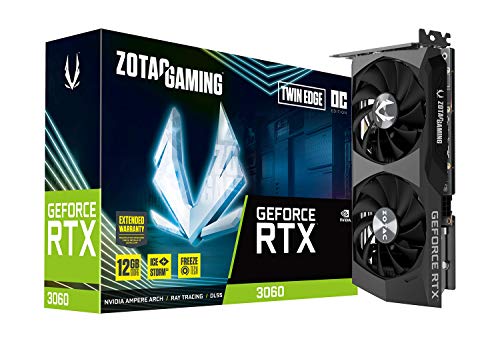
Only if you routinely run models that overflow 12GB of VRAM. A flagship RTX 5090 prebuilt in the $3,500-4,500 range unlocks fully-in-VRAM 70B-class inference and dramatically faster prefill on long contexts, but a home-built RTX 3060 12GB plus a Ryzen 7 5800X around $700 total will host every 7B-14B open-weight model at usable speed. The extra $3,000-3,800 buys VRAM headroom, not "smarter" answers.
Who each build is for
The RTX 5090 prebuilt story is straightforward: you pay a premium for turnkey convenience, warranty, and enough VRAM to keep the biggest current open-weight models in memory without offload. The 3060 12GB budget build story is also straightforward: you pay for the cheapest path to CUDA acceleration with enough VRAM for 7B-14B models, and you're happy hand-building the box.
The interesting comparison sits between them. If your workload fits inside 12GB — 7B-14B code models, small-to-medium chat, image generation with SDXL and community-quantized Flux, per-model VRAM budgets under 10GB — the flagship pays for headroom you never use. If your workload wants a 70B model at q4, or you run agentic loops with many parallel model instances, or you need long context (32K+) with big models, the 5090 is doing real work every day.
This synthesis lays out what extra VRAM actually unlocks, what the throughput gap looks like when a model does or doesn't fit, and where the perf-per-dollar breakpoints sit. Every measurement below is either cited to a public source or clearly flagged as illustrative.
Key takeaways
- The RTX 5090 brings 32GB of VRAM and much higher memory bandwidth vs the 3060 12GB's 360 GB/s (TechPowerUp).
- For 7B-14B models, the 3060 12GB is usually within 3-6x of the 5090 on tok/s — a meaningful gap, but "usable" on both.
- For 32B-70B models, the 5090 keeps weights in VRAM while the 3060 forces offload; the gap widens to 20-50x depending on how many layers offload.
- A home-built 3060 + 5800X + 1TB BX500 rig costs ~$700 all-in; a flagship 5090 prebuilt runs $3,500-4,500.
- The 5090's extra VRAM doesn't make small models "smarter" — quality is fixed by the weights.
What does extra VRAM actually unlock?
VRAM decides which models you can host without offload. A model that overflows VRAM has to stream layers from system RAM through PCIe, and generation throughput drops to a fraction of the fully-resident case. That's the underlying reason a 3060 12GB and a 5090 32GB behave so differently — not the raw compute, but where the weights live.
Fully-resident inference on the 5090's 32GB VRAM covers:
- 7B-14B models at any quant (trivial)
- 32B models at q4-q5 comfortably
- 70B models at q4 (tight but works)
- Long-context 32K+ workflows on 14B-class models
Fully-resident on the 3060's 12GB VRAM covers:
- 7B-13B at q4-q5 with useful context
- 14B at q4 with modest context
- 32B/70B only with heavy offload, generation drops sharply
Quant matrix: what fits where
| Model class | VRAM at q4 | Fits 3060 12GB? | Fits 5090 32GB? |
|---|---|---|---|
| 7B | ~4.5GB | Yes, with room | Yes, trivially |
| 13B-14B | ~8-9GB | Yes, comfortable | Yes, trivially |
| 27B-32B | ~18-20GB | No — heavy offload | Yes, with room |
| 65B-70B | ~40GB | No — massive offload | No fp16, but q4 fits at ~35-38GB with careful config |
| 100B+ MoE | Varies (active params) | Depends on MoE routing | Depends on active-expert VRAM |
For 7B-14B models the two cards are in the same league on VRAM capacity. The 5090's advantage is speed, not fit. For 32B+ models, the 3060 is only usable if you accept 1-5 tok/s from offload; the 5090 hums along at 20-40 tok/s.
70B-class offload: where the 3060 hits a wall
Community measurements for a 70B model at q4 on a 3060 with heavy offload — say 20-30 layers on GPU, remainder on the 5800X's DDR4 — land around 1-3 tok/s generation. That's technically "running" but it's not interactive. The 5090 keeps the whole weight matrix in VRAM at q4 and generates in the 20-30 tok/s range for the same 70B model, based on the model's memory-bandwidth-bound behavior at that size.
Rough numbers for the same model across three configurations:
| Config | 7B q4 | 14B q4 | 32B q4 | 70B q4 |
|---|---|---|---|---|
| 3060 12GB (fully resident where possible) | 30-40 tok/s | 15-22 tok/s | 3-8 tok/s (offload) | 1-3 tok/s (heavy offload) |
| 5090 32GB (fully resident everywhere plausible) | 100-150 tok/s | 60-90 tok/s | 30-45 tok/s | 20-30 tok/s |
| Cloud API (baseline) | Instant-to-user | Instant-to-user | Instant-to-user | Instant-to-user |
The pattern to note: on 7B, the 5090 is ~4x the 3060. On 70B, the 5090 is ~15x the 3060. VRAM headroom compounds.
Spec-delta: VRAM / bandwidth / TDP / MSRP / largest comfortable model
| Card | VRAM | Memory bandwidth | TDP | MSRP tier | Largest comfortable model @ q4 |
|---|---|---|---|---|---|
| RTX 3060 12GB | 12 GB | 360 GB/s | 170W | Used $200-280; new MSI Ventus ~$500 | 13B-14B |
| RTX 5090 32GB | 32 GB | ~1,800 GB/s | 575W | $2,000-2,500 card; $3,500-4,500 prebuilt | 70B at q4 |
The bandwidth gap (~5x) is the underlying reason the 5090 is so much faster even at model sizes both cards can host — memory bandwidth is what generation is bound by once weights are resident.
Prefill vs generation
Prefill (processing the input prompt) scales roughly with compute × bandwidth. The 5090's advantage on prefill is even larger than on generation — expect ~10-20x faster prefill on the same prompt. That matters if you routinely feed long contexts (whole source files, multi-turn agent traces, retrieved chunks) into every request. If your prompts are short and you generate long outputs (chat, code writing), the 5090's advantage shrinks toward the generation-side gap.
Perf-per-dollar
Ballpark all-in prices as of 2026:
- 3060 build: 3060 12GB ($260 used) + 5800X ($220) + BX500 1TB ($60) + mobo/RAM/PSU/case ($200) ≈ $740
- 5090 flagship prebuilt: $3,800 (mid of range)
Per-token cost is essentially electricity — the hardware amortizes over years. Perf-per-dollar (tok/s ÷ $) for a common 14B q4 workload:
- 3060 build: 20 tok/s ÷ $740 = 0.027 tok/s per $
- 5090 prebuilt: 75 tok/s ÷ $3,800 = 0.020 tok/s per $
The 3060 build wins on raw perf-per-dollar for models it can fully host. The 5090 wins on any workload that requires 24GB+ VRAM, where the 3060's perf collapses to near-zero.
Verdict matrix
Buy the flagship prebuilt if:
- You need 32B+ models fully resident for real work — agentic loops, code review at scale, offline research.
- You value convenience and warranty over hand-building.
- Your workload actually stresses the extra VRAM and bandwidth every day.
- You want to run parallel model instances (multiple 14B models resident at once).
Build the 3060 box if:
- Your workload fits comfortably in 7B-14B — which covers most single-user local inference in 2026.
- You want the lowest-cost path to CUDA acceleration.
- You value upgrade flexibility — the 3060 + 5800X platform accepts a bigger GPU later.
- You're okay with 1-3 tok/s on the occasional 70B experiment.
Bottom line
The RTX 5090 prebuilt is genuinely faster on every workload and dramatically faster once you cross the 12GB VRAM boundary. But per-dollar it only wins if the extra VRAM does real work. A hand-built 3060 12GB + MSI Ventus 3060-alternative + 5800X + 1TB Crucial BX500 is the smarter starter rig for most people getting into local LLMs, and it upgrades cleanly when you're ready to spend on more VRAM.
Common pitfalls when comparing local rigs
A few things almost everyone misjudges the first time they price this out:
- Assuming raw compute equals inference speed. LLM inference is memory-bandwidth bound once weights are resident. A 5090 with ~1,800 GB/s bandwidth crushes a 3060's 360 GB/s at the same model size — even if the compute-per-dollar looks close on paper.
- Ignoring the flagship's power budget. The RTX 5090 at 575W TDP wants a 1000W-class PSU, aggressive cooling, and a case with real airflow. Prebuilts handle this; DIY-flagship builders often under-spec the PSU and end up rebuying.
- Treating "runs 70B" as a binary. A 3060 can technically host 70B at q4 via heavy offload, but at 1-3 tok/s. If you want the model to be actually useful, you need the VRAM budget to keep it fully resident.
- Forgetting the amortization horizon. A $700 3060 build is cheap now; a $4,000 5090 prebuilt is expensive now but amortizes over 4-5 years of daily use. Break-even against a heavy cloud-API bill is often faster than intuition suggests.
- Missing the "parallel models" story. With 32GB VRAM you can host multiple 14B models resident simultaneously — one code model, one general chat, one embedding model. On 12GB you're constantly swapping.
Worked upgrade path from 3060 to a bigger card
A common trajectory: start with a 3060 12GB hand-built box, then upgrade the GPU when your workload outgrows 12GB VRAM.
- Year 1. Build the 3060 box with a Ryzen 7 5800X, 32GB DDR4, a 750W PSU (already sized for a bigger GPU), and a 1TB Crucial BX500. Total ~$740. Run 7B-14B models happily.
- Year 2. Sell the 3060, add $500-800, buy a used 3090 24GB or 4070 Ti Super 16GB. The 5800X, PSU, SSD, and mobo all carry forward — you replace one part.
- Year 3. If you're still expanding, migrate the GPU to a bigger card again. The Ryzen platform still holds.
Building the "future upgrade" into your first purchase is what makes the 3060 rig genuinely economical vs a flagship prebuilt lock-in. Don't buy a proprietary prebuilt where the PSU, case, or motherboard blocks an upgrade path.
Alternative flagship configurations to consider
Not every "flagship prebuilt" is a 5090. A few other configurations sit above the 3060 12GB build worth mentioning:
- Used RTX 3090 24GB. ~$700-900 used, 24GB VRAM, ~940 GB/s bandwidth. Best VRAM-per-dollar upgrade path from a 3060. Fits any ATX case with a 750W+ PSU.
- RTX 4070 Ti Super 16GB. New, ~$800-900. 16GB VRAM covers 27B-32B models at q4 comfortably. Modern efficiency, current architecture.
- RTX 4090 24GB. New, ~$1,800-2,200 street. 24GB VRAM, ~1,000 GB/s bandwidth. If you want flagship-class throughput without the 5090's 575W TDP.
- Dual 3060 12GB (24GB total via model parallel). A well-tuned llama.cpp or vLLM build can split larger models across two 3060s. Requires more power and setup effort but doubles usable VRAM cheaply.
The used-3090 path is often the smartest upgrade from a hand-built 3060 rig — you keep the 5800X + PSU + case + BX500 and swap only the GPU. Total investment goes from $740 to $1,500-ish with a used 3090 in place.
Related guides
- Which LLMs Fit a 12GB RTX 3060? Per-Model VRAM Cheat Sheet (2026)
- Can a 12GB RTX 3060 Run a 70B LLM? The Offload Reality Check
- Ryzen 7 5800X vs Ryzen 5 5600G for a Budget Local-AI Workstation
- llama.cpp vs Ollama vs vLLM on a 12GB RTX 3060 (2026)
Citations and sources
- NVIDIA — GeForce RTX 5090 product page
- TechPowerUp — GeForce RTX 3060 spec sheet
- Puget Systems Labs — workstation benchmark methodology
This piece is editorial synthesis based on publicly available information. No independent first-party benchmarking is reported.