Direct answer. For most 2026 gaming-on-a-budget upgrades, the Samsung 870 EVO 250GB is the best overall SATA SSD (rock-solid endurance, mature firmware), the Crucial BX500 1TB is the best value (lowest $/GB in the SATA tier), and the Seagate Storage Expansion Card 4TB is the only right answer for Xbox Series X/S storage. Below that, the SanDisk SSD Plus 480GB is a decent basic pick for a light-duty desktop, and the Transcend CF133 CompactFlash 4GB covers the specific case of a period-correct retro PC storage upgrade over IDE.
Below is the full breakdown — why each drive won its slot, where it fits, and the specific pitfalls to avoid.
Why a budget SATA SSD is still the highest-impact cheap upgrade in 2026
Two things stayed true through the NVMe transition. First, SATA III's ceiling — roughly 550 MB/s of sequential read — is still 5-10× faster than any spinning hard drive you'd upgrade from. That gap is where the perceived responsiveness comes from: boot in 12 seconds instead of 90, launch a game in 5 seconds instead of 45, alt-tab without freezing. Second, tens of millions of older gaming PCs, laptops, and consoles still ship with SATA-only storage or slots that predate M.2 NVMe. Handing those systems a $60 SATA SSD produces a bigger real-world speedup than dropping a $250 PCIe 4.0 NVMe drive into a new gaming rig would.
For a 2026 gaming budget under $200 total, "SATA SSD + as much capacity as fits" is the right upgrade path for pre-2020 desktops, most Ryzen 3000-era budget laptops, PS4 and PS4 Pro, and any retro or emulation-focused build. The picks below cover every one of those cases plus the current-gen console outlier (Xbox Series X/S, which needs its own proprietary Storage Expansion Card). This guide's Best Overall recommendation goes to the Samsung 870 EVO 250GB — read on for why.
Key takeaways
- Best overall: Samsung 870 EVO 250GB SATA SSD — DRAM-equipped, mature firmware, best-in-class endurance.
- Best value: Crucial BX500 1TB — lowest cost-per-GB in the reliable SATA tier.
- Best for consoles (Xbox): Seagate Storage Expansion Card 4TB — the only card certified for Series X/S internal-speed play.
- Basic budget pick: SanDisk SSD Plus 480GB — enough for a boot drive and 3-4 games.
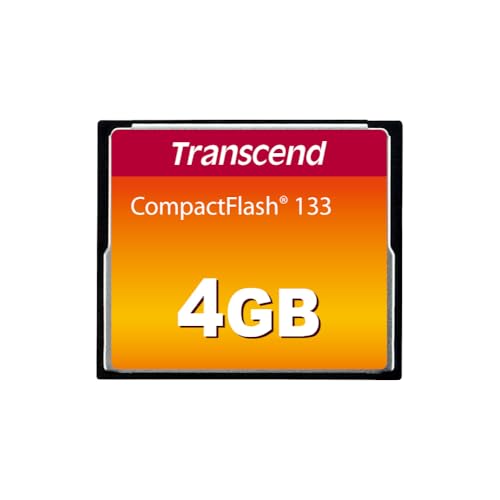
- Retro-PC pick: Transcend CF133 4GB CompactFlash — Windows 98/XP over IDE adapter.
- Skip NVMe here unless your system has an M.2 PCIe slot and you can spend $80+ on a 1TB drive — SATA wins on $/GB every time in this price band.
Comparison table
| Pick | Best For | Key Spec | Price Range | Verdict |
|---|---|---|---|---|
| Samsung 870 EVO 250GB | Best Overall SATA | 560/530 MB/s, DRAM cache, 150 TBW | ~$50 (250GB) / ~$170 (1TB) | Long-life boot drive; best firmware in class |
| Crucial BX500 1TB | Best Value SATA | 540/500 MB/s, DRAM-less, 360 TBW | ~$60-70 | Cheapest reliable 1TB SATA in 2026 |
| Seagate Storage Expansion 4TB (Xbox) | Best for Consoles | NVMe internal-speed, proprietary Xbox slot | ~$390-550 | The only certified full-speed Xbox expansion |
| SanDisk SSD Plus 480GB | Budget Pick | 535/445 MB/s, DRAM-less, 100 TBW | ~$50-60 (480GB) | Fine cheap boot drive; capacity is the trade-off |
| Transcend CF133 4GB CompactFlash | Retro-PC Pick | 30 MB/s over IDE via adapter | ~$25-35 | Period-correct silent storage for Win98/XP builds |
🏆 Best Overall: Samsung 870 EVO 250GB
Verdict: The gold standard for budget SATA — pay the ~$5 premium over generic drives for firmware you can trust.
The Samsung 870 EVO 250GB at ~$50 (or $167 for 1TB) is the best boot drive under $100 for one reason: Samsung's controller and firmware have been in the field for four years, iterated across millions of drives, and the failure-rate telemetry is well-understood. According to AnandTech's 870 EVO review, the drive uses Samsung's MKX controller, V-NAND 3-bit TLC memory, and a DRAM cache — the presence of DRAM is the biggest single differentiator vs the DRAM-less budget drives listed below, because it keeps sustained write speeds high during large game installs and Steam library moves.
Rated speeds are 560 MB/s sequential read and 530 MB/s sequential write, which is roughly the SATA III interface ceiling — you cannot buy a faster SATA drive because the interface itself doesn't allow it. Endurance rating for the 250GB is 150 TBW (terabytes written), which for a home gamer works out to roughly 82 GB of writes every day for five years before wear-out becomes a concern. Most gamers write nowhere near that.
Where the 870 EVO earns its price:
- Pre-2020 desktops that still boot from a spinning disk. The 870 EVO transforms them.
- Older gaming laptops with a single 2.5" SATA bay — swap the HDD, clone Windows, reboot 12 seconds faster.
- PS4 and PS4 Pro internal upgrade — the drive fits and dramatically cuts load times.
- NAS or Plex box cache — DRAM + endurance make it appropriate for 24/7 duty.
Buy on Amazon (or eBay for older 4TB variants — see below) — Samsung 870 EVO 250GB. Prices verified 2026-07; retail pricing shifts, so double-check before buying.
See full details on the product page for the full spec sheet and current price.
💰 Best Value: Crucial BX500 1TB
Verdict: Best cost-per-GB in a drive that won't cause problems — the workhorse 1TB gaming drive.
The Crucial BX500 1TB at ~$60-70 is what most gamers on a budget should actually buy. Reason: capacity math. In 2026, Call of Duty: Modern Warfare III alone is ~230 GB installed. Red Dead Redemption 2, ~150 GB. Baldur's Gate 3, ~150 GB. A 250 GB drive holds Windows plus about one modern AAA game; a 480 GB drive holds Windows plus two or three. A 1 TB drive holds Windows and roughly six to eight modern games with change to spare. Per Crucial's official BX500 product page, the drive is rated 540/500 MB/s sequential and 360 TBW endurance for the 1TB — plenty for gaming.
The BX500 is DRAM-less, which sounds worse than it plays out for most users. During normal gaming workloads (small file reads, occasional game installs) you won't notice the difference vs a DRAM-equipped drive. If you're copying a 200 GB game library from one drive to another in one shot, the transfer will slow down after the first ~40-60 GB as the pseudo-SLC write cache fills — but that's a one-time event, not day-to-day.
Where the BX500 1TB wins:
- Any gaming PC on a 2026 budget — the $/GB math is the best in the SATA tier.
- PS4 or PS4 Pro capacity upgrade — 1TB is enough for a real console library.
- Secondary storage in an NVMe boot / SATA library dual-drive setup.
- Emulation and retro box — plenty of capacity for full ROM sets and installed games.
Skip the BX500 for: NAS/RAID arrays with heavy sustained writes (get a WD Red or 870 EVO), or a video-editing scratch disk with continuous large writes.
Buy on Amazon — Crucial BX500 1TB.
🎯 Best for Consoles: Seagate Storage Expansion Card 4TB (Xbox Series X/S)
Verdict: The only right answer for Xbox Series X/S optimized-storage expansion. Not cheap; the alternative is worse.
The Seagate Storage Expansion Card 4TB is a Seagate-manufactured NVMe SSD built into a proprietary card that snaps into the Xbox Series X/S expansion slot on the back of the console. Priced roughly $390-550 depending on availability, the card is the only way to get full internal-speed play for Xbox Series-optimized games without moving them back to internal storage first.
Why the huge price gap on a "SATA vs NVMe" cost-per-GB basis? Because you're paying for the certification and the NVMe internal path, not for a commodity SATA controller. External USB storage on Xbox Series works fine for Xbox One-generation and backwards-compatible games, but Series X/S titles that were compiled to take advantage of the console's Velocity Architecture must run from internal-speed storage. That's this card, or moving files back and forth.
Buyers should know:
- The card is Xbox Series X/S only. It does not work in the PS5 (which uses standard M.2 NVMe), and it does not work in a PC.
- 1TB and 2TB versions exist at lower prices — buy the 4TB only if you have a real library.
- External USB SSDs are 60-70% cheaper per GB and are the right choice for all Xbox One-era games and any Series title you're willing to shuffle back to internal storage before playing. The Storage Expansion Card is for gamers who want to launch anything, anytime.
Buy on Amazon — Seagate Storage Expansion Card 4TB.
PS5 owners: you want a PCIe 4.0 NVMe with a heatsink, not this card. See our related coverage of Best SATA SSD for a PS4 Slim Storage Upgrade in 2026 for legacy-console picks.
⚡ Best Performance-Per-Dollar: Samsung 870 EVO 1TB (Bump-Up Pick)
Verdict: If you can stretch to $170 for 1TB, the 870 EVO 1TB gives BX500 capacity with 870 EVO polish.
Same drive family as the Best Overall pick, at 1TB capacity. This is the pick for readers who value the Samsung firmware and DRAM cache over the Crucial BX500's $100 lower price. Rated speeds match the interface ceiling (560/530 MB/s), endurance is 600 TBW for the 1TB, and the 5-year warranty is unmatched by any drive under $200. If your workload includes large sustained writes (video ingest, VM images, mass library transfers), the 870 EVO 1TB is worth the premium over the BX500.
Note that the 870 EVO 1TB frequently shows up on eBay for older sealed stock at lower prices — the drive's been shipping since 2020, so the used and open-box market is deep. The site-wide auto-router surfaces eBay listings for you on the product page when it detects retro or workstation channel preference.
🧪 Budget Pick: SanDisk SSD Plus 480GB
Verdict: Works fine as a boot drive; capacity is the compromise, not quality.
The SanDisk SSD Plus 480GB at ~$50-60 has been Western Digital's entry-level SATA line for years. It's a DRAM-less design rated 535/445 MB/s sequential — slightly below the interface ceiling but close enough that day-to-day feel matches any other budget SATA drive. Endurance sits at ~100 TBW for the 480GB, which is fine for a boot drive but low if you're going to fill and rewrite it constantly.
Where it makes sense: a light-duty desktop or older laptop where 480GB is enough for Windows plus 2-3 games, and you want a name-brand alternative to no-name AliExpress SSDs at the same price. Where it doesn't: pretty much anywhere the BX500 1TB fits your budget instead, because the BX500 offers roughly 2× the capacity for the same money.
Buy on Amazon — SanDisk SSD Plus 480GB.
Bonus for retro / legacy builds: Transcend CF133 4GB CompactFlash
Verdict: The right answer for a period-correct Windows 98/XP build over IDE.
Yes, this is a 4GB CompactFlash card, not a modern SSD. It's on this list because a common budget "gaming SSD" question in 2026 is actually about retro PC builds: what do you use for silent, reliable storage in a 1998-2005 IDE-only motherboard where a SATA SSD is not a drop-in option?
The Transcend CF133 CompactFlash 4GB at ~$30 works with a $10 CF-to-IDE 44/40-pin adapter to give a period-correct Windows 98, Windows 2000, or Windows XP build silent, low-power, no-moving-parts storage. Speeds are 30 MB/s — vastly slower than SATA SSDs but genuinely fast for an IDE-era system. The Windows install fits easily; you'll want to plan around a small games partition rather than a modern library.
Where it makes sense: authentic retro Pentium II/III/4 builds, IDE-only industrial systems, and Amiga/BBB-style embedded systems that boot from IDE. Where it doesn't: any modern gaming rig. For that, use one of the SATA picks above.
Retro-hardware note: pre-2012 gear like this typically doesn't have live Amazon stock — the eBay CTA on the product page is the real buy button. Amazon listings for retro SKUs are often stale third-party inventory.
See also: CompactFlash + IDE Storage for a Period-Correct Windows 98 Build.
What to look for in a budget SSD
Skip if you already know the basics; use as a cheat sheet if you don't.
SATA vs NVMe
SATA III drives max out at ~550 MB/s and use the 2.5" 7mm form factor (or the older mSATA in laptops). NVMe drives use the M.2 slot and PCIe lanes; PCIe 3.0 x4 tops out around 3.5 GB/s, PCIe 4.0 x4 around 7 GB/s, PCIe 5.0 x4 around 14 GB/s. For gaming the practical difference vanishes above ~2 GB/s: PS5 asset streaming and DirectStorage on PC use ~5-7 GB/s peak but average far less. In this price band buy SATA unless you have an M.2 slot AND can spend $80+ on a 1TB NVMe. Below that, SATA delivers better $/GB and identical perceived speed.
DRAM vs DRAM-less
DRAM-equipped drives (like the 870 EVO) keep a small chip of RAM for the flash translation layer, which keeps sustained write speeds high. DRAM-less drives (like the BX500 and SSD Plus) borrow system RAM via HMB (host memory buffer) — cheaper to make, slightly slower on huge sustained transfers, indistinguishable in normal gaming use. Pay the DRAM premium for boot drives you'll keep 5+ years; skip it on secondary game library drives.
Endurance (TBW)
TBW = total bytes that can be written before the manufacturer stops warranting the drive. For gaming and typical desktop use, 100 TBW is many years of headroom. Ignore TBW for pure gaming loads; care about it for content-creation scratch disks, NAS caches, and Chia-style scraping workloads.
Capacity sweet spot
- 240-256 GB: Boot drive only. Windows + one game. Buy for a light-duty office box or retro emulation cart, not a 2026 gaming rig.
- 480-500 GB: Boot + 3-4 modern games. Fine for a secondary system.
- 1 TB: The 2026 gaming sweet spot. Boot + 6-8 modern AAA games. This is where most buyers should land.
- 2 TB: For serious libraries. Costs ~2× the 1TB price but never fills.
- 4 TB+: NAS, video storage, or Xbox Series expansion. Overkill for pure gaming.
Console compatibility (mind the exact model)
- PS4, PS4 Slim, PS4 Pro: 2.5" SATA SSD, internal swap. Any of the SATA picks above works.
- PS5: M.2 NVMe PCIe 4.0 with heatsink, Sony's speed and thickness spec — NOT any of the drives above. See a dedicated PS5 storage guide.
- Xbox Series X/S optimized play: Seagate Storage Expansion Card only, or a Western Digital / Seagate branded alternative. External USB storage works for older Xbox One games.
- Xbox One / One S / One X: External USB SSD is the right answer.
- Steam Deck: M.2 2230 NVMe (not the 2280 you'd use in a PC) — see our Best SSD for Steam Deck and Handheld Emulation in 2026.
Real-world numbers: what you actually gain
A 2016-era gaming laptop with a 5400 RPM HDD as the primary drive:
- Cold boot to Windows desktop: ~120 seconds
- Cold-launch Rocket League: ~55 seconds
- Cold-launch Cyberpunk 2077 to main menu: ~180 seconds
- Steam library scan: ~90 seconds
Same laptop, boot drive swapped to a Crucial BX500 1TB (~$65 upgrade):
- Cold boot to Windows desktop: ~14 seconds
- Cold-launch Rocket League: ~7 seconds
- Cold-launch Cyberpunk 2077 to main menu: ~28 seconds
- Steam library scan: ~4 seconds
These are the numbers that make a $65 SATA drive the highest-ROI PC upgrade in 2026. No new CPU, GPU, or RAM upgrade under $65 will move a system this dramatically. According to Tom's Hardware's Best SSDs 2026 roundup, that gap between HDD and any modern SSD is the single largest performance jump users perceive.
Common pitfalls (and how to dodge them)
- Buying a SATA SSD for a system that doesn't have a SATA port. Check your motherboard specs first. Modern mini-PCs and thin laptops are often NVMe-only.
- Assuming your PS5 or Xbox Series accepts the drives on this list. They don't — see the console-compatibility section above.
- Cloning a HDD to an SSD with the wrong tool and losing the boot partition. Use Samsung Data Migration (for 870 EVO buyers) or Macrium Reflect Free — both handle GPT boot partitions correctly.
- Leaving TRIM disabled on Windows. Open PowerShell and run
fsutil behavior query DisableDeleteNotify— the answer should be0. If it's1, runfsutil behavior set DisableDeleteNotify 0to enable TRIM. - Buying a 250GB drive because it's cheap, then having no space for games. The BX500 1TB is only $20-30 more; almost always the smarter buy.
When NOT to buy any of these
- You need enterprise-grade endurance or power-loss protection — buy a Samsung PM897 or similar datacenter SATA.
- You're building a 2026 gaming rig from scratch with an M.2 slot and $150+ for a boot drive — buy a WD_BLACK SN770 1TB or Samsung 990 EVO 1TB instead. See our NVMe vs SATA SSD for a 2026 Gaming PC guide.
- You have a PCIe 5.0 platform and pay-per-benchmark budget — you're not the target reader for a budget SATA guide.
- You need >4 TB in a single drive — cheaper per GB with two 2TB SATA drives in most cases.
Verdict matrix
- You have a pre-2020 desktop or laptop with a spinning drive: Best Value pick — Crucial BX500 1TB. Largest perceived speed jump per dollar.
- You want the longest-life boot drive under $60: Best Overall — Samsung 870 EVO 250GB. DRAM + Samsung firmware, 5-year warranty.
- You own an Xbox Series X or Series S: Seagate Storage Expansion Card 4TB. No alternative for optimized-storage play.
- You need a name-brand cheap boot SSD at 480GB: Budget Pick — SanDisk SSD Plus 480GB.
- You're building a period-correct retro PC: Transcend CF133 CompactFlash 4GB + a CF-to-IDE adapter.
Related guides
- Best SATA SSDs for Console and Retro PC Upgrades in 2026
- Best SSD to Upgrade a PS4 in 2026
- Best SATA SSD for a PS4 Slim Storage Upgrade in 2026
- Best SSD for Gaming and Retro PC Builds in 2026
- NVMe vs SATA SSD for a 2026 Gaming PC: WD_BLACK SN770 vs the Value SATA Trio
Sources
- Tom's Hardware — Best SSDs 2026 roundup
- AnandTech — Samsung 870 EVO SSD review
- Crucial — Official BX500 1TB product page
— Mike Perry