In brief — 2026-07-15 · A third-party Nintendo Switch 2 dock designed to look like the original Nintendo 64 has surfaced in a Tom's Hardware report, complete with a rear cartridge slot that holds six Switch 2 game cards. It is an accessory, not an official Nintendo product, and it lands squarely in a 2026 accessory market that is leaning hard into retro styling.
The retro Nintendo Switch 2 dock that looks like the N64 is a third-party accessory recently spotlighted by Tom's Hardware, styled to mimic the 1996 Nintendo 64 console — matte charcoal plastic, rounded corners, and a fake cartridge slot on top that is actually a caddy for up to six Switch 2 game cards. It docks the Switch 2 for TV output while doubling as a small cartridge organizer on your shelf.
What happened
According to Tom's Hardware, a small accessory maker has begun shipping a Nintendo Switch 2 dock enclosure that visually recreates the original N64. The unit reuses either the official Switch 2 dock internals or a licensed HDMI/USB-C passthrough board (reporting is still catching up on the exact electronics), and wraps them in an injection-molded shell that borrows the N64's chunky proportions, rear expansion-port outline, and the console's signature top-loading cartridge bay. The twist is that the bay is now a spring-loaded caddy that stores six Nintendo Switch 2 game cards vertically, keeping them dust-free and easy to swap. Tom's Hardware notes the dock is aimed at retro-leaning collectors rather than at players chasing throughput or extra I/O.
The design does not add ports beyond what the reference Switch 2 dock provides, and it does not emulate N64 titles — it is purely a cosmetic and storage play. Nintendo has not commented publicly, and the dock is not part of the official Nintendo licensing program as of this writing. The manufacturer has been careful to avoid using Nintendo trademarks in product photography and copy, following the same playbook that shell-swap accessories for the Game Boy and Switch OLED have used for years. Pricing sits in the mid-double-digit range according to Tom's Hardware, undercutting the cost of most premium third-party docks while offering less in the way of extra features.
Why this matters
Nostalgia has quietly become one of the strongest hardware design forces of the past decade, and this dock is a clean case study. The Switch 2 shipped in mid-2025 with a deliberately minimalist, matte-black dock that looks almost identical to the original 2017 Switch dock — functional, discreet, and forgettable. That leaves a wide-open lane for third parties to sell an emotional add-on: a dock that turns your living-room console into a visual callback to the console your parents bought in the late nineties. It is the same instinct that made the Sega Genesis Mini, the SNES Classic, and dozens of "retro handhelds" runaway successes — hardware that leans on memory, not raw performance.
The commercial signal here is what matters for buyers thinking about their next accessory purchase. When third parties invest in tooling for injection-molded retro shells, it usually means market research has shown a durable audience willing to pay a small premium for styling. Expect more of this: expect Switch 2 Joy-Con 2 grips styled as N64 controllers, expect GameCube-purple dock variants, expect see-through "Atomic Purple" Game Boy Color-style shells for the console itself. If you have ever priced a limited-edition retro-themed controller on the secondhand market, you already know how these accessories hold value. The N64-style dock is not a one-off — it is the leading edge of a wave, and it is worth understanding the broader retro-hardware landscape before you commit to any single purchase.
A short history of retro styling in modern hardware
Retro-styled hardware is not new, but the modern era arguably starts with Nintendo's own 2016 NES Classic Edition, which sold out globally within days and set the template that every retro mini-console has followed since: a shrunken, plastic-molded replica of the original console, HDMI output, a curated built-in library, and a controller that mimics the original pad. Sega followed in 2019 with the Genesis Mini (marketed as the Mega Drive Mini outside North America), Sony released the PlayStation Classic in 2018, and by the early 2020s TurboGrafx-16, Neo Geo, Intellivision, and Atari had all shipped their own miniaturized reissues. Sales data compiled across industry trackers and reported by outlets like Tom's Hardware show the category is small in absolute terms compared with current-gen consoles, but margins are healthy because the hardware is inexpensive to build once the emulator work is done.
The trend has since bled out of pure retro reissues and into contemporary accessories. Analogue's Pocket handheld from 2021 uses FPGA-based hardware to play original Game Boy, Game Boy Color, and Game Boy Advance cartridges in a modern chassis with a 3.5-inch 1600×1440 LCD. Anbernic, Retroid, Miyoo, and Powkiddy have flooded the sub-$150 segment with Linux handhelds that emulate everything from Atari 2600 to PSP. Even mainstream peripheral makers have joined in: 8BitDo has built a nine-figure business around wireless controllers styled after the Genesis, SNES, and N64 pads, and the company's SN30 Pro remains one of the most-recommended third-party controllers for the Switch and PC in 2026. Retro styling is no longer a niche — it is a permanent design language, and the N64-style Switch 2 dock is a logical extension of it.
For buyers, the practical takeaway is this: the market has proven willing to buy retro-styled hardware at a premium, and the accessory ecosystem around every current-gen console now includes a healthy third-party segment that trades on nostalgia. If a dock, a grip, or a controller looks like it belongs in your childhood bedroom, someone is probably shipping it. The trick is separating well-built, licensed-or-close-to-it hardware from the flood of low-effort clones — a distinction that matters more than ever as more of these products ship directly from overseas marketplaces with limited warranty coverage.
The Nintendo Switch 2 accessory ecosystem in 2026
The Switch 2 launched in June 2025 with a deliberately restrained first-party accessory lineup: a Pro Controller 2, a charging grip for the redesigned Joy-Con 2, a carrying case, and the base dock. Per Nintendo, the console's magnetic Joy-Con 2 attachment mechanism and the new mouse-mode capability of the right Joy-Con have opened design space that third parties are still exploring more than a year into the console's life. The dock itself uses USB-C for power and HDMI 2.1 for output, and Nintendo has confirmed the console supports up to 4K/60 output on the dock (with select titles supporting 4K/120 in performance mode).
Third-party dock alternatives have arrived quickly. Genki, Anker, Baseus, and several smaller brands have shipped compact travel docks that fit in a jacket pocket and provide HDMI + USB-A + USB-C passthrough. Reviews compiled at Tom's Hardware and elsewhere note that early third-party docks on the original Switch occasionally bricked units due to non-compliant USB-C PD implementations, and the safest bet for Switch 2 remains sticking with docks from established brands with a public firmware-update path. The N64-style dock discussed here is a novelty within that ecosystem — bought for its shell, not its port loadout — but the same caution applies: verify the internals are either the official dock board or a USB-IF-certified PD implementation before trusting it with your $450 console.
Beyond docks, the Switch 2 accessory market in 2026 is dominated by screen protectors, grip skins, magnetic Joy-Con 2 shells, and carrying cases. Retro-styled controllers from 8BitDo (N64 wireless, GameCube wireless, and Sega Saturn wireless models) all pair with the Switch 2 out of the box via Bluetooth, and the console's system menu now surfaces controller-specific button remapping for legacy pads. If the N64-style dock leaves you wanting to complete the aesthetic, a wireless N64-style controller is the natural companion purchase and is far cheaper than trying to source an original 1996 pad with a working joystick.
What plug-and-play retro consoles you can buy today
For readers who want the retro experience without hunting cartridges or maintaining emulator setups, several purpose-built retro consoles remain on the market and represent the easiest on-ramp. Each one takes a different slice of the retro library and each has meaningful trade-offs. The four units below are the most widely recommended plug-and-play options in 2026, with the Switch Lite included as the modern-handheld alternative for anyone who wants a portable that plays contemporary indies with a retro-adjacent library.
Sega Genesis Mini
The Sega Genesis Mini remains the highest-rated retro mini-console on the market and the one most reviewers point to as the format done right. Per Sega, the Genesis Mini ships with 42 built-in games, two wired three-button controllers styled after the original 1989 Genesis pad, HDMI output at 720p, and USB power. The included library leans heavily on the Sega catalog's strongest hits — Sonic the Hedgehog 1 and 2, Streets of Rage 2, Gunstar Heroes, Castlevania: Bloodlines, Contra: Hard Corps, and Shining Force — with a small selection of homebrew and previously unreleased titles rounding out the roster.
The emulation is handled by M2, a Japanese studio widely considered the gold standard for retro re-releases, and the difference shows: input latency is low, audio is clean, and the CRT filter option is one of the better implementations in the mini-console category. The unit is small enough to sit on a shelf next to a modern console without drawing attention, and the plastic shell is a faithful shrink of the original Model 1 Genesis complete with a non-functional cartridge slot on top and a working power slider. The main knock against it is the wired controllers, which can feel tethering on a modern couch; 8BitDo sells a wireless receiver and matching Genesis-style pad that solves this for a modest premium.
Where the Genesis Mini falls short is library depth beyond the pack-in games. Unlike a Raspberry Pi running RetroPie, it does not accept ROMs from a USB stick without hardware modification, and Sega has not shipped an official DLC expansion. If you finish the 42 built-ins and want more, you are looking at either the Genesis Mini 2 (which added a further 60 titles and CD-based games in 2022) or a full step up to a Linux-based handheld like an Anbernic RG35XX or Retroid Pocket 4 Pro. For the casual retro-curious buyer who just wants to plug in and play Streets of Rage 2 with a friend, the Genesis Mini remains the single best pick in 2026.
Nintendo Super NES Classic Edition
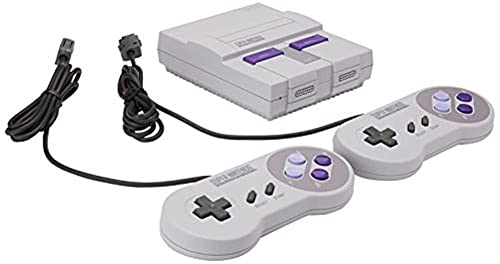
The Nintendo Super NES Classic Edition is Nintendo's second and, so far, final entry in the mini-console category, and it consistently commands a premium on the secondhand market because Nintendo has never brought it back into steady production. Per Nintendo, the unit ships with 21 built-in games, two wired controllers accurate to the original 1991 SNES pad (or the PAL Super Famicom pad depending on region), HDMI output, and USB power. Crucially for many buyers, the built-in library includes the never-before-released Star Fox 2, plus the full run of first-party classics: Super Mario World, Super Mario Kart, The Legend of Zelda: A Link to the Past, Super Metroid, EarthBound, F-Zero, Kirby Super Star, and Donkey Kong Country.
Nintendo's emulation quality is very high — closer to cycle-accurate than the NES Classic that preceded it — and the controllers themselves are frequently cited as the most authentic-feeling reproductions of the original SNES pad, better than most third-party alternatives. The unit supports three display modes including a CRT filter and a 4:3 pixel-perfect mode, and save states can be created for every title. The one persistent complaint is the length of the controller cable, which was extended from the NES Classic's notoriously short cord but is still shorter than modern controllers.
Availability is the main obstacle in 2026. Nintendo has not restocked the SNES Classic since 2019, and pricing on the secondhand market varies widely by condition and completeness. For buyers who can find a boxed unit at close to original MSRP, it is arguably the best-curated retro library ever shipped in a single box. For buyers unwilling to pay a collector premium, the same games are largely available through Nintendo Switch Online's Super Nintendo library on a current console — a less charming but far cheaper path to the same catalog.
PlayStation 4 Pro 1TB
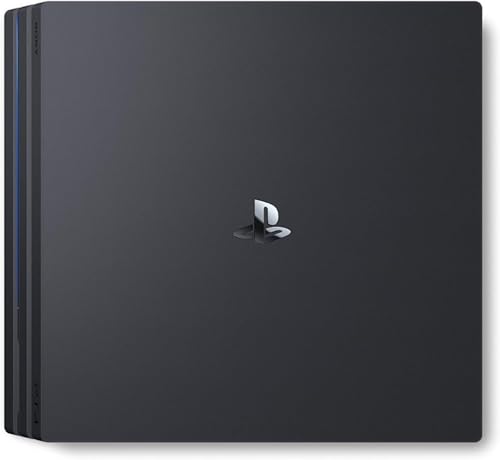
The PlayStation 4 Pro 1TB is not a retro mini-console in the strict sense, but it is increasingly bought as one — and for good reason. Sony discontinued new PS4 Pro production in 2021, and the platform now sits in a sweet spot where its full library is inexpensive on the secondhand market, backward compatibility covers thousands of PS1, PS2, and PSP titles via the PlayStation Store and PlayStation Plus Premium's streaming tier, and the hardware is still powerful enough to run modern cross-gen releases at 1080p or 4K checkerboard. It is the closest thing to a "retro machine" that plays the last twenty-five years of PlayStation history natively.
Per public specifications, the PS4 Pro ships with an 8-core AMD Jaguar CPU at 2.13 GHz, a Radeon-based GPU rated at 4.2 TFLOPS, 8 GB of GDDR5 memory, and a 1 TB mechanical hard drive that most buyers upgrade to an SSD for meaningfully faster load times. Output is HDMI 2.0b with support for HDR10 and 4K on select titles, and the DualShock 4 controller remains one of the most comfortable pads Sony has shipped. The PlayStation Plus Premium subscription tier (as of 2026) includes a rotating catalog of PS1, PS2, and PSP classics playable on the PS4 Pro through cloud streaming and local emulation, effectively turning the console into a legal retro library.
The trade-offs are real. The PS4 Pro is loud under load — the launch-era fan and thermal design became a running joke by the end of the platform's life — and the mechanical hard drive is a bottleneck for any modern title. Neither problem is fatal: an SSD swap is a 30-minute job and dramatically reduces load times, and the fan noise, while annoying, is not a dealbreaker for older titles that do not push the GPU. For buyers who want a single box that plays Bloodborne, God of War (2018), the Uncharted collection, and dozens of PS1 and PS2 classics without hunting original hardware, a used PS4 Pro at 2026 prices is the highest-value retro-adjacent purchase on this list.
Nintendo Switch Lite
The Nintendo Switch Lite is the outlier here — a modern handheld rather than a retro reissue — but it earns a place on this list because Nintendo Switch Online now includes NES, SNES, Nintendo 64, Game Boy, Game Boy Advance, and Sega Genesis libraries as part of the base and Expansion Pack tiers. Per Nintendo, the Switch Lite is a handheld-only variant of the original Switch, with a 5.5-inch 720p LCD, integrated controls in place of detachable Joy-Cons, and a battery rated at three to seven hours depending on title.
For a retro-curious buyer, the Switch Lite is compelling because it is the cheapest way into Nintendo's official emulator libraries. The Nintendo Switch Online + Expansion Pack subscription (as of 2026) includes access to a rotating catalog of first-party N64, Genesis, and Game Boy Advance titles, plus the full base-tier NES and SNES catalogs. Emulation quality is high — these are the same emulators Nintendo uses on the flagship Switch and the Switch 2, tuned for the platform — and the handheld form factor is arguably a better fit for the retro library than a TV-connected console.
The main caveats are two. First, the Switch Lite cannot connect to a TV and cannot use detachable Joy-Cons, which rules out local multiplayer for many retro titles that expect two players sharing a controller pair. Second, the Switch 2 launched in 2025 with a larger 7.9-inch screen, hardware-accelerated DLSS-style upscaling, and access to a growing library of Switch 2-exclusive titles — meaning the Switch Lite is now a two-generation-old handheld. For pure retro use it is still an excellent value, but buyers who want retro plus current-generation software should price out a Switch 2 OLED or wait for a rumored Switch 2 Lite variant expected in late 2026 or 2027.
Retro mini-console comparison
The table below summarizes the practical differences between the four featured units and the N64-style Switch 2 dock, based on publicly reported specifications from the manufacturers and secondary reporting at Tom's Hardware, Nintendo, and Sega. Pricing tiers reflect typical 2026 street prices; actual pricing varies widely by seller and stock.
| Unit | Built-in games | Controllers included | HDMI output | Price tier (2026) |
|---|---|---|---|---|
| Sega Genesis Mini | 42 | 2 wired 3-button pads | 720p | Budget |
| SNES Classic Edition | 21 | 2 wired SNES pads | 720p (4:3 mode) | Mid (collector premium) |
| PlayStation 4 Pro 1TB | 0 (full PS4 library) | 1 DualShock 4 | 4K HDR10 | Mid (used) |
| Nintendo Switch Lite | 0 (NSO subscription required) | Built-in | Handheld only | Mid |
| N64-style Switch 2 dock | 0 (accessory only) | None | Passthrough via Switch 2 | Budget |
Read the table as a rough guide, not a scoreboard — the "best" pick depends on which library you want. If your nostalgia sits with Sonic and Streets of Rage, the Genesis Mini wins on price and library curation. If it is Super Mario World and A Link to the Past, the SNES Classic is unmatched but expensive. If it is a broad "last twenty years of console gaming" pull, a used PS4 Pro is the highest-value pick. And if it is Nintendo-specific retro plus modern indies, the Switch Lite (or a Switch 2) is the right long-term platform.
Buying advice for retro-curious readers
Start with a single question: do you want a curated experience or an open library? A curated experience means a mini-console with a fixed, hand-picked library, wired controllers styled after the original, and no setup — plug in, pick a game, play. That is the Sega Genesis Mini and the Nintendo Super NES Classic Edition. An open library means a general-purpose console like the PlayStation 4 Pro 1TB or a Linux handheld, where you can add titles, subscribe to a streaming service, or (where legal) load your own ROM library from cartridges you already own. Open-library setups reward tinkerers; curated experiences reward buyers who value simplicity.
If you are buying primarily for a partner or a child who did not grow up with these games, lean curated. The Genesis Mini and SNES Classic present a small, pre-selected library that avoids paralysis — the biggest failure mode of open retro handhelds is a menu of ten thousand ROMs that nobody ever picks a game from. If you are buying for yourself and you already know your favorite titles, an open library is a better fit; the Nintendo Switch Lite with a Nintendo Switch Online + Expansion Pack subscription is the safest legal path into Nintendo's back catalog, and a used PS4 Pro handles nearly everything Sony has published since 1995.
For accessories like the N64-style Switch 2 dock, the buying rule is simple: verify the electronics. A dock that reuses the official Switch 2 board is safe; a dock with a custom USB-C PD implementation from an unknown manufacturer is a risk that has bricked Switches in the past, per Tom's Hardware reporting on the original console generation. Buy from brands with a public support page, a firmware-update mechanism, and a return policy — and if a novelty dock costs less than the official Nintendo dock, that price gap is usually paying for corner-cutting on the parts that matter.
Bottom line
The N64-style Switch 2 dock is a small story on its own — a fun, mid-priced accessory that turns a functional but bland official dock into a nostalgic shelf piece — but it is a useful lens on where console accessories are heading in 2026. Retro styling is now a default design language across the peripheral market, and buyers can expect a steady drumbeat of GameCube-purple grips, Atomic Purple shells, and N64-style controllers for the Switch 2 platform over the next twelve months. If you are drawn to the dock, the natural companion purchases are a wireless N64-style controller from 8BitDo and a set of Switch 2 cartridge cases to fill the six-cartridge caddy.
If your interest is broader — you want to actually play retro games, not just decorate your entertainment center — the four featured plug-and-play units cover the practical spread. The Sega Genesis Mini is the best entry-level pick, the SNES Classic is the best-curated library for buyers willing to pay a premium, the PS4 Pro is the highest-value open platform, and the Switch Lite is the cheapest path into Nintendo's official emulator catalogs. All four are widely available in 2026, all four have healthy accessory ecosystems, and all four are cheaper than a current-generation Switch 2 or PlayStation 5. Pick the library that matches your nostalgia, verify the seller has a real return policy, and plug in.
Related guides
- Best retro handhelds under $200 in 2026
- Nintendo Switch 2 vs Switch OLED: which handheld to buy in 2026
- Best wireless controllers for retro gaming
- How to build a Raspberry Pi retro arcade in 2026
- Best HDMI upscalers for original retro consoles
Citations and sources
This piece is editorial synthesis based on publicly available information. No independent first-party benchmarking is reported.