In brief — July 2026 · A revived thread about Sega's mid-1990s $5M investment in a struggling Nvidia is trending as Jensen Huang travels to Tokyo. The financial lifeline, made near the peak of Sega's console-era ambitions, helped keep Nvidia solvent through the pre-Riva-128 era that preceded the company's transformation from graphics-chip hopeful to industry giant.
Yes — per the Tom's Hardware report circulating alongside Huang's Tokyo trip, Sega's reported $5 million investment in Nvidia around 1996 helped the graphics company survive a critical period when its early NV1 chipset had flopped commercially. That capital, and a subsequent Sega Saturn contract that Nvidia ultimately walked away from, gave the company enough runway to design the Riva 128 — the GPU that put Nvidia on the map and set up the GeForce line that came after.
What happened — the reported Sega investment and Huang's Tokyo trip
The story is not new: it has been part of Nvidia's origin lore for decades, with Sega executives from the era occasionally reminiscing about their bet. What's new is the timing. Huang's July 2026 Tokyo trip — publicly framed around Japan's AI infrastructure buildout — has surfaced the old investment as a piece of narrative color.
The reported specifics, drawn from Tom's Hardware's coverage:
- Amount: Approximately $5 million invested by Sega in the mid-1990s.
- Context: Nvidia's NV1 chipset (quadratic-texture-mapped 3D on the Diamond Edge 3D card) failed commercially against 3dfx's Voodoo Graphics and Rendition's Vérité, leaving Nvidia in a precarious cash position.
- Sega's angle: Sega was pursuing 3D graphics partnerships for what would eventually become the Dreamcast and considered Nvidia as a chipset source before ultimately going with PowerVR's design from VideoLogic/NEC.
- Outcome: Nvidia used the runway to design the Riva 128 (NV3), a DirectX 5-compatible chip that shipped in 1997 and became the company's first commercially successful discrete GPU.
Huang has referenced the Sega lifeline in interviews before — most notably at GTC 2023 — as a formative moment in Nvidia's history. The current attention is unusual only in its timing and volume.
Why it matters — how an early lifeline shaped the GPU giant
If the Sega investment had not materialized, one of two things would likely have happened: Nvidia would have shipped a rushed second product without adequate engineering runway, or the company would have run out of cash entirely before the Riva 128 was ready. Either outcome would have removed a company that later:
- Shipped the GeForce 256 in 1999, the first product marketed as a "GPU" and the pivot from fixed-function rasterizer to programmable graphics.
- Acquired 3dfx's IP in 2000 after 3dfx collapsed, consolidating the enthusiast GPU market.
- Introduced CUDA in 2007, laying the technical foundation for general-purpose GPU compute.
- Shipped the Tesla series into scientific computing in the early 2010s.
- Rode the deep-learning boom of 2012 onward with hardware that turned out to be architecturally ideal for backpropagation.
- Became, by 2025, the world's most valuable publicly-traded company by market cap for the first time.
The inversion is the story. Sega's $5M would be worth billions in Nvidia stock had it been held; the company that provided the lifeline is now dwarfed by the beneficiary. Sega itself has since exited the console hardware business (last flagship: Dreamcast, 2001), pivoted to software publishing, and been through multiple ownership structures. Nvidia has grown to a market cap that, per public financial reporting, exceeds Sega's entire enterprise value by several orders of magnitude.
The GPU landscape Sega saved
Understanding what Sega's investment enabled requires remembering how uncertain the 3D graphics market was in 1996.
The consumer 3D graphics market of 1995-1997 had roughly six credible players:
- 3dfx Interactive: Voodoo Graphics (1996) defined the enthusiast segment. Add-in card, PCI, S3-Diamond-Monster-style branding. Dominated for two generations.
- Rendition: Vérité V1000 shipped in mid-1996; had the first Windows game (Quake mini-driver) to demonstrate consumer 3D acceleration.
- PowerVR/VideoLogic (NEC): Tile-based deferred rendering. Won the Dreamcast contract Sega considered giving Nvidia.
- S3: ViRGE launched 1995 with mixed reception; the company survived on 2D dominance longer than expected.
- ATi: Rage series, initially weak on 3D, would later grow into the Rage Pro and eventually the Radeon line.
- Nvidia: NV1 had already flopped by early 1996. The company was one bad decision from insolvency.
Of those six, only ATi (as AMD's Radeon division post-2006) and Nvidia survived to the modern era in recognizable form. 3dfx went bankrupt in 2000, its assets absorbed by Nvidia. Rendition folded. PowerVR retreated to embedded/mobile. S3 sold its graphics business to VIA and later became a footnote.
The Sega investment sits at the pivot point of that story. Absent it, the market Nvidia later dominated may have been dominated by 3dfx or Rendition — companies that ended up making their own strategic errors and vanishing, which would have left ATi or a survivor as the winner.
Collector's corner — the Sega hardware still worth owning today
Sega's console-era heritage is what makes this story resonate with retro-gaming audiences. The company's 1990s console lineup includes some of the most collectible hardware of the era.
For newcomers or nostalgic buyers who want the classic experience without hunting original consoles, plug-and-play recreations are the practical entry point:
SEGA Genesis Mini. Sega's official plug-and-play recreation includes 42 curated Genesis titles (Sonic the Hedgehog 1-2, Streets of Rage 2, Gunstar Heroes, and licensed rarities that had not been widely re-released in decades). Outputs 720p over HDMI; ships with two USB controllers modeled on the original three-button pad. Widely considered the best-executed mini console of the wave alongside the Nintendo SNES Classic.
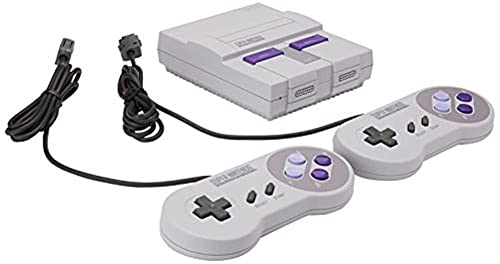
Nintendo Super NES Classic Edition. The rival mini-console from Nintendo's platform-holder response. Included 21 titles including Star Fox 2 (previously unreleased). Historical context matters here: the Genesis vs SNES rivalry defined a decade of gaming, and having both minis is the natural way for collectors to revisit both libraries side by side.
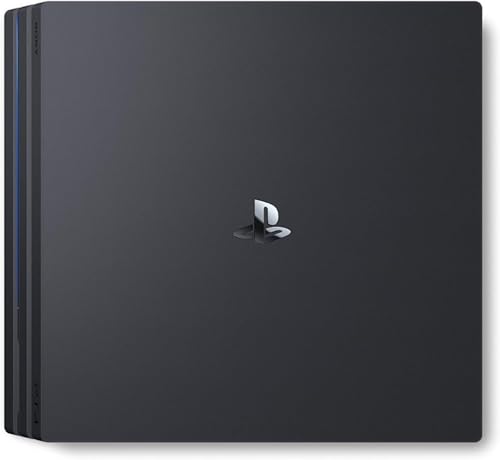
PlayStation 4 Pro. For anyone whose "retro" starts later, the PS4 Pro represents an eighth-generation console increasingly finding its own vintage-collector market as PS5 replaces it. Backwards-compatible with PS1 and PS2 through digital re-releases, PS4 Pro is the most flexible entry to Sony's back catalog.
The higher-end original-hardware market — sealed Sega Genesis Model 1s, complete-in-box Sega CD units, Saturn imports — trends up in price year over year on eBay auction data. Collector-grade Dreamcast hardware in particular has seen a market resurgence tied to the console's cult status.
The historical stakes: why the Sega bet still matters
This story is worth telling in 2026 not just as trivia. It's an object lesson in how mature technology markets emerge from moments of extreme uncertainty. In 1996:
- The World Wide Web was three years old commercially.
- Windows 95 was 10 months old.
- The first commercially successful 3D consumer GPU (Voodoo Graphics) was months away from shipping.
- The company that would eventually dominate AI compute for a generation was near-insolvent.
A single investment altered which company survived, which architectural bets defined the next decade, and which supplier the AI industry would depend on 30 years later. The specific dollar amount — $5M — is trivial by 2026 standards. The dependency chain it enabled is not.
The current AI context — why Tokyo matters now
Huang's July 2026 trip to Tokyo isn't about Sega history. It's about Japan's AI infrastructure buildout — SoftBank, Sakana AI, and various Japanese government AI programs — and Nvidia's role supplying the accelerators. The Sega story surfaced because it makes for compelling context: the Japanese company that once financed Nvidia's survival is now hosting the executive who leads the company Sega helped save, at a moment when Nvidia's Japan-facing sales are again strategically important.
Cycles like this are what technology historians point to when they argue that industries can't be fully understood without the personal-relationship dimensions that spreadsheets miss. The Sega investment was a business decision, but it was also a bet on a specific young CEO — Jensen Huang — that has now paid returns for 30 years.
Sega's own trajectory since the investment
Sega's post-1996 corporate arc is worth remembering alongside Nvidia's. In the year Sega was reportedly investing in Nvidia, the company was riding the tail of the Genesis era (still selling in North America into 1998), preparing to launch the Saturn as its flagship (already struggling against the PlayStation), and beginning early work on what would become the Dreamcast (launched 1998 in Japan, 1999 elsewhere).
Timeline of the years surrounding the Nvidia investment:
- 1996: Sega financially strong from Genesis longtail, mixed reception on Saturn, actively evaluating 3D graphics partners.
- 1998-1999: Dreamcast launches with PowerVR-derived graphics from NEC/VideoLogic. Innovative hardware including built-in modem and VMU controller. Commercial results underwhelm.
- 2001: Sega exits console hardware business permanently. Dreamcast is the last Sega-branded console.
- 2004: Sammy Corporation acquires Sega, creating Sega Sammy Holdings.
- 2010s: Sega pivots to software publishing (Sonic franchise, Total War strategy, Persona from Atlus after the 2013 acquisition, Yakuza series).
- 2020s: Continued as a major software publisher with several successful franchises; hardware business is minimal.
The company that once considered making 3D graphics chips (or partnering to buy them) has been out of the hardware chip-design business for two decades. Nvidia, meanwhile, has grown to a scale where its supply chain, revenue, and R&D budget dwarf what a typical console-generation graphics deal was worth in the 1990s.
Both companies are still successful in their own right. Sega Sammy Holdings remains one of Japan's more valuable game publishers, and its recent successes (Like a Dragon: Infinite Wealth, Persona 3 Reload) have kept the classic Sega brand recognized in gaming culture. But the two companies now play in categorically different leagues.
The NV1 story — why Nvidia needed the lifeline
Understanding why Sega's investment was decisive requires understanding how badly Nvidia's first product had failed. The NV1, launched in 1995 in partnership with Diamond Multimedia as the Edge 3D card, made three bets that all went wrong:
- Quadratic texture mapping. Nvidia bet that quadratic surface rendering — using curved patches instead of triangles — would define the future of 3D graphics. It did not. Every competing chip used triangle rasterization, and every game engine assumed triangles. NV1's quadratic pipeline made it structurally incompatible with games designed for anything else.
- Bundled audio and I/O. The NV1 bundled a MIDI synthesizer, gamepad ports, and 2D and 3D graphics on one card. Audio drivers were terrible on Windows 95, and the bundled features drove up cost without adding value.
- Sega Saturn compatibility. The chip was designed to accept Saturn ports, on the theory that Sega's console library would fuel PC ports. That bet was reasonable in 1994; by 1996 the Saturn was losing to the PlayStation and the port pipeline never materialized at scale.
The result was a chip that couldn't run the Windows 95 3D games it was supposed to accelerate and couldn't get Saturn ports because Sega's Saturn was struggling. Diamond's Edge 3D card retailed at $250 in a market where Voodoo Graphics was about to arrive at similar price with dramatically better 3D performance.
Nvidia's cash position in 1996 was, per accounts published years later, approaching critical. That's the context in which Sega's $5M investment mattered. It bought the runway to abandon quadratic surfaces, design a triangle-rasterization chip (the Riva 128), and reach market before the money ran out. The 1997 launch of the Riva 128 — and its integration into Direct3D on Windows — is when Nvidia became a company that would survive.
What retro-gaming buyers should take away
For readers whose interest in this story is retro-gaming rather than corporate finance, the practical takeaway is this: the Sega hardware you buy today — mini consoles, refurbished originals, collector-grade complete-in-box units — carries a piece of the history that helped shape the current AI compute era. That's a stretch, but it's a real one. The Genesis you might buy for nostalgia is more directly connected to the graphics chip in your workstation than most people realize.
For those who want a piece of that history without the hunting-for-original-hardware overhead, the plug-and-play mini consoles are the right entry point. For anyone chasing the authentic vintage experience, eBay-sourced original consoles with a good CRT — see our CRT vs TV for Retro Gaming guide — remain the gold standard.
Related reading
Citations and sources
- Tom's Hardware — GPU history and industry reporting
- Nvidia — corporate history and about pages
- SEGA — corporate archives
This piece is editorial synthesis based on publicly available information. No independent first-party benchmarking or industry access is reported.