If you want to play old games on a modern TV in 2026, five real paths cover almost every use case: plug-and-play boxes (SNES Classic, Sega Genesis Mini), portable Nintendo access via Switch Lite, a used PlayStation 4 Pro for PS1 Classics plus the modern PS4 library, or a PS4 Slim 1TB at a lower price point. Each solves a slightly different problem. This guide walks you through which one fits which buyer, ranks the plug-and-plays by library value, and covers when a Raspberry Pi RetroPie build wins over any of the commercial options.
Key takeaways
- Sega Genesis Mini has the strongest library-per-dollar for a plug-and-play in 2026.
- SNES Classic is the higher-prestige library but harder to find at reasonable prices.
- Switch Lite is the right pick if portability plus modern Nintendo output both matter.
- PS4 Pro (used) unlocks PS1 Classics plus the full PS4 catalog.
- Raspberry Pi + RetroPie wins on flexibility for hobbyists but loses on gift-and-play polish.
- Every option ships with real HDMI output and works on a modern TV without adapters.
Who is buying a retro console in 2026?
Three archetypes dominate the market:
- The nostalgic returner — grew up on SNES or Genesis, wants to replay 5-15 specific games, has no interest in a hobby project. Plug-and-play wins.
- The gift-giver — buying for a kid, spouse, or parent who mentioned "the old Nintendo." Plug-and-play wins by a mile.
- The hobbyist — wants to explore multiple libraries, tinker with settings, curate a personal collection. Raspberry Pi + RetroPie wins.
For the first two, this guide is aimed squarely at your decision. For the third, this guide will end by pointing you at the DIY path.
#1: Sega Genesis Mini — best library-per-dollar
The Sega Genesis Mini is the plug-and-play we recommend to buyers who do not have a strong Nintendo-vs-Sega loyalty already. Sega loaded it with 42 games spanning the entire Genesis era, and the included controllers replicate the original three-button pad while adding modern USB internals. HDMI output is 720p, upscaled cleanly from the original 320x224, and audio reproduction is faithful to the FM synthesis the Genesis is famous for.
Library highlights: Streets of Rage 2, Sonic 2, Sonic 3, Contra Hard Corps, Castlevania Bloodlines, Gunstar Heroes, Comix Zone, Shining Force, Ecco the Dolphin, Vectorman, Landstalker.
Trade-offs:
- Three-button controllers (six-button pad sold separately) — some fighting games feel cramped.
- Save states are per-game via the menu, no cloud sync.
- No option to add ROMs from your own collection.
Best for: buyers who want a well-curated Sega library out of the box and value setup-free operation.
Bottom-line pick: yes, for anyone whose childhood weekends included Sonic 2 or Streets of Rage.
#2: Super NES Classic Edition — best library, harder to find
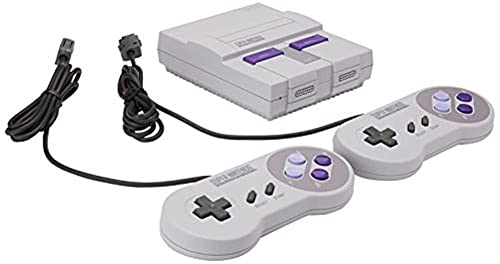
The Super NES Classic Edition is the higher-prestige pick and, for a lot of buyers, the emotional one. Nintendo loaded it with 21 games plus the previously unreleased Star Fox 2, and the controllers are direct clones of the original SNES pads down to the exact feel. HDMI output is 720p and looks clean on modern TVs. The unit itself is a slightly-smaller-than-original desktop object that many buyers keep out as a display piece.
Library highlights: Super Mario World, The Legend of Zelda: A Link to the Past, Super Metroid, Super Mario RPG, Chrono Trigger, Final Fantasy III, Star Fox, Super Mario Kart, Street Fighter II Turbo, Kirby Super Star, Yoshi's Island.
Trade-offs:
- Discontinued from new production; used-market prices reflect scarcity.
- 21 games vs Genesis Mini's 42 — fewer titles for often higher prices.
- Two controllers included, but the cord is short.
- No option to add ROMs.
Best for: SNES-loyal buyers, gift-givers targeting Nintendo fans, and collectors who value the polished Nintendo hardware feel.
Bottom-line pick: yes, if the price is reasonable and the library matches your nostalgia. Verify seller reputation carefully on the used market — counterfeit units exist.
#3: Nintendo Switch Lite — portable Nintendo classics via NSO
The Switch Lite is not a dedicated retro console, but it is a legitimate retro platform for anyone willing to pay for the Nintendo Switch Online + Expansion Pack subscription. The catalog now includes NES, SNES, N64, Game Boy, Game Boy Advance, Game Boy Color, and Sega Genesis libraries streamed and playable natively on the handheld.
Retro library highlights via NSO: Super Mario 64, The Legend of Zelda: Ocarina of Time, GoldenEye 007, Paper Mario, Star Fox 64, Mario Kart 64, Advance Wars, Metroid Fusion, Kirby's Return to Dream Land, and the classic NES and SNES libraries in full.
Trade-offs:
- Requires an ongoing subscription — not a one-time purchase.
- Handheld only, no dock support (that is what the Switch Lite is).
- Some emulation is imperfect — GoldenEye's frame rate quirks translate to the Switch Lite version.
- Battery life on graphics-heavy titles drops to about 3 hours.
Best for: buyers who want portability, a huge growing library, and modern Nintendo output for current-gen games alongside retro.
Bottom-line pick: yes if handheld matters. The Switch OLED is the better display if home use dominates.
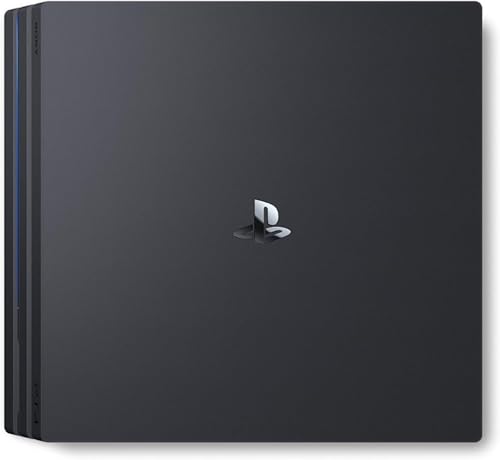
#4: PlayStation 4 Pro (used) — PS1 Classics plus PS4 library
The PlayStation 4 Pro is the deep-cut recommendation for buyers who want retro plus a full modern library. PlayStation Plus Premium unlocks a rotating PS1 Classics library streamed and playable natively, plus PS2 and PS3 streaming, and the PS4 Pro itself plays every PS4 game ever released — a catalog now measured in thousands including many retro-styled indies (Cuphead, Shovel Knight, Celeste, Undertale) and modern remakes of classic titles.
PS1/PS2/PS3 highlights via PS Plus Premium: Final Fantasy VII, Tekken 2, Twisted Metal, Wild Arms, Ridge Racer, Syphon Filter, Ape Escape, Jumping Flash, Silent Hill, Toy Story.
Trade-offs:
- Discontinued from new production, buy used with care.
- Requires PS Plus Premium subscription for the streaming classics library.
- Bigger and louder than a plug-and-play (a full home console).
- 4K HDR output is a plus but requires a compatible TV to enjoy.
Best for: buyers who want retro plus modern and are willing to pay for the ecosystem.
Bottom-line pick: yes for the buyer who plays both retro and modern indies and wants one box to serve both.
#5: PlayStation 4 Slim 1TB — budget PS4 entry
The PS4 Slim 1TB is the value-tier PS4 entry point when the Pro's 4K output does not matter to you. Everything the Pro does at 1080p works on the Slim; only 4K HDR gaming is missing. For retro streaming via PS Plus Premium the two are identical.
Trade-offs:
- No 4K, no HDR at gaming rates.
- Otherwise identical library and features to the Pro.
- Slightly smaller and quieter than the Pro.
Best for: buyers who want the PS4 ecosystem on a 1080p TV or don't care about 4K.
Bottom-line pick: yes if the price gap between Slim and Pro is meaningful to your budget.
The Raspberry Pi RetroPie alternative
For hobbyists, a Raspberry Pi 4 or 5 running RetroPie plays every 8- and 16-bit console library plus early PlayStation and Nintendo 64 at usable speeds. The catch: you have to source ROMs legally (from cartridges you own via a legally acquired dumper, from published free-and-legal collections, or by purchasing digital editions), configure controllers, tune emulator settings, and accept a less polished front-end than the plug-and-plays.
If any of that sounds like a fun weekend project, the Pi path is the flexible one. If it sounds like a chore, buy a plug-and-play.
Ranking summary
| Rank | Console | Best for | Approx. price 2026 |
|---|---|---|---|
| 1 | Sega Genesis Mini | Library-per-dollar, Sega loyalists | $80-$110 new |
| 2 | Super NES Classic | Prestige Nintendo library | $120-$180 used |
| 3 | Switch Lite | Portable Nintendo + NSO retro | $199 new |
| 4 | PS4 Pro | Retro + modern indies in one box | $220-$290 used |
| 5 | PS4 Slim 1TB | Value PS4 entry | $170-$220 used |
Raspberry Pi + RetroPie is a separate category — hobbyist tier, not a plug-and-play — and lands around $100-$150 for the Pi 5 and accessories, plus your time.
How to check a used console before buying
For any used PS4 or SNES/Genesis Mini:
- Verify the box and cables: original HDMI, original power, both controllers on the classic minis.
- Check the vents: dust caked in the intakes is a sign of neglect; run a Q-tip check.
- Boot to menu: verify HDMI handshake, controller pairing, and basic navigation before payment.
- Play one game for 10 minutes: verify HDD (PS4) or NAND (mini consoles) health with actual load.
- Warranty: virtually none of these carry factory warranty on the used market. Buy from sellers with returns.
What about the Analogue Pocket or Anbernic handhelds?
These are legitimate options for the hobbyist tier but rarely the right pick for the plug-and-play buyer this guide targets.
Analogue Pocket — a premium FPGA-based handheld that plays Game Boy, Game Boy Color, and Game Boy Advance cartridges via original cartridges and via loaded cores. Superb screen, superb build quality, price point in the $220+ range. Best for enthusiasts who own original cartridges.
Anbernic RG35XX / RG40XX / RG556 — inexpensive Chinese-branded handhelds that emulate 8- and 16-bit consoles plus PlayStation and Nintendo 64 at varying quality tiers. Great value for hobbyists who don't mind the setup work. Battery life varies widely by model.
Neither replaces a plug-and-play for gift-giving or casual use. Both are excellent for the hobbyist tier who wants portability plus flexibility.
Household setup notes
- HDMI switch: if you have multiple retro consoles plus a modern console plus streaming, a $30 HDMI switch prevents "which input am I on?" frustration.
- Storage box: mini consoles get lost in TV stands. A small labeled bin per console keeps everything findable.
- Controller cables: retro pads use various proprietary connectors. Keep a labeled bag per console.
- Save-state discipline: mini consoles keep save states in on-board flash. If you plan to keep the console for years, back up the save data periodically (some allow USB export).
Common pitfalls
- Buying a counterfeit SNES Classic: they exist, especially on marketplaces. Verify serial numbers.
- Assuming Switch Lite plays every retro game: NSO is subscription; some titles rotate.
- Ignoring cord length: SNES Classic pads are notoriously short. Extension cables are cheap.
- Underestimating PS4 fan noise: launch-model PS4 Pros are audible; find the CUH-7200 revision or later for quieter operation.
- Ordering from grey-market resellers: verify the console has the correct HDMI signal for your region.
- Skipping controllers: extra plug-and-play controllers are hard to find; buy any extras at the same time as the console.
Family and shared-play considerations
Retro consoles are often bought for shared play — parents and kids, siblings, couples. Each of the top picks handles two-player differently:
- SNES Classic: two-controller included, most SNES titles support two-player.
- Genesis Mini: two-controller included, Streets of Rage and Contra co-op are excellent.
- Switch Lite: single-screen handheld; not great for shared play. Get a Switch OLED instead.
- PS4 Pro/Slim: two-controller supported via a second Sony pad ($60-$70).
For gift-giving to a family, the Genesis Mini's co-op library and included second controller make it the top pick for households where "we're both going to play this."
Bottom line
The Sega Genesis Mini is our top overall recommendation for a plug-and-play retro console in 2026 — best library-per-dollar, still available new in many regions, polished HDMI output. The SNES Classic is the prestige pick if you have a Nintendo loyalty and can pay used-market prices. The Switch Lite is the portable option that adds modern Nintendo output on top of a growing retro library. The PS4 Pro and PS4 Slim are the deep-cut picks for buyers who want retro and modern in one box.
Everything else — Raspberry Pi RetroPie, the Analogue Pocket line, the Anbernic handhelds — is a legitimate but hobbyist-tier answer. If you are shopping for a gift or a set-and-forget nostalgia machine, buy one of the plug-and-plays. If you want a project, pick the Pi and enjoy the ride.
Citations and sources
- RetroPie — Raspberry Pi retro emulation project
- Nintendo — official gaming systems page
- Sega — Genesis Mini product page
- r/retrogaming — community buyer's discussion
This piece is editorial synthesis based on publicly available information. No independent first-party benchmarking is reported.