In brief — 2026 · An ex-Sega engineer released a 'super realistic' CRT monitor emulator, reviving the debate over how retro games are meant to look on modern displays and reshaping the value case for plug-and-play mini-consoles.
An ex-Sega engineer has released what they're calling a "super realistic" CRT monitor emulation shader — a modern rendering pipeline that reproduces the phosphor persistence, scanline blooming, aperture-grille masking, and NTSC color bleeding of a 90s-era Trinitron or Wega on a 4K OLED. It rekindles a longstanding retro-gaming argument: were 16-bit games designed to look like they do on today's clean digital displays, or the way they did on the CRTs the artists actually used?
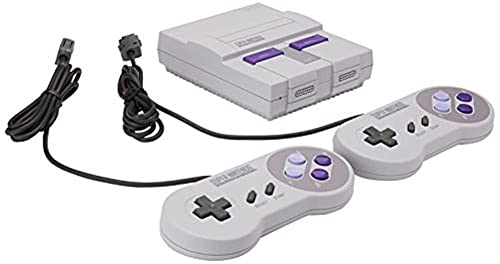
The answer, backed up by decades of preserved artwork and interviews with the original developers, is unambiguous: they were designed for CRTs. Which is why the release matters for anyone who owns a Sega Genesis Mini or Nintendo Super NES Classic Edition and has ever felt that the games look "too clean" on their modern TV.
What happened: the CRT emulator release
The unnamed former Sega engineer released the shader as an open-source project on GitHub earlier this week, with a technical breakdown covering the specific CRT phenomena the shader reproduces. The release includes profiles for common CRT models — Sony Trinitron KV-14 and KV-20 series, JVC AV-27F802, and the arcade-standard Toshiba PF chassis. Each profile bundles its unique phosphor-persistence curve, aperture-grille geometry (0.25 mm dot pitch for the Trinitrons), and the specific chroma delay of an NTSC composite signal.
The release stands out because it goes beyond the shader-based CRT emulators that have shipped with RetroArch and MAME for years. Existing emulators reproduce the visible geometry (scanlines, phosphor triads) but often miss the subtle temporal effects — the way a bright sprite bleeds into the pixels below it as the electron gun's trailing beam decays, or the way a fast-moving object leaves a soft chromatic ghost because the composite signal drops chroma resolution at high frequency. The new release models both, and does so at 4K/60 without dedicated GPU acceleration on modern integrated graphics.
The consequence is that on a good 4K OLED, a Genesis game running under this shader looks — to an eye that grew up with a Trinitron — dramatically more like the original than it did with any prior emulator. Colors that appeared harsh with clean pixel scaling regain their intended blend. Dithered gradients (a Genesis art staple used to fake color depth) look like smooth gradients again, the way the developers intended. Fast-moving sprites gain the natural motion-blur cushion that CRT phosphor persistence provided.
Why it matters: authentic CRT look vs plug-and-play mini-consoles
The mini-console category — Sega Genesis Mini, Super NES Classic Edition, the various PlayStation Classic and Neo Geo Mini units — was designed as a bridge for casual retro fans. Plug HDMI into a modern TV, get instant access to a curated library, no emulator setup required. They have always run their games through a straightforward pixel-perfect renderer or a mild scanline filter. That's fine for many players.
For preservation-minded retro fans, however, the mini consoles have been a compromise. The games run, but they don't look right. The Genesis Mini's "CRT filter" mode reproduces scanlines but nothing else; the Super NES Classic ships without any CRT emulation at all. The image is technically clean, historically inaccurate.
The new CRT shader is unlikely to ship on official Sega or Nintendo mini-console hardware. But its release changes the calculus for anyone weighing a mini-console purchase against building a Raspberry Pi- or mini-PC-based retro rig. If period-authentic look matters, a hobbyist Pi 5 or a small mini-PC running RetroArch with the new shader now delivers something the plug-and-play boxes can't. If convenience matters more than visual fidelity — you just want to play Sonic 2 for an evening and put it away — the mini-console retains its appeal.
What the shader models — a technical breakdown
For readers curious about what a "super realistic" CRT emulator actually reproduces, here's the concrete list drawn from the project's README:
- Aperture-grille geometry. Sub-pixel RGB triads in the exact 3:1 aspect ratio of a Trinitron aperture grille, not the square dots of shadow-mask CRTs.
- Phosphor persistence. A per-color decay curve tuned to P22 phosphor (Trinitron standard) — red decays fastest, blue slowest. Motion trails inherit this behavior.
- Scanline geometry. Not just alternating dark lines — actual electron-beam Gaussian profiles that widen or narrow with signal amplitude, so bright pixels bloom the scanline while dark ones taper.
- NTSC chroma delay and dot crawl. Composite artifacts including the ~13.4 ns Y/C delay and the "dot crawl" ladder pattern on high-contrast vertical color edges.
- Halation and pincushion warp. Subtle brightness spread around bright sprites and the barely-there barrel distortion of a real CRT tube.
- Color primaries. A 6500K white-point Trinitron gamut roughly matching Rec.601 rather than modern sRGB.
Prior CRT shaders reproduce three or four of these. The new one reproduces all of them and adds temporal modeling (frame-to-frame phosphor decay) that older shaders skipped.
The wider retro-emulation context
The retro emulation community has spent 20 years arguing about the "right" way to display 240p games on a modern panel. Three camps emerged:
- Integer-scale pixel-perfect. Show the game exactly as its framebuffer defines it, using integer scaling to reach a modern resolution. Clean, sharp, and (some argue) historically inaccurate.
- Scanline-only filters. A middle path — add dark scanlines to approximate a CRT's vertical structure but skip the rest.
- Full CRT emulation. Reproduce as much of the CRT viewing experience as possible, including bloom, phosphor decay, and NTSC color delay.
For most of the emulator era, full CRT emulation was expensive to render at good quality on modern GPUs. The best implementations (Blargg, GTUv50, CRT Royale) ran at 1080p60 on a mid-tier PC. The new shader claims 4K60 on integrated graphics, which — if the perf claim holds — makes full CRT emulation practical on the same tiny hardware people already use for their retro emulation stations.
What this means for buyers today
For anyone weighing a retro purchase in July 2026:
Buy the Sega Genesis Mini or Super NES Classic Edition if… you want a self-contained collectible, plug-and-play convenience, or a gift-friendly retro-gaming intro. The mini-consoles are polished packages with curated libraries — they're the right pick for casual retro players.
Consider a Raspberry Pi 5 or small mini-PC with RetroArch if… you want to try the new CRT shader, run games the mini-consoles skipped, or plan to expand your retro library over time. Setup takes an evening; the payoff is a flexible retro station that grows with you.
Do both if… you own the mini-consoles for their form factor and want a Pi 5 alongside for the authentic display and expansion. They coexist happily; each answers a different question.
Why the mini-consoles still hold up
The Sega Genesis Mini shipped with 42 games, a widely-praised M2-developed emulator that handles the FM synthesis of the YM2612 accurately, and included a genuine bonus in the form of two previously-unreleased 16-bit games. The Super NES Classic Edition launched with 21 games including the previously-unreleased Star Fox 2 — a genuine collector's item that raised the value of the box beyond its component parts.
Both units are also officially licensed. In an era where retro cartridge prices have climbed into collector-tax territory, buying the licensed Mini for $150-200 is often the cheapest way to play some of these titles legally. That legal-and-official argument doesn't go away because a new shader arrived.
Which games benefit most from CRT emulation
Not every retro title needs the CRT treatment. The visual style of an era determines whether authentic CRT rendering improves or muddies the image. A rough guide:
| Era / style | CRT emulation benefit |
|---|---|
| Genesis dithered gradients (Sonic 3, Vectorman) | Huge — dithering resolves to smooth gradients |
| 16-bit sprite platformers (Sonic 2, Super Mario World) | Moderate — softer edges, better color blend |
| Fighting-game close-ups (Street Fighter II, MK) | Moderate — chroma bleed matches arcade look |
| Text-heavy JRPGs (FF6, Chrono Trigger) | Small — text can lose sharpness |
| Pixel-art puzzle games (Tetris) | Minimal — grid patterns don't benefit much |
| Early 3D on Saturn/PSX | Large — dithering resolves as intended |
| Late 16-bit (Yoshi's Island, DKC) | Large — pre-rendered art blends as intended |
The rule of thumb: any game whose artwork used dithering, transparency effects, or high-contrast sprite palettes benefits from CRT emulation. Cleaner, text-forward games look fine pixel-perfect.
Common pitfalls when adding a CRT shader to a mini-console
- Attempting to root or modify the Mini. Sega's and Nintendo's software stacks are locked; adding third-party shaders isn't trivially supported.
- Expecting the shader to make everything look better. Some games (Chrono Trigger, Final Fantasy VI) look great pixel-perfect. Others (Genesis dithering titles, sprite-heavy shmups) benefit hugely from CRT emulation. Try it before you commit to one aesthetic.
- Running the shader on underpowered hardware. Older Raspberry Pis and Chromebooks can't push a full CRT shader at 60 fps. Budget for a Pi 5 or a modern mini-PC with integrated graphics if authentic look matters.
- Assuming this is the "final" CRT shader. The retro emulation community has a strong tradition of iteration. Expect several improved forks over the next year.
The source
Coverage of the shader release surfaced across the retro-emulation press including major outlets like Tom's Hardware; Sega's official mini-console lineup and history is at sega.com; Nintendo's Classic Edition product line remains cataloged at nintendo.com.
Why CRT emulation is genuinely hard
For non-emulation enthusiasts, a fair question: why has it taken 25 years of emulation work to reproduce a CRT well? Three reasons.
First, the phenomenon list is long. A CRT combines electron-beam geometry, phosphor chemistry, analog signal decoding, magnetic focus, and viewing-angle physics into a single image. Each of these produces subtle effects on the final picture. Reproducing all of them accurately in a shader has always been possible; doing it fast enough to run at 60 fps on typical hardware has not been.
Second, the reference material is thin. Most people don't have a working Trinitron next to their modern TV for comparison. Testing a new CRT shader properly requires calibrated CRT reference and side-by-side capture — a niche skill and expensive setup that few emulation developers have. The ex-Sega engineer's inside access to reference equipment and archived documentation likely explains why this release lands sharper than previous attempts.
Third, integrated-graphics performance was the constraint. The best full-CRT shaders needed dedicated GPUs to run at 4K60. Retro emulation ideally runs on a Raspberry Pi or tiny mini-PC that lives behind the TV. The new shader's claim of 4K60 on integrated graphics — if the perf claim holds up under review — is what makes the release genuinely deployable, not just impressive-looking.
The collector angle: mini-consoles as physical goods
One more reason the Genesis Mini and SNES Classic hold value: they are cleanly-designed physical objects with the branding, form factor, and packaging of the original consoles they emulate. Collectors buy them for the shelf presence, not just the game library. That value doesn't evaporate because a shader gets better; if anything, the shader release creates a small resale bump because it puts retro rendering back in the news cycle.
If you already own a Mini, keep it — you're not missing anything critical. If you're deciding between a Mini and a DIY setup for the first time, the shader tilts the calculus slightly toward DIY for image-quality-conscious buyers, but the Mini remains the correct answer for anyone whose priority is convenience and collector appeal.
Bottom line
An ex-Sega engineer's CRT emulator raises the bar for how authentic retro games can look on a modern display — and quietly widens the gap between DIY retro rigs and the sealed mini-consoles that most casual fans start with. Neither the Sega Genesis Mini nor the Super NES Classic Edition will get the new shader officially. Both remain excellent plug-and-play retro purchases for their intended audience — collectors, gift-buyers, casual retro players. For anyone who wants their 90s games to look the way the developers intended, the answer increasingly points to a small Pi 5 or mini-PC and this shader.