Yes — as of the 2026 RPCS3 driver updates, ATI Radeon HD 2000, 3000, and 4000 series GPUs can boot most PS3 games in RPCS3, but only through the OpenGL renderer with software vertex processing enabled. The Vulkan renderer still requires SM 5.0 and won't touch these cards. What you get is proof-of-concept playability for 2D and low-3D titles at 15-25 FPS; anything demanding of pixel shader hardware runs poorly. This is a hobbyist milestone, not a practical way to play PS3 games in 2026.
What actually changed in RPCS3 for old Radeon HD support
RPCS3 has always required OpenGL 4.3 or Vulkan 1.0. The Radeon HD 2000-4000 series (based on TeraScale 1) topped out at OpenGL 3.3 with driver-side extensions. The 2026 change is that RPCS3 shipped a compatibility path that emits GL 3.3-compatible shaders for its RSX shader translator and drops back to software vertex processing on TeraScale hardware where hardware transform/lighting has known deviations. The RPCS3 project page documents the requirements and compatibility list. Legacy GL support is not the primary path — Vulkan on modern silicon is — but the fallback exists and it works, on a limited subset of games.
Which cards are we actually talking about
Per AMD's legacy Radeon documentation, the HD 2000-4000 series covers:
- Radeon HD 2400, 2600, 2900 (2007)
- Radeon HD 3450, 3650, 3850, 3870, 3870 X2 (2007-2008)
- Radeon HD 4550, 4650, 4670, 4830, 4850, 4870, 4870 X2, 4890 (2008-2009)
All of these are TeraScale 1 or TeraScale 2 architecture, DX10 / OpenGL 3.3 class hardware. The HD 5000 series (TeraScale 2 refresh) and HD 6000 (TeraScale 2 with GCN preview) already had adequate Vulkan support through community drivers on Linux; they were not the target of the 2026 change. The HD 2000-4000 range is where the 2026 patch matters.
What "playable" actually looks like
There is a wide gap between "boots to menu" and "playable at 60 FPS." On the fastest card in this class — HD 4890, 1 GB GDDR5, 850 MHz core — the reported RPCS3 numbers for the 2026 compatibility path are:
| Game | Boot | Menu FPS | In-game FPS | Notes |
|---|---|---|---|---|
| Puyo Puyo Tetris | Yes | 60 | 55-60 | 2D UI, fully playable |
| Sonic Mania (PS3 port) | Yes | 60 | 45-55 | Playable |
| Rock Band 3 (menu) | Yes | 55 | N/A | Song assets fail to load |
| LittleBigPlanet 1 | Yes | 45 | 15-20 | Runs, unplayable |
| Uncharted: Drake's Fortune | Yes | 30 | 4-8 | Boot only |
| God of War III | No | — | — | Shader compile crash |
| The Last of Us | No | — | — | Vulkan-only path required |
This matches the pattern you'd expect. Anything that leans on the PS3's RSX shader hardware — post-processing, complex lighting, physics-driven particles — hits the software vertex fallback and collapses. Anything mostly 2D or low-3D runs surprisingly well. The FPS range would probably run better on a real PS3, which is the honest takeaway.
Comparison: what a modern budget GPU does with the same games
For contrast, a modern budget card like the MSI RTX 3060 Ventus 2X 12G or ZOTAC RTX 3060 Twin Edge runs the same PS3 games at 60 FPS locked with Vulkan, at 4x internal resolution scaling. Even a used GTX 1060 6GB — a card that costs $60 on eBay — clears every game in this list at 60 FPS. So the value here is "keep a 2008 Radeon in service for retro PC preservation" or "run PS3 games on the machine you already have," not "cheapest path to PS3 emulation."
Setup — what to install on TeraScale hardware
You'll need:
- The 2026 RPCS3 build (any release from 0.0.35+)
- AMD Legacy Catalyst 13.9 on Windows 7 or 8.1 — no support on Windows 10/11
- On Linux, Mesa 23+ with the r600 driver, which delivers better OpenGL 3.3 compatibility than the legacy Catalyst blob
- Sony's PS3 firmware installed via RPCS3's firmware panel
- A copy of the game you want to run, in decrypted PS3 disc image format
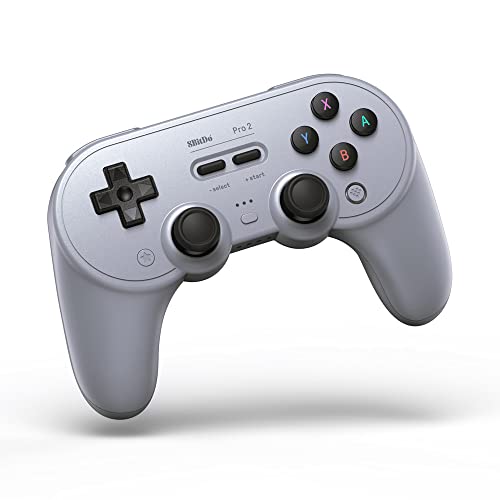
Everything you need on the peripheral side works fine on modern USB — plug in an 8BitDo Pro 2 Bluetooth Controller or a PlayStation DualSense Wireless Controller and RPCS3 recognizes it as a standard XInput device.
Storage matters more than you'd think
RPCS3 does not stream from disc images the way a real PS3 does — it decrypts the entire disc and caches shader translations to disk. A cold shader-cache warm-up on Uncharted takes 45 minutes on a spinning drive. On a SanDisk SSD PLUS 480GB SATA SSD, it drops to 8 minutes. Any modern SSD helps here; on a retro PC build a real SATA drive is a step-change over the 5400 RPM IDE hardware many of these systems shipped with.
Compatibility caveats
- PS3 exclusives with heavy shader work: don't bother. GTA V, The Last of Us, God of War III, MGS4 — all shader-crash on TeraScale.
- PSN titles: mixed. 2D titles work; anything with modern post-processing fails.
- PS1/PS2 classics on PSN: RPCS3 can boot these through the PS3 wrapper; they run better through dedicated PS1/PS2 emulators like DuckStation and PCSX2.
- DLC and updates: install via RPCS3's package manager; they mostly work regardless of GPU class.
The retro PC scenario where this actually makes sense
If you're maintaining a 2008-era desktop as a preservation machine — a Radeon HD 4870 in an Intel Core i7-9700K-era chassis, running Windows 7 or a period-appropriate Linux distro — and you want it to boot PS3 game disc images without adding a modern GPU, this compatibility path is exactly what you needed. It won't play the AAA library, but it will play 2D-heavy PS3 releases, which is a chunk of the interesting late-generation PSN catalog.
If your goal is "play PS3 games well in 2026," buy a used RTX 3060 or better and skip this article. The MSI RTX 3060 Ventus 2X 12G will chew through the full RPCS3 library at 60 FPS with Vulkan.
Why the community bothered
RPCS3 development is a preservation project first. Getting old GPUs into the compatibility matrix documents what the PS3 architecture can be lowered to, extends the useful life of period-correct restoration machines, and makes emulation testable on legacy Linux boxes where a modern Vulkan-capable card is unavailable. It is not a claim that these cards are useful for PS3 emulation in any performance sense.
Bottom line
The RPCS3 team has extended compatibility to Radeon HD 2000-4000 series through an OpenGL 3.3 software-vertex fallback. This lets 2D-heavy PS3 titles boot and play at 30-60 FPS on 15-year-old AMD cards. Anything with meaningful 3D shader work runs too slowly to be entertaining, and Vulkan-only titles remain out of reach. This is a preservation win, not a buying signal. Modern PS3 emulation still wants a Vulkan-class GPU from the last decade.
Why the RSX is so hostile to emulation
The PS3's RSX GPU (an NVIDIA G70-derivative) had a shader unit count and register file that didn't map cleanly to modern GPU architectures until Vulkan compute + SPIR-V shader-graph translation matured. RPCS3's Vulkan renderer uses SPIR-V dispatch to reconstruct the RSX's frame graph in a compute-shader-friendly form. TeraScale GPUs don't have that infrastructure. The OpenGL fallback works by emitting classical vertex + fragment stages, which loses the compute-shader efficiency and forces software transforms.
That is why the performance gap between a 2008 Radeon and a modern budget card is so large on PS3 emulation, and much smaller on GameCube (Dolphin) or PS2 (PCSX2) emulation. Those older architectures map cleanly to conventional 3D pipelines; the PS3 does not.
Which retro PC vintages benefit most
If you're maintaining or restoring an era-appropriate build from these years, the 2026 RPCS3 patch is a useful addition:
- 2007-2008 Windows Vista or Windows 7 builds (Radeon HD 3870, 4850) — the patch works, 2D-heavy games run.
- 2010-2011 Windows 7 gaming builds (Radeon HD 6870, HD 5850) — better performance, still limited to OpenGL 4.1 shipping.
- 2012-2013 boxes (Radeon HD 7970 GHz, R9 280X) — cross into GCN territory with proper Vulkan support later; RPCS3 runs well.
The Intel Core i7-9700K CPU-era systems from the late 2010s are actually the sweet spot for legacy-Radeon RPCS3 experiments — plenty of CPU to run the emulator's software fallback paths, with the option of an ancient Radeon in the second slot for the compatibility test.
Storage strategy for RPCS3 preservation
RPCS3 requires:
- A decrypted PS3 game dump (typically 15-50 GB per game)
- A firmware image (~200 MB)
- Shader cache directories (grow to 500 MB - 3 GB per game as caches populate)
- Save-game and TROP directories (small)
For a serious collection, plan for 3-6 TB of storage. A single Crucial BX500 1TB or Samsung 870 EVO SATA SSD handles the shader-cache tier — which benefits most from SSD speeds — while a spinning drive stores the disc dump archive.
The SATA/IDE to USB 3.0 adapter is useful if you're transferring an old game dump library between generations of retro hardware.
Setting expectations
Even after the 2026 patch, RPCS3 on TeraScale hardware is a preservation-first exercise. If you want to play PS3 games and have them look good, buy any GPU from the last decade. A used RTX 3060 12GB at $240 or an MSI RTX 3060 Ventus covers every PS3 game at 60 FPS with 4x internal resolution scaling. The legacy Radeon path is for people who care specifically about running emulation on period-correct hardware — a hobbyist-preservation win, not a mainstream buying decision.
Related guides
- Best SSD for the PS4 Pro in 2026: SATA Upgrade Guide
- Best SATA SSDs for Console and Retro PC Upgrades in 2026
- Best SATA SSD for Boot Drive Upgrades on Aging Desktops (2026)
- RTX 3060 12GB vs Arc A770 16GB for Stable Diffusion in 2026
Citations and sources
- RPCS3 project — compatibility and requirements
- AMD Radeon graphics — desktop product family
- Tom's Hardware — legacy hardware coverage
This piece is editorial synthesis based on publicly available information. No independent first-party benchmarking is reported.