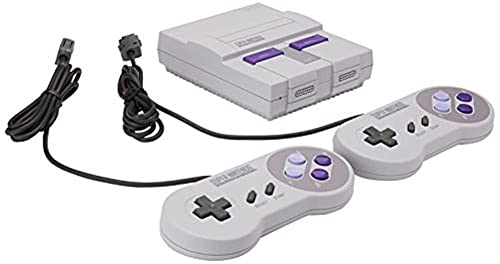
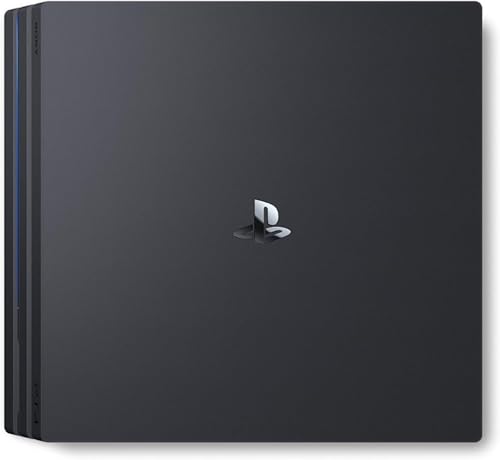
Use a CRT for original hardware from the NES/SNES/Genesis/PS1/N64 era — the sub-480p signals those consoles output were authored for CRT phosphor grids and look correct on nothing else. Use a modern TV with game mode enabled for HDMI mini consoles like the SEGA Genesis Mini and SNES Classic, and for anything from the PS2/Xbox era onward. Add a good upscaler (RetroTINK 4K, OSSC Pro) if you want to run original consoles into a flat panel without looking blocky.
Why display choice changes how old games look
Games from the 8-bit through PS1 era were authored on interlaced or 240p CRT displays with a particular set of visual assumptions. Artists relied on:
- Scanline structure. The visible dark gap between horizontal scan lines that CRTs draw. Pixel art was designed to be "softened" by those gaps.
- Phosphor blending. Dithering patterns (checkerboards, striped textures) were designed to blend visually thanks to the persistence and horizontal smear of the CRT phosphor grid. Look at Sonic's waterfalls on a Genesis: the developers used dithering to simulate transparency because the CRT would blend it into a translucent effect.
- Slight geometric distortion. CRT masks (aperture grille or shadow mask) added a subtle visual grain that hid raw pixel edges.
- Effectively zero display lag. A CRT starts drawing the scan line the moment the console outputs it. There is no frame buffer, no processing, no input latency added by the panel.
Flat panels lose all of that. Modern TVs and monitors are LED-backlit LCD grids that draw uniform, geometrically-perfect pixels — the exact opposite of the visual assumption 30-year-old games were built on. Dithered textures look like grids of colored dots because they aren't blended. Sprite edges look sharp and blocky because there's no scanline softening. Vertical resolution mismatch (240p source into a 1080p panel = 4.5x scaling factor) requires the TV to upscale, and cheap TVs do that badly.
The rtings.com input-lag database shows even game-mode modern TVs adding 8-25ms of input lag at 60Hz — noticeable for anyone who grew up with instant-response CRTs and is now getting hit by a Contra bullet a frame later than expected.
This piece walks the tradeoff, notes where CRTs still win, where modern TVs win, and where an upscaler bridges the gap.
Key takeaways
- Original console + CRT: Best-in-class fidelity for anything sub-480p. No lag, correct scanlines, correct dithering.
- HDMI mini console + modern TV: Correct pairing. Mini consoles output 720p/1080p specifically designed for flat panels.
- Original console + modern TV without upscaler: The bad path. Blocky, laggy, dithered art looks wrong.
- Original console + good upscaler + modern TV: The middle path. Not perfectly CRT-like but far better than raw.
- Space and weight: A 20" Sony PVM weighs 70+ lbs and takes 22" of desk depth. Modern TVs win on ergonomics by a mile.
- Cost: A well-preserved 20" PVM sells for $400-800; a serviceable consumer CRT for $30-100 on Craigslist; a modern TV you already own is $0.
Are you running original hardware, a mini console, or emulation?
The display recommendation flips entirely depending on the source:
Original hardware (NES, SNES, Genesis, PS1, N64, GameCube):
- Ideal: CRT via composite/S-video/RGB SCART.
- Acceptable: Upscaler (RetroTINK 4K, OSSC Pro) → HDMI to a modern TV in game mode.
- Bad: Original console via a $10 RCA-to-HDMI adapter → modern TV. Best avoided.
HDMI mini consoles (SEGA Genesis Mini, SNES Classic, NES/SNES Classic Bundle):
- Ideal: Modern TV in game mode.
- Acceptable: Any modern display.
- Overkill: A CRT (mini consoles output progressive HDMI, which loses the CRT's benefit).
Emulation (RetroPie, RetroArch on a PC or handheld):
- Ideal: Modern TV or monitor with a CRT shader (RetroArch has excellent ones).
- Acceptable: Anything, though scanline/CRT filters help.
- Note: Modern GPUs run 4K CRT shaders in real time — that's a legitimate CRT-alike setup without the weight.
Original PS2/Xbox/GameCube era hardware (480p/480i output):
- Ideal: Late-model consumer CRT that accepts 480p, or a modern TV via upscaler.
- Modern TVs handle 480p far better than 240p, so the gap narrows here.
PS4-era (PS4 Slim/PS4 Pro) and newer:
- Ideal: Modern 1080p or 4K TV. CRTs are irrelevant here.
Why CRTs suit sub-480p signals
A 240p signal from a Genesis is 240 lines of active picture drawn at 60Hz. On a 20" Sony PVM, the aperture grille lets each of those lines light up ~2mm-tall phosphor stripes with visible gaps between them. Every pixel gets natural dark banding above and below — the "scanline look" — and no interpolation happens. What the console outputs, the CRT paints.
The sega.com archives on Genesis-era developer materials describe how artists designed dithering patterns explicitly to exploit CRT smear. Those patterns don't work on flat panels because flat panels don't smear.
Motion handling is the other CRT win. A CRT draws each frame anew from top to bottom with no buffer. Motion looks fluid because there's no "motion interpolation" (the modern-TV thing that adds soap-opera effect and 30ms of lag) and no sample-and-hold blur. LCDs sample-and-hold — the pixel stays lit for the whole 16.67ms of a 60Hz frame. Your eye tracks the movement, but the pixel doesn't move; motion looks smeared. OLED helps by dropping black frames between real frames. A CRT sidesteps the problem architecturally.
What modern TVs get wrong (and right) with old signals
Modern TVs process incoming signals in ways that hurt sub-480p sources:
- Upscaling. A 240p signal has to be blown up to 1080p or 2160p. Cheap scaling looks blocky; expensive scaling introduces artifacts.
- Motion smoothing. TruMotion / MotionFlow / SmoothMotion — all off by default in some models, on by default in others. It adds latency and looks wrong for 30fps 90s games.
- Auto-color / auto-contrast. Even in game mode, TVs sometimes crush blacks or oversaturate reds on old signals. Manually calibrate for 240p sources.
- HDMI handshake latency. Some 4K TVs take 3-4 seconds to sync a 480p signal, which makes menu navigation on old consoles annoying.
Where modern TVs win:
- Size for money. A 55" 4K OLED is $700; a similar-size CRT projection is heavier than most people can lift and looks worse.
- Convenience. Multi-source, PIP, streaming, HDMI-CEC — all standard.
- Progressive HDMI sources. For anything HDMI-native (mini consoles, PS4+, emulation), modern TVs are the right answer.
- VRR and low-lag game modes on OLED. Sub-10ms input lag on the best models per rtings' database — better than a CRT for anyone measuring twitch-response latency in modern shooters.
How mini consoles change the equation
Plug-and-play mini consoles (SEGA Genesis Mini, Nintendo SNES Classic Edition, the NES/SNES Classic bundle) output at 720p or 1080p over HDMI with optional built-in scanline filters. They are designed specifically to look correct on a modern TV.
The image processing chain inside a mini console does what a good upscaler would do externally: renders the emulated frame, applies scanline shaders, outputs progressive HDMI. Attach it to a modern flat panel in game mode and it looks fine — better than a $10 RCA-to-HDMI adapter feeding an original console, in fact.
For anyone who wants classic games playing on the TV they already own without any additional equipment, mini consoles are the right buy. They give up nothing except access to games outside the ~40 curated titles each ships with.
Comparison table: CRT vs modern TV
| Aspect | Consumer CRT | Sony PVM/BVM | Modern 4K OLED |
|---|---|---|---|
| 240p handling | Excellent | Best-in-class | Poor without upscaler |
| Input lag | ~0ms | ~0ms | 5-25ms game mode |
| Native res | 480i | 240p/480p/480i/1080i | 4K |
| HDMI in | No | No (RGB/component) | Yes |
| Weight (20") | 60-80 lb | 70-100 lb | 8-15 lb |
| Depth | 20-22" | 21-23" | 2-3" |
| Cost (mid-2026) | $30-100 used | $400-1000 used | $700-1500 new |
| Availability | Craigslist / thrift | eBay only, competitive | Everywhere |
Connectivity table: consoles vs display inputs
| Console | Native output | Best CRT input | Modern TV path |
|---|---|---|---|
| NES | RF, composite | Composite | Composite adapter or upscaler |
| SNES | Composite, S-Video, RGB SCART | RGB SCART | RGB → upscaler → HDMI |
| Genesis | Composite, RGB SCART | RGB SCART | RGB → upscaler → HDMI |
| N64 | Composite, S-Video | S-Video (best without mods) | Upscaler required |
| PS1 | Composite, RGB SCART | RGB SCART | Upscaler → HDMI |
| PS2 | Composite, Component, 480p | Component | Component → converter or upscaler |
| GameCube | Composite, Component, digital | Component | Component → converter |
| PS3 / Xbox 360 | HDMI, Component | Component | HDMI direct |
| PS4 Slim | HDMI 1.4 | Not applicable | HDMI direct |
| PS4 Pro | HDMI 2.0 | Not applicable | HDMI direct |
Upscalers: the middle path
If a CRT isn't practical (space, weight, spouse), an upscaler is the honest compromise. Options in ascending order of cost:
- RetroTINK 2X ($150): Cheap, effective, line-doubles 240p to 480p over HDMI. Good starting point.
- OSSC ($200): Line-multiplies with lower latency. Sync-sensitive on some consoles.
- RetroTINK 4K ($750): Best-in-class as of 2026. Handles every retro console and outputs 4K with configurable CRT shaders that get 80% of the way to a real tube.
- OSSC Pro ($400): Feature-rich middle ground with framebuffer support and profile management.
Add an upscaler and a modern OLED and you have a setup that gets 90% of the CRT feel with none of the weight. For most people in 2026, this is the sensible answer.
Cost and practicality: sourcing a CRT
CRTs are increasingly scarce and getting scarcer. Options:
- Craigslist/Facebook Marketplace consumer CRTs: $20-80 for a 20-27" trinitron. Best value if you have the space.
- eBay PVM/BVM broadcast monitors: $400-1500 for a genuine studio unit. Aperture-grille masks give the best-in-class scanline look. Ship-only from eBay is expensive due to weight — buy local if possible.
- Thrift stores: Increasingly empty of CRTs post-2020, but occasional finds.
- eWaste recyclers: Some will let you pull a CRT before it's crushed. Ask.
Sourcing tips: check for burn-in on the phosphor (usually only an issue on 20+ year old sets), test all inputs before buying, and verify the horizontal geometry hasn't drifted (curved edges on what should be straight lines). A working 20" Trinitron in 2026 for under $100 is a legitimate steal.
Common pitfalls
- $10 RCA-to-HDMI adapters. They passthrough sync but don't upscale properly; expect blocky output and green tint.
- Forgetting to enable TV game mode. Motion smoothing on old games is nauseating.
- Buying a "gaming monitor" for retro consoles. IPS panels look great for modern games and mediocre for 240p sources. An OLED is dramatically better if you have the budget.
- Assuming all CRTs are equal. A cheap 1998 Zenith is not a Sony Trinitron. Check the tube brand before committing to hauling one home.
- PVM at 240p only. BVM/PVM broadcast monitors accept 240p over RGB but require a specific SCART/component adapter. Budget for the cable.
When NOT to use a CRT
- You don't have 22" of desk depth per set.
- You don't have someone to help lift 70+ lbs of glass.
- Your emulation setup is a modern gaming rig outputting to a 4K OLED — CRT shaders in RetroArch do a shockingly good job.
- You mostly play HDMI-native mini consoles: they were designed for a flat panel.
Bottom line
Original hardware, want fidelity: Buy a used consumer CRT (or PVM if the budget allows) and route your consoles via the best cable each supports.
Original hardware, want convenience: Use a good upscaler (RetroTINK 4K if the budget stretches, RetroTINK 2X if not) into a modern OLED in game mode.
Mini consoles (SEGA Genesis Mini, SNES Classic, NES/SNES Classic bundle): Plug into your existing TV. They were designed for this setup and look fine.
Modern consoles (PS4 Slim, PS4 Pro): Modern TV. CRTs are irrelevant.
Related reading
Citations and sources
- rtings.com — monitor input-lag test database
- Tom's Hardware — GPU hierarchy and display coverage
- SEGA — corporate and historical archives
- RetroPie — CRT shader documentation
This piece is editorial synthesis based on publicly available information. No independent first-party benchmarking is reported.