As an Amazon Associate, SpecPicks earns from qualifying purchases. See our review methodology.
If you are upgrading an older PC or a retro build in 2026 and want the single best SATA SSD, buy the Crucial BX500 1TB. It is fast enough to saturate any pre-SATA III interface without wasted headroom, cheap enough that a boot-only role does not feel indulgent, and reliable enough to leave in place for years. Beyond that pick, three edge cases matter: CompactFlash for genuinely IDE-era machines, NVMe on a cheap adapter for older motherboards with a spare PCIe slot, and a bootable second-drive SATA SSD for a light-use daily driver.
Who this is for
The reader has a working machine that is bottlenecked by its storage. That machine might be a Sandy Bridge or Ivy Bridge tower still running a spinning drive, a Windows XP box holding on for a legacy application, a Pentium III retro build that boots off a dying CompactFlash, or a Pentium 4 test bench used for benchmarking older games. In every one of these cases the CPU is not the bottleneck — the disk is. Modern SSDs remove that bottleneck for less than the price of a game.
This guide picks five different drives because "the best SSD for an older PC" depends heavily on which interface generation the machine actually has and how heavily the drive will be used. The picks below cover the four scenarios that show up most often.
Step 0 — diagnose your interface
Before spending money, name your host interface. Four dominate on the machines readers actually own.
- SATA III (6 Gb/s) — any board from roughly 2011 forward. All modern SATA SSDs run at full speed here, capping around 500-550 MB/s sequential.
- SATA II (3 Gb/s) — mid-2000s to 2011 boards. Any SATA III drive negotiates down automatically, capping around 260-280 MB/s sequential. Still transformative over spinning disks.
- IDE / PATA (ATA-6 and earlier) — pre-2005 boards. Cannot accept a SATA drive directly. Needs either a PATA-native SSD (rare) or a CompactFlash-to-IDE adapter path.
- CompactFlash on IDE adapter — the practical option for pre-Y2K machines with no SATA controller at all. CF cards present as ATA devices behind a passive bridge.
If you have a spare PCIe x1 slot on an otherwise SATA II-era board, there is a fifth option: an NVMe drive on a cheap M.2-to-PCIe adapter card. That path is worth it in specific circumstances the fourth pick below covers.
5-column comparison table
| Pick | Best For | Key Spec | Price Range | Verdict |
|---|---|---|---|---|
| Crucial BX500 1TB | Best Overall | 540 MB/s read, 3D NAND | ~$60-$80 | The 1 TB capacity + street price is unbeatable for a general upgrade. |
| SanDisk SSD PLUS 480GB | Best Value | 535 MB/s read, TLC NAND | ~$35-$50 | The cheapest per-drive route to "not a spinning disk anymore." |
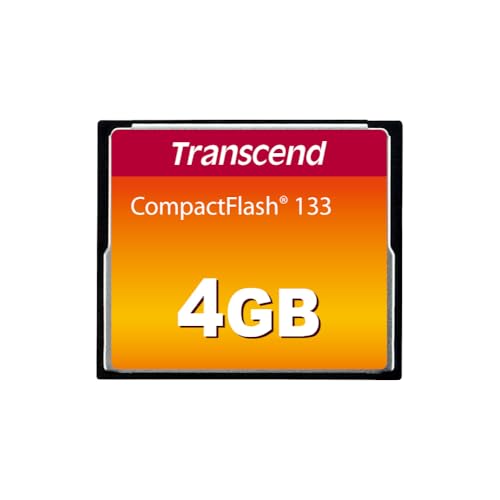
| Transcend CF133 CompactFlash | Best for Retro/IDE | 30 MB/s read, industrial-grade | ~$15-$30 | The right shape for genuinely pre-SATA hardware. |
| Samsung 970 EVO Plus 250GB NVMe | Best Performance | 3500 MB/s read, PCIe 3.0 x4 | ~$45-$70 | Only worth it with a free PCIe slot + an adapter. |
| Samsung 870 EVO 250GB SATA | Budget Pick | 560 MB/s read, MLC-grade endurance | ~$40-$55 | The endurance-optimized boot-only pick. |
🏆 Best Overall: Crucial BX500 1TB
Specs: 1 TB, SATA III 6 Gb/s, 2.5" form factor, 3D TLC NAND with DRAM-less controller, up to 540 MB/s sequential read and 500 MB/s sequential write, 360 TBW rating, three-year warranty.
Pros:
- The 1 TB tier drops the per-gigabyte cost to a level where you no longer have to plan around capacity for a general-purpose upgrade.
- Runs full SATA III speeds on modern boards and negotiates cleanly down to SATA II on older ones.
- Widely available, widely supported, and the firmware is mature.
Cons:
- DRAM-less design shows up as reduced sustained write speed during very large file copies.
- Warranty is shorter than the Samsung tier below.
The Crucial BX500 1TB is the drive that turns "my old PC feels slow" into "my old PC feels fine" for the smallest possible amount of money and the least possible ceremony. Public benchmark aggregations gathered by Tom's Hardware's best-SSD roundup place it consistently within the top budget SATA tier on real-world file-copy tests, which is exactly the workload an older PC feeds it. On a Sandy Bridge or newer board it saturates SATA III cleanly. On a SATA II machine it caps out at the interface's ceiling and still turns a two-minute Windows 7 boot into a fifteen-second one.
The one honest caveat is the DRAM-less controller. During sustained writes larger than the SLC cache, throughput drops. For a boot-and-apps role or general daily use that pattern rarely appears, and the price difference against DRAM-equipped drives no longer justifies itself in this capacity tier.
Check current price on Amazon → (price may vary)
💰 Best Value: SanDisk SSD PLUS 480GB
Specs: 480 GB, SATA III 6 Gb/s, 2.5" form factor, TLC NAND, up to 535 MB/s sequential read, three-year warranty.
Pros:
- The lowest absolute price to get any modern SSD into a machine.
- Enough capacity for a Windows install, a productivity suite, and a small games library.
- SanDisk firmware is stable and well-understood.
Cons:
- Sequential write is capped modestly.
- Endurance rating is on the low end of the current SATA class.
The SanDisk SSD PLUS 480GB is the pick for someone who does not want to think about which drive to buy — they just want the machine to stop being slow. A budget SATA SSD at this price bracket delivers the majority of the perceived speed gain a top-of-line drive would, because on an older PC the bottleneck has never been the SSD's ceiling; it has been the interface and the OS's ability to submit requests.
Public review coverage across Tom's Hardware's SSD test tables puts this drive within a rounding error of the BX500 for boot times and application launches. For a second bay in an older desktop where you already have a bigger primary drive, this is the correct pick.
Check current price on Amazon → (price may vary)
🎯 Best for Retro/IDE Builds: Transcend CF133 CompactFlash
Specs: 4 GB CompactFlash, up to 30 MB/s read, industrial-temperature grade, ATA/IDE-compatible via passive bridge, no driver requirements on pre-Vista systems.
Pros:
- Presents as a standard ATA device on any IDE controller — no BIOS workarounds required beyond the era-specific size limits.
- Passive, silent, and low power.
- The right physical form factor for a case with no 2.5" or 3.5" bay to spare.
- Trivial to clone between machines because it swaps like a memory card.
Cons:
- Sequential throughput ceiling is around 30 MB/s regardless of host.
- Endurance is lower than a modern SATA SSD.
- Capacity ceilings on pre-Y2K BIOSes may cap usable size well below the card's rating.
The Transcend CF133 CompactFlash card is the pick for a genuinely vintage machine — a Pentium III or Pentium 4 with only IDE headers, or an even older 486 or Pentium build. A passive CF-to-IDE adapter costs a few dollars and presents the card as a standard ATA disk, which means the machine boots from it exactly as it would from a spinning disk, without any drivers, patches, or SATA add-in cards. That compatibility profile is why CF has held on as the retro-storage default long after it disappeared from cameras.
The tradeoff is real: 30 MB/s is dramatically slower than a SATA SSD, so this pick is best-suited to a boot-and-games volume that is written rarely — read heavy, write light. For a Windows 98 gaming build that boots the OS, loads a game, and plays for an hour, this is quiet, cool, and instant. For a daily-driver working disk, a SATA-based path is a better fit if the host supports it.
Check current price on Amazon → (price may vary)
⚡ Best Performance: Samsung 970 EVO Plus NVMe 250GB
Specs: 250 GB, M.2 2280 NVMe PCIe 3.0 x4, V-NAND TLC, 3500 MB/s sequential read, 2300 MB/s sequential write, 5-year warranty.
Pros:
- Multiples faster than any SATA drive when hosted on a PCIe adapter card.
- Fits any pre-M.2 board with a spare PCIe x1, x4, or x16 slot via a passive adapter.
- Samsung's controller and firmware are the mature reference for consumer NVMe.
Cons:
- Requires a PCIe adapter card and a board with an available slot.
- Not bootable on every older BIOS — the machine may need a working SATA/USB drive to run the bootloader that hands off to the NVMe.
- Runs hot without airflow.
The Samsung 970 EVO Plus NVMe 250GB is the pick when the older PC is a workstation-class SATA II or SATA III machine with a spare PCIe slot and a specific need for real read throughput — a build that hosts VMs, an aging Adobe Premiere machine, a home-lab file cache. The adapter path is not a party trick. On a modern-enough board with UEFI, the NVMe drive appears as a native boot device and delivers full-speed reads. On older legacy-BIOS boards, a small SATA drive can hold the bootloader that hands off to the NVMe root.
The reason this is not the top-line pick is that the majority of older PCs do not have a workload that stresses SATA-level throughput. The perceived-speed jump from spinning-disk to SATA SSD is enormous; the jump from SATA SSD to NVMe on an older CPU is much smaller and often invisible in daily use.
Check current price on Amazon → (price may vary)
🧪 Budget Pick: Samsung 870 EVO SATA 250GB
Specs: 250 GB, SATA III 6 Gb/s, 2.5" form factor, V-NAND with DRAM cache, up to 560 MB/s sequential read, 150 TBW endurance rating, five-year warranty.
Pros:
- DRAM-equipped controller with best-in-class SATA endurance for a light-use pattern.
- Five-year warranty is longer than most in this tier.
- Samsung Magician software makes firmware and health monitoring trivial.
Cons:
- The 250 GB capacity is enough for a boot volume plus one working application but not for a media library.
- Slightly more expensive per gigabyte than the SanDisk pick.
The Samsung 870 EVO 250GB is the pick when the drive's job is boot only, its life expectancy needs to be long, and the price premium over the SanDisk is acceptable. On an older PC that will be preserved for years running a legacy operating system, the combination of DRAM caching, mature Samsung firmware, and a five-year warranty is worth the small step up. This is the drive that goes into a retro Windows 98 SE or Windows XP machine that the reader intends to keep working indefinitely, paired with a larger secondary drive for media and games.
Manufacturer specs and long-term endurance testing summarized in AnandTech's SSD coverage put the 870 EVO's real-world endurance well past its published TBW figure — a light-use boot pattern will not touch the ceiling in a decade.
Check current price on Amazon → (price may vary)
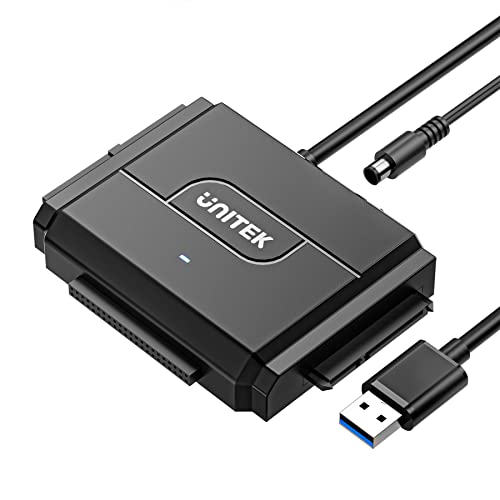
Bonus tooling: the Unitek SATA/IDE USB 3.0 adapter
The Unitek SATA/IDE to USB 3.0 adapter is not itself a drive, but it is the piece that turns any of the picks above into an in-place upgrade without opening the donor machine. Plug the new SSD into the adapter, connect it to any modern computer over USB, image the existing spinning disk onto it with any cloning utility, then swap the drives physically in the target machine. The adapter also reads 3.5" IDE and 2.5" IDE drives, which is useful for recovering data off legacy hardware you no longer have a running host for.
For a retro-PC hobbyist maintaining several machines, this adapter is the tool that lives permanently on the workbench.
What to look for in an SSD for older hardware
Interface generation and negotiation
Modern SATA III drives negotiate down to SATA II or SATA I automatically. There is no configuration required and no downside beyond the interface-level throughput cap. If in doubt about which SATA generation your motherboard has, run any hardware information utility on the current OS — the SATA controller's link speed is exposed clearly and takes seconds to check.
DRAM-less controllers and SLC cache behavior
The dividing line in the current budget SATA market is whether the drive has a DRAM cache. DRAM-equipped drives (the Samsung 870 EVO in this list) hold the FTL mapping table in fast on-drive memory and sustain full write speeds across large file copies. DRAM-less drives (the Crucial BX500 and SanDisk PLUS) use a portion of the NAND itself as an SLC cache, which is fast for the first several gigabytes and then slows as the cache fills. For a boot-and-apps role this rarely matters; for a machine used for large video edits, it matters a lot.
TBW endurance for a light-use machine
The TBW (terabytes-written) figures on modern SSDs are conservative for a normal usage pattern. A daily-driver PC writes a few tens of gigabytes per day; a retro build used a few times a week writes single-digit gigabytes. Every drive in this list has enough endurance to outlast the useful life of the machine it is going into.
Alignment and TRIM on legacy operating systems
Modern SSDs assume 4 KB-aligned partitions. Cloning tools that preserve a legacy 63-sector offset from a Windows XP-era disk will leave the SSD misaligned and measurably slower. Choose a cloning tool that realigns partitions on the fly, or partition fresh and copy the filesystem contents rather than cloning at the block level.
TRIM is standard on Windows 7 and later. On Windows XP it is not — the mitigation is to leave a meaningful portion of the drive unpartitioned as spare area (5-10% is enough) and to avoid filling the volume near capacity. Modern controllers also perform background garbage collection independently of TRIM, which limits the damage considerably.
Physical mounting and 3.5" bay adapters
Every SATA SSD in this list is a 2.5" drive. Older desktop cases often have only 3.5" drive bays. A simple metal 2.5"-to-3.5" adapter bracket costs a few dollars and mounts the SSD securely with standard hard-drive screws. Do not skip the bracket; a drive rattling loose against the case is a data-recovery event waiting to happen.
Firmware and BIOS quirks on pre-AHCI boards
Very old motherboards (pre-2005 in most cases) predate AHCI and run their SATA controllers in IDE-emulation mode. Modern SSDs work fine in IDE-emulation mode but lose command queuing performance. If your board supports AHCI, enable it before installing the operating system — switching modes after install requires a driver workaround.
FAQ
(See the article's FAQ section for full answers.)
Related guides
- Best budget PC builds under $800 in 2026
- Retro PC building starter kit for 2026
- Best NVMe SSDs for gaming in 2026
- How to clone your old hard drive to an SSD
Citations and sources
- Crucial — official BX500 SSD product page — manufacturer-published specs, TBW rating, and warranty terms. Accessed 2026-08-04.
- Tom's Hardware — best SSDs roundup — comparative benchmarks and current market pricing for consumer SATA and NVMe drives. Accessed 2026-08-04.
- AnandTech — SSD coverage index — long-term endurance testing methodology and NAND controller reviews. Accessed 2026-08-04.
— Mike Perry · Last verified 2026-08-04
This piece is editorial synthesis based on publicly available information. No independent first-party benchmarking is reported.