

Ubiquiti Networks
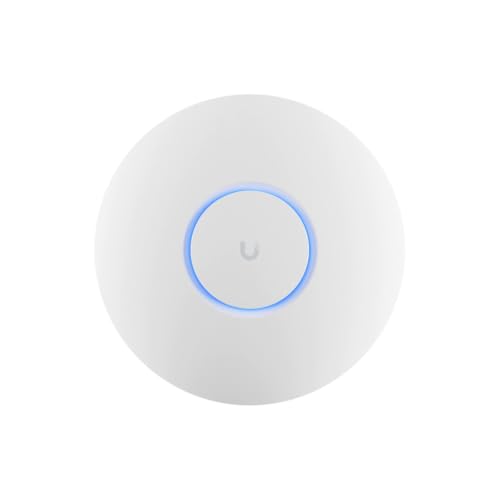
Ubiquiti Networks UniFi nanoHD Internal 1733Mbit/s Power Over Ethernet (PoE) White WLAN Access poin
Bottom line: The Ubiquiti Networks UniFi nanoHD Internal 1733Mbit/s Power Over Ethernet ($60.89 on Amazon as of 2026-10-06): 4x4 MU-MIMO Wave-2 radio rated to 1733 Mbit/s aggregate; main trade-off: 802.11ac Wave-2 only, so no Wi-Fi 6 or 6E clients benefit.
As an Amazon Associate, SpecPicks earns from qualifying purchases. Full disclosure →
*Price sourced from Amazon.com. Last updated 2026-10-06. Price and availability subject to change.
Pros & Cons
Pros
- ✓ 4x4 MU-MIMO Wave-2 radio rated to 1733 Mbit/s aggregate
- ✓ Handles 200+ concurrent clients in dense rooms
- ✓ 30% smaller than the UAP AC Pro it replaces
- ✓ Single 802.3af PoE Gigabit port carries data and power
- ✓ Optional skins in camo, concrete, marble, wood, black, fabric
Cons
- ✗ 802.11ac Wave-2 only, so no Wi-Fi 6 or 6E clients benefit
- ✗ One Gigabit port caps total throughput below the radio's peak
- ✗ Needs a UniFi controller (self-hosted or Cloud Key) to configure
- ✗ No PoE injector or switch listed in the box - budget separately
Manufacturer description
The UniFi nanoHD (UAP-NanoHD-US) is Ubiquiti Networks' answer to crowded rooms: a 4x4 MU-MIMO 802.11ac Wave-2 access point rated for 1733 Mbit/s and 200+ concurrent users, in a puck 30% smaller than the UAP AC Pro. That footprint is the point. You mount it on a wall or ceiling with the included kits, run a single Cat5e/6 drop for both data and power over the Gigabit 802.3af PoE port, and it disappears into the room — especially with the optional skins, which come in camouflage, concrete, marble, wood, black, and fabric so the AP matches the surface it sits on rather than announcing itself…
SpecPicks Verdict
SpecPicks scored Ubiquiti Networks UniFi nanoHD Internal 1733Mbit/s Power Over… using a rating × review-volume × price-fit model applied to published specs and reviews across the networking category. Ubiquiti Networks's networking lineup sits within the broader category mid-tier; price and specs are the deciding factors over brand loyalty here. Judge it on the specification table and the price rather than on sentiment: check the figures that decide your use case, then put it side-by-side with two or three close alternatives in the Compare tool before clicking through.
Common buyer scenarios for networking of this kind: matching it to an existing build, replacing a failing part, or upgrading from a previous-generation equivalent. Check the spec table below against your current setup — particularly socket / form-factor / power-rating fields — and confirm compatibility on the retailer's listing before purchase. Prices and stock are set by the retailer and may have moved since this page was last updated.
Frequently Asked Questions
How many devices can the UniFi nanoHD handle at once?
Ubiquiti rates the nanoHD for 200+ concurrent users, which is why it is marketed for high-density environments like offices and classrooms rather than as a single-room AP.
What is the actual model number for this access point?
UAP-NanoHD-US. It is the 4x4 MU-MIMO 802.11ac Wave-2 unit from Ubiquiti Networks, rated at 1733 Mbit/s.
Does the nanoHD need a separate power adapter?
It draws power over its single Gigabit Ethernet port using 802.3af PoE, so a PoE switch or injector supplies both data and power on one cable. Check the listing for what ships in the box.
Can I mount the nanoHD on a ceiling as well as a wall?
Yes. Mounting kits for both wall and ceiling installation are included, and the body is 30% smaller than the UAP AC Pro, so it sits flatter against either surface.
Is this access point Wi-Fi 6?
No. The nanoHD is 802.11ac Wave-2, the generation before Wi-Fi 6. Wave-2 clients get the full 4x4 MU-MIMO benefit; Wi-Fi 6 devices connect but fall back to ac speeds.
Key Features
- Model: UAP-NanoHD-US UniFi nanoHD Wave-2 Access Point Discretely install the UniFi nanoHD 4x4 MU-MIMO 802.11ac Wave-2 Access Point from Ubiquiti Networks into nearly any building environment, thanks to the optional skins which come in a variety of designs including camouflage, concrete, marble, wood, black and fabric. This Ubiquiti Networks AP also comes equipped with a single Gigabit Ethernet 802.3af PoE-compliant network port and includes mounting kits for easy installation to either the wall
- Deploy the UniFi nanoHD AP in high-density environments requiring maximum wireless performance and minimal footprint.
- Our Smallest UniFi Access Point Available On the Market. UAP nanoHD is 30% smaller than UAP AC Pro version.
- Supports 200+ Concurrent Users
Full Specifications
| Brand | Ubiquiti Networks |
|---|---|
| Color | White |
| Coverage | Extensive |
| Frequency | 5 GHz |
| Model Name | UAP-NANOHD |
| Unit Count | 1 Count |
| Antenna Type | Internal |
| Connectivity | Wireless |
| Model Number | UAP-NANOHD |
| Control Method | App |
| Connection Type | Wireless |
| Controller Type | App Control |
| Mfr Part Number | UAP-NANOHD |
| Number of Ports | 1 |
| Special Feature | Access Point Mode, WPS |
| Antenna Location | Home |
| Wi-Fi Generation | Wi-Fi 5 |
| Security Protocol | WPS, WPA2, WPA3 |
| Compatible Devices | Smartphone |
| Data Transfer Rate | 1733 megabits_per_second |
Ready to buy?
Ubiquiti Networks UniFi nanoHD Internal 1733Mbit/s Power Over Ethernet (PoE) White WLAN Access poin is listed on Amazon. Price, availability, shipping and returns are set by Amazon and its sellers — check the listing for current terms. SpecPicks earns a small commission on qualifying purchases — thank you for supporting independent review work.
*Price sourced from Amazon.com. Last updated 2026-10-06. Price and availability subject to change.
Related Networking




More guides & deep dives from the SpecPicks archive
Browse all articles & guides →- The Complete Voodoo5 5500 AGP Driver Guide (2026 Edition)
- Best Retro Handhelds in 2026 — From $35 to $500
- Best Budget Gaming PC Build 2026 — ~$1,000 ($800 on Sale)
- How to Build a Windows 98 Retro PC in 2026
- RTX 4070 Super vs RX 7800 XT — Which to Buy in 2026
- Best 1440p Gaming GPUs in 2026
- Emulation Hardware in 2026: FPGA, Software, and Cart-Reader Ecosystems
More reviews from the SpecPicks archive
Browse all reviews →- How to run Qwen 3 32B on NVIDIA GeForce RTX 5080
- Best SSD for a Retro PC Build: CompactFlash vs SATA in 2026
- Bridging Retro Audio: Sound Blaster Legacy to a Modern Sound BlasterX G6
- Best Controller for Steam Deck Docked Mode in 2026
- ZOTAC vs MSI RTX 3060 12GB: Which Twin-Fan Card Should You Buy in 2026?
- AMD Ryzen 7 7700X3D Review: 7800X3D's OEM-Only Rival
- 3dfx Voodoo2 SLI in 2026: Building a Period-Correct Windows 98 Glide Rig
- Automated Cabinet Lighting With a Raspberry Pi: Build Guide
- Govee vs DAYBETTER vs KSIPZE: Best LED Strip for Desk and Monitor Bias Lighting
- Best Budget Gaming Peripherals in 2026
- Raspberry Pi 5 IOMMU Support Lands in Mainline Linux: What It Means
- Q4_K_M Is Fine for Chat, a Trap for Agents: KV Cache Quant Math for Local Coding
- Best Budget 4K Gaming Monitor 2026: SANSUI 27" vs KOORUI QD-Mini LED vs ASUS TUF
- Best AM4 CPU to Pair With an RTX 3060 12GB in 2026
- PebbleOS Comes to the Raspberry Pi RP2350: What the Port Means for Tinkerers
- AMD Ryzen AI Mini PC vs a DIY RTX 3060 Build for Local LLMs
- 768GB Optane Ran a 1T-Param LLM: What It Means for Home Rigs
- AMD Ryzen AI Max 400 'Gorgon Halo': 192GB Unified Memory APU Hits $3,999
- Best Budget PC Gaming Peripherals in 2026: 5 Picks That Punch Above Their Price
- Best CompactFlash to IDE Adapter for Win98 SE Builds in 2026
- Best Sim Racing Wheel + Shifter Combo Under $400 in 2026: 5 Setups for iRacing, ACC, and GT3
- A LEGO Castle Case for the Raspberry Pi 5 Is Going Viral — Here's the Build
- Best SSDs & Cloning Tools for Gaming PC Upgrades 2026
- Raspberry Pi 4 8GB vs Ryzen 5 5600X: Gemma 3 1B Always-On
Earliest SpecPicks reviews
Browse full archive →- Best GPU for Llama 3.1 8B (2026)
- Best GPU for Qwen 3 14B (2026)
- Best GPU for Qwen 3 32B (2026)
- Best GPU for Llama 3.1 70B (2026)
- Best GPU for DeepSeek-R1 32B (2026)
- Best GPU for Llama 3.1 405B (2026)
- How to run Llama 3.1 8B on NVIDIA GeForce RTX 5090
- How to run Qwen 3 14B on NVIDIA GeForce RTX 5090
- How to run Qwen 3 32B on NVIDIA GeForce RTX 5090
- How to run Llama 3.1 70B on NVIDIA GeForce RTX 5090
- How to run DeepSeek-R1 32B on NVIDIA GeForce RTX 5090
- How to run Llama 3.1 8B on NVIDIA GeForce RTX 4090