Anyone still running an RTX 3080 and eyeing an upgrade in 2026 is in a reasonable spot: the card remains a capable 1440p performer, which means the upgrade decision comes down to where the bottleneck actually is rather than whether the 3080 has become unusable. This guide walks through how to evaluate the decision, what current-gen options look like, and what else in the system is worth checking before money goes toward a new GPU.
Should You Upgrade From an RTX 3080 in 2026?
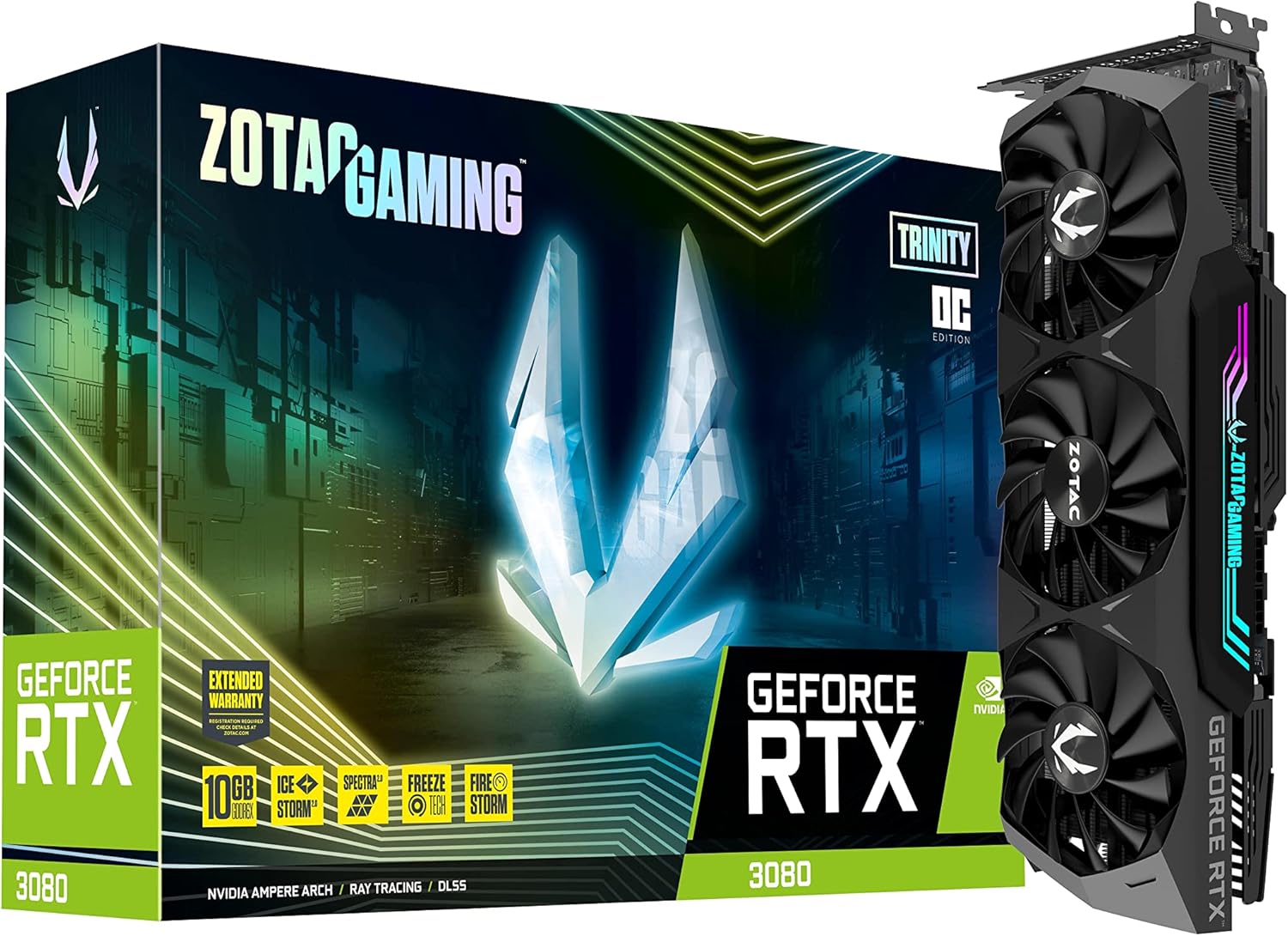
The RTX 3080 launched as a 4K-capable flagship, and per current GPU hierarchy rankings tracked by TechPowerUp's GPU database and Tom's Hardware, it still lands solidly in the upper-mid tier of the current lineup — ahead of most last-generation midrange cards, behind the newest flagship and near-flagship parts. Whether that's "good enough" depends entirely on target resolution and refresh rate:
- 1080p/1440p, 60-144Hz: The 3080 is generally not the bottleneck here. An upgrade mostly buys headroom for future, more demanding titles rather than fixing a current problem.
- 1440p high refresh (165Hz+) or 4K: This is where a 3080 more commonly falls short of maxing out a modern high-refresh panel, particularly in newer titles with heavier ray tracing or upscaling-dependent rendering paths.
- VRAM-constrained titles: A small but growing set of AAA releases with high-resolution texture packs can push past what a 10GB 3080 comfortably holds at maximum settings, even if raw shader throughput would otherwise be sufficient.
If none of those apply to your actual usage, the most cost-effective move for many 3080 owners is not a GPU upgrade at all, but addressing a different bottleneck — see Best Budget PC Gaming Upgrades Under $200 in 2026 and Best Budget Upgrades to Revive an Old Gaming PC in 2026 for lower-cost paths that can meaningfully extend a system's life.
The Current-Gen Upgrade Landscape
Both NVIDIA and AMD's current lineups span multiple tiers above where the 3080 sits. Rather than quoting benchmark percentages that shift with driver updates and game patches, the table below summarizes how these tiers are generally positioned relative to a 3080, per public GPU hierarchy trackers:
| Tier | Typical use case | Positioning vs. RTX 3080 |
|---|---|---|
| Upper-midrange (e.g. RTX 4070-class, RX 7700 XT-class) | 1440p high refresh, entry 4K | Modest to solid step up, depending on title and resolution |
| High-end (e.g. RTX 4070 Ti/Super-class, RX 7800 XT/7900 GRE-class) | 4K, high refresh 1440p | Clear step up across most workloads |
| Flagship | 4K max settings, ray tracing-heavy titles | Largest generational gap |
Exact FPS deltas vary by title, resolution, and driver version — current listings on TechPowerUp's GPU database and hands-on GamersNexus benchmark coverage are the most reliable places to check a specific game before buying, since any single percentage quoted today can shift with the next driver release. For a build already anchored around a specific CPU, it's also worth checking for a CPU-side bottleneck before assuming the GPU is the limiting factor — see Best GPU for i7-13700K at 1440p 180Hz (GTX 1080 Upgrade) for how that pairing question is typically worked through.
NVIDIA vs. AMD: How to Decide
The NVIDIA-vs-AMD decision for a 3080 upgrade tends to come down to a short list of concrete factors rather than a universal "better" answer:
- Upscaling ecosystem. NVIDIA's DLSS has broader and generally more mature per-title support, which matters most if you regularly lean on upscaling to hit a high refresh target. AMD's FSR has closed much of that gap and works across a wider range of hardware, including older GPUs, per both companies' own product pages (NVIDIA GeForce, AMD Radeon).
- Ray tracing headroom. NVIDIA generally retains an edge in heavily ray-traced titles at equivalent price points, per current GPU hierarchy rankings — a relevant factor if you play titles that lean hard on the feature, less so if you mostly disable it.
- Content creation and production workloads. NVIDIA's CUDA ecosystem has broader third-party software support in creative and AI-adjacent applications, which can matter beyond pure gaming FPS.
- Price-to-performance at a given tier. This shifts frequently with street pricing and regional availability rather than staying fixed at MSRP, so it's worth comparing current listings rather than relying on launch-day pricing.
For a side-by-side on a closely related upgrade decision in the same generation, see 7800X3D vs 5700X3D: Is the AM5 Upgrade Worth It?, which walks through a similar "is the jump worth it" framework on the CPU side.
Should You Wait for the Next Generation?
Next-generation GPU architectures typically land 18-24 months apart, and early rumors around any next-gen refresh should be treated as unconfirmed until manufacturers post official specs. The practical calculus for a 3080 owner is straightforward:
- Upgrading now delivers whatever performance gain the current-gen tier offers today, with no additional wait.
- Waiting for the next architecture generation historically delivers a larger single jump, at the cost of continuing to run into the current bottleneck in the meantime.
There's no universally correct answer — a 3080 owner who's actively frustrated by dropped frames in daily play gets more value from upgrading now, while someone whose 3080 is still comfortably meeting their needs loses little by waiting for more information on the next generation.
Don't Forget the Rest of the System
A GPU upgrade is easy to isolate as "the" fix, but a few adjacent components can undercut the gain if they're overlooked:
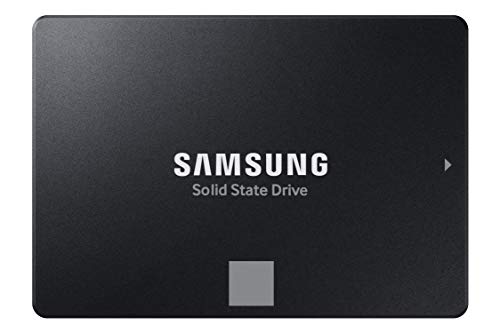
- Storage. Texture streaming in recent titles can bottleneck on a slow or nearly-full boot/game drive even with a fast GPU installed. A SATA SSD like the Samsung 870 EVO 500GB ($235.11) or the smaller 250GB variant ($165.99) is a low-cost way to add game-drive headroom alongside a GPU swap; for larger libraries, higher-capacity options like the SanDisk SSD Plus 2TB ($429.00) reduce how often games need to be reinstalled to make room. See Best Storage Upgrades for Older Gaming PCs in 2026 for a fuller breakdown.
- Case airflow and ambient cooling. A new GPU in the current-gen tier often draws more power and dumps more heat into the case than the 3080 did, which is a case-airflow question, not just a GPU-cooler one. If the room the PC sits in also needs help, a compact circulator like the DREO Smart Tower Fan ($79.96) is a common low-effort addition for keeping a small office or bedroom setup comfortable during long sessions. For case- and cooler-specific guidance, see Best Quiet PC Cooling Upgrades in 2026.
- RAM, if the platform is older. A 3080-era build on DDR4 can still be a perfectly good host for a current-gen GPU, but it's worth confirming RAM capacity and speed aren't the actual limiter before spending on the GPU alone — see Best Upgrades for a DDR4 Gaming PC in 2026.
Bottom Line
| If your priority is… | Consider… |
|---|---|
| Best 1440p high-refresh upgrade from a 3080 | Upper-midrange current-gen tier (RTX 4070-class / RX 7700 XT-class) |
| Clear 4K uplift | High-end tier (RTX 4070 Ti/Super-class / RX 7800 XT/7900 GRE-class) |
| Maximum headroom, budget secondary | Flagship tier |
| Staying on a budget without a GPU swap | Storage, cooling, or RAM upgrades instead — see linked guides above |
Specific parts currently available across those tiers include the ASRock Radeon RX 9070 XT as an AMD upper-midrange pick, the ASUS Prime RTX 5070 12GB for NVIDIA's mid current-gen tier, and the ASUS TUF RTX 5080 16GB at the flagship tier. Whichever tier fits, confirm case clearance, PSU wattage and connectors, and CPU pairing before buying, and check current street pricing rather than MSRP, since it moves independently of official launch pricing.
Citations and sources
- https://www.techpowerup.com/gpu-specs/
- https://www.tomshardware.com/pc-components/gpus
- https://www.gamersnexus.net/
- https://www.amd.com/en/products/graphics/desktops/radeon.html
- https://www.nvidia.com/en-us/geforce/graphics-cards/
This piece is editorial synthesis based on publicly available information. No independent first-party benchmarking is reported.