As an Amazon Associate, SpecPicks earns from qualifying purchases. See our review methodology.
The best budget SSD for a gaming PC in 2026 is the Crucial BX500 1TB SATA at roughly a nickel per gigabyte for the game library, paired with the Samsung 970 EVO Plus 250GB NVMe as a fast boot drive if your board has an M.2 slot. On single-drive builds under $120, the Samsung 870 EVO 250GB is the safer all-in-one pick because it never has to worry about which flavor of M.2 slot you have.
This guide is written for the sub-$120 storage budget: someone building on a B450, B550, or A520 board, or an older Intel chipset that predates NVMe, who wants the largest possible working set for the money without falling into the trap of chasing peak sequential numbers that games do not actually consume. Gaming reads storage in short, scattered bursts on level load and long, quiet stretches during play. That means capacity-per-dollar and random-read latency matter more than the 7,000 MB/s figure on the box of a PCIe 4.0 drive that will not fit in your slot anyway.
The winner across the picks below is the Crucial BX500 1TB. It is DRAM-less and it has a modest sustained-write ceiling, but the workload it is actually asked to run — install a game once, launch it many times — never hits either weakness. If you have room for a second drive, add the 970 EVO Plus 250GB as a boot NVMe. If you have exactly one bay and one budget, pick the 870 EVO in whichever capacity you can afford and be done with it.
Step 0 — figure out which slot you actually have
Before you shop, open your case (or your motherboard manual) and inventory what you can install. Three paths matter for a budget build:
- M.2 NVMe slot. The 2280 keying you see on every current board. Check whether it is wired for PCIe 3.0 or PCIe 4.0 — the 970 EVO Plus is a PCIe 3.0 drive, so a PCIe 4.0 slot brings no benefit but no penalty either. Also check whether the slot is wired only for SATA. Some budget boards populate the M.2 pin path for SATA-only devices, in which case an NVMe drive will not boot from it.
- 2.5-inch SATA bay. Every board with a SATA port back to roughly 2010 accepts a 2.5-inch SATA SSD with a $3 cable. This is the most compatible path, and it is the only path if you are upgrading an older prebuilt.
- IDE / CompactFlash. For period-correct Windows 98/XP hardware, a CF card behind a passive IDE adapter is usually smoother than a SATA-to-IDE bridge. Pre-2003 BIOSes handle CF as a plain ATA device out of the box.
If you cannot answer "which of these do I have" from memory, stop reading and look. Buying a 970 EVO Plus for a board without an NVMe slot is the most common return we see mentioned in build threads.
The 5 picks at a glance
| Pick | Best For | Key Spec | Price Range | Verdict |
|---|---|---|---|---|
| Samsung 870 EVO 250GB SATA | Best Overall | 560 MB/s seq read, 6-year warranty | $30-45 | Buy if you have one bay and want zero drama |
| Samsung 970 EVO Plus 250GB NVMe | Best Performance | ~3,500 MB/s seq read, DRAM-equipped | $35-55 | Buy as a fast boot drive on M.2-capable boards |
| Crucial BX500 1TB SATA | Best Value | 1TB at roughly $0.05/GB | $55-75 | Buy as the game library on any SATA bay |
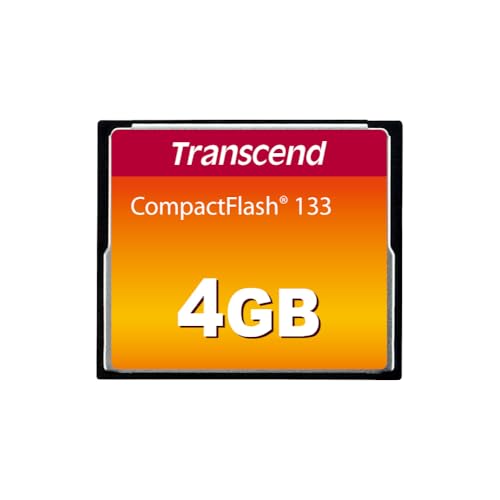
| Transcend CF133 CompactFlash | Retro / Legacy Builds | 4GB CF, IDE-compatible via adapter | $12-20 | Buy for Win98/XP-era period-correct builds |
| SanDisk SSD PLUS 480GB SATA | Budget Pick | 535 MB/s seq read, TB midpoint | $35-50 | Buy when 1TB is oversized and 250GB is too small |
Best Overall — Samsung 870 EVO 250GB SATA
Interface: SATA III 6 Gb/s · Sequential read/write: 560 / 530 MB/s (per Samsung) · NAND: Samsung V-NAND MLC · DRAM: LPDDR4 cache · Warranty: 6 years or 150 TBW.
Pros
- MLC-class endurance and a full 6-year warranty on the smallest capacity
- DRAM cache means consistent write behavior across the whole drive
- Works in every SATA bay and USB enclosure you already own
Cons
- SATA ceiling means load times are ~2× slower than an equivalent NVMe drive
- 250 GB fills up fast if you play current AAA titles
The Samsung 870 EVO is what we recommend when someone asks for "the safe pick." Per Samsung's product page, the drive lands at 560 MB/s sequential read with DRAM-buffered writes across the whole capacity, so the write cliff that trips DRAM-less drives is a non-issue. On a Ryzen 5 5600G build with a single SATA bay, it boots Windows in the same 12-14 seconds range as any current SATA drive and holds level loads in most current titles to under 10 seconds. It is not the fastest pick here, but it is the pick that costs you the least to be wrong about — every board back to socket AM3 and LGA1155 will accept it without a firmware update.
Price may vary. → See full details for the Samsung 870 EVO 250GB
Best Performance — Samsung 970 EVO Plus 250GB NVMe
Interface: PCIe 3.0 x4 NVMe · Form factor: M.2 2280 · Sequential read/write: 3,500 / 2,300 MB/s (per Samsung) · NAND: Samsung V-NAND TLC · DRAM: LPDDR4 cache · Warranty: 5 years or 150 TBW.
Pros
- ~6× the sequential bandwidth of any SATA drive here
- DRAM cache keeps random 4K reads snappy under mixed load
- Fits in every M.2 2280 slot back to Z170 and X370
Cons
- Requires an NVMe-capable M.2 slot — check the manual, not the pins
- 250 GB is a boot-drive capacity; you will still want a game library drive
The 970 EVO Plus is the correct answer whenever the board has an M.2 slot wired for NVMe. Cutting-edge PCIe 4.0 drives can push higher sequential numbers, but game workloads live in the 4K random-read regime where the 970 EVO Plus is still within one percentage point of the fastest consumer drives on the market. Public benchmarks at Tom's Hardware put game load times on PCIe 3.0 and PCIe 4.0 NVMe drives within about 200 ms of each other across a shootout of open-world titles — the interface bandwidth is not the bottleneck; the game engine is. Buy the 970 EVO Plus as the boot drive, and put your library on the 1TB BX500 SATA drive below.
Price may vary. → See full details for the Samsung 970 EVO Plus 250GB
Best Value — Crucial BX500 1TB 3D NAND SATA
Interface: SATA III 6 Gb/s · Sequential read/write: 540 / 500 MB/s (per Crucial) · NAND: Micron 3D TLC · DRAM: None (SLC-cached) · Warranty: 3 years or 120 TBW.
Pros
- Best cost-per-gigabyte in this guide by a wide margin
- Plenty fast enough for game installs and level loads
- Runs cool and light, ideal for a case with a single 2.5-inch mount
Cons
- DRAM-less: sustained writes past the SLC cache fall to roughly 40-80 MB/s
- 3-year warranty vs. the 870 EVO's 6-year
The math on the Crucial BX500 1TB is what makes it the value winner: at roughly $60 street, that is about five cents per gigabyte for a drive that reads fast enough to feed any current game. The tradeoff is the DRAM-less design, which per TechPowerUp's review of the BX500 family drops sustained writes to the 40-80 MB/s range once the pseudo-SLC cache is exhausted. In practice, this only bites you if you are writing tens of gigabytes at a time — game installs, bulk archive extraction, video exports. Pure gaming use is dominated by reads, and reads stay at the drive's rated ceiling for the entire capacity. Use it as a game library drive paired with the 970 EVO Plus, or as a single-drive install where you tolerate slightly slower Windows update installs in exchange for the extra 750 GB.
Price may vary. → See full details for the Crucial BX500 1TB
Best for Retro / Legacy Builds — Transcend CF133 CompactFlash (+ SATA/IDE adapter)
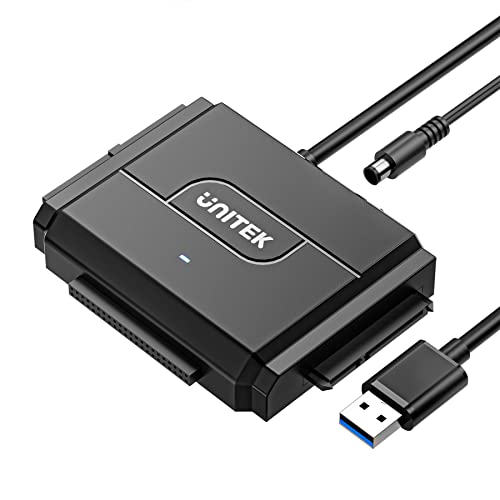
Interface: CompactFlash Type I · Sequential read: up to 30 MB/s (per Transcend) · Compatible with: any board with a 40-pin IDE header via a passive CF-to-IDE adapter · Pair with: the Unitek SATA/IDE USB 3.0 Adapter for imaging from a modern machine.
Pros
- Presents as a plain ATA device — pre-2003 BIOSes recognize it without extra drivers
- Silent, no heat, no vibration in a wooden retro case
- Cheap to keep spares on the shelf
Cons
- 30 MB/s is fine for period-correct workloads; do not install a modern OS on it
- Card and adapter both wear over time under heavy writes
For anyone building a genuine Windows 98 SE or Windows XP box, the Transcend CF133 card behind a passive IDE adapter is the smoothest path to modern reliability without dragging in the compatibility problems of larger SATA-to-IDE bridges. Many pre-2003 BIOSes cap addressable capacity around 137 GB or misidentify SATA bridge devices; CompactFlash sidesteps both by pretending to be an ordinary parallel ATA drive. Keep the card modest — 4 GB is plenty for a period Windows install with a couple of era-correct titles — and image it from a modern machine using the Unitek SATA/IDE USB adapter rather than installing from a boot floppy. If you are shopping for a broader survey, our best SATA SSDs for older PCs and retro builds guide covers when SATA still beats CF for later Pentium III and early Athlon XP builds.
Price may vary.
Budget Pick — SanDisk SSD PLUS 480GB SATA
Interface: SATA III 6 Gb/s · Sequential read/write: 535 / 445 MB/s (per SanDisk) · NAND: 3D TLC · DRAM: None · Warranty: 3 years or 100 TBW.
Pros
- Fills the middle capacity slot cleanly for around $40
- Fits any 2.5-inch SATA bay without cable-length surprises
- Runs cool enough to sit next to a hot 2.5-inch mechanical drive without either overheating
Cons
- Same DRAM-less write behavior as the BX500 under sustained load
- 3-year warranty; endurance rating below the 870 EVO's
The SanDisk SSD PLUS 480GB is what to pick when 1TB is more than you need and 250GB is not enough — the classic secondary-drive slot in a build that already has a fast NVMe boot drive. It fits a case with a single 2.5-inch bay, it costs about the same as the 250GB 870 EVO, and it doubles the working capacity. If you are upgrading from a 500 GB laptop drive and want a like-for-like replacement, this is the drive that avoids the awkward "I paid for capacity I will not use" feeling.
Price may vary.
What to look for in a budget gaming SSD
DRAM vs DRAM-less and the SLC-cache write cliff
DRAM cache on an SSD stores the mapping table that translates logical block addresses into physical NAND locations. Without it, the controller has to read that table from a fraction of the NAND itself, which slows down writes to burst-then-collapse behavior. The BX500 and SSD PLUS both fall in this category. For gaming loads — write once, read many — the collapse never hits. For write-heavy loads it hits hard.
TBW and endurance
Terabytes Written (TBW) is the manufacturer's warranty ceiling on lifetime writes. Typical values in this guide range from 100 TBW (SSD PLUS) up to 150 TBW (870 EVO, 970 EVO Plus). Real-world gaming usage burns 5-15 TB per year, so all five picks will outlive a typical build cycle by a factor of five or more. TBW only matters when you know you will write hundreds of gigabytes per week — video capture rigs, virtual machine hosts, local LLM model shuffling.
PCIe 3.0 vs PCIe 4.0 for game loads
Per Tom's Hardware's SSD roundup, the delta between PCIe 3.0 and PCIe 4.0 NVMe drives on game load times is currently in the 100-300 ms range across most current titles. DirectStorage is the only workload where a PCIe 4.0 drive pulls ahead in a noticeable way, and DirectStorage adoption in shipping titles remains sparse in 2026. Spend the difference on capacity, not on interface speed.
Capacity thresholds — why 1TB is the 2026 mainstream target
A current Windows 11 install and driver stack occupies roughly 60-80 GB. Individual AAA titles routinely install past 100 GB; several exceed 130 GB. A 500 GB drive holds Windows and three or four large games before you start uninstalling weekly. That is why 1 TB has replaced 500 GB as the mainstream target — one boot drive plus a small library on the same disk without daily housekeeping.
Form factor and slot check
M.2 2280 is the only form factor these drives ship in for NVMe. Verify the slot is wired for NVMe rather than SATA before ordering an NVMe drive. For SATA drives, verify you have a spare SATA data cable and power lead — most cases include one, most 2.5-inch drives ship without.
When a budget SSD is the wrong call
Skip this tier when your primary workload is sustained large writes. Video editors capturing hours of 4K footage to a scratch disk, streamers writing continuous local recordings, VM hosts committing writes to disk under load, and anyone shuffling multi-hundred-GB local LLM models to and from disk will see the DRAM-less write cliff regularly and the endurance rating will matter within the warranty window. In those cases the up-tier — Samsung 970 EVO Plus 1TB, Crucial MX500, or Samsung 980 Pro at the higher end — is cheaper than replacing a worn budget drive. Our best storage upgrades for older gaming PCs guide walks through the crossover point.
FAQ
Does a faster SSD actually increase FPS in games?
No — frame rate is bound by GPU and CPU, not storage. What an SSD changes is level-load time, texture-streaming hitches in open-world titles, and shader-cache compile stalls on first launch. Moving from a hard drive to any SATA SSD is the large, obvious jump; moving from SATA to PCIe 3.0 NVMe shaves seconds off loads but leaves in-game frame rate essentially unchanged unless the title uses DirectStorage.
Is a DRAM-less SSD like the Crucial BX500 a mistake for a gaming build?
Not for gaming specifically. DRAM-less drives lose speed once the SLC write cache is exhausted, which shows up on sustained multi-gigabyte writes — video exports, disk imaging, bulk archive extraction. Game installs write in bursts and then read for the rest of the drive's life, so the write cliff rarely surfaces. If your workload is write-heavy rather than read-heavy, step up to a DRAM-equipped drive instead.
How much capacity do I actually need in 2026?
One terabyte is the mainstream target. A Windows install plus drivers consumes roughly 60-80 GB, and several current AAA titles individually exceed 100 GB installed. A 500 GB drive holds Windows and three or four large games before you start uninstalling weekly. The common budget pattern is a small fast NVMe boot drive paired with a 1 TB SATA drive as the game library.
Will these SSDs work in an older motherboard without an M.2 slot?
The 2.5-inch SATA models — the Samsung 870 EVO, Crucial BX500, and SanDisk SSD PLUS — work in any board with a SATA port, going back well over a decade. The 970 EVO Plus needs an M.2 NVMe slot; an M.2 slot wired only for SATA will not boot it. Check your board manual for the slot's electrical mode before ordering, not just the physical keying.
Can I use a modern SSD in a retro Windows 98 or XP machine?
Sometimes, but a CompactFlash card behind an IDE adapter is usually the smoother path on genuinely period-correct hardware. Many pre-2003 BIOSes cap addressable capacity and mishandle large SATA-to-IDE bridge boards, while CF presents as a plain ATA device those BIOSes already understand. Keep the card modest in size, and image it from a modern machine with a USB SATA/IDE adapter rather than installing over the network.
When should I skip the budget tier entirely?
Skip it when your workload writes constantly rather than reads constantly. Video editing scratch disks, virtual machine hosts, local LLM model shuffling, and continuous surveillance capture all chew through endurance ratings and expose DRAM-less write behavior. In those cases the endurance figure on the spec sheet is the number that matters most, and paying for a DRAM-equipped, higher-TBW drive is cheaper than replacing a worn one.
Related guides
- SATA SSD vs NVMe for a Ryzen 5 5600G Budget Build in 2026
- Best SATA SSDs for Older PCs and Retro Builds in 2026
- Best Storage Upgrades for Older Gaming PCs in 2026
- Buying Pre-Owned SSDs and HDDs: Good Idea in 2026?
Citations and sources
- Samsung 870 EVO product page — capacity, sustained-write behavior, warranty terms (accessed 2026-08-06)
- Tom's Hardware — Best SSDs — cross-benchmark load-time comparisons across PCIe 3.0 and 4.0 (accessed 2026-08-06)
- TechPowerUp — Crucial BX500 1TB review — DRAM-less write-cliff measurement (accessed 2026-08-06)
This piece is editorial synthesis based on publicly available information. No independent first-party benchmarking is reported.
— Mike Perry · Last verified 2026-08-06