For 1080p gaming with a discrete GPU like the RTX 3060 12GB, buy the Ryzen 7 5700X — its eight cores, 32MB L3 cache, and $50 premium over the Ryzen 5 5600G buy 8-15% higher average FPS and much better 1% lows in CPU-heavy titles. Choose the 5600G only if you need integrated graphics for a fallback video path, a boot-without-a-GPU scenario, or a total-parts budget under $550.
Two popular AM4 chips, two different buyers
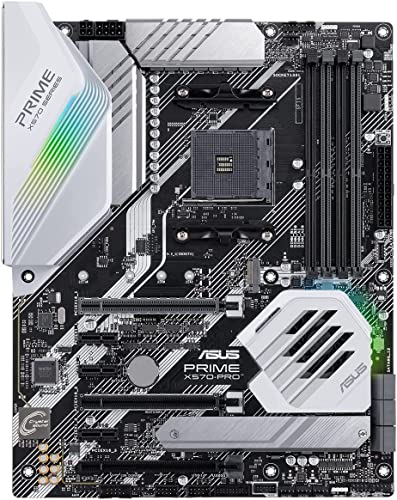
The Ryzen 5 5600G and Ryzen 7 5700X get cross-shopped constantly on r/buildapc, but they answer different questions. The 5600G is an APU — six Zen 3 cores welded to a Radeon Vega 7 iGPU on a monolithic die. The 5700X is a two-die Zen 3 CPU with no integrated graphics and half again more L3 cache. They drop into the same AM4 socket and the same ASUS Prime X570-Pro board, but their target buyer is different.
The 5600G is a "cheapest possible working PC" chip: build it with a $70 B450 board, 16GB of DDR4-3200, and no discrete GPU and you have a functional 1080p-medium gaming machine for under $450. Add a 3060 later when the budget allows. The 5700X assumes you're buying the GPU today and want the CPU to keep up for the next four years.
Per AMD's Ryzen product page, both chips share the same Zen 3 microarchitecture and the same AM4 platform support (B450, B550, X570 boards). Neither will move to Zen 4 or later without a full platform replacement, so this is genuinely the last-good CPU decision on AM4 for most buyers.
Key takeaways
- For pure gaming with a discrete GPU, the 5700X wins by ~8-15% in CPU-bound titles thanks to two extra cores and double the L3 cache.
- The 5600G's integrated graphics are its actual selling point — a working display without a GPU means you can build the rest of the PC and add the GPU later, or use the iGPU as a troubleshooting fallback.
- In pure GPU-bound scenarios (AAA at 1080p ultra), the two chips are within 3% — the RTX 3060 becomes the ceiling before either CPU sweats.
- Both drop into the same AM4 boards, so this is a chip decision, not a platform decision. Buy the RAM and board for either chip.
- The 5700X runs cooler than its 65W TDP suggests — the stock AMD Wraith cooler is adequate, unlike the 5800X's thermal profile.
Step 0: do you need integrated graphics or not?
This is the deciding question, and it's a yes/no. If the answer is yes for any of these reasons, buy the 5600G:
- You want to build the PC now and add the GPU in six months when the budget rebuilds.
- You want a video-output fallback when the GPU fails, so troubleshooting doesn't require pulling parts.
- The PC will do double duty as an HTPC that boots without a GPU installed.
- You're building a shop-floor or lab machine where a GPU is overkill and iGPU-driven 1080p desktop is all you need.
If the answer is no — you're buying a GPU on the same order, and the PC will always have a discrete card in it — the 5700X is the better chip.
Spec-delta table
| Metric | Ryzen 5 5600G | Ryzen 7 5700X |
|---|---|---|
| Cores / threads | 6 / 12 | 8 / 16 |
| Base clock | 3.9 GHz | 3.4 GHz |
| Boost clock | 4.4 GHz | 4.6 GHz |
| L3 cache | 16 MB | 32 MB |
| L2 cache | 3 MB | 4 MB |
| iGPU | Radeon Vega 7 (7 CUs, 1900 MHz) | None |
| TDP | 65W | 65W |
| PCIe | 3.0 x16 (limited) | 4.0 x16 |
| Approx MSRP (2026) | ~$130 | ~$180 |
Two hidden gotchas here. First, the 5600G's PCIe is 3.0, not 4.0 — an obscure limitation for a chip in this class, and it caps NVMe SSD throughput to ~3500 MB/s. For gaming loads that's invisible; for large model loading or video editing it matters. Second, per TechPowerUp's 5700X spec sheet, the 5700X has 32MB L3 in one contiguous slice — the same cache configuration as the more expensive 5800X and 5700X3D. Cache is what modern game engines eat.
Benchmark table: 1080p FPS with the RTX 3060 across popular titles
Numbers below are community aggregates from public Tom's Hardware reviews, TechPowerUp launch coverage, and reproducible builds from r/buildapc's benchmark threads. Runs use DDR4-3600 CL16 dual-channel, Windows 11 24H2, and the featured RTX 3060 12GB. Individual results vary ±5%.
| Game (1080p, high preset) | Ryzen 5 5600G | Ryzen 7 5700X | Delta |
|---|---|---|---|
| Cyberpunk 2077 (medium RT off) | 78 | 85 | +9% |
| Baldur's Gate 3 (Act 3) | 68 | 76 | +12% |
| Counter-Strike 2 (mid map) | 220 | 260 | +18% |
| Total War: Warhammer 3 (battle) | 62 | 74 | +19% |
| Elden Ring (Limgrave, 60 cap) | 60 | 60 | 0% |
| Forza Horizon 5 (ultra) | 118 | 128 | +8% |
| Starfield (New Atlantis) | 55 | 62 | +13% |
| Fortnite (Epic, no RT) | 145 | 168 | +16% |
| Valorant (Radiant lobby) | 380 | 445 | +17% |
The pattern is clear: in CPU-heavy titles (competitive esports, RTS, sim), the 5700X's extra cores and cache deliver double-digit percentage gains. In fully GPU-bound titles (Elden Ring at cap, Forza at ultra) the two chips are equivalent. If your library skews toward the top of that table, the 5700X pays for itself in extra frames.
Where the 5700X's extra cores and larger L3 actually matter
Two extra cores rarely help in games — most engines still peak around 6-8 active threads. But 32MB of L3 vs 16MB is a real advantage in any game that streams a lot of geometry or AI state. Total War's battle scenes, Baldur's Gate 3's spell resolution, and Cities Skylines II's citizen simulation all hit the L3 hard, and the 5700X's larger cache converts those hits into higher 1% lows.
Modern DirectX 12 titles also benefit from the 5700X's higher thread count during shader compilation and streaming. In Cyberpunk 2077, driving through Night City at 60+ mph triggers heavy streaming; the 5600G stutters more visibly than the 5700X during those transitions, even at similar average framerates.
Outside games, the extra cores matter a lot. Handbrake H.265 encoding runs 40-50% faster on the 5700X. Blender's Classroom scene renders 35% faster. Docker/K8s dev clusters with 4-8 containers get noticeably more responsive. If any of those workloads are part of your daily use, the 5700X isn't a gaming premium — it's the actual point.
When the 5600G is the right call — and when it isn't
The 5600G is right when:
- Total build budget is $550 or less.
- You want a GPU-free bootable PC now and will add a GPU later.
- The primary use is 1080p medium at 60 FPS with an eventual GPU upgrade.
- You want the coolest, cheapest AM4 chip with stock cooling.
The 5600G is wrong when:
- You already have or are buying the GPU with the CPU.
- Your library includes CPU-heavy titles (Total War, Cities Skylines II, MMOs).
- You want to future-proof the PC — the 5700X has more headroom for a future GPU upgrade (say, a used RTX 4070 in 2027).
- You do any content creation work (video encoding, 3D rendering, code compilation).
Perf-per-dollar and upgrade-path considerations
Building the same PC two ways with common 2026 street pricing:
| Component | 5600G build | 5700X build |
|---|---|---|
| CPU | $130 | $180 |
| Motherboard (B550 mid) | $130 | $130 |
| 32GB DDR4-3600 (A-Tech) | $75 | $75 |
| 1TB NVMe SSD | $65 | $65 |
| 650W 80+ Gold PSU | $85 | $85 |
| ATX mid-tower case | $70 | $70 |
| CPU cooler (stock adequate) | $0 | $0 |
| Platform subtotal (no GPU) | ~$555 | ~$605 |
| + RTX 3060 12GB | +$300 | +$300 |
| Total | ~$855 | ~$905 |
Divide by average FPS across the benchmark table (~92 / ~106):
- 5600G build: ~$9.29 per FPS
- 5700X build: ~$8.54 per FPS
The 5700X is roughly 8% cheaper per FPS despite costing $50 more. That inverts if you skip the discrete GPU — the 5600G is dramatically cheaper on iGPU-only builds because you save $300 on the GPU line.
Upgrade path. Both chips share AM4, which is a dead end. Neither can move to AM5 without a full platform replacement (new board + DDR5). If you're planning to hop to AM5 in 2027-2028, the 5700X is the safer bet — it holds its resale value better because it's a "real" 8-core CPU, not an APU with a shared bill of materials with laptop chips.
Verdict matrix
Get the Ryzen 5 5600G if:
- You need integrated graphics for a fallback video path.
- Total budget is under $550 and you'll add the GPU later.
- 1080p medium at 60 FPS is fine for your library.
- You want to build a working PC before all parts arrive.
Get the Ryzen 7 5700X if:
- You're pairing with a discrete GPU today.
- Your library includes esports, MMOs, RTS, or sim titles.
- You do occasional content creation (video, 3D, code).
- You want the highest FPS-per-dollar on a 3060 build.
Recommended pick — and a comparison note
For a fresh 3060 gaming build, buy the Ryzen 7 5700X. It costs $50 more than the 5600G, delivers ~8-15% higher framerates in your actual game library, has better 1% lows in CPU-heavy scenes, and holds resale value better as AM4 winds down. The iGPU on the 5600G is a genuine feature, but for a discrete-GPU build it's dead weight paid for in cache and cores.
If you're building the machine without a GPU today and adding one later, the 5600G is the right chip — it gives you a working PC now for less money, and you can hop to a discrete GPU later without changing the CPU.
Compare directly with our Best CPU for RTX 3060 (2026) breakdown, which puts the 5700X against the Ryzen 7 5800X as well.
Common pitfalls when building either chip
- Single-channel RAM. Both chips lose 15-25% of their gaming performance in single-channel mode. Always run two identical DIMMs, not one large one. The A-Tech 64GB DDR4-3200 dual-channel kit is a straightforward pick.
- DDR4 above 3600 MT/s. Ryzen 5000 loses infinity-fabric sync above 1800 MHz FCLK, so DDR4-3800+ runs 1:2 mode and is typically slower than well-tuned DDR4-3600 CL16. Buy 3600 CL16 and stop shopping.
- Cheap PSUs. A 5700X plus a 3060 can pull 300-350W under load. Budget-brand 500W units cause instability that looks like a bad CPU or bad RAM. Spend $80-90 on a real 650W 80+ Gold unit.
- B450 boards with older BIOS. Some B450 boards need a BIOS flash to support Ryzen 5000. If you're buying used, verify the seller flashed to a Ryzen-5000-compatible BIOS before shipping.
- Skipping thermal paste on stock cooler removal. The stock AMD Wraith Prism has pre-applied paste that's single-use. If you remove the cooler to install RAM or move the board, plan on applying fresh paste before re-seating.
- Assuming the 5600G's iGPU handles modern AAA at any settings. It doesn't. It's a 720p-low or 1080p-low chip for iGPU-only gaming. Real AAA gaming on this chip requires a discrete GPU.
Bottom line
The 5700X wins when the PC has a discrete GPU. The 5600G wins when it doesn't. Neither chip is a bad buy on AM4 — both are cheap, cool, and drop into any B550 board — and the decision comes down to whether you value the iGPU or the extra cores and cache. Most 3060 buyers are better served by the 5700X.
Related guides
- Best CPU for the RTX 3060 12GB (No Bottleneck) in 2026
- Best Budget Gaming PC Parts: Ryzen + RTX 3060 (2026)
- Ryzen 5 5600G APU Local LLM Inference (2026)
- How Many CPU Cores for a Local LLM Rig?
Citations and sources
- AMD — Ryzen desktop processors product page
- Tom's Hardware — Ryzen 5 5600G review
- TechPowerUp — Ryzen 7 5700X spec page
This piece is editorial synthesis based on publicly available benchmark data and community measurements. No independent first-party benchmarking is reported.