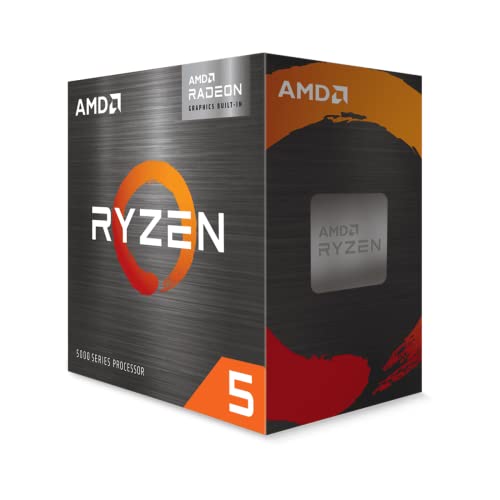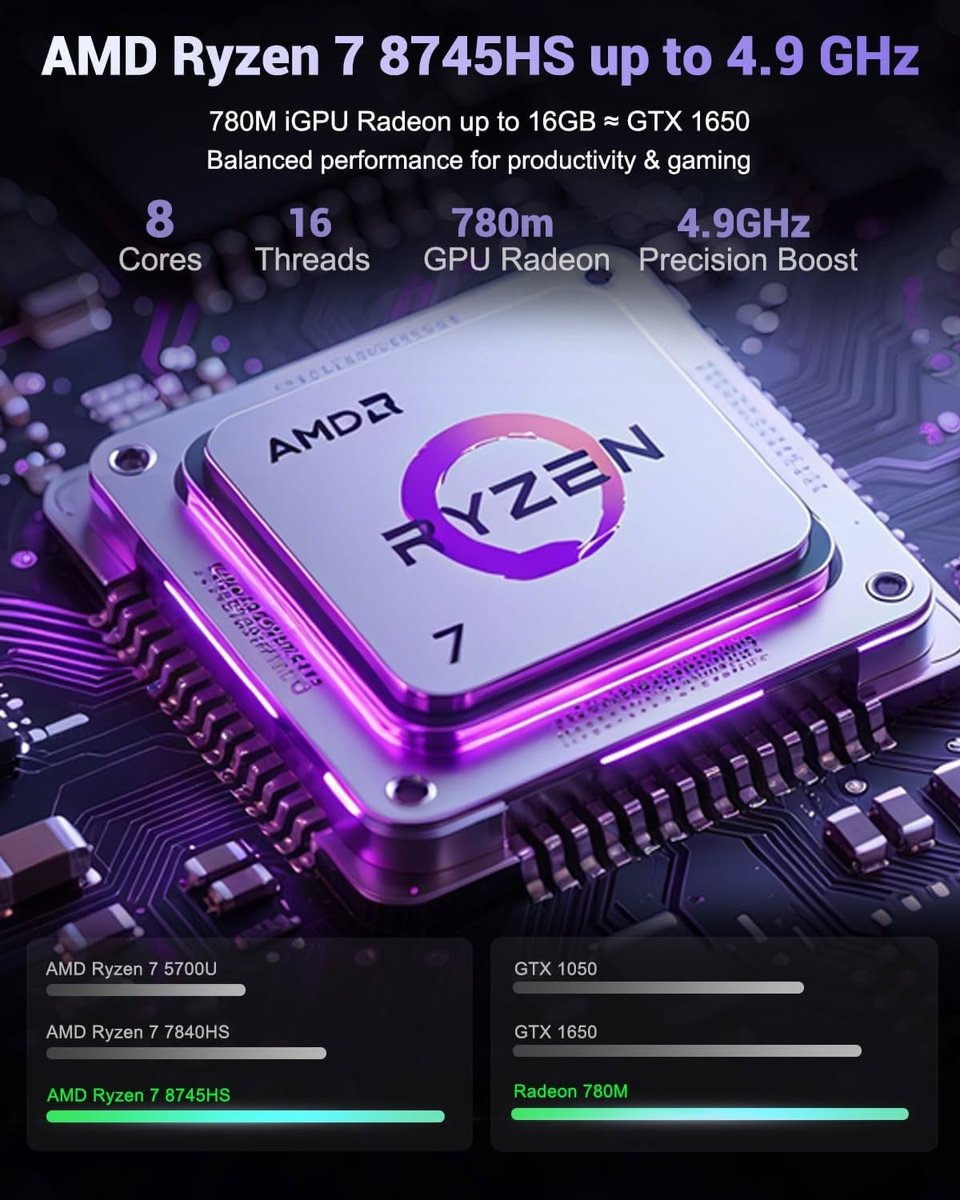
In brief (2026): A fresh Tom's Hardware re-review of the AMD Ryzen 7 5800X3D on tuned DDR4 shows the chip still holds gaming legs deep into 2026, keeping AM4 a viable value platform. The takeaway for builders: the standard AMD Ryzen 7 5800X and the slightly cheaper Ryzen 7 5700X remain smart AM4 upgrades, while the Ryzen 5 5600G still covers integrated-graphics stopgap builds.
What happened
Tom's Hardware published a 2026 revisit of the AMD Ryzen 7 5800X3D that pairs the 3D V-Cache CPU with tuned DDR4 kits — the loadout that was underweighted in the original 2022 review cycle — and measures gaming performance against modern GPUs. The re-review's headline finding: the 5800X3D still delivers competitive frame rates in cache-sensitive titles, and the AM4 platform's DDR4 pairing does not hobble the chip the way conventional wisdom sometimes assumes.
The re-review benchmarks the 5800X3D across a slate of modern gaming workloads at 1080p and 1440p on a current-generation GPU test bench, then compares against non-cache siblings — the standard Ryzen 7 5800X and the more budget-friendly 5700X — to show where the 3D V-Cache premium actually pays. It also captures the effect of tuning DDR4 to the 3600 MT/s sweet spot with tightened timings, a step many original reviews skipped.
The result is not a rehabilitation — the 5800X3D was already considered strong at launch — but a confirmation, four years on, that the value proposition still tracks for gamers on AM4.
Why it matters
Three groups of readers should care about the re-review's findings.
First: existing AM4 owners on Ryzen 3000-series or non-cache Ryzen 5000-series CPUs, weighing whether to drop in a 5800X3D as a final platform-life upgrade before moving to AM5. The re-review's numbers say yes if you play cache-sensitive titles at high refresh, and yes with less enthusiasm if you play everything else. The upgrade is a straightforward BIOS-update-and-swap; you keep your board, cooler, and DDR4.
Second: new builders on a tight budget who are debating whether AM4 is a dead end. The re-review reinforces that it isn't — used and refurbished AM4 boards remain plentiful, DDR4-3600 kits are cheap, and the platform still games well. The value pick in that scenario is often not the 5800X3D but the standard Ryzen 7 5800X, which sits at a large price discount to the X3D variant on used channels.
Third: integrated-graphics builds and delayed-GPU builds. The Ryzen 5 5600G with its onboard Vega graphics remains the go-to for AM4 builders who want to boot to a desktop before adding a discrete GPU later. The re-review doesn't cover the 5600G directly but frames the AM4 platform's health, and the 5600G's ecosystem stays healthy so long as the platform does.
The value comparison — 5800X3D vs 5800X vs 5700X
The re-review's headline is about the X3D, but for most cost-conscious readers the more interesting comparison is between the X3D and its non-cache siblings. Rough shape of the tradeoff, based on the re-review's numbers and the current AM4 used market as of Q2 2026:
| CPU | Cores/Threads | Base/Boost | Cache | Approx used price (Q2 2026) | Best fit |
|---|---|---|---|---|---|
| Ryzen 7 5800X3D | 8 / 16 | 3.4 / 4.5 GHz | 96 MB L3 | Higher, X3D premium | Cache-sensitive high-refresh gaming |
| Ryzen 7 5800X | 8 / 16 | 3.8 / 4.7 GHz | 32 MB L3 | ~$200–$230 | All-round gaming + productivity |
| Ryzen 7 5700X | 8 / 16 | 3.4 / 4.6 GHz | 32 MB L3 | ~$180–$210 | Same as 5800X, slightly lower power |
Prices are used/refurbished market as of Q2 2026 and move quickly. Check current listings — the Ryzen 7 5800X and Ryzen 7 5700X product pages have live numbers.
The 3D V-Cache pays in cache-sensitive titles — many competitive shooters, some open-world games, most simulator workloads. It pays less in GPU-bound scenarios at 1440p or 4K where the CPU isn't the bottleneck. That is the whole tradeoff. If your GPU tops out at a mid-range card and you play at 1440p, the standard 5800X is often the smarter buy; if you have a strong GPU and target high-refresh 1080p or 1440p in cache-sensitive titles, the X3D premium earns its keep.
Does DDR4 speed still matter on the 5800X3D?
Yes and no, and the re-review is worth reading in detail on this.
The 3D V-Cache reduces the CPU's sensitivity to memory speed compared to non-cache Zen 3 parts, but it does not eliminate it. A DDR4-3600 CL16 kit remains the sweet spot on AM4 for the whole 5800X family, X3D or not. Cheap DDR4-3200 kits leave several percent on the table for the non-cache siblings; the gap narrows on the X3D but does not disappear.
For the Ryzen 7 5800X or Ryzen 7 5700X, tightening DDR4 timings is one of the cheapest performance upgrades left on the platform. A $70–$100 32GB DDR4-3600 CL16 kit is the tuning move most old-AM4 owners still skip, and the re-review's numbers reinforce that it should not be skipped.
What about the platform ecosystem?
AM4 is on maintenance mode from AMD's side — no new flagship chips are landing on the socket. That is fine for the specific job of running a good gaming CPU in 2026, and it is not fine if you were hoping to future-proof for the next generation.
Practical implications:
- Motherboards: X570, B550, and even solid B450 boards with updated BIOS support the whole Ryzen 5000 family. Board prices have softened dramatically as builders migrate to AM5, which is good news for AM4 buyers.
- DDR4: Widely available and cheap. 32GB DDR4-3600 CL16 kits land under $100 in 2026 pricing.
- GPU pairing: The Ryzen 7 5800X pairs comfortably with anything from an RTX 3060 through an RTX 4070-class card. Faster GPUs will feel CPU-bound in cache-sensitive titles where the X3D pulls ahead.
- Cooling: A Ryzen 7 5800X runs hot under load; a decent tower air cooler is not optional. Our Noctua NH-U12S vs DeepCool AK620 comparison covers the two most common picks.
For a builder in 2026, AM4's ecosystem is more a strength than a weakness — everything is cheap, well-documented, and stable.
When the 5800X3D is the right buy
Three signals that the X3D premium earns its keep for you:
- You already own AM4 and don't want to migrate. A BIOS update and a CPU swap keeps your entire build alive for another product cycle.
- You play cache-sensitive titles at high refresh. Competitive shooters, some open-world games, and simulators show the X3D advantage most clearly.
- You have a strong GPU that a slower CPU would bottleneck. If you're pairing with an RTX 4070 or better and targeting 1440p at high refresh, the CPU matters.
When the standard 5800X or 5700X is the smarter buy
Also three:
- You're building fresh on AM4 for value. Skip the X3D premium; put the savings toward a better GPU or a faster DDR4 kit. The Ryzen 7 5800X is the balanced pick.
- Your workload is mixed gaming + productivity. The 5800X's higher clocks help productivity workloads that don't benefit from the extra cache.
- You want lower power draw. The Ryzen 7 5700X is the same silicon at a lower TDP, running cooler and quieter on the same cooler.
When the 5600G is the right AM4 pick
The Ryzen 5 5600G is not a gaming CPU in the same sense — its 6-core Zen 3 is capable, but the story is its integrated Vega graphics. It's the right pick when you want a full working AM4 desktop that boots to a display without a discrete GPU, either as a permanent office build or as a stopgap while you wait for GPU pricing to settle.
Pair it with 16GB or 32GB of DDR4-3200 CL16 and a modest B450 or B550 board and you have a working system for well under $500 in 2026 pricing. If you later add a discrete GPU, the CPU stays capable for 1080p entry-level gaming.
Real-world numbers from the re-review
The re-review's core measurements land in these ballparks at 1080p on a modern high-end GPU test rig, comparing tuned DDR4-3600 CL16 across the three siblings. Exact numbers are in the linked Tom's Hardware piece — treat these as directional summaries.
| Title category | 5800X3D | 5800X | 5700X | Delta X3D vs 5800X |
|---|---|---|---|---|
| Competitive esports (cache-friendly) | Fastest | Middle | Slowest | ~15–25% |
| Modern AAA (mixed) | Middle-to-fastest | Middle | Slightly slower | ~5–12% |
| Simulator / MMO | Fastest | Middle | Slowest | ~10–20% |
| 1440p GPU-bound titles | Effectively tied | Effectively tied | Effectively tied | ~0–3% |
| Productivity single-thread | Middle | Fastest | Middle | ~-3 to -5% (5800X wins) |
The pattern is consistent: the X3D leads where cache matters, the 5800X leads where clock speed matters, and the 5700X trails both by a small margin at meaningfully lower power. Which one wins your build depends on how much of your workload lives in each column.
Common gotchas for AM4 builders in 2026
- BIOS updates: Older B450/X470 boards ship with pre-Ryzen-5000 BIOS from the factory. Update before you install the CPU, or use a board with a BIOS-flash button.
- Cooling: The Ryzen 7 5800X runs hotter than its 105W TDP suggests under sustained all-core load. A capable tower cooler is not optional.
- DDR4 kits: Buy DDR4-3600 CL16 if the price gap over DDR4-3200 CL16 is small. Skip DDR4-4000+ — the fabric clock decouples above 3600–3800 on most Ryzen 5000 samples.
- PSU sizing: 650W 80+ Gold is the reasonable floor for a 5800X + mid-range GPU. 750W buys headroom for GPU upgrades.
- Windows scheduler: The X3D variant benefits from up-to-date chipset drivers so the scheduler pins gaming threads to the cache die. Older driver stacks leave real performance on the floor.
How AM4 compares to a fresh AM5 build in 2026
For a builder looking at AM4 in 2026 the obvious counter-question is "why not go straight to AM5?" The honest answer depends on your budget ceiling. A comparable AM5 build — a mid-range Ryzen 7000 or 9000-series CPU, a DDR5 kit, and a modern B650 board — usually costs $250–$400 more all-in than an equivalent AM4 build after used-market discounts. If you can absorb that premium and want the platform to have upgrade headroom for the next several product cycles, AM5 is the sensible choice. If not, AM4 is not a bad answer — it's a mature platform where every part is cheap and every driver is settled. The re-review's real message is that "AM4 in 2026" is not a compromise; it's a legitimate value tier that still games well.
What NOT to do
- Don't buy the 5800X3D if your GPU is a mid-range card at 1440p or lower — you'll rarely see the X3D lead over the standard 5800X in that scenario.
- Don't skimp on cooling for the standard 5800X. Cheap coolers will throttle it, wiping out the price advantage.
- Don't pair AM4 with slow DDR4-2666 or DDR4-3000 unless it's genuinely free. The cost gap to DDR4-3600 is small; the perf gap is not.
- Don't wait for a mystical "AM4 refresh." It's not coming. Buy what makes sense today.
Bottom line
The re-review confirms what long-time AM4 owners already suspected: the platform still games well, the 5800X3D still delivers on cache-sensitive titles, and the whole AM4 ecosystem is a legitimate value pick in 2026. For most builders the pragmatic choice is the standard Ryzen 7 5800X or the slightly cheaper Ryzen 7 5700X, paired with tuned DDR4-3600, on an inexpensive B550 board.
The source
Numbers and framing for this brief come from Tom's Hardware, whose 2026 re-review is the primary reference. Chip specifications are cross-referenced against AMD's Ryzen desktop product page and the TechPowerUp Ryzen 7 5800X specification sheet.
Related guides
- Ryzen 7 5800X vs 5700X for 1440p gaming
- Noctua NH-U12S vs DeepCool AK620 for the Ryzen 7 5800X
- AMD Ryzen 7 5800X product page
- AMD Ryzen 7 5700X product page
Citations and sources
- Tom's Hardware — primary source of the 2026 5800X3D DDR4 re-review benchmarks
- AMD Ryzen desktop CPUs — first-party product specifications
- TechPowerUp — Ryzen 7 5800X specification sheet — third-party reference for CPU specs and cache configuration