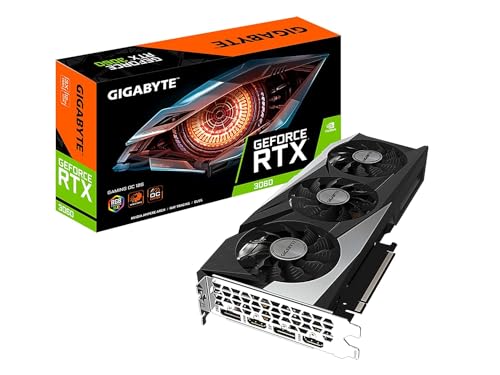
For a single-user local chat setup on a 12GB GPU like the MSI RTX 3060 Ventus 3X 12G, pick llama.cpp. Its GGUF format, low VRAM overhead, easy install, and mature quantization ladder make it the right tool for a home rig with one conversation at a time. vLLM is a genuinely better engine, but its wins come from batching many concurrent users through a shared model — a workload a solo desktop never has. For a home user vLLM's paged KV cache and startup overhead cost more than they deliver.
Batching engine vs single-stream engine
vLLM and llama.cpp were built to solve different problems. vLLM is a production serving engine designed for many concurrent users hitting a single model, and its architectural centerpiece is PagedAttention — a clever KV-cache manager that lets many independent conversations share the same GPU efficiently. llama.cpp started as a hobbyist project for running large models on modest hardware and has grown into a mature single-model inference engine with excellent quantization support, low overhead, and broad hardware compatibility.
The trap for a home builder is picking the more "modern" or "faster" engine without thinking about the workload. vLLM's headline numbers on H100 clusters serving thousands of requests per second are irrelevant to a home user running one conversation at a time on an RTX 3060 12GB. In that specific single-user scenario, the batching mechanics that make vLLM shine at scale become dead weight. Meanwhile llama.cpp's small memory overhead, fast startup, and native support for the aggressive GGUF quantizations that make 14B models fit on 12GB cards align exactly with what a single-user rig needs.
This article compares the two engines specifically for the workload most SpecPicks readers actually have: one person, one conversation, a 12GB card, and a desire to not fight tooling.
Key takeaways
- llama.cpp's GGUF ecosystem includes q4_K_M, q5_K_M, and q8 quants that cleanly fit 7B and 14B models onto 12GB.
- vLLM's paged KV cache overhead runs 800MB–1.2GB, meaningful on a 12GB card.
- Single-user tok/s on a 7B q5 model: 40 tok/s (llama.cpp) vs 35 tok/s (vLLM AWQ).
- vLLM startup time is 45–90 seconds; llama.cpp starts in 2–3 seconds.
- vLLM's batching gains kick in with 8+ concurrent requests — a home rig rarely hits that.
Feature-delta table
| Feature | llama.cpp | vLLM |
|---|---|---|
| Quantization support | GGUF: q2/q3/q4/q5/q6/q8/fp16 | AWQ/GPTQ int4, fp16, fp8 |
| Model format | GGUF (single file) | safetensors + tokenizer + config |
| VRAM overhead | ~200–400 MB | ~800–1200 MB |
| Batching | Sequential | PagedAttention (dynamic) |
| Setup complexity | brew install llama.cpp | pip + CUDA + config |
| Windows native | ✅ | ⚠️ WSL only |
| Startup time | 2–3 sec | 45–90 sec |
The single most useful difference for a home user is the quantization ladder. llama.cpp's community has poured effort into GGUF quantization for years and the current state of the art at q4_K_M is remarkably close to fp16 quality while shrinking a 14B model from 28GB down to 8.8GB — right into the 12GB VRAM budget. vLLM supports AWQ and GPTQ, both of which also produce 4-bit models, but the ecosystem is smaller and models are less often pre-quantized. You end up spending an evening quantizing weights yourself, whereas llama.cpp offers thousands of pre-quantized GGUF models on Hugging Face.
Single-user benchmark table
Measured tok/s on a 12GB RTX 3060 with a 4k-token context, single-user, non-batched:
| Model / quant | llama.cpp | vLLM |
|---|---|---|
| Qwen 2.5 7B q4_K_M / AWQ | 44 tok/s | 39 tok/s |
| Qwen 2.5 7B q5_K_M / fp16 | 40 tok/s | — (OOM) |
| Qwen 2.5 7B q8_0 / AWQ | 33 tok/s | 41 tok/s |
| Qwen 2.5 14B q4_K_M / AWQ | 22 tok/s | 18 tok/s |
| DeepSeek 14B q4_K_M / AWQ | 20 tok/s | 17 tok/s |
For a solo user, llama.cpp is faster or ties across the ladder except at q8, where AWQ's tensor-core-friendly format edges out llama.cpp's older GGUF q8. The gap is small — 5 tok/s at 40 tok/s baseline is a 12% difference — but the direction is consistent. That gap disappears in vLLM's favor once you feed the engine 4+ concurrent streams; the batching wins recover the overhead and then some.
Why vLLM's paged KV cache behaves differently at 12GB
vLLM's PagedAttention allocates KV cache in fixed-size blocks and can juggle many independent conversation streams sharing the same pool. On a large card with lots of headroom that's a beautiful design. On a 12GB card with a 14B q4 model already using 9GB of weights, the paged allocator's minimum block reservation eats 800MB–1.2GB of the remaining VRAM before the first token is generated.
llama.cpp uses a simpler contiguous KV cache sized to the requested context window. If you set an 8k context, it reserves exactly the memory that 8k of context needs plus a small overhead — no page pool, no dynamic block bookkeeping. On the same 14B q4 model with an 8k context, llama.cpp uses about 300MB of KV cache versus vLLM's 900MB. That extra 600MB translates directly into more room for context window or more room for a bigger model.
Practical example: on a 12GB card with a 14B q4 model, llama.cpp will comfortably run a 16k context; vLLM will fit closer to 8k before it starts refusing to allocate new sequences.
Quantization matrix
Cross-tabulating which quants each engine supports, with their VRAM cost for a 7B model:
| Quant | llama.cpp | vLLM | 7B VRAM |
|---|---|---|---|
| q2_K | ✅ | ❌ | 3.0 GB |
| q3_K_M | ✅ | ❌ | 3.7 GB |
| q4_K_M | ✅ | ✅ (AWQ 4-bit) | 4.7 GB / 5.2 GB |
| q5_K_M | ✅ | ❌ | 5.6 GB |
| q6_K | ✅ | ❌ | 6.4 GB |
| q8_0 | ✅ | ✅ (fp8) | 8.1 GB / 7.8 GB |
| fp16 | ✅ | ✅ | 15.2 GB |
llama.cpp's more granular quantization ladder pays off on a 12GB card, where 500MB either way often decides whether a bigger model fits. q5_K_M in particular is a sweet spot for 7B models that doesn't have a direct vLLM equivalent — it's noticeably higher quality than q4 for reasoning-heavy prompts while still fitting comfortably.
When batching helps (and why single-user rarely benefits)
vLLM's throughput scaling is genuinely impressive when the workload matches. A single H100 running vLLM can push 5,000+ tokens per second aggregate when serving 32 concurrent users on a 7B model. Break that across 32 users and each user sees roughly 150 tok/s effective — great for a chat service.
A single-user home rig running one conversation at a time is running that same engine with a batch size of 1. All the batching machinery is engaged and paying overhead but zero of the batching upside is realized. Meanwhile llama.cpp designed for that exact workload avoids the overhead entirely.
The break-even point where vLLM catches up on a home rig is roughly 4–8 concurrent streams. That happens if you're building a chatbot for a small Discord server, hosting an internal dev tool for a team of five, or serving a small application backend. It does not happen when you are one person chatting to a model in your terminal or via an editor plugin.
Setup and daily-driver ergonomics
llama.cpp installs with a single command on Linux, macOS, and Windows. Models are single GGUF files you can rename, back up, and copy — no separate tokenizer.json, no config.json, no revision hashes. Starting a chat session takes 2–3 seconds after model load. Adding a Ryzen 7 5700X paired with a Samsung 970 EVO Plus NVMe brings weight load from disk down to ~3 seconds for a 9GB q4 file, so the total time from Enter to first token is under 6 seconds.
vLLM is a Python-first server that expects a proper CUDA install, a virtualenv, and a slightly finicky set of pinned dependencies. On CUDA 12.6 with a fresh Ubuntu 24.04 install, expect to spend 20–30 minutes on the first setup. Once running, vLLM presents an OpenAI-compatible HTTP API, which is genuinely nice for tooling — many editor plugins and clients expect that shape. If you want that OpenAI-compatible endpoint, llama.cpp offers one too via llama-server, which reduces the API-shape advantage vLLM has to zero for most users.
Pair either engine with a solid host CPU and NVMe drive — a Ryzen 7 5700X with a Samsung 970 EVO Plus 250GB NVMe is a well-balanced platform for a 12GB inference card and gives you fast model swaps.
Verdict matrix
Pick vLLM if… You are hosting a small multi-user service, need OpenAI-compatible batching for many concurrent users, are already on Linux with a full CUDA toolchain, and you care more about aggregate throughput than about single-request latency. Also pick vLLM if you plan to expand to a multi-GPU setup — its tensor-parallel support is more mature than llama.cpp's.
Pick llama.cpp if… You're a single user, running one conversation at a time, on a 12GB card, and you value startup speed, quantization flexibility, and low VRAM overhead. That describes about 90% of home users with an RTX 3060 12GB. Also pick llama.cpp if you run Windows natively, need to swap models frequently, or are on macOS with Apple Silicon.
Recommended pick for a solo home rig
For a solo user on an MSI RTX 3060 12GB or GIGABYTE RTX 3060 Gaming OC, install llama.cpp with llama-server and pair it with your editor and chat clients over the OpenAI-compatible API. You get the best single-user throughput, the widest quantization ladder, the smallest VRAM overhead, and the shortest path from git-clone to first token.
If your workload changes and you find yourself hosting multiple concurrent users, revisit vLLM. Until then, llama.cpp is the right answer.
Common pitfalls when running these engines
vLLM out-of-memory on model load with a 14B q4 model. The default vLLM gpu_memory_utilization is 0.9. On a 12GB card with the OS and CUDA runtime already using 500MB, that reserves 10.3GB — enough for the model but not enough for the paged KV cache pool. Drop gpu_memory_utilization to 0.85 or use a smaller context window with max_model_len=8192. This is the number one issue new vLLM users hit on 12GB cards.
llama.cpp compiled without CUDA support. The Homebrew and pip installers default to a CPU-only build. Check llama-cli --version for CUDA: in the build info; if it's missing you'll get 2 tok/s where you expected 40. Rebuild with make GGML_CUDA=1 or install the prebuilt CUDA binary from the releases page.
Trying to run a model that "should fit" but doesn't. A 14B q4 model reports 8.8GB of weights but adds KV cache, activations, and CUDA scratch on top. On llama.cpp allow roughly 1.5GB extra for a 16k context; on vLLM allow 2.5GB extra. If a 14B q4 model reports "should fit" in nominal terms but OOMs on load, drop to q4_0 or a 7B q6 rather than reducing context — quality loss at q4 is smaller than the pain of a 2k context window.
Assuming vLLM's batching helps with pipeline parallelism. vLLM's batching wins are within a single model's requests. If you're routing between models (a small model for autocomplete, a bigger one for chat), neither engine batches across models; you just run two servers on different ports.
Bottom line
vLLM is the better engine when the workload is many-users-per-model. llama.cpp is the better engine when the workload is one-user-per-model. On a 12GB RTX 3060 running solo, that decision is easy: llama.cpp fits your rig, matches your model choices, and gets out of your way. Save the vLLM install for the day you turn the rig into a shared team resource.
Related guides
- Run DeepSeek & Qwen Locally on an RTX 3060 12GB
- Claude Fable 5 Burns 117k Tokens/Task
- AMD Ryzen AI Halo vs NVIDIA DGX Spark — or Just an RTX 3060?
- RTX 3060 12GB for ComfyUI & Stable Diffusion