
Amazon Renewed
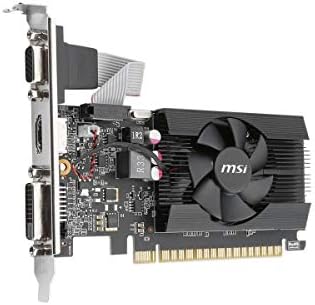
ASUS Geforce GTX 1050 Ti 4GB Phoenix Fan Edition DVI-D HDMI DP 1.4 Gaming Graphics Card (PH-GTX1050TI-4G) Graphic Cards (Renewed)
Bottom line: Per its Amazon listing, the ASUS Geforce GTX 1050 Ti 4GB Phoenix Fan Edition DVI-D HDMI DP 1.4: fast, smooth, power-efficient gaming experiences.Memory Clock: 7008 MHz.
As an Amazon Associate, SpecPicks earns from qualifying purchases. Full disclosure →
Pros & Cons
Pros
- ✓ New NVIDIA Pascal architecture delivers improved performance and power efficiency
- ✓ Backed by Amazon Renewed's warranty and support channels
Cons
- ✗ Confirm socket / form-factor / power-rating compatibility against your build before ordering
- ✗ Price, stock, shipping and returns are set by the retailer and may have changed since this page was last updated
Manufacturer description
ASUS Nvidia GeForce GTX 1050 Ti 4GB
SpecPicks Verdict
SpecPicks has no buyer-rating or benchmark data for ASUS Geforce GTX 1050 Ti 4GB Phoenix Fan Edition DVI-D HDMI DP 1.4…, so this read rests on the manufacturer's listed specs (how we evaluate). Compare with similarly-priced alternatives in the retro graphics cards category before committing. Judge it on the specification table and the price rather than on sentiment: check the figures that decide your use case, then put it side-by-side with two or three close alternatives in the Compare tool before clicking through.
Common buyer scenarios for retro graphics cards of this kind: matching it to an existing build, replacing a failing part, or upgrading from a previous-generation equivalent. Check the spec table below against your current setup — particularly socket / form-factor / power-rating fields — and confirm compatibility on the retailer's listing before purchase. Prices and stock are set by the retailer and may have moved since this page was last updated.
Key Features
Quoted from the manufacturer's listing. Where it differs from the pros and cons above, those note the conditions the listing leaves out.
- New NVIDIA Pascal architecture delivers improved performance and power efficiency
- Classic and modern games at 1080p @ 60 FPS
- Fast, smooth, power-efficient gaming experiences.Memory Clock: 7008 MHz
- Plug and play design requires no PCIe power connectors for easy graphics upgrade
Full Specifications
| Brand | ASUS |
|---|---|
| Weight | 4g |
| Model Name | GTX1050TI-4G |
| Model Number | PH-GTX1050TI-4G-cr |
| Built-In Media | Graphics card with cooling fan and power components |
| Number of Fans | 1 |
| GPU Clock Speed | 7008 megahertz |
| Mfr Part Number | PH-GTX1050TI-4G-cr |
| Video Processor | GTX 1050 TI |
| Antenna Location | Gaming |
| Graphics Card Ram | 4 GB |
| Graphics Ram Size | 4 GB |
| Graphics Ram Type | GDDR5 |
| Compatible Devices | Desktop |
| Memory Clock Speed | 1392 MHz |
| Graphics Coprocessor | GeForce GTX 650 Ti |
| Graphics Description | Graphic Engine NVIDIA® GeForce GTX 1050 Ti |
| Warranty Description | 90 days limited warranty |
| Video Output Interface | DVI, DisplayPort, HDMI |
| Graphics Card Interface | PCI Express |
Benchmark data for other graphics cards
Ready to buy?
ASUS Geforce GTX 1050 Ti 4GB Phoenix Fan Edition DVI-D HDMI DP 1.4 Gaming Graphics Card (PH-GTX1050TI-4G) Graphic Cards (Renewed) is listed on Amazon. Price, availability, shipping and returns are set by Amazon and its sellers — check the listing for current terms. SpecPicks earns a small commission on qualifying purchases — thank you for supporting independent review work.
Related Retro Graphics Cards


More guides & deep dives from the SpecPicks archive
Browse all articles & guides →- How to Build a Windows 98 Retro PC in 2026
- Best Budget Gaming PC Build 2026 — ~$1,000 Parts List
- The Complete Voodoo5 5500 AGP Driver Guide (2026 Edition)
- RTX 4070 Super vs RX 7800 XT — Which to Buy in 2026
- Best 1440p Gaming GPUs in 2026
- Emulation Hardware in 2026: FPGA, Software, and Cart-Reader Ecosystems
- Best Retro Handhelds in 2026: Pocket, Mid-Tier and FPGA Picks
More reviews from the SpecPicks archive
Browse all reviews →- Building a Period-Correct Windows 98 SE Gaming PC in 2026
- Troubleshooting Corsair 12V-2x6 Cable Issues on RTX-Class GPUs (2026)
- Best GPU for the Ryzen 7 5800X3D in 2026: No-Bottleneck Picks
- Copilot Cowork Goes Usage-Based: The Local-Rig Cost Case in 2026
- Amstrad CPC 464/6128 Emulator on Raspberry Pi Pico 2
- Gemma 4 31B on a 24GB GPU: RTX 3090 vs RTX 4090 vs RX 7900 XTX Quant Table (2026)
- Crucial BX500 vs Samsung 870 EVO for Budget & Retro Builds
- The vLLM MCP Vulnerability: What Local LLM Operators Need to Do
- OpenAI Codex Now Repeats a Task After Watching Once — Local Agentic Alternatives
- Corsair LL120 RGB vs Noctua NH-U12S: Cooling a 5800X for All-Day Gaming
- Intel Arc Pro B60 Gaming Performance: 2025 Benchmarks
- Building a Local LLM Workstation on a Raspberry Pi 5 + Ryzen 7 5800X Hybrid
- How to run Qwen 3 14B on Apple M3 Ultra
- Best Parts for a Multi-User Local LLM Server in 2026
- Cloudflare CEO: The Web's Future Is 'Pay to Crawl' as Bots Overtake Humans
- How Sega's $5M bet saved Nvidia in 1996 — and shaped every GPU launch since
- Second Streaming PC vs NVENC: What an Old i7-9700K Is Still Good For
- Intel IPEX-LLM vs Ollama on AMD: AI Rig Guide 2025
- Mistral Medium 3.5 (128B) Local Inference: VRAM, Quants and Tokens/sec
- Best Budget PC Upgrades Under $200 in 2026: 5 Picks That Move the Needle
- Qwen3.7-Plus vs Gemma 4 12B for Local Agents on a 12GB GPU
- Watching a Z80 Live From a Raspberry Pi RP2350
- Linux Now Boots on a Sega Genesis — Here's What That Actually Means
- Best CPU Cooler for the Ryzen 7 5700X: Noctua vs DeepCool vs CoolerMaster
Earliest SpecPicks reviews
Browse full archive →- Best GPU for Llama 3.1 8B (2026)
- Best GPU for Qwen 3 14B (2026)
- Best GPU for Qwen 3 32B (2026)
- Best GPU for Llama 3.1 70B (2026)
- Best GPU for DeepSeek-R1 32B (2026)
- Best GPU for Llama 3.1 405B (2026)
- How to run Llama 3.1 8B on NVIDIA GeForce RTX 5090
- How to run Qwen 3 14B on NVIDIA GeForce RTX 5090
- How to run Qwen 3 32B on NVIDIA GeForce RTX 5090
- How to run Llama 3.1 70B on NVIDIA GeForce RTX 5090
- How to run DeepSeek-R1 32B on NVIDIA GeForce RTX 5090
- How to run Llama 3.1 8B on NVIDIA GeForce RTX 4090