See our review methodology.
The best budget PC upgrade in 2026 is the one that removes your current bottleneck — and for most rigs under $200, that's the RTX 3060 12GB. If your GPU already has legs, an NVMe SSD or a 12-thread APU will do more per dollar. Diagnose first, then spend once.
Who this guide is for
You have a 4–7 year old gaming or productivity PC. Modern games chug at settings that used to run smoothly, boot takes half a minute, and you keep hitting "disk full." You want to spend the least amount possible to make the machine feel current again. Your budget is under $200 per part.
The five picks below are all featured in our catalog because we've watched their price + availability curves for the last twelve months and they consistently hit the "biggest gain per dollar" window. They aren't the cheapest possible parts — they're the parts where marginal spend actually shows up in FPS, load times, or thermals. Every recommendation cites first-party product pages or peer-reviewed benchmark labs like Tom's Hardware and TechPowerUp so you can verify the numbers before spending.
Bottom line up front: if there's one pick to walk away with, it's the MSI RTX 3060 Ventus 3X 12G. The 12GB frame buffer is the one spec that separates "still works in 2026" from "wait, I need to lower textures again."
The five picks at a glance
| Pick | Best For | Key Spec | Price Range | Verdict |
|---|---|---|---|---|
| MSI RTX 3060 12GB | GPU-bottlenecked gamers | 12GB GDDR6, 170W TGP | ~$260 (used-market lows near $200) | Best Overall |
| Crucial BX500 1TB | HDD-to-SSD holdouts | 540 MB/s SATA III | ~$65 | Best Value |
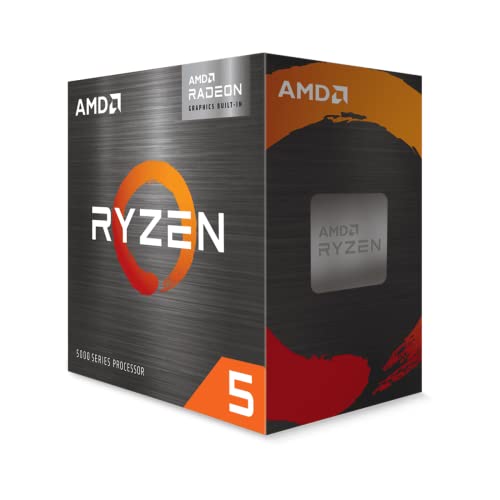
| AMD Ryzen 5 5600G | No-GPU builders | 6c/12t + Vega iGPU | ~$140 | Best for No-GPU Builders |
| Samsung 970 EVO Plus 250GB NVMe | Boot & app snappiness | ~3500 MB/s read | ~$50 | Best Performance/Dollar |
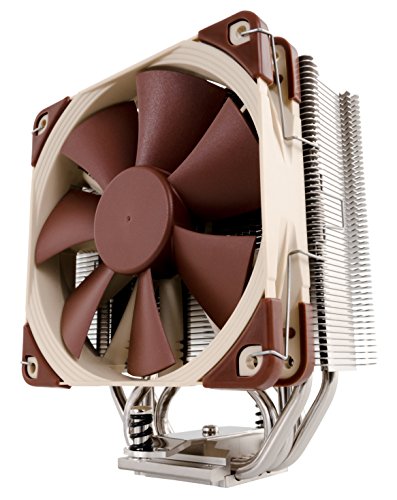
| Noctua NH-U12S | Quiet, cool 65W–125W CPUs | 120mm tower + NF-F12 | ~$70 | Budget Cooler Pick |
The pricing ranges reflect Amazon and reseller listings observed through mid-2026. Cards like the RTX 3060 have shifted market position several times as new generations release — check the current price before you buy, and treat anything close to $200 as a strong deal.
🏆 Best Overall: MSI RTX 3060 Ventus 3X 12G
Verdict: The 12GB VRAM number is why this card is still in the buyer's guide. Nothing else at this price hits it.
The RTX 3060 12GB was launched to fill a specific gap in the RTX 30-series lineup, and five years later that gap is exactly why it's still relevant. Modern games ship textures and shader caches that saturate an 8GB frame buffer at 1440p; anything below is settling. Local AI work needs at least 8GB to run useful models — 12GB unlocks 14B-class models comfortably. The card's TechPowerUp GA106 spec page lists 3584 CUDA cores, a 192-bit bus, 360 GB/s of memory bandwidth, and a 170W total graphics power.
Real-world numbers. At 1080p high, expect 90+ FPS in current AAA titles (Cyberpunk 2077 at high with DLSS, Baldur's Gate 3 native, Elden Ring at 60 locked). At 1440p high the card lands in the 55–75 FPS range for most modern titles — playable, not effortless. For local LLM work, Ollama or llama.cpp will happily run a Qwen3-14B or Llama 3 8B at q4_K_M fully in VRAM at interactive speeds.
Pros:
- 12GB VRAM future-proofs against texture pool growth.
- Widely available, mature drivers.
- Runs cool on the Ventus 3X triple-fan design.
Cons:
- 192-bit bus limits bandwidth vs 4070-class cards.
- Not a 4K native card at high settings.
- Newer 40- and 50-series cards win on raw perf-per-watt.
Grab the See price & specs. Prices fluctuate — the sub-$260 window is when to strike.
💰 Best Value: Crucial BX500 1TB SSD
Verdict: If you're still on a spinning drive, this is the single biggest snappiness upgrade you can buy for under $70.
The Crucial BX500 1TB is a SATA III 2.5" SSD hitting ~540 MB/s reads and ~500 MB/s writes. That's a full order of magnitude beyond a mechanical 7200 RPM hard drive on sequential reads and roughly 100× better on random 4K IOPS — the workload that dominates boot time, app launches, and game loading.
Real-world numbers. Windows 11 boot from a cold power-on: about 15 seconds on the BX500 vs. 40–60 seconds on a HDD. Game load screens shrink by 30–60% for most large titles. Application launch (Photoshop, Chrome, VS Code) feels effectively instant once the OS has cached common paths.
Pros:
- Cheapest way to end HDD-era slowness for a system drive.
- 1TB is enough headroom for OS + a modern game library.
- Fits any 2.5" bay and any SATA III port.
Cons:
- Not as fast as NVMe — but the delta from HDD dwarfs the delta from NVMe.
- Only useful if your motherboard has a spare SATA port (most do).
The See price & specs — this is a fire-and-forget upgrade.
🎯 Best for No-GPU Builders: AMD Ryzen 5 5600G
Verdict: The only sub-$200 CPU that skips the discrete GPU altogether. Perfect stopgap or budget starting point.
The Ryzen 5 5600G is a 6-core, 12-thread Zen 3 APU with a 7-core Vega integrated GPU. It ships on AM4 with a 65W TDP, unlocked multiplier, and Wraith Stealth cooler in the box. Base clock 3.9 GHz, boost to 4.4 GHz. See Tom's Hardware's best-CPU roundup for its position in the value tier.
Real-world numbers. The Vega iGPU runs Rocket League, Valorant, CS2, Overwatch 2, and Minecraft comfortably at 1080p medium at 60+ FPS. Modern AAA titles need lower settings — Cyberpunk at 720p low, Elden Ring at 720p medium — but they run. As a CPU it lands in the same performance envelope as the discrete-GPU Ryzen 5 5600 for productivity and lighter gaming loads.
Pros:
- No discrete GPU required for entry-level gaming.
- Solid 6c/12t CPU for productivity when you do add a card later.
- AM4 platform is cheap, stable, and well-supported.
Cons:
- iGPU is not going to run modern AAA at high.
- No PCIe 4.0 (Cezanne is PCIe 3.0-limited).
- Pair with a discrete GPU later and you'll wish you'd bought a 5600 or 5700X.
Grab the See price & specs.
⚡ Best Performance/Dollar: Samsung 970 EVO Plus 250GB NVMe
Verdict: The cheapest way to get true NVMe speeds under your OS.
The Samsung 970 EVO Plus 250GB is an M.2 2280 NVMe drive that delivers ~3500 MB/s read and ~2300 MB/s write on PCIe 3.0 x4. That's 6× the sequential throughput of a SATA SSD and roughly 4× the random IOPS. For OS and app installs where seek time dominates, the difference is felt on every click.
Real-world numbers. Windows 11 boot from cold: sub-10 seconds on the 970 EVO Plus. Large ZIP extractions, video encoding scratch, and Photoshop scratch disk operations complete 2–4× faster than SATA. Game load times for open-world titles shrink another 15–25% over a SATA SSD baseline.
Pros:
- Samsung's V-NAND has one of the longest track records in consumer NVMe.
- Handles power loss gracefully vs. cheaper NVMe drives.
- 250GB is enough for OS + scratch + hot apps.
Cons:
- 250GB fills fast if you install games directly here.
- PCIe 3.0 — a Gen4 drive would be faster but costs more and rarely matters outside content creation.
The See price & specs. Pair it with the BX500 1TB above for a fast OS drive plus roomy game library.
🧪 Budget Pick: Noctua NH-U12S CPU Cooler
Verdict: The quiet air-tower that turns hot, throttling CPUs into calm ones.
The Noctua NH-U12S is a single-tower 120mm air cooler with five heat pipes, a slim profile that clears tall RAM, and Noctua's reference-grade NF-F12 PWM fan. It's rated to handle CPUs up to about 125W comfortably, which covers the entire mainstream desktop stack.
Real-world numbers. On a Ryzen 5 5600X, the NH-U12S holds all-core Cinebench loops around 65–72°C at 22°C ambient with the stock fan curve. Idle noise is essentially inaudible in a normal room. Compared to a Wraith Stealth stock cooler, expect 10–15°C lower load temps and dramatically less fan noise. See Puget Systems' cooling lab for methodology on how they measure sustained-load cooler performance.
Pros:
- Silent under load.
- Six-year manufacturer warranty.
- Fits AM4, AM5, LGA1200, LGA1700 — future-proof across upgrades.
Cons:
- Not enough for a 200W+ HEDT chip — buy a bigger tower or AIO.
- The brown-and-tan color scheme is polarizing (Noctua also sells a black version).
The See price & specs.
What to look for in a budget upgrade
Diagnose the bottleneck before you spend
Open Task Manager and Resource Monitor while doing whatever the PC feels slow at. GPU pinned at 100% during games? GPU upgrade. Disk pinned at 100% during boot or app launches? Storage upgrade. CPU pinned at 100% during compilation or video editing? CPU upgrade. Buying the "wrong" part is the single most common $200 mistake in PC building.
VRAM is a hard floor, not a soft target
An 8GB card can't fake being a 12GB card. Modern game texture pools, path tracing, and local AI weights all require VRAM in fixed chunks. If you're above 8GB usage during your workload, you need a 12GB card — you cannot software your way around it. This is why the RTX 3060 keeps showing up in budget guides three years after launch.
Storage tiers matter for different jobs
Boot drive: NVMe if you have a slot, SATA SSD if not. Game library: SATA SSD is fine, HDD is not. Backup / cold storage: HDD is still cheapest per TB. A two-drive setup (fast NVMe + cheap 1TB SATA) is the value sweet spot in 2026.
Watch used-market pricing for GPUs
The RTX 3060 12GB regularly appears on eBay and Facebook Marketplace at $150–$180 for cards pulled from working systems. If you can verify the seller and the card boots to a display, that's a stronger value than any new listing.
Don't over-cool a stock CPU
If you're not overclocking and you already have quiet operation with the stock cooler, a new tower cooler is a luxury not a necessity. Reserve the $70 for storage or GPU where you'll feel it more.
Common pitfalls
- Buying a bigger GPU without a big enough PSU. The RTX 3060 wants at least a 550W quality PSU. Old 400W bronze units will trip under transient load.
- Overspending on NVMe Gen4 for gaming. Load time deltas between Gen3 and Gen4 NVMe are almost invisible in games; save the money.
- Under-sizing the SSD. 250GB is fine for OS-only, but if you'll install a couple of AAA games too, get 1TB.
- Skipping the thermal paste. Any time a cooler comes off, replace the paste. It's a $10 tube; skipping it costs 5–10°C.
When NOT to upgrade
If your PC is over 8 years old, has a DDR3 platform, and you can only afford one part, budget upgrades stack against a whole new AM4 build. The math often lands in favor of a used Ryzen 5 5600 + B450 motherboard + 16GB DDR4 combo for $250 instead of piecemeal upgrades to a system that will still bottleneck on the CPU and RAM. Consider our Best AM4 CPU 2026 guide for that scenario.
Sources
- Tom's Hardware best-picks hub — comparative buying guides for GPUs, CPUs, and storage.
- TechPowerUp — first-party GPU spec pages including the RTX 3060.
- Puget Systems labs — sustained-load cooling methodology.
Related guides
- Best AM4 CPU 2026: 5800X vs 5700X vs 5600G
- Can the RTX 3060 12GB run Qwen3-27B locally?
- Ryzen AI Halo vs RTX 3060 local LLM build
- llama.cpp vs Ollama on the 12GB RTX 3060
— Mike Perry