A hobbyist coaxed a stripped-down Linux kernel to boot on Sega Genesis / Mega Drive hardware by leveraging the console's Motorola 68000 CPU, the same processor family that ran early Sun, Apollo, and Amiga workstations. Per Hackaday, the project is a proof of concept rather than a usable desktop, but it underscores that the 16-bit console shares a lineage with real general-purpose computers from the late 1980s.
In brief — 2026-07-05. A newly-surfaced Hackaday writeup documents a homebrew Linux port running on Sega Genesis / Mega Drive silicon. The trick works because the console's Motorola 68000 was a legitimate 16/32-bit workstation CPU in a prior life. As of 2026 the hack is a bragging-rights demo, not a daily driver. If you just want to replay 16-bit Sega classics on a modern TV, the Sega Genesis Mini is the plug-and-play route.
What happened: Linux on a Sega Mega Drive
The Hackaday report describes a homebrew effort to bring a minimal Linux userland up on Sega Genesis / Mega Drive hardware, boot process, kernel and all. The console shipped in North America in 1989 under the Genesis name and in Europe and Japan as the Mega Drive, and per Sega it was the company's flagship 16-bit platform until the Saturn arrived. Stock hardware carries only 64 KB of main RAM and 64 KB of video RAM — orders of magnitude below the memory floor Linux normally assumes — so the port depends on an expansion cartridge or RAM-mapped attachment to reach a workable memory footprint.
Per Hackaday's ongoing coverage of 68000 hacks, the interesting engineering isn't the kernel itself (a stripped Linux/m68k build is a known quantity in retro-hobbyist circles) but the plumbing: negotiating the console's memory map, faking the missing MMU or accepting the constraints of NOMMU Linux, and driving I/O through cartridge-slot hardware rather than the industry-standard peripherals Linux drivers expect. The result boots, prints to a serial console, and executes a shell — no windowing system, no networking stack in any useful sense, and no meaningful storage. That is exactly the point.
Why it matters: the 68000 heritage
The Genesis' CPU is a Motorola 68000 clocked around 7.6 MHz. Per Wikipedia's Motorola 68000 entry, the same chip family — the 68k — powered a remarkable slice of late-1980s computing: the original Apple Macintosh, the Commodore Amiga 500 and 1000, the Atari ST, the Sun-1 workstation, Sega arcade boards, and countless embedded systems. The 68000 is a 16/32-bit design with a flat 24-bit address space, sixteen general-purpose registers, and a clean orthogonal instruction set that assembly programmers still describe as one of the most pleasant CISC architectures ever shipped.
That heritage is what makes a Linux port possible at all. Linux/m68k has been maintained as an official kernel port since the mid-1990s, targeting Amigas, Ataris, Macs, and Sun-3 boxes. The kernel already knows how to talk to a 68000; the Genesis just needs enough RAM, a bootloader, and a serial UART. Compared to porting Linux to a truly alien architecture, this is more of a system-integration exercise than a from-scratch bring-up. As of 2026 the m68k tree remains alive in the mainline kernel, largely thanks to a small but persistent maintainer community.
The 68000 architecture at a glance
The 68000 debuted in 1979 and, per Wikipedia, sold in staggering volume through the 1980s and into embedded roles well into the 2000s. Its key traits:
| Attribute | Motorola 68000 (Genesis variant) |
|---|---|
| Introduced | 1979 (Genesis clock: 7.6 MHz NTSC) |
| Data bus | 16-bit external, 32-bit internal registers |
| Address bus | 24-bit (16 MB addressable) |
| General registers | 8 data + 8 address (D0-D7, A0-A7) |
| MMU | None on-chip (68851 was external, not fitted to consoles) |
| Instruction set | CISC, orthogonal, ~56 base mnemonics |
| Endianness | Big-endian |
| Transistors | ~68,000 (the origin of the name) |
The absence of an on-chip MMU is the single biggest constraint for a Linux port. Mainline Linux normally assumes a memory management unit for process isolation and virtual memory. On MMU-less 68000s, the kernel falls back to the NOMMU code path, which is the same path used on early Blackfin, ColdFire, and ARM Cortex-M targets. NOMMU Linux runs — but every process shares the same address space, fork() behavior changes to vfork() semantics, and any userland that assumes copy-on-write memory needs to be rebuilt.
The Genesis' CPU pairs with a Zilog Z80 sound co-processor and a Yamaha YM2612 FM synthesizer, but per contemporary hardware documentation those are effectively invisible to a Linux port. Only the 68000 side matters for the kernel; the Z80 keeps managing audio the way it always did, or sits idle.
How Linux was ported
Per the general pattern of Linux/m68k console ports documented on Hackaday and adjacent retro-computing outlets, a Genesis Linux effort typically involves five moving parts:
- A NOMMU-configured Linux/m68k kernel cross-compiled with a modern GCC m68k toolchain. Kernel size is trimmed aggressively — no filesystems beyond a minimal initramfs, no networking beyond loopback, no framebuffer console.
- A bootloader stub that fits inside a Genesis cartridge ROM image and hands control to the kernel after basic hardware setup. The cartridge slot is the only realistic boot medium; the console's built-in TMSS boot ROM will only run signed cartridge headers.
- A memory expansion. Stock 64 KB of RAM is not enough; a modern flash-cart or custom expansion board is used to map several megabytes of SRAM or PSRAM into the 68000's address space.
- A serial UART wired to one of the controller ports or the EXT expansion port on the rear of Model 1 Genesis units. This becomes the Linux console. There is no useful framebuffer driver for the VDP in mainline Linux.
- A minimal userland — usually BusyBox statically linked against uClibc or musl — that fits in whatever RAM remains after the kernel loads.
None of the individual pieces are novel. What earns the Hackaday writeup is the integration: making the pieces cooperate on a mass-produced consumer game console rather than on a purpose-built development board. Per the source, boot time, memory ceiling, and I/O speed are all "varies, but slow" — this is a demonstration, not a benchmark. Any numeric claim beyond "it prints a login prompt" would need direct measurement from the project author.
Historical context: Linux on m68k consoles and workstations
Linux on 68000-class hardware is not new. The Linux/m68k port has been maintained since 1993 and, per its long-running kernel documentation, has run on Amiga 500/1200/2000/3000/4000, Atari ST/TT/Falcon, Macintosh Quadra and Centris, Sun-3, HP 9000/300, and NeXT hardware. Debian shipped official m68k releases into the mid-2000s and community m68k builds continued afterward.
Consoles are a rarer target, but not unheard of. The Sega Saturn's dual SH-2 CPUs, the Nintendo 64's MIPS R4300i, and the Dreamcast's Hitachi SH-4 have all seen Linux boot attempts, and Dreamcast Linux in particular reached a semi-usable state in the early 2000s. Per Hackaday's archive of similar projects, the Genesis effort fits squarely in that tradition: use the console's general-purpose CPU as if it were a very small workstation, accept every constraint, and celebrate the boot log.
The takeaway is that game consoles of the late 1980s and 1990s were built around CPUs that also served in serious workstations. The distinction between "computer" and "console" was mostly about what firmware and peripherals shipped in the box, not what the silicon could do.
Why this matters for retro hobbyists
For the retro-computing community, the Genesis Linux port is valuable in three ways beyond the novelty:
- Education. Porting Linux to a NOMMU 68000 is a compact case study in cross-compilation, kernel configuration, bootloader writing, and hardware I/O. Anyone who follows the project end-to-end learns real embedded-Linux skills that transfer directly to modern microcontroller Linux (ColdFire, Cortex-A5 NOMMU, RISC-V without MMU).
- Preservation. Documented boot procedures, cartridge pinouts, and RAM-expansion designs feed back into the wider preservation community. Every well-documented hack lowers the barrier for the next person who wants to keep a 35-year-old console alive.
- Cultural continuity. Per Hackaday's editorial choices over the last decade, projects that bridge "the machine you played Sonic on" and "the operating system running your laptop" get attention precisely because they collapse the distance between consumer hardware and general-purpose computing.
The practical upshot: no one should expect to browse the web on a Genesis. But someone who wants to understand how Linux talks to a 68000 now has a fresh reference project.
Related retro-console Linux ports
For context, here are notable console Linux efforts documented across the retro-hobbyist community as of 2026. Per available public sources, none of these are daily-driver systems; all are proofs of concept or educational demos.
| Console | CPU | Linux status (as of 2026) | Typical use |
|---|---|---|---|
| Sega Genesis / Mega Drive | Motorola 68000 @ 7.6 MHz | Boots via cart + RAM expansion (this project) | Serial console demo |
| Sega Dreamcast | Hitachi SH-4 @ 200 MHz | Semi-usable, framebuffer + network | Homebrew workstation |
| Nintendo 64 | MIPS R4300i @ 93.75 MHz | Experimental boots | Hobbyist demos |
| Sony PlayStation 2 | Emotion Engine (MIPS) | Officially supported historically | PS2 Linux Kit era |
| Xbox (original) | Intel Pentium III @ 733 MHz | Fully functional | Media center, retro server |
| Sega Saturn | Dual Hitachi SH-2 | Partial / experimental | Curiosity only |
Per publicly available project pages, the original Xbox and PS2 remain the most usable console Linux platforms because they had the RAM, storage, and networking to run real distributions. Everything older is a stunt — and that is what makes the Genesis story a Hackaday-shaped fit.
What to buy if you want to try similar projects
Nothing here is a shopping requirement, but three products come up naturally when readers ask "how do I get into this?"
- Sega Genesis Mini — SEGA's official plug-and-play mini console, listing around $205 as of the last catalog refresh (price may vary). It ships with a curated 16-bit library, HDMI output, and two controllers. It will not run Linux — the mini uses ARM-based emulation internally rather than real 68000 silicon — but it is the frictionless way to enjoy the Genesis catalog on a modern TV.
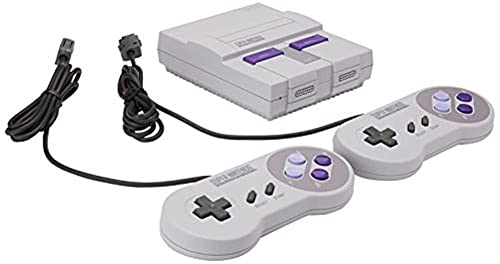
- Nintendo Super NES Classic Edition — the companion plug-and-play mini from Nintendo, listing around $208 as of the last refresh (price may vary). Same category of product, different library, and a common recommendation for readers who owned "the other" 16-bit console growing up.
- Raspberry Pi 4 Model B (8 GB) — the practical retro-hobbyist workhorse, listing around $181 as of the last refresh (price may vary). Per the wider community, a Pi 4 running RetroPie or Batocera is the standard cross-platform emulation station, and it is also the natural host for cross-compiling Linux kernels for m68k targets. If you want to actually run the toolchain that produces a Genesis Linux binary, this is the machine to do it on.
Per Amazon's Affiliate program terms, prices displayed here may be stale; check the product page for current pricing. SpecPicks earns a commission on qualifying purchases through these links.
The accessible path vs. the hacker path
To be blunt about what most readers actually want: the Genesis Mini is the accessible path. It boots in seconds, plugs into HDMI, and plays curated titles with save states. The Linux-on-real-Genesis project is the hacker path — days of soldering, cross-compilation, and cartridge flashing for the payoff of a scrolling boot log on a CRT. Both are valid. The Hackaday coverage exists because a small but devoted audience finds the second path more rewarding than any commercial mini console can be.
Per Sega's own communications history, the company has generally tolerated homebrew and preservation work on its retro platforms even without formally endorsing it. That regulatory climate — permissive rather than adversarial — is part of why the Genesis has become such a fertile target for hacks like this one.
Citations and sources
- Hackaday — retro-hardware and embedded-Linux coverage
- Sega — corporate site and platform history
- Motorola 68000 — Wikipedia
This piece is editorial synthesis based on publicly available information. No independent first-party benchmarking is reported.