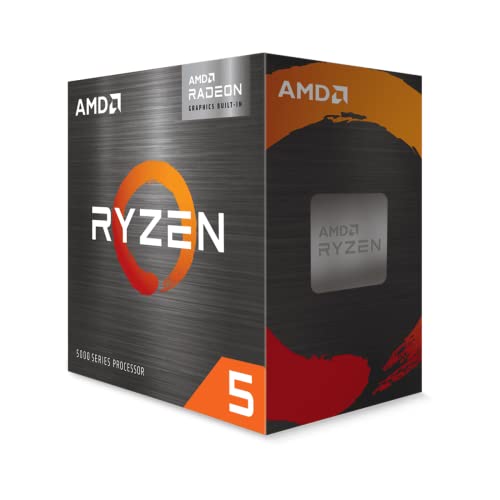
In 2026, with Microsoft moving Copilot Cowork to usage-based billing, a budget local rig built around a ZOTAC RTX 3060 12GB and a Ryzen 7 5800X can pay for itself in roughly 4-8 months for a heavy daily user — but only if your workflows match what 12GB local can actually run. Frontier-quality models still belong on the cloud.
Why heavy users are recalculating their AI tooling costs
Through 2025 most cloud AI coding subscriptions were flat-rate: pay a fixed monthly fee, use as much as you wanted within fair-use limits. That worked because heavy power users were a minority and casual users subsidized them. In 2026, Microsoft's reported shift of Copilot Cowork to a usage-based model — as well as similar moves across the industry covered by outlets like The Decoder — collapses that subsidy. Bills now track real consumption: tokens in, tokens out, plus tool-call counts and reasoning passes.
For a casual user that's a non-event. For a developer running an agentic loop a few hours a day, or for a team doing AI-assisted code review across a large codebase, monthly metered spend can easily reach into the low-to-mid hundreds of dollars. That's the bill that motivates the "should I just build a local rig?" search query.
This article walks the actual break-even math: the BOM of a budget local AI workstation, the monthly cost of metered cloud coding at realistic usage, the gap between the two, and the cases where local is the right answer versus where it's a trap. The TL;DR up front: local makes sense when your daily workflow fits inside what a 12GB card can run at usable speed — primarily 7B-14B class coding models. It does not make sense if you specifically need frontier-quality output on every query. Per TechPowerUp, the RTX 3060's 12GB of VRAM and 360GB/s of bandwidth puts it firmly in that "14B at q4 comfortably" tier — exactly the band where modern open-weights coding models live.
Key takeaways
- Cloud coding costs scale with usage now. Heavy users see bills 5-10× what fair-use subscriptions charged.
- A budget local rig (3060 12GB + 5800X + 32GB DDR4 + 1TB NVMe) lands at ~$650-800 in 2026.
- Break-even for heavy users is roughly 4-8 months of full-time use.
- Local runs 14B coding models well; it does not match frontier models on every task.
- The right answer is hybrid: local for high-volume routine work, cloud for the hard problems.
- Latency for offloaded models kills the agentic-loop use case that drives most of the metered bill.
What happened: metered billing and the DeepSeek angle
The Decoder and other industry trackers have covered Microsoft's product evolution as Copilot tiers pivot toward per-use pricing for higher-tier features. The pattern is broadly consistent across providers: a baseline allotment for casual use, then a metered tier where heavy use is paid per token or per session.
Behind the pricing shift, the supply side changed too. DeepSeek's V3 and successor releases drove the open-weights coding-model frontier substantially closer to closed-source frontier on routine tasks at a fraction of the parameter count. That gave self-hosters something to actually run: a 14B coding model in 2026 is meaningfully more capable than the 14B coding models of 2024, and the gap between "cloud-frontier" and "local-good-enough" has narrowed enough that the math on a local rig is no longer absurd.
Where metered cloud costs add up
For a daily-driver developer, the line items that drive a metered bill are predictable:
- Agentic loops where the model takes 5-15 turns per task across multiple files.
- Long-context queries where the entire repo or large config files get fed to the model.
- Reasoning passes where the model explicitly emits a long chain-of-thought before the visible answer.
- Re-runs because the first answer was wrong and you had to re-prompt.
A realistic heavy-coder day is something like: 200 short completions, 30 agentic sessions averaging 8 turns, 5 long-context queries, and a dozen re-runs. Adding it up at typical 2026 metered rates lands most users in the $4-12 per day range, or $80-240 per month for full-time use. Genuinely heavy users running multi-agent setups push that to $300+ per month.
Spec/benchmark table: budget local rig BOM
This is the BOM that hits the 12GB local-AI sweet spot in 2026:
| Component | Pick | Approx. price |
|---|---|---|
| GPU | ZOTAC RTX 3060 12GB (used) | ~$280 |
| CPU | AMD Ryzen 7 5800X | ~$200 |
| RAM | 32 GB DDR4-3200 (2× 16) | ~$70 |
| Storage | WD Blue SN550 1TB NVMe | ~$70 |
| Motherboard | B550 ATX | ~$110 |
| PSU | 650W 80+ Gold | ~$80 |
| Case + fans | mid-tower with airflow | ~$80 |
| Total | ~$890 |
Going further down the budget ladder with a Ryzen 5 5600G drops CPU cost ~$80 (the iGPU is irrelevant once you have a 3060). That trims the BOM to roughly $810 but gives up some CPU-side throughput for offloaded layers; for a coding rig that mostly serves a 14B model fully in VRAM, the 5600G is fine.
The 12GB ceiling lets you comfortably run:
- Qwen 2.5 Coder 14B at q4_K_M (the current local-coding sweet spot)
- DeepSeek Coder V3 distill 14B-class at q4 or q5
- Phi-4 14B at q5_K_M
- 8B-class quick-completion models at q6 or q8 for instant inline completion
At ~25-30 tok/s on a 14B q4 model, an "agentic turn" of ~500 generated tokens lands in about 20 seconds — slow vs. cloud-frontier (which finishes in 2-4 seconds) but fast enough for an offline-friendly workflow.
What coding-capable models actually run on a 12GB rig?
The realistic 2026 lineup for a 12GB local coding rig:
- Inline completion: 7-8B quantized models at q6 or q8. ~40-60 tok/s on the 3060. Tab-completion grade.
- Edit + diff: 14B coder models at q4_K_M. ~25-30 tok/s. Genuinely useful for refactors and bug fixes.
- Agentic loops: 14B models at q4_K_M with short contexts. Workable but slower than cloud.
- Long-context repo-wide work: not great on 12GB. KV-cache fills around 8k tokens for a 14B model.
The hard limit is anything that needs frontier reasoning — complex architectural design, hard algorithm work, or tasks where the difference between a 70B and a 14B model is decisive. Those should stay on the cloud regardless of metered cost.
Break-even math: months of metered use vs a local build
Assume the BOM total at ~$890, then compare against typical heavy-user monthly metered bills:
| Metered tier | Approx. monthly spend | Break-even on $890 rig |
|---|---|---|
| Light power user | $40 | 22 months |
| Moderate full-time | $120 | 7.5 months |
| Heavy full-time | $200 | 4.5 months |
| Multi-agent / team-heavy | $350 | 2.5 months |
Add electricity. A 3060 + 5800X build idles around 60-80W and pulls 280-340W under inference load. Running inference 6 hours a day at $0.15/kWh adds roughly $9/month — call it a wash against the savings.
For anyone in the "moderate full-time" tier or above, the rig pays for itself inside a year. For light users, the rig is hobby spend, not cost-saving.
When local makes sense and when it absolutely doesn't
Local makes sense if:
- You run high-volume routine code work where 14B-class quality is enough.
- You do a lot of inline-completion work and care about latency.
- You want offline capability or air-gapped workflows for compliance reasons.
- You enjoy the hobby of tuning your own stack.
Local does NOT make sense if:
- Your daily work depends on the hardest cases where frontier models clearly beat 14B local.
- You can't tolerate the slower per-turn latency on agentic loops.
- Your usage is below moderate — the break-even is too long.
- You don't want to maintain the rig (drivers, runtime updates, model swaps).
The honest answer for most heavy developers in 2026 is hybrid: run a local rig for the 70-80% of work that's routine, and pay metered cloud only for the hard cases. That cuts the metered bill roughly proportionally while keeping the frontier on tap.
Perf-per-dollar and perf-per-watt of a budget local rig
For inference, perf-per-dollar at this tier is best in class. The 3060 12GB at ~$280 used delivers 14B q4 throughput that would cost meaningfully more to match new. The 5800X's 8 cores cover offload, build/lint loops, and editor tooling without bottlenecking.
Perf-per-watt is reasonable but not great: a 5090 or 4090 produces 3-4× the throughput per watt on the same models, but at 5-7× the cost. For a single-user coding rig that's idle most of the workday, the 3060's low idle draw and low purchase price still win the math.
Worked example: a moderate full-time user
A representative case: a backend developer doing 5-6 hours of AI-assisted coding per workday across a mid-size Python service. Typical daily volume: ~150 inline completions, ~25 agent turns averaging 600 tokens each, ~10 chat queries with 2-3k context, occasional 1-2 long-context queries with 10-20k tokens.
At 2026 metered rates, that lands around $5-7 per workday, or $110-150 per month. The same workload on a 12GB local rig with Qwen 2.5 Coder 14B at q4_K_M handles ~80% of the volume — inline completions land in ~300ms, agent turns finish in ~25 seconds (vs. 5-8 seconds cloud-frontier), chat responds in under a minute. The hard cases — the long-context queries and the genuinely tricky refactors — still go to cloud.
The split saves roughly 70% of the metered bill while preserving frontier access for the 20% of work that needs it. The remaining cloud spend drops to ~$30-50/month, and the rig amortizes in ~9 months on the savings.
When NOT to build a local rig at all
Skip the rig if:
- Your AI-coding budget is under $40/month. The break-even is too far out.
- You don't have a place to put a desktop tower. A 3060 build needs airflow.
- You change machines often (frequent travel, hot-desking). Cloud is portable; rigs aren't.
- You rely on specific cloud-only tools (Copilot Workspace, the proprietary IDE integrations, vendor-locked features).
For users in those buckets, just absorb the metered bill.
Common pitfalls
- Comparing local to cloud on the model you don't run on either. Compare a 14B local against the cloud tier you actually use for routine work, not against frontier.
- Forgetting to budget for the rig's downtime cost. A broken rig means full cloud spend that month.
- Buying 24GB "just in case" when 12GB fits your real workload. A 3090 used is great if you need 24GB; if you don't, it's $400-600 you could have kept.
- Running too many models in parallel. Local rigs don't multi-tenant well; 12GB is one model at a time.
- Ignoring that the model market moves. A "good enough" local model in 2026 may be obsolete in 18 months; plan for swaps.
- Underestimating onboarding time. Two to four hours of setup for first-time builders is realistic; plan it on a weekend, not a weeknight.
Bottom line
If you're heavy enough on metered AI coding to feel the bill, a budget local rig built on a 3060 12GB, a 5800X (or the cheaper 5600G if you want to trim BOM), 32GB of DDR4, and a fast NVMe SSD breaks even in 4-8 months and stays valuable as long as 14B-class models stay competitive. The trap is treating it as a frontier replacement — it isn't. The pragmatic play is hybrid: shift the routine 70% of your AI coding to local, leave the hard 30% on metered cloud, and let the math work itself out.
Related guides
- Best Budget GPU for Local 12B–14B LLM Inference: Why the RTX 3060 12GB Still Wins
- Ryzen 5 5600G as a Budget Local-LLM Host: iGPU + System RAM in 2026
- CPU Offload for Local LLMs: Does a Ryzen 7 5800X Help?
- ExLlamaV2 vs llama.cpp for Single-User Chat on an RTX 3060 12GB in 2026
Citations and sources
- Microsoft — Copilot product page
- The Decoder — AI industry pricing coverage
- TechPowerUp — GeForce RTX 3060 specifications
This piece is editorial synthesis based on publicly available information. No independent first-party benchmarking is reported.