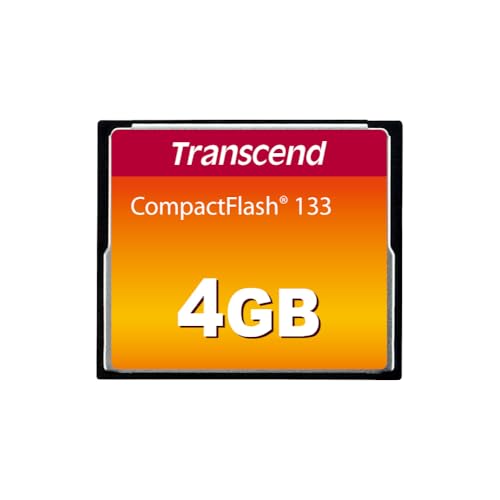
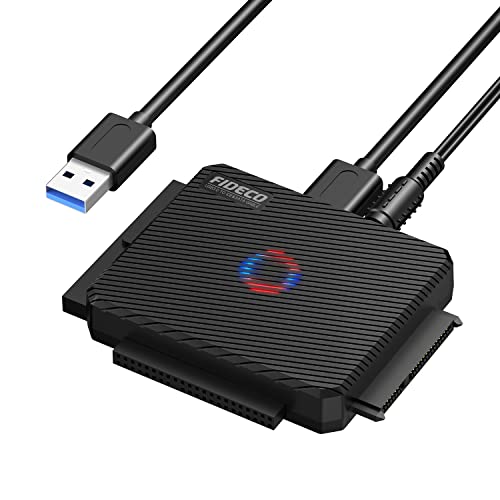
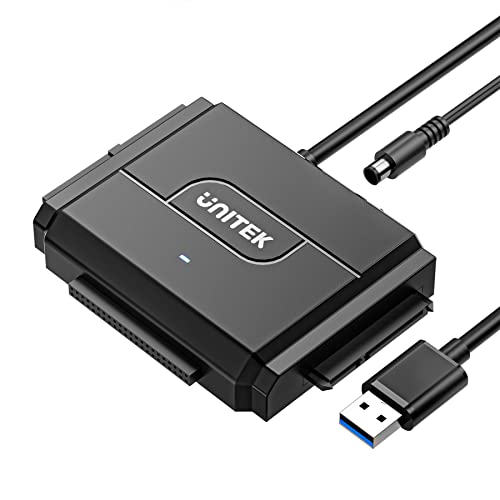
A period-correct Windows 98 SE gaming PC build in 2026 starts with a Pentium III 600–1000 MHz or a slightly later Pentium 4 Northwood class CPU, 256–512 MB of SDRAM, a 3dfx Voodoo3 or a Voodoo5 (or, for DirectX 8 titles, a GeForce 4 Ti 4200/4600 or Radeon 9700 Pro), and a Sound Blaster X G6 bridged via SPDIF for clean modern output. Storage is solid-state to keep the chassis silent — a Transcend CF133 4GB CompactFlash card on a passive CF-to-IDE adapter is the cleanest route. A Unitek USB-to-IDE/SATA adapter or FIDECO equivalent is your bench tool for imaging and recovery.
Why build a period-correct Win98 SE rig in 2026
Three reasons. First, DirectX 1–8 era games (Quake, Quake II, Quake III, Half-Life, Diablo II, the original StarCraft, Unreal Tournament 1999/2004, Deus Ex, System Shock 2, Thief, the early Tomb Raiders) often play better on the hardware they were written for than under modern compatibility shims. DOSBox and Wine cover the simpler titles; the more complex 3D-accelerated games regularly have rendering bugs, audio bugs, or input bugs under emulation that disappear on a real Pentium III with a Voodoo. Second, the hardware itself is interesting — 3dfx's Glide API, the AWE32/AWE64 audio cards' synthesis, the early GeForce/Radeon DirectX 8 capabilities are not preserved well in modern software. Third, building a quiet, solid-state Win98 SE rig in 2026 is a different challenge from buying matched 1999 parts on eBay — you choose what to make period-correct and what to modernize.
This synthesis pulls from the Vogons forum's Win98 build threads, Phil's Computer Lab's Win98 SE guides, and Microsoft's Windows 98 hardware compatibility notes.
Key takeaways
- A Pentium III 800–1000 MHz with 256–512 MB SDRAM hits the Win98 SE sweet spot
- Solid-state storage (CompactFlash) is silent and reliable — period-correct because CF is an ATA device
- 3dfx Voodoo for Glide titles; GeForce 4 / Radeon 9700 for late DirectX 8
- Sound Blaster X G6 over SPDIF is the cleanest modern audio path; a real AWE32/64 is the museum option
- BIOS 128 GB barrier means small drives only — 4–128 GB is plenty for the era
- Plan for a real CRT or a good LCD with a DVI-D or VGA input
The CPU choice: Pentium III vs early Pentium 4
The Win98 SE sweet spot is a Pentium III 800–1000 MHz on a Slot 1 or Socket 370 board. Anywhere in this range gives you headroom for late-era 3D games (Half-Life, Unreal Tournament, Quake III) without being so fast that older DOS titles run too fast for their fixed-tick timers. A Pentium III 1.0 GHz is the most-recommended choice in community guides because it scales cleanly with Voodoo3/5 and early GeForce cards.
Stepping up to a Pentium 4 Northwood (1.6–2.4 GHz) gives you more headroom for later DirectX 8 titles but trades period authenticity. The Northwood era also brings DDR memory, which is faster but a different platform. Most period-correct builds stop at the Pentium III.
A modern desktop CPU like the AMD Ryzen 7 5800X — clearly not relevant for the build itself — is mentioned here only as a reminder of the bench-side PC you'll use to image drives and prep media for the retro system.
Memory: 256 MB minimum, 512 MB practical max
Windows 98 SE has known issues addressing more than 512 MB of RAM without the VCACHE.VXD MaxFileCache workaround. Some builds work with 768 MB or 1 GB but require BIOS tweaks and patches. The pragmatic answer for a period-correct build is 256–512 MB of PC133 SDRAM. That's plenty for every Win98-era game.
PC133 SDRAM modules are still abundant on eBay. Generic Kingston or Crucial CFR133 sticks are the safe choice.
Graphics: 3dfx, GeForce 4, or Radeon 9700
Three viable paths for the GPU:
- 3dfx Voodoo3/5: Best for late-1990s Glide titles. The Glide API was 3dfx's proprietary 3D API; many of the best-looking games of the era (UT 1999, Quake III, Half-Life) had Glide-optimized renderers. A Voodoo3 PCI is cheap and easy; a Voodoo5 5500 AGP is the period-correct flagship. (Find on eBay: Voodoo3 PCI · Voodoo5 5500 AGP.)
- GeForce 4 Ti 4200/4600: Best for DirectX 8 era games (UT 2004, Far Cry, Doom 3 lite). The Ti 4200 is a strong all-rounder; the Ti 4600 is the late-Win98 endgame. (Find a GeForce4 Ti 4200/4600 AGP on eBay.)
- Radeon 9700 Pro: Best DirectX 9 era card, slight stretch for "period correct" but the most capable retail Win98 GPU. Driver support in Win98 is less mature than NVIDIA's. (Find a Radeon 9700 Pro AGP on eBay.)
For a build that maximizes "look right" for the 1999–2001 game window, a Voodoo5 5500 or a GeForce 4 Ti 4200 is the cleanest pick. The Voodoo3 PCI is the budget choice that still hits the right vibe.
Storage: CompactFlash, no spinning disk
The right Win98 SE storage layer in 2026 is CompactFlash on a passive CF-to-IDE adapter. CF speaks ATA natively — the BIOS sees the CF card as an IDE drive with no extra firmware. The advantages over a 1999 mechanical drive:
- Silent (no spindle)
- Cold-boot instantly
- Heat-free (1–3 W vs 10–20 W)
- Reliable (no head crash failure mode)
A Transcend CF133 4GB CompactFlash card holds a Win98 SE install with the full game catalog of the era. For more headroom, a 32 GB or 64 GB UDMA-5 industrial CF card is the upgrade path — still well under the 128 GB BIOS barrier that plagues this generation of motherboard.
Spec sheet: target build summary
| Component | Recommended | Approx 2026 cost |
|---|---|---|
| CPU | Pentium III 800–1000 MHz | $30–$60 (eBay) |
| Motherboard | Socket 370 (Intel 815 / VIA 694) | $40–$80 (eBay) |
| RAM | 256–512 MB PC133 SDRAM | $20–$40 |
| GPU | Voodoo5 5500 AGP or GeForce 4 Ti 4200 | $50–$200 (depends on rarity) |
| Audio | Sound Blaster X G6 (modern) or AWE32 ISA | $130 new / $50–$200 ISA |
| Storage | CF133 4GB + CF-to-IDE adapter | $30–$50 |
| PSU | Quality modern ATX, 350–450 W | $40–$60 |
| Case | Period beige tower (eBay) or modern small ATX | $0–$80 |
Total: roughly $300–$600 depending on how rare the GPU is and whether you reuse a case. The graphics card is the single biggest variable — Voodoo5 prices fluctuate wildly.
Audio: Sound Blaster X G6 over SPDIF, or a real ISA AWE32
A modern Sound Blaster X G6 sits on the modern bench PC's SPDIF or USB input and acts as a clean DAC/amp for the Win98 rig. The Win98 PC outputs analog through its onboard Sound Blaster Pro–compatible or AC'97 chip (good enough), or via the G6's USB input if you don't need ISA-era sound effects.
The purist path: a real AWE32 or AWE64 ISA card for the OPL3 FM synthesis and the SoundFont MIDI samples. This is the museum choice — ISA cards are getting expensive on eBay and the boards that take them are getting rarer. A G6 over modern monitors is the practical choice.
Display: CRT, retro LCD, or modern LCD with VGA
A real period CRT (Sony Trinitron, NEC MultiSync) is the right answer for absolute authenticity. CRT availability is shrinking and shipping a 21" CRT is brutal; if you can get a local one, take it.
A modern LCD with VGA or DVI input works fine. Most Voodoo and GeForce 4 cards output VGA; some support DVI-I. A modern budget monitor or TV with VGA accepts 1024×768 @ 85 Hz cleanly. For mixed retro/modern duty, a small LCD with both VGA and HDMI is the pragmatic choice.
Common pitfalls
- Trying for too much RAM — anything past 512 MB risks instability without tweaks
- Mixed driver eras — install chipset drivers first, then USB, then video, then audio, in that order
- Wrong AGP voltage — Voodoo5 needs 3.3V; later cards may not be compatible with old AGP slots
- Ignoring the BIOS clock — old motherboards drift; sync the CMOS clock when you boot the rig
- Skipping the unofficial Service Pack — community-maintained patches fix dozens of stability bugs
When NOT to build a period-correct Win98 rig
If your goal is just to play one specific Win98 game (one of the GOG.com re-releases of Diablo II or Quake III, for instance), a modern PC with the GOG installer is far cheaper. Build a period rig when the journey is the goal, not when "I want to replay this game once" is the goal.
Bottom line
A Win98 SE gaming PC build in 2026 lives at the intersection of period-correct era hardware and solid-state modern reliability. Build around a Pentium III 800–1000 MHz, 256–512 MB SDRAM, a Voodoo or GeForce 4 GPU, and silent CF storage via a Transcend CF133 4GB on a CF-to-IDE adapter. Use the Sound Blaster X G6 on the modern side for clean audio, and keep a Unitek USB-to-IDE/SATA adapter or FIDECO USB 3.0 adapter on the bench for imaging and recovery work.
Related guides
- CompactFlash vs SATA SSD vs IDE-to-USB Storage Guide
- Booting Windows 98 From CompactFlash
- Period Sound Card Buying Guide
Citations and sources
- Vogons.org — Win98 build community discussion
- Phil's Computer Lab — Win98 SE benchmarks and build guides
- Microsoft — Windows 98 official documentation archive
This piece is editorial synthesis based on publicly available information. No independent first-party benchmarking is reported.
Worked example: a $400 budget Win98 build
Constraints: $400 total, period-correct enough that the rig looks and feels right.
- Pentium III 1.0 GHz Slot 1 or Socket 370 — $40 eBay
- Compatible motherboard (Asus P3B-F for Slot 1, or Asus CUSL2 for Socket 370) — $60 eBay
- 256 MB PC133 SDRAM (2× 128 MB) — $25
- Voodoo3 3000 PCI — $80 eBay
- Transcend CF133 4GB + passive CF-to-IDE adapter — $25
- Quality modern 350W ATX PSU — $40
- Used beige tower case — $30
- AC'97 onboard audio routed to a modern receiver — $0 (use onboard)
- Generic micro-ATX optical drive (or USB-CD via PCI USB card) — $20
Total: roughly $320. Add a real CRT (or modern LCD with VGA) for the display.
Worked example: $700 endgame Win98 build
Stretch budget. The expensive parts: Voodoo5 5500 AGP and a Sound Blaster X G6 for the modern-audio path.
- Pentium III 1.0 GHz — $40
- Asus CUSL2 with AGP slot — $70
- 512 MB PC133 SDRAM — $40
- Voodoo5 5500 AGP — $250 (rare)
- Sound Blaster X G6 on modern receiver side — $130
- Transcend CF133 4GB + adapter — $25
- 450W ATX PSU — $50
- Period beige case — $40
- Unitek USB 3.0 adapter or FIDECO USB 3.0 adapter — $25
Total: roughly $670. The Voodoo5 is the variable — if you can find one for $150, the budget drops significantly.
Common-mode pitfall: the unofficial service pack
Win98 SE shipped in 1999 with known networking, USB, and stability bugs. The Unofficial Win98 SE Service Pack (community-maintained) patches dozens of them. Install it after the first-boot driver installs; it makes Win98 SE meaningfully more stable for modern hardware (USB 2.0 with patched drivers, larger drives, more RAM).
Closing thought
Building a period-correct Windows 98 SE gaming PC in 2026 is a real project but a rewarding one. The combination of solid-state silent storage (Transcend CF133), clean modern audio (Sound Blaster X G6) and a working bench tool (Unitek USB-IDE adapter or FIDECO equivalent) lets you have a quiet, reliable retro rig that boots in seconds and runs DirectX 1–8 era games the way they were originally meant to be played.
Quick-start checklist for a fresh Win98 SE build
- Source a Pentium III 800–1000 MHz Slot 1 or Socket 370 CPU + matching motherboard
- 256–512 MB PC133 SDRAM (2× 128 MB modules)
- Voodoo3 / Voodoo5 / GeForce 4 Ti graphics
- Transcend CF133 4GB CompactFlash + passive CF-to-IDE adapter
- Modern quality 350–450W ATX PSU
- Period beige tower or modern compact ATX case
- USB CD-ROM via a PCI USB card (or original IDE optical drive)
- Sound Blaster X G6 for clean modern audio output
- Unitek USB-IDE adapter or FIDECO USB-IDE adapter on the bench
Install Win98 SE from CD or netboot, apply the Unofficial Service Pack, install chipset/USB/video/audio drivers in that order, and verify each via Device Manager. The whole build comes together in a weekend if eBay deliveries cooperate.