Local LLM inference has split into two distinct tool families: inference accelerators that squeeze performance out of specific hardware, and serving frameworks that abstract away hardware differences behind a friendly API. Intel IPEX-LLM belongs to the first family; Ollama to the second. Understanding which layer does what—and how each maps to AMD or Intel consumer hardware—determines whether a build runs a 13B model at a useful clip or stalls at single-digit tokens per second.
IPEX-LLM and Ollama: Different Layers, Not Direct Competitors
A common misconception positions IPEX-LLM and Ollama as head-to-head alternatives. They operate at different levels of the stack.
Intel IPEX-LLM (formerly BigDL-LLM, maintained at github.com/intel-analytics/ipex-llm) is an optimization library built on Intel Extension for PyTorch. It applies low-bit quantization (INT4, INT8, FP8) and hardware-aware kernel dispatch to reduce memory footprint and increase arithmetic throughput on Intel CPUs and Intel Arc GPUs. It surfaces as a Python library—developers import it into an inference script and IPEX-LLM transparently replaces standard PyTorch operations with oneAPI-accelerated equivalents via Intel's SYCL kernel stack.
Ollama (github.com/ollama/ollama) is a model serving framework built around a llama.cpp compute core. It ships as a single binary that handles model download, GGUF format management, and HTTP API serving. Ollama abstracts hardware: it detects available accelerators (NVIDIA CUDA, AMD ROCm, Apple Metal, Intel Arc via SYCL) and routes compute accordingly. Users interact with a simple REST API or the ollama run CLI, with no PyTorch dependency required.
The two tools are complementary. Intel maintains an IPEX-LLM integration that plugs into Ollama's serving layer, routing requests through IPEX-LLM's optimized backend while retaining Ollama's OpenAI-compatible API surface. The Ollama + IPEX-LLM Docker Compose guide on this site documents that hybrid configuration in detail.
What Intel oneAPI Means for LLM Inference
Intel's oneAPI is a unified programming model that targets CPUs, integrated graphics, and discrete Arc GPUs through SYCL—Intel's C++ parallel-programming extension. For LLM inference, oneAPI enables hardware-level kernel fusion, memory access patterns tuned for Intel's cache hierarchy, and support for Intel AMX (Advanced Matrix Extensions) on 4th-generation Xeon and newer Core processors.
IPEX-LLM exploits these paths. Per Intel's public documentation on the project's GitHub repository, the library's INT4 quantization pipeline can load a 7B-parameter model into approximately 4 GB of memory—making it feasible to run on Intel Arc A770 (16 GB VRAM) or even partially on the Arc A380 (6 GB VRAM). The IPEX-LLM README includes benchmark tables showing per-token latency improvements relative to unoptimized PyTorch on the same hardware, though real-world figures vary by model architecture and batch size.
The caveat: oneAPI requires the Intel oneAPI Base Toolkit to be installed, adding several gigabytes of driver and compiler infrastructure. Intel's pre-built Docker containers for IPEX-LLM substantially reduce the setup complexity relative to a bare-metal install. That same oneAPI environment underpins Intel's Stable Diffusion stack—the Intel Arc Stable Diffusion setup guide covers the overlapping driver prerequisites in depth, and the Arc A770 and B580 Stable Diffusion benchmark documents what Battlemage and Alchemist-generation compute units deliver on generative matrix workloads adjacent to LLM inference.
AMD ROCm + Ollama: The Competing Stack
AMD's alternative is ROCm—the open-source GPU compute platform for RDNA and CDNA hardware. Ollama integrates ROCm on Linux, enabling inference on RDNA2 cards (RX 6800 XT and above) and RDNA3 cards (RX 7600 through RX 7900 XTX). On supported hardware, Ollama auto-detects the ROCm installation and compiles llama.cpp against the HIP backend.
The VRAM ceiling is the decisive factor for consumer AMD GPUs. Per TechPowerUp's GPU database, the RX 7900 XTX carries 24 GB of GDDR6. That headroom allows running Llama 3 70B at aggressive quantization levels that would be impossible on 16 GB cards without significant CPU offloading. The Intel Arc A770 tops out at 16 GB—sufficient for 7B and 13B models at Q4 quantization but too small for 70B without layer offloading to system RAM.
ROCm's Linux support is mature; Windows support as of mid-2025 remains experimental for most ROCm versions. Developers targeting Windows-primary workflows will find Ollama's CUDA path (NVIDIA) or IPEX-LLM's Windows oneAPI support more reliable than ROCm on Windows.
Intel Arc in Practice: A770, B580, and the IPEX-LLM Toolchain
Intel's consumer discrete GPU line for LLM inference centers on three cards:
| Card | VRAM | TDP | Practical Fit |
|---|---|---|---|
| Arc A770 | 16 GB GDDR6 | 225 W | 7B–13B models at Q4–Q8 quantization |
| Arc B580 | 12 GB GDDR6 | 190 W | 7B models, power-constrained builds |
| Arc A380 | 6 GB GDDR6 | 75 W | 3B–7B models at Q4 quantization only |
Per Intel's public IPEX-LLM documentation, Arc GPUs use the XPU device type in PyTorch (device='xpu'), with SYCL kernels dispatched through Intel's Level Zero runtime. The quantization pipeline is applied before model load, reducing the GPU memory footprint to fit larger models within available VRAM. Documentation and per-model performance notes are maintained in the docs/ directory of the IPEX-LLM GitHub repository.
The Arc B580 and Arc B60 represent Intel's Battlemage generation, which includes hardware-level improvements to the matrix execution units. The Arc B60 Stable Diffusion benchmark and the Arc B50 vs RTX 3060 12 GB comparison document Battlemage compute performance on generative workloads—LLM inference and image diffusion share the same underlying matrix-multiply pipeline.
For a cross-platform performance reference, the IPEX-LLM + Ollama vs CUDA RTX 3060 rig comparison in this catalog positions the Intel and non-NVIDIA stacks relative to the CUDA ecosystem.
Model Library and Ecosystem Depth
| Feature | IPEX-LLM | Ollama |
|---|---|---|
| Model format | Hugging Face Transformers (native) + GGUF | GGUF (native) |
| API surface | Python library + optional FastAPI server | OpenAI-compatible REST (default) |
| Hardware targets | Intel Arc, Intel CPU (xpu/cpu) | NVIDIA CUDA, AMD ROCm, Apple Metal, Intel Arc, CPU |
| Model discovery | Hugging Face Hub | ollama.com/library |
| Install complexity | Medium–High (oneAPI Toolkit required) | Low (single binary) |
| Custom fine-tune support | Full HF Transformers support | Requires GGUF conversion |
Ollama's model library at ollama.com/library covers Llama, Mistral, Gemma, Qwen, Phi, and a large set of community fine-tunes. Users pull a model with ollama pull llama3:8b and serving starts immediately without conversion steps.
IPEX-LLM's model support is broader in one respect: it integrates with the Hugging Face Transformers ecosystem, meaning any transformers-compatible model can be loaded and optimized without first converting to GGUF. This matters for enterprise developers using proprietary fine-tunes or custom model architectures that haven't been exported to GGUF format for Ollama consumption.
What Community Data Shows
No authoritative controlled benchmark between IPEX-LLM on Arc A770 and Ollama on equivalently priced AMD hardware exists from an independent lab as of mid-2025. Published community reports on forums such as r/LocalLLaMA—which should be treated as anecdotal rather than controlled data—generally indicate:
- AMD RDNA3 GPUs running Ollama via ROCm on Linux produce higher raw token throughput than Intel Arc cards running IPEX-LLM on equivalently priced hardware, primarily due to the VRAM advantage and ROCm's more mature llama.cpp kernel library for LLM workloads.
- IPEX-LLM's CPU path—using AVX-512 and Intel AMX on compatible 12th-gen+ Core or Xeon processors—offers lower per-token latency than generic llama.cpp CPU inference on the same x86 hardware, due to Intel's hardware-specific kernel tuning documented in the project's benchmark suite.
- The IPEX-LLM + Ollama hybrid stack, documented in Intel's official examples, delivers performance close to standalone IPEX-LLM while preserving Ollama's REST API layer.
For the CPU-only performance baseline—what inference looks like with no GPU acceleration—the Ollama on Raspberry Pi 4 guide on this site documents the lower bound of the llama.cpp inference stack on constrained ARM hardware.
Choosing the Right Stack
| Scenario | Recommended Stack |
|---|---|
| Intel Arc A770 or B580 primary GPU | IPEX-LLM (standalone or + Ollama serving layer) |
| AMD RX 7900 XTX on Linux | Ollama + ROCm |
| Mixed Intel CPU + AMD GPU system | Ollama (ROCm for GPU, CPU fallback automatic) |
| NVIDIA GPU system | Ollama (CUDA, widest ecosystem) |
| Enterprise fine-tunes / custom HF models | IPEX-LLM Python library |
| Rapid API prototyping | Ollama (OpenAI-compatible endpoint out of the box) |
| 70B+ model inference on-device | AMD RX 7900 XTX (24 GB) or dual-GPU configuration |
The Intel Arc A770's 16 GB VRAM and IPEX-LLM's quantization pipeline carve out a real niche for developers who need 13B model inference without investing in a high-end AMD card. The Arc A770 routinely lists below $350 at retail, while the RX 7900 XTX (24 GB) commands significantly more. For pure 7B-and-under inference, Ollama's native Arc SYCL support—introduced in v0.3.0—also provides a lighter-weight path on Intel hardware without the oneAPI Toolkit dependency.
If the workload demands 34B+ models running fully on-device, AMD's 24 GB VRAM tier holds a structural advantage that IPEX-LLM quantization cannot entirely close on a 16 GB card. At that tier, AMD Radeon Pro W7900 (48 GB) or dual-GPU configurations enter the conversation for consumer deployments.
System RAM and Storage for Local LLM Rigs
System RAM matters when models overflow VRAM and spill into unified or shared memory. A Crucial 16 GB DDR4-3200 kit covers GPU-primary builds running 7B–13B models fully on-device, where the system RAM load is minimal. CPU-offload-heavy workflows—where a fraction of model layers run on the GPU and the remainder execute through system RAM—benefit from 32 GB DDR4-3200 to eliminate RAM as the bottleneck during partial-offload inference. IPEX-LLM's memory manager can dynamically partition model layers across XPU (GPU) and CPU memory, so additional system RAM directly expands the effective model size that can run with partial Arc acceleration.
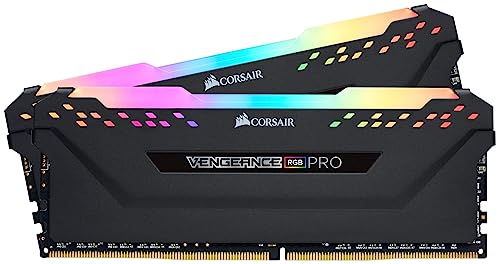
For enthusiast builds, CORSAIR Vengeance RGB PRO DDR4-3200 16 GB provides the same bandwidth tier with visual aesthetics relevant to open-chassis AI rig builds.
Fast NVMe storage reduces model load times at startup. A Samsung 980 1 TB M.2 loads a 4-bit Llama 3 8B model (approximately 5 GB on disk) in under ten seconds from cold start, compared to 30–60 seconds from a spinning hard drive—a meaningful difference for iterative development workflows that restart the inference server frequently.
The Intel Arc Stable Diffusion Cross-Reference
The same oneAPI/XPU infrastructure that IPEX-LLM uses for LLM inference underlies Intel's Stable Diffusion stack. Performance data on that adjacent workload—documented in the Intel Arc Stable Diffusion WebUI guide—provides a useful cross-workload signal: the Arc hardware that delivers competitive image generation throughput uses the same matrix-multiply execution units that LLM inference depends on. Developers evaluating Arc for a dual-purpose rig (LLM inference + image generation) can use Stable Diffusion benchmarks as a proxy for relative LLM hardware capability across Arc generations.
FAQs
Can IPEX-LLM and Ollama be used together? Yes. Intel maintains an official integration that routes Ollama's serving layer through IPEX-LLM's optimized backend. Docker Compose configurations for this hybrid stack are documented in the IPEX-LLM + Ollama Docker guide.
Does Ollama support AMD GPUs? Ollama supports AMD RDNA2 and RDNA3 GPUs via ROCm on Linux. As of mid-2025, Windows ROCm support is experimental. Linux is the recommended OS for AMD GPU inference with Ollama.
Which Intel Arc cards are best for local LLM inference? The Arc A770 (16 GB VRAM) is the top consumer option—it fits 7B and 13B models at 4-bit quantization. The Arc B580 (12 GB) is the power-efficient Battlemage-generation alternative. IPEX-LLM supports both via Intel's XPU/SYCL stack.
Is IPEX-LLM difficult to install? Setup is more involved than Ollama's single-binary install. IPEX-LLM requires Intel's oneAPI Base Toolkit, correct Intel Arc GPU drivers, and a compatible Python environment. Intel's pre-built Docker images reduce setup friction and are the recommended starting point for new deployments.
Can Ollama run on CPU only without a dedicated GPU? Yes. Ollama ships CPU-only builds for x86-64 and Apple Silicon. CPU-only inference produces significantly lower throughput than GPU-accelerated inference, varying by model size and quantization level. The Raspberry Pi 4 Ollama guide documents the hardware floor of the CPU-only inference path.
What system RAM is recommended for a local LLM build? 32 GB DDR4-3200 is a practical floor for CPU-offload-heavy workflows where model layers spill from VRAM into system RAM. GPU-primary builds running models fully on-device can often operate with 16 GB system RAM alongside 12–24 GB VRAM. IPEX-LLM's dynamic layer-partitioning makes additional system RAM directly usable for running larger models under partial XPU acceleration.
Citations and sources
- https://github.com/intel-analytics/ipex-llm — Intel IPEX-LLM GitHub repository: project documentation, quantization pipeline specs, and benchmark tables
- https://github.com/ollama/ollama — Ollama GitHub repository: hardware compatibility notes, ROCm and Arc SYCL support changelog
- https://ollama.com/library — Ollama public model library
- https://www.intel.com/content/www/us/en/developer/tools/oneapi/overview.html — Intel oneAPI developer documentation
- https://rocm.docs.amd.com/en/latest/ — AMD ROCm platform documentation, supported GPU matrix
- https://www.techpowerup.com/gpu-specs/radeon-rx-7900-xtx.c3941 — TechPowerUp GPU specifications: AMD Radeon RX 7900 XTX
- https://www.techpowerup.com/gpu-specs/intel-arc-a770.c3914 — TechPowerUp GPU specifications: Intel Arc A770
This piece is editorial synthesis based on publicly available information. No independent first-party benchmarking is reported.