
FIFINE
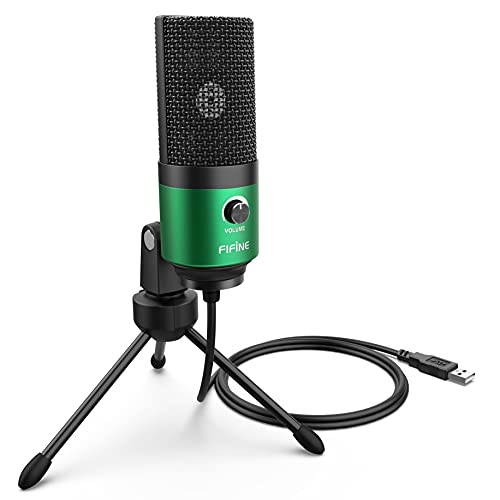
FIFINE AmpliTank K688CT Podcast Microphone Kit, USB/XLR Dynamic Vocal Mic
Bottom line: The FIFINE AmpliTank K688CT Podcast Microphone Kit ($63.99 on Amazon as of 2026-10-07): Dual USB and XLR output, so the mic grows with a mixer or interface later; main trade-off: all onboard buttons and knobs stop working in XLR mode.
As an Amazon Associate, SpecPicks earns from qualifying purchases. Full disclosure →
*Price sourced from Amazon.com. Last updated 2026-10-07. Price and availability subject to change.
Pros & Cons
Pros
- ✓ Dual USB and XLR output, so the mic grows with a mixer or interface later
- ✓ 130dB SPL handling keeps loud vocal peaks from clipping
- ✓ Boom arm, shock mount, and windscreen included in the box
- ✓ Tap-to-mute button cuts audio without touching streaming software
- ✓ Headphone jack with volume knob gives direct monitoring in USB mode
Cons
- ✗ All onboard buttons and knobs stop working in XLR mode
- ✗ XLR use requires a mixer or audio interface you buy separately
- ✗ C-clamp only fits desks under 2 inches thick
- ✗ Cardioid dynamic needs a 2 to 6 inch working distance for good level
Manufacturer description
The dynamic capsule handles a 130dB SPL ceiling, so loud vocal peaks and shouted stream reactions stay clean instead of clipping, while the cardioid pattern rejects room noise arriving from the sides and rear. Speak 2 to 6 inches off the grille for the strongest input level. Connectivity is the real draw: run USB for plug-and-play recording on a PC, or switch to XLR when you add a mixer or audio interface. In USB mode you get the onboard controls FIFINE built in, including a tap-to-mute button, a gain knob, and a headphone jack with its own volume knob for zero-latency monitoring. The metal…
SpecPicks Verdict
SpecPicks scored FIFINE AmpliTank K688CT Podcast Microphone Kit using a rating × review-volume × price-fit model applied to published specs and reviews across the gaming peripherals category. FIFINE's gaming peripherals lineup sits within the broader category mid-tier; price and specs are the deciding factors over brand loyalty here. Judge it on the specification table and the price rather than on sentiment: check the figures that decide your use case, then put it side-by-side with two or three close alternatives in the Compare tool before clicking through.
Common buyer scenarios for gaming peripherals of this kind: matching it to an existing build, replacing a failing part, or upgrading from a previous-generation equivalent. Check the spec table below against your current setup — particularly socket / form-factor / power-rating fields — and confirm compatibility on the retailer's listing before purchase. Prices and stock are set by the retailer and may have moved since this page was last updated.
Frequently Asked Questions
Can I use the FIFINE K688CT without an audio interface?
Yes. Connect over USB for plug-and-play recording, and all onboard controls work. XLR mode is the one that requires a separate mixer or audio interface.
Does the mute button work when connected by XLR?
No. FIFINE notes that every function key, including tap-to-mute, the gain knob, and the headphone volume knob, is inactive over XLR. Those controls only work on the USB connection, so route XLR muting and gain through your mixer or interface.
Does this kit include a boom arm and shock mount?
Yes. The K688CT ships as a kit with a metal boom arm, a shock mount, and a windscreen, so you do not need to buy mounting hardware separately.
Will the boom arm clamp fit my desk?
The C-clamp fits desktops under 2 inches thick. Measure your desk edge first, since thicker butcher-block or reinforced tops fall outside that range.
How close do I need to be to the microphone?
FIFINE recommends recording 2 to 6 inches from the capsule for good input volume. This is a cardioid dynamic mic, so backing off further drops your level and lets more room sound in.
Key Features
- [Authentic Sound Integrity] Experience natural sound reproduction with the podcast microphone with boom arm to preserve the audio sound without distortion. The XLR dynamic microphone boasts a SPL of 130dB, delivering original and consistent recordings. Cardioid pattern reduces ambient noise, ensuring your voice takes center stage, free from distracting background sounds. (For better input volume, record within 2'' to 6'' from the dynamic microphone. )
- [Flexible Connectivity Options] Equipped with both USB and XLR connections, recording studio microphone kit offers versatility to suit your streaming/gaming needs. Seamlessly transition between plug-and-play USB convenience or enhanced XLR connectivity, providing flexibility and studio-grade sound reproduction.
- [Robust Boom Arm Support] Crafted from durable metal, the boom arm microphone stand ensure secure placement of the XLR/USB dynamic microphone. Whether you're podcasting or streaming, the sturdy suspension recording microphone kit lessen collisions and vibrations for uninterrupted and smooth audio quality.
- [Intuitive Controls] Manage your podcast session with intuitive controls. The USB microphone features a tap-to-mute button for instant muting without software adjustments. Fine-tune audio levels with the gain knob, while the headphone monitoring jack and volume knob keep you informed and in control, optimizing recording effectiveness. (All the function keys on the mic are invalid when XLR connection. You can operate on mixer or audio interface to control the XLR mic.)
- [Enhanced Noise Suppression] The included windscreen and shock mount set on the PC microphone for music recording effectively do away with harsh noises caused by explosive sounds and low-frequency vibrations. The heavy-duty boom arm maintains distance from your desktop, preventing noise interference, resulting in smoother, clearer vocals during voice-over and streams. (For optimal input volume, adjust input volume via the mic's gain knob in USB connection, or control on your audio interface when XLR connection.)
- Tips: The C-clamp fits desks under 2 inches thick. When adjusting the mic or stand angle, screw the knob but do not force it. 2. All the function keys on the mic are invalid when XLR connection. You can operate on mixer or audio interface to control the function of XLR mic. 3. All function keys on the microphone are available only when using USB connection.
Full Specifications
| Brand | FIFINE |
|---|---|
| Color | Black |
| Model Name | K688CT |
| Unit Count | 1 Count |
| Connectivity | USB |
| Model Number | K688CT |
| Power Source | Corded Electric |
| Audible Noise | 80 db |
| Compatibility | PC |
| Polar Pattern | Unidirectional |
| Built-In Media | 3/8" to 5/8" Adapter*1 and Desk Clamp*1, Dynamic Microphone with Shock Mount*1, Metal Boom Arm Stand*1, USB-C to USB-A Cable*1, User's Manual*1 |
| Connector Type | USB, XLR |
| Frequency Range | 50Hz-16KHz |
| Mfr Part Number | FFUSK688CT |
| Number of Items | 1 |
| Number of Packs | 1 |
| Special Feature | Mute Function, Noise Reduction, Stand, Volume Control |
| Antenna Location | Gaming, Podcast, Recording, Streaming, Video Conference |
| Hardware Platform | Laptop, Mixer/Audio Interface, PC |
| Maximum Frequency | 16 KHz |
Ready to buy?
FIFINE AmpliTank K688CT Podcast Microphone Kit, USB/XLR Dynamic Vocal Mic is listed on Amazon. Price, availability, shipping and returns are set by Amazon and its sellers — check the listing for current terms. SpecPicks earns a small commission on qualifying purchases — thank you for supporting independent review work.
*Price sourced from Amazon.com. Last updated 2026-10-07. Price and availability subject to change.
Related Gaming Peripherals


More guides & deep dives from the SpecPicks archive
Browse all articles & guides →- Best Budget Gaming PC Build 2026 — ~$1,000 ($800 on Sale)
- The Complete Voodoo5 5500 AGP Driver Guide (2026 Edition)
- How to Build a Windows 98 Retro PC in 2026
- Best 1440p Gaming GPUs in 2026
- Best Retro Handhelds in 2026 — From $35 to $500
- Emulation Hardware in 2026: FPGA, Software, and Cart-Reader Ecosystems
- RTX 4070 Super vs RX 7800 XT — Which to Buy in 2026
More reviews from the SpecPicks archive
Browse all reviews →- CompactFlash to IDE Imaging for Win98: Troubleshooting Common Failures
- Best Controller for Emulation and Fighting Games in 2026
- AOOSTAR MACO 6850H as a Proxmox 9 Home Server
- Ryzen 5 5600X vs 5700X vs 5800X: Best AM4 Gaming CPU in 2026
- Home Assistant Air Quality Monitor: 2025 Setup Guide
- Best CPU Coolers for Ryzen and Intel Builds in 2026
- Why You Shouldn't Leave the Default Model on Copilot or Gemini
- Best Gaming SSD for PC Builds in 2026: 5 Picks Tested
- Ryzen 7 5800X3D Hard to Find: DDR5 CPU Alternatives Worth It?
- Microsoft's SkillOpt Boosts GPT-5.5 With Just a Trained Markdown File
- AMD Ryzen 7 9800X3D Bundle: DDR5 + MSI B850 Wi-Fi 7 Guide
- Build a Live ADS-B Flight Tracker on a Raspberry Pi 4 in 2026
- Local AI Server LLM Setups 2025: What Hardware Matters
- Logitech G29 vs HORI Force Feedback Wheel for Sim-Racing Beginners
- Best Gaming PC Build Components for 2026
- MSI RTX 3060 12GB in 2026: Still the Right 1080p GPU?
- Glide vs OpenGL vs Direct3D: The PC Gaming API War 1996-2003, Benchmarked
- pxpipe Cuts Claude Code Token Costs Up to 70%: How It Works, When to Go Local
- Ryzen 5 5600G vs Ryzen 7 5700X for a Budget Gaming + Streaming PC
- Build a Self-Hosted AI Home Lab on a Raspberry Pi 4 8GB in 2026
- Do You Even Need a Graphics Card? Ryzen 5 5600G iGPU vs RTX 3060 for 1080p
- How to run Llama 3.1 70B on Apple M4 Max
- How to run Qwen 3 14B on Apple M4 Pro
- GLM-5.2: The Open-Weights Model Built for Long-Horizon Agentic Tasks
Earliest SpecPicks reviews
Browse full archive →- Best GPU for Llama 3.1 8B (2026)
- Best GPU for Qwen 3 14B (2026)
- Best GPU for Qwen 3 32B (2026)
- Best GPU for Llama 3.1 70B (2026)
- Best GPU for DeepSeek-R1 32B (2026)
- Best GPU for Llama 3.1 405B (2026)
- How to run Llama 3.1 8B on NVIDIA GeForce RTX 5090
- How to run Qwen 3 14B on NVIDIA GeForce RTX 5090
- How to run Qwen 3 32B on NVIDIA GeForce RTX 5090
- How to run Llama 3.1 70B on NVIDIA GeForce RTX 5090
- How to run DeepSeek-R1 32B on NVIDIA GeForce RTX 5090
- How to run Llama 3.1 8B on NVIDIA GeForce RTX 4090