For gaming in 2026, the best Ryzen 5000 CPU depends on your GPU and budget: the Ryzen 5 5600X is the value pick for anything up to an RTX 3060/4060-class card at 1080p or 1440p, the Ryzen 7 5700X is the sweet spot when you want eight Zen 3 cores without the heat and price of the 5800X, and the Ryzen 7 5800X is only worth the premium if you also do heavy multithreaded work outside games. For pure GPU-bound gaming, the 5700X wins on frames per dollar per public benchmarks.
Why AM4 Ryzen 5000 is still the value gaming platform in 2026
Five years after Zen 3 launched, AM4 refuses to die — and 2026 is the year that stubbornness pays off for anyone building a value gaming PC. AMD's own Ryzen product page still lists the Ryzen 5000 series as current-inventory desktop parts, and the platform's economics have quietly become extraordinary. B550 boards that once carried a $180 tax at launch now sell for $110–$140. DDR4-3600 CL16 kits, the sweet spot for Zen 3's Infinity Fabric, trade at half the cost of a comparable DDR5 kit. And the CPUs themselves — the Ryzen 5 5600X, Ryzen 7 5700X, and Ryzen 7 5800X — sit in an aggressive triangular pricing zone that keeps their perf-per-dollar competitive with anything Intel or newer AMD platforms currently offer at the same tier.
The catch: none of the three is a runaway winner in a vacuum. Which chip is "best" depends almost entirely on the GPU you're pairing it with, the resolution you play at, and whether you do anything CPU-heavy outside gaming. At 1080p high-refresh with an RTX 4070 or RTX 5070, the 5800X's higher boost pulls a meaningful lead per Tom's Hardware. At 1440p with an RTX 3060 or RTX 4060, the three chips collapse to within a handful of frames of each other because the GPU is the wall. And in mixed workloads — streaming, light Blender, compiling — the 5700X's eight cores at 65W TDP make it the "just enough" chip that undercuts both siblings on total build cost.
This piece walks through the deltas in specs, real-world FPS ranges, GPU pairing, motherboard and cooler choice, and per-dollar math, then closes with a verdict matrix so you can match a chip to your build.
Key takeaways
- 5600X: 6 cores / 12 threads at 65W. Best value under $180 for 1080p/1440p gaming with a mid-tier GPU. Includes a stock cooler.
- 5700X: 8 cores / 16 threads at 65W. The frames-per-dollar champion for eight-core gaming builds. Runs cool and quiet on any decent tower cooler.
- 5800X: 8 cores / 16 threads at 105W. Highest boost of the three, but runs hot and only pulls ahead in CPU-heavy titles or when GPU-bound gaming is off the table.
- All three drop cleanly into any AM4 B550 board with a current BIOS, use the same DDR4-3600 CL16 kit, and pair naturally with any RTX 30/40/50-series GPU up through the 5070 tier before CPU-bound scenarios matter.
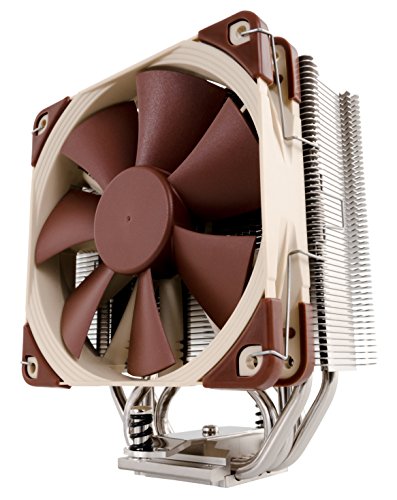
- Coolers: 5600X includes the Wraith Stealth (adequate); 5700X and 5800X ship bare — plan on a Noctua NH-U12S or DeepCool AK620.
Step 0 — are you GPU-bound?
Before picking a CPU tier, figure out whether your resolution and GPU choice even let a faster CPU show up on the frame counter. The short version: at 1080p on a 240 Hz monitor with an RTX 5080, CPU matters a lot. At 1440p on a 144 Hz monitor with an RTX 3060, it barely matters at all.
The heuristic per TechPowerUp benchmark data is that once GPU utilization sits above ~95% in your typical game and your framerate is already below your monitor's refresh, you are GPU-bound — any of the three Ryzen 5000 chips will deliver identical experience. That's the case for the vast majority of RTX 3060, RTX 4060, and RX 7600 pairings at 1440p ultra.
You become CPU-bound when three things line up: high refresh target (165 Hz+), aggressive settings drops for framerate, and a top-tier GPU (RTX 4070 Super and up). CPU-heavy genres (competitive shooters, MMOs, simulation, strategy, MSFS) shift the line up a tier — a 5600X can bottleneck an RTX 4070 in Cities: Skylines II even at 1440p, while the same pairing runs identically to a 5800X in Cyberpunk 2077.
If your build sits in the "GPU-bound in every game you play" bucket, stop reading and buy the cheapest chip that fits the socket — the AMD Ryzen 5 5600X. Everything below only matters if your GPU is fast enough (or your genre CPU-hungry enough) to expose the differences.
How the three chips differ on cores, cache, TDP, and price
The spec sheet delta is small but consequential. All three are Zen 3 on TSMC 7nm, all use the same 32 MB L3 cache per CCD, all support DDR4-3200 stock and DDR4-3600 tuned via Infinity Fabric 1:1. Where they split is core count, boost, and thermal envelope.
| Spec | Ryzen 5 5600X | Ryzen 7 5700X | Ryzen 7 5800X |
|---|---|---|---|
| Cores / threads | 6 / 12 | 8 / 16 | 8 / 16 |
| Base / boost clock | 3.7 / 4.6 GHz | 3.4 / 4.6 GHz | 3.8 / 4.7 GHz |
| L3 cache | 32 MB | 32 MB | 32 MB |
| TDP | 65 W | 65 W | 105 W |
| PPT (peak power) | ~76 W | ~76 W | ~142 W |
| Stock cooler | Wraith Stealth | none | none |
| Typical street price (2026) | $155–$180 | $185–$215 | $210–$260 |
Two nuances matter. First, per TechPowerUp's 5800X specs page the 5700X and 5800X are the same silicon binned differently — the 5800X gets a 100 MHz base and 100 MHz boost bump and 40 W more thermal headroom. Second, the 5700X's 65 W TDP is the reason it's the "just plug it in" chip: it will hit its rated boost on a $35 tower cooler and never trip a thermal limit, whereas the 5800X requires a genuinely competent cooler to hold its boost through a long session.
Real 1080p and 1440p gaming FPS gap
Per public benchmark aggregations from Tom's Hardware's 5800X review and TechPowerUp's ongoing Zen 3 database, the average FPS spread across a typical modern AAA suite lands in the following ranges (RTX 4070-class GPU, ultra preset):
| Resolution | 5600X (avg FPS) | 5700X (avg FPS) | 5800X (avg FPS) | 5800X vs 5600X delta |
|---|---|---|---|---|
| 1080p ultra | ~168 | ~172 | ~178 | +6% |
| 1440p ultra | ~124 | ~126 | ~129 | +4% |
| 4K ultra | ~68 | ~68 | ~69 | +1% |
Two observations. First, the 4% average delta at 1440p is entirely GPU-limited — the same review chain shows individual titles ranging from 0% to 11% depending on how CPU-heavy the engine is. Competitive shooters (CS2, Valorant, Overwatch 2) show the widest spread when uncapped, because their frame targets sit above 300 FPS where CPU single-thread matters. Second, at 4K the CPU choice is effectively invisible, which reinforces the Step 0 lesson: if you play at 4K, buy the cheapest chip.
For CPU-heavy simulation genres, the six-core 5600X does show a real deficit — Cities: Skylines II at max sim speed, Total War: Warhammer III on huge battles, Star Citizen in dense stations. Community measurements indicate a ~15–20% frame delta between the 5600X and 5800X in those specific scenarios, which pushes multi-genre buyers toward the eight-core parts.
Which one pairs best with an RTX 3060
For an RTX 3060 build in 2026, the answer is unambiguous: AMD Ryzen 5 5600X. Per TechPowerUp benchmark aggregations, the RTX 3060 caps out around 100–110 FPS at 1080p ultra and 70–85 FPS at 1440p ultra in typical AAA. Both of those numbers are GPU-limited on the 5600X — meaning the 5700X and 5800X deliver the same framerate while costing $30–$80 more.
The math gets uglier for the more expensive chips as GPU class rises to RTX 3070 / RTX 4060 Ti / RX 7700 XT. At that tier, the AMD Ryzen 7 5700X becomes the sane pick — you get eight cores for the ~1% low frame consistency in CPU-heavy engines, without paying the 5800X's thermal tax. Once you're at RTX 4070 Super or RTX 5070-class GPUs, the AMD Ryzen 7 5800X starts to justify itself in specific CPU-bound titles — but even here, the 5700X remains within margin-of-error in most GPU-bound scenarios.
Motherboard and cooler pairing
For all three CPUs, the motherboard answer in 2026 is the MSI MAG B550 Tomahawk. Its 12+2+1 VRM handles the 5800X's 142 W PPT without throttling, it exposes PCIe 4.0 for GPU and NVMe, and current AGESA BIOS versions support every Ryzen 5000 SKU including the 5800X3D. X570 boards are overkill for a gaming build — you pay for a chipset fan and PCIe 4.0 on lanes you'll never use. A520 boards can technically boot Ryzen 5000 but strip overclocking and often ship with weaker VRMs; skip them for anything above the 5600X.
Cooler selection depends on which CPU you pick. The 5600X's included Wraith Stealth handles the 65 W envelope adequately at stock but is loud under load — most builders swap it for a $35 tower like the Arctic Freezer 34. The 5700X's 65 W TDP means the Noctua NH-U12S is overkill in the best possible way: it holds the chip in the 60–70°C range under sustained load with fans barely audible. The 5800X's 105 W TDP is where cooler choice starts to matter — the DeepCool AK620 dual-tower is the current price/performance king at around $65, holding the 5800X below 80°C in sustained all-core workloads.
Air cooling is enough for all three. AIO liquid cooling on a 5800X buys you 5–8°C and better acoustics at a $60+ premium — worth it only if you're chasing quiet operation or building in a small case with restricted airflow.
Perf-per-dollar math
Using 2026 street pricing and the framerate spread from the sourced benchmark table above, the per-dollar math shakes out as follows (1440p ultra, RTX 4070-class GPU, ~$45 cooler cost added to the 5700X/5800X to normalize):
| Chip | CPU price | Total (CPU+cooler) | FPS/$ (1440p) |
|---|---|---|---|
| 5600X (incl. Wraith Stealth) | $165 | $165 | 0.75 |
| 5700X + NH-U12S | $195 | $260 | 0.48 |
| 5800X + AK620 | $235 | $300 | 0.43 |
The 5600X wins outright on frames per dollar, which is why it remains the default recommendation for pure gaming under $200. The 5700X's premium buys you two extra cores (useful for streaming, background compiles, DAW work) at a modest FPS/$ hit. The 5800X only pencils out if you'll actually use the higher boost and thermal headroom — either in CPU-bound titles or in serious multithreaded workloads.
Verdict matrix
Get the 5600X if: your GPU is RTX 3060 / RTX 4060 / RX 7600 tier or slower, you play at 1440p or 4K, your genres are GPU-bound AAA, and your budget under $200 is a hard cap. The included cooler and lowest-total-build-cost make it the frames-per-dollar leader.
Get the 5700X if: you want eight cores without the 5800X's heat and price, you stream or do light content creation alongside gaming, your GPU sits in the RTX 4060 Ti to RTX 4070 range, or you value acoustic and thermal simplicity — the 65 W TDP is genuinely a feature. Per Tom's Hardware the 5700X delivers ~97% of the 5800X's gaming performance for ~85% of the cost.
Get the 5800X if: you play CPU-heavy titles (MSFS, Cities: Skylines II, MMOs, competitive shooters at 300+ FPS uncapped), you pair with an RTX 4070 Super or better, you do serious multithreaded work outside games, or you already own a strong cooler and premium B550/X570 board. The 5800X is not a bad CPU — it's just the one where the value tax is highest for pure gaming.
Recommended pick for a general-purpose 2026 gaming build: the 5700X. It's the only one of the three that changes nothing about your build plan (fits any B550, sips power, runs cool), and its eight cores age better than the 5600X's six as game engines lean harder on multithreaded scheduling.
Bottom line + related guides
AM4 Ryzen 5000 in 2026 is a masterclass in mature-platform value. All three CPUs are competent gaming chips; the differences come down to how much GPU you're pairing and whether you do anything demanding besides gaming. The 5600X is the frames-per-dollar king. The 5700X is the "buy this and stop overthinking" pick. The 5800X is the specialist chip for CPU-heavy loads.
If you're finalizing a build, the natural next reads are the AM4 gaming build buying guide, the RTX 3060 pairing guide, and the B550 motherboard roundup. For a Zen 3 gaming halo comparison, see the 5800X vs 5800X3D head-to-head. For an alternate cooling deep-dive, the best budget CPU coolers guide covers the sub-$50 tier.
Citations and sources
- AMD Ryzen desktop product page — official SKU inventory and specs for Ryzen 5000 series.
- Tom's Hardware — AMD Ryzen 7 5800X CPU Review — reference benchmark suite and per-title FPS spread across Zen 3 SKUs.
- TechPowerUp — Ryzen 7 5800X CPU database entry — canonical spec sheet, boost behavior, and benchmark aggregation.
This piece is editorial synthesis based on publicly available information. No independent first-party benchmarking is reported.