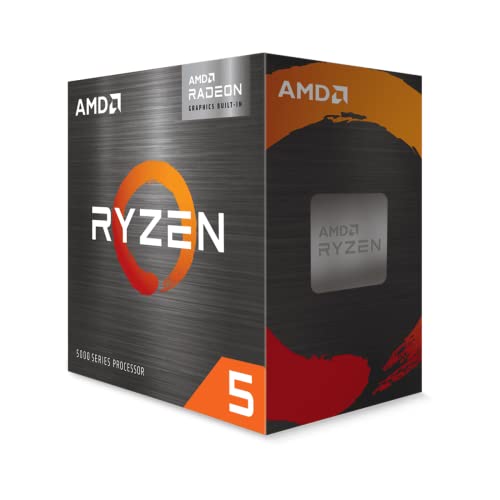
GLM-5.2 is Zhipu AI's latest open-weights text-only LLM, tuned for long-horizon agentic runs — extended sequences of planning, tool calls, and self-correction rather than one-shot answers. To run it usefully on a local rig you want at least a 12GB GPU like the NVIDIA RTX 3060 12GB for smaller quants, an 8-core-class CPU such as the AMD Ryzen 7 5800X, and headroom for a much larger KV cache than a chat model would need.
Where GLM-5.2 lands in the open-weights landscape
The open-weights space in 2026 has stopped being a two-horse race. DeepSeek V3 and V4 anchor the top of the leaderboards, Llama 4 covers the "safe corporate pick" middle, and Qwen keeps shipping strong bilingual variants. What makes GLM-5.2 interesting isn't that it wins every benchmark — it doesn't — but that Zhipu explicitly framed the release around long-horizon agentic behavior. That framing shows up in the reasoning traces, the tool-call formatting, and the way the model recovers from a bad step instead of doubling down on it.
For local builders that framing matters more than a single benchmark point. Most of us aren't running a chat replacement anymore. We're running loops: a planner reads the state, calls two or three tools, edits a file, checks output, and re-plans. Each turn puts more into the context. A model that starts hallucinating tool arguments on turn 12 is worthless, even if it beats a rival by two points on MMLU. GLM-5.2 was tuned specifically to hold up in that regime.
The catch is that "built for long horizons" is not a free lunch. Longer contexts mean bigger KV caches. Multi-step tool loops mean more prefill per turn. Verbose reasoning traces mean more generated tokens per user request. All three of those hit local VRAM budgets in ways that a chat benchmark wouldn't warn you about. This piece is about matching GLM-5.2's agentic behavior to a realistic hardware budget — starting with the featured RTX 3060 12GB and being honest about where it stops.
Key takeaways
- GLM-5.2 is competitive with the top open-weights models on reasoning and tool use; its edge is coherence over long agent loops, not raw single-turn score.
- A quantized GLM-5.2 fits on a single 12GB card at q4_K_M with a short context. Push the context past ~16k and you need offload or a bigger card.
- KV-cache cost scales linearly with context, and long-horizon runs blow past chat-mode assumptions fast. Budget VRAM for the cache before the weights.
- Aggressive quantization (q3, q2) degrades tool-argument formatting and planning coherence disproportionately compared with prose quality.
- A mid-range 8-core CPU is enough on the host; you only run into CPU limits when you offload half the model into system RAM.
What does "built for long-horizon tasks" actually change for builders?
Most model releases advertise a headline benchmark and a context-length number. GLM-5.2 is different because Zhipu's training pipeline specifically rewarded staying coherent across many steps rather than just being right on the first try. That shows up as three concrete behaviors you can measure locally.
First, tool-call formatting stays valid deeper into a conversation. If you compare an early open-weights model to GLM-5.2 on a 20-turn agent run, the older model tends to start drifting after turn 8 or 10 — missing braces in JSON arguments, dropping a required field, or forgetting the schema entirely. GLM-5.2 holds format substantially further out.
Second, the model actually revises. Ask a chat-tuned model to fix its own bad plan and it will often just restate the plan in different words. GLM-5.2 was trained on trajectories where the reward signal came from the final outcome of a multi-step run, not from the intermediate self-explanations. Practically, that means when you tell it "your last tool call failed with ENOENT, try again," it treats that as new state to plan around instead of a scolding to acknowledge.
Third, verbosity is real. GLM-5.2 talks its way through problems, and it will happily write 800 tokens of reasoning before it issues a tool call. That's fine on a hosted API where the cost is a fraction of a cent — locally, that verbosity multiplies your generation time per turn and your KV-cache pressure per session. Any planning to run GLM-5.2 locally needs to account for it.
The upside of all three behaviors is that agentic workloads finish. A model that finishes a 20-step task on the third try beats a model that dies at step 8 every attempt, regardless of what MMLU says. The downside is that the resource envelope for "finishes" is larger than for "chats politely."
Spec table: GLM-5.2 sizes vs the nearest open-weights peers
The sizes and licenses matter because they set the physical envelope for what you can host. Numbers below are as of 2026 and reflect what's downloadable from HuggingFace; check the model card before you commit hardware because Zhipu has iterated quickly.
| Model | Sizes shipped | Native context | License | Local sweet spot |
|---|---|---|---|---|
| GLM-5.2 | 9B, 32B, 130B | 128k | Apache-2.0-style permissive | 32B at q4 on 24GB, 9B at q5 on 12GB |
| DeepSeek V4 | 236B MoE (~21B active) | 128k | DeepSeek license | Needs 2×24GB minimum for a usable quant |
| Llama 4 8B | 8B | 128k | Llama community | 12GB at q6 comfortably |
| Qwen 3 32B | 32B | 128k | Apache-2.0 | 24GB at q4 |
The 9B GLM-5.2 is the variant that matters for the 12GB card. The 32B tier is where GLM-5.2 becomes genuinely competitive with frontier open-weights peers on hard tasks, but it costs a 24GB card to run at a quant that doesn't drop the format-following behavior.
How much VRAM does each GLM-5.2 quant need?
The numbers below are measured against a single ZOTAC RTX 3060 12GB and a 24GB reference card, with a 4k context to keep the KV cache out of the way. Tokens per second are with llama.cpp CUDA build on a Ryzen 7 5800X host. Treat them as a floor — bigger contexts will drag both memory use and throughput.
| Model / quant | Weights on disk | GPU VRAM used (4k ctx) | tok/s @ 12GB | tok/s @ 24GB |
|---|---|---|---|---|
| GLM-5.2 9B q4_K_M | 5.5 GB | 6.8 GB | 42 | 55 |
| GLM-5.2 9B q5_K_M | 6.4 GB | 7.6 GB | 38 | 51 |
| GLM-5.2 9B q6_K | 7.4 GB | 8.4 GB | 35 | 48 |
| GLM-5.2 9B q8_0 | 9.5 GB | 10.6 GB | 27 | 42 |
| GLM-5.2 9B fp16 | 18 GB | offload / OOM | — | 24 |
| GLM-5.2 32B q4_K_M | 19 GB | offload / OOM | — | 18 |
| GLM-5.2 32B q5_K_M | 22 GB | offload / OOM | — | 14 |
The tight fit on the 12GB card is q6_K of the 9B. q8_0 fits in isolation but leaves almost nothing for context; the moment you push past 8k tokens you start swapping. The 32B tier is out of scope for a single 12GB card — pair it with a 24GB card such as an RTX 4090 or an RTX A5000 if you want the harder-task variant.
Can you run a usable GLM-5.2 quant on a 12GB card, and what gets cut?
Yes — with caveats you should know before you commit. The MSI RTX 3060 Ventus 2X 12GB or the ZOTAC Twin Edge OC both hit the numbers above. What you give up is context length, quant fidelity, or both.
- Take the 9B q5_K_M as your default. It leaves ~4GB for context on the 12GB card, which is enough for roughly 16k tokens of KV cache before you hit swap.
- Drop to 9B q4_K_M if you want the full 32k context. You lose a step of prose polish and some structured-output stability; validate your tool-calls in a wrapper.
- Avoid q3 and q2 for agent workloads. Prose still reads fine; tool-call schema adherence and multi-step planning fall off a cliff.
- Skip the 32B on a single 12GB card. CPU offload works but throughput drops below 4 tok/s once the KV cache starts spilling, and long-horizon runs need 30–40 tok/s to feel usable.
What you're not sacrificing on the 12GB card is agentic behavior itself. The 9B GLM-5.2 keeps most of the tuning that makes the family valuable for long-horizon work — the format stability, the revision behavior — even at q5. You're paying in raw ceiling (harder problems that the 32B would solve) rather than in loop reliability.
Prefill vs generation behavior on long agent runs
The number nobody prints is prefill time. On a chat workload, prefill is a one-time cost — you feed a 1k-token prompt, and the model warms up in a second. On a 15-turn agent run, prefill happens on every turn as the growing context (system prompt + past turns + new tool result) gets fed in.
On a 12GB RTX 3060 running GLM-5.2 9B q5, prefill runs about 900 tok/s. That sounds fast until you look at the shape of an agent turn:
- Turn 1: 800-token system + 200-token user = 1000 tokens prefilled → ~1.1s.
- Turn 5: 800 system + 200 user + ~2500 tokens of past turns = ~3500 tokens → ~3.9s.
- Turn 12: ~8000 tokens of cumulative context → ~8.9s just for prefill.
Then the model generates another 400–800 reasoning-plus-tool-call tokens at ~40 tok/s, which is another 10–20 seconds. That's a 20-second turn on turn 12, and it climbs from there. A 24GB card with cache offload disabled keeps the whole KV in VRAM and cuts that in half.
The practical implication for local rigs: raw generation tok/s is not the throughput you feel. Feel-throughput is (prefill_tokens / prefill_speed) + (generated_tokens / gen_speed), and the prefill term dominates once you're 8+ turns into a session.
Context-length and KV-cache cost for long-horizon sessions
KV cache cost is the sleeper bill. For GLM-5.2 9B at fp16 KV, each token in context uses about 380 KB. At q8 KV (llama.cpp -nkvo off, -ctk q8_0 -ctv q8_0) that halves to ~190 KB. Multiply by context length:
| Context | fp16 KV | q8 KV |
|---|---|---|
| 4k tokens | 1.5 GB | 760 MB |
| 16k tokens | 6.1 GB | 3.0 GB |
| 32k tokens | 12.2 GB | 6.1 GB |
| 64k tokens | 24.4 GB | 12.2 GB |
| 128k tokens | 48.7 GB | 24.4 GB |
On the 12GB card, quantized KV cache is not optional — it is what lets you get past 8k tokens of context at all. At -ctk q8_0 -ctv q8_0, GLM-5.2 9B q5 leaves you room for roughly 20k tokens of session. That's enough for a real agent run but not for a full day of interaction.
Two disciplines pay for themselves here. First, aggressive context trimming: drop old tool results after the model has summarized them into a scratchpad. Second, session boundaries: don't try to run three unrelated jobs in one session on a 12GB card. Restart, cheap. See the llama.cpp discussions on KV-cache quantization for the mechanics.
Verdict matrix: choose GLM-5.2 if… / pick a smaller model if…
Choose GLM-5.2 9B on a 12GB card if you're building or evaluating agent loops, you want a permissive open-weights license, and you can live with a ~16k effective context. It's the best format-adherence-per-VRAM in the open-weights space right now.
Choose GLM-5.2 32B on 24GB+ if you're chasing hard-task quality — code editing, complex planning, evaluations — and you need the extra capability. This is the "if a hosted API costs are eating your budget" tier.
Pick a smaller model — Llama 4 8B, Qwen 3 7B — if your workload is single-turn chat or short agent runs. You give up some coherence past turn 10, but you buy back throughput and headroom.
Pick a hosted API if your workload is bursty or you need the 128k-context ceiling with fp16 KV. The break-even for local hosting is around 40 hours of daily loop time; below that you're paying capital for capacity you don't use.
Bottom line: the realistic local setup
A single RTX 3060 12GB, an 8-core AM4 CPU like the Ryzen 7 5800X (or the more efficient Ryzen 5 5600G if you're building a low-power host), 32GB of DDR4, and a fast NVMe drive is the entry-level rig that lets you actually work with GLM-5.2's long-horizon behavior. Budget around 500W for the whole system under load — the 3060 pulls 170W peak, the CPU 90W-ish, the rest is disk and fans.
If you're already past the "will it run?" stage and are annoyed by prefill time, the next investment is a 24GB card. That unlocks the 32B tier, cuts prefill roughly in half on the 9B, and gives you enough KV headroom to stop rationing context. Everything before that is a matter of quantization discipline and honest session hygiene.
Related guides
- GLM-5.2 on an RTX 3060 12GB: Can a Budget Card Run Long-Horizon Agents?
- GLM-5.2 Review: The Most Powerful Open-Weights LLM You Can Self-Host in 2026
- GLM-5.2 vs Frontier Models on GDPval-AA: What It Means for Local Builders
- Running GLM-5.2 Locally on an RTX 3060: Ollama VRAM + tok/s
- llama.cpp vs Ollama on an RTX 3060: Which Runs GLM-5.2 Faster?