Logitech G29 vs HORI Force Feedback Racing Wheel — which is the right first sim wheel?
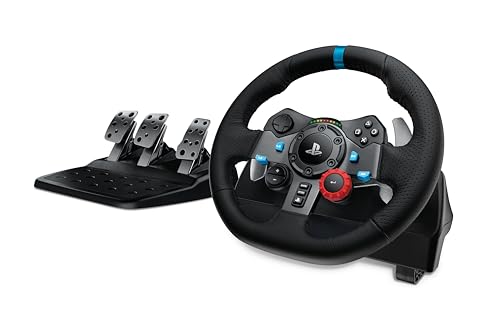
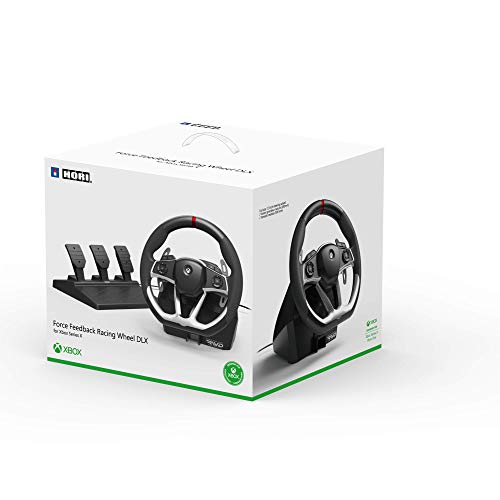
Buy the Logitech G29 if you want the safer, better-supported entry-level force-feedback wheel — it is the most-tested peripheral in the sim-racing community, works with virtually every wheel-supporting title, and has the mature accessory ecosystem to grow with. Buy the HORI Force Feedback Racing Wheel DLX if you specifically want an Xbox-native wheel at a lower price and are willing to accept a less flexible mount and a more limited game-support list. Both are honest wheels for a first sim-racing setup, and both survive the "am I actually going to keep sim racing?" test — but they win in different lanes.
The 60-second answer
- Best all-round first wheel: Logitech G29. PS5, PS4, PC, Mac. Two-decade-old software support means every sim in the genre supports it.
- Best Xbox-native pick: HORI Force Feedback Racing Wheel DLX. Officially licensed for Xbox Series X|S, PC compatible, aggressive price.
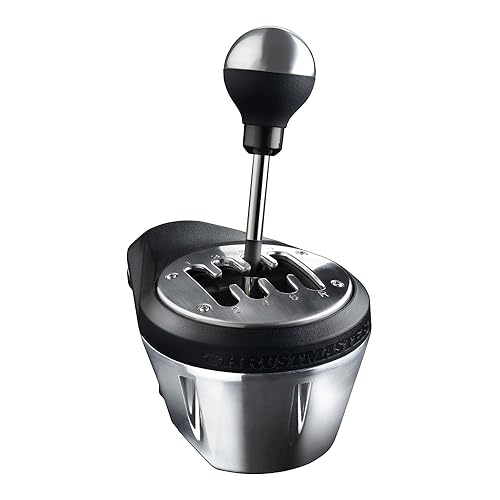
- Add on later: an H-pattern shifter like the Thrustmaster TH8A if you want manual shifting for rally and truck sims. Both wheels accept it.
- Skip for now: the Logitech G Farm Simulator bundle. It's a specialized Farming Simulator peripheral, not a racing wheel — great for that one game, wrong tool for iRacing or Assetto Corsa.
Why the entry-level wheel market is settled and unsettled at the same time
Sim racing at the entry tier has been shaped by two forces for a decade. The Logitech Driving Force line — Driving Force GT, G27, G29, G920 — has been the "buy this if you are new" pick since ~2011. Meanwhile, HORI has been quietly building officially-licensed racing peripherals for Nintendo and Xbox, and in 2020–2021 shipped their first serious force-feedback wheel for Xbox — the DLX we compare here. Everything below that price point is a lockable-wheel gear-driven design; everything above is direct-drive territory that starts around USD 450.
The choice for a new sim racer in 2026 is not "which wheel is best" — the market is settled that direct-drive is best if you can afford it. The choice is "which entry-tier wheel gets me hooked before I spend real money on direct drive."
Head-to-head spec table
| Feature | Logitech G29 | HORI Force Feedback Racing Wheel DLX | |
|---|---|---|---|
| Force feedback drive | Dual-motor helical gear | Single-motor gear | |
| Rotation | 900° | 270° (adjustable in software) | |
| Platform | PS5, PS4, PS3, PC, Mac | Xbox Series X\ | S, Xbox One, PC |
| Pedals | 3 pedals (throttle, brake, clutch) | 2 pedals (throttle, brake) | |
| Shifter | Sold separately (compatible with Logitech G shifter) | Sold separately | |
| Wheel material | Leather-wrapped rim, metal paddle shifters | Rubberized plastic rim | |
| Mount | Clamp + fixed bolt-through option | Clamp only | |
| MSRP | USD 400 | USD 250 | |
| Street 2026 | USD 250–300 | USD 200–230 |
Notice what the table hides: the G29 is a mature product with well-known behavior, active driver support, and a used-market that is deep enough that if yours breaks in 3 years you can replace it cheaply. The HORI DLX is newer and its used market is thinner. Both are honest first buys; the G29 has the bigger safety net.
Where the Logitech G29 wins
Game support is universal. Every serious sim ships with G29 support out of the box. iRacing, Assetto Corsa, Assetto Corsa Competizione, Automobilista 2, rFactor 2, F1 24, Le Mans Ultimate, Dirt Rally 2.0, WRC Generations, EA Sports WRC. If you plan to try more than one sim, this is the wheel that will not surprise you.
Force feedback quality per dollar. The dual-motor helical-gear design in the G29 is noticeably notchier than direct-drive at low forces (which cannot be fixed), but at moderate-to-high forces the feedback is legitimate and readable. You can feel curbs, camber changes, and the front-end losing grip through the rim.
Three-pedal set with clutch. The G29 pedals include a clutch, which unlocks manual-gearbox sim rally and truck games (and, crucially, standing-start practice for anyone who plans to move to competitive online racing). The HORI DLX ships two pedals only; you have to add a third pedal set (or a paddle-shifted-only workflow) if you want to shift manually.
Better mounting flexibility. The G29's clamp is well-designed for a normal desk, and it also has a fixed bolt-through option for a proper wheel stand or rig later. When you upgrade to a wheel stand (a Playseat, GT Omega, or similar) the G29 mounts cleanly. The HORI DLX ships with a clamp only.
**PS5/PS4 native. iRacing on PS is limited, but Gran Turismo 7 and F1 24 both love the G29, and if you keep a PlayStation in the house the G29 is the correct choice.
Where the HORI Force Feedback Racing Wheel DLX wins
Xbox-native. The DLX is officially licensed for Xbox Series X|S and Xbox One. Forza Motorsport, Forza Horizon 5, F1 24, and Assetto Corsa Competizione all support it natively on Xbox. The G29 is not an Xbox wheel — Logitech has a separate G920 for that, and the two have different price points and used-market values.
Price. At USD 200–230 street in 2026 it comes in USD 50–70 under the G29 for a similar entry-force-feedback experience. If you are a casual Xbox player who wants a wheel for Forza and is not sure sim racing will stick, this is a legitimate lower-risk buy.
Quieter operation. The single-motor design is a bit less notchy at rest and audibly quieter than the G29. A very small difference, but noticeable if you play late at night.
Cleaner desktop footprint. The DLX is physically smaller than the G29 and a touch lighter, which matters on a shared desk that also has a monitor and a keyboard.
What actually loses on each
G29 — dated cosmetics. The G29 has been sold in essentially this form since 2015. The design feels dated next to newer wheels with cleaner cabling and USB-C. Purely aesthetic; does not affect driving experience.
G29 — no Xbox support. If your primary console is an Xbox, the G29 does not work. You want the G920 (or the HORI DLX).
HORI DLX — 270° base rotation vs 900°. The DLX is software-rotation-limited compared to the G29. In practice you get 270° at power-on and can extend in software to the 900° range for authentic rally-style range, but the physical wheel range and the software mapping is fiddlier to get right than the G29's straightforward 900°.
HORI DLX — no clutch. Manual-shift games and rally titles are less pleasant without a clutch. You can add an external pedal set, but that is another USD 100+ investment.
HORI DLX — narrower game support outside the Xbox core. iRacing supports it, but community driver profiles are less mature than the G29's. Older sims may need manual force-feedback tuning; the G29 is usually plug-and-play.
Game-by-game recommendation
Forza Motorsport / Forza Horizon 5. DLX if you are on Xbox, G29 if you are on PC. Both work well; the DLX has native Xbox controller identification.
Gran Turismo 7. G29. This is one of the most-played console sims and the G29 is essentially the reference wheel.
iRacing. G29 is the safer bet — thousands of community setup guides use the G29 as the reference wheel. The DLX works but you'll spend more time in the FFB tuning tab.
Assetto Corsa / Assetto Corsa Competizione. Either. If you have PC + Xbox, the DLX makes the crossover cleaner. If you are PC-only, the G29 has better community tuning presets.
Dirt Rally 2.0 / EA Sports WRC. G29, easily. Clutch pedal is a real advantage for rally. Rally driving without a clutch is possible but noticeably worse.
F1 24. Either. Both wheels are official-licensed and have good FFB profiles.
Farming Simulator 22. Neither — buy the specialized Logitech G Farm Simulator bundle if that is your target game. The Farm Simulator wheel is optimized for the game's control scheme (side-panel controls for equipment). Not a racing wheel; do not buy it hoping to sim-race.
What to expect the first month
Set-up time. Both wheels take 20–30 minutes to install drivers, mount to a desk, and calibrate. Set force feedback to ~65 percent to start — the default is often too heavy and gets exhausting after 30 minutes.
The first "aha" moment. You will discover you were driving 30 percent too aggressively on the pad, and your lap times will drop for a week as you learn to be smooth. This is normal and applies to both wheels.
Wrist and forearm fatigue. Force feedback at the entry tier is heavier than direct drive at the same "authentic feel" setting. Expect wrist soreness for the first few sessions. Dial FFB back for the first week and ramp up.
Pedal placement matters as much as the wheel. Whichever wheel you buy, mount the pedals against a wall or on a proper rig so they do not slide. The single largest complaint about first sim setups is not the wheel — it is the pedals sliding around on carpet.
Common pitfalls we have hit
Buying a wheel without a stand. A clamp on a normal desk works, but a wheel stand or rig transforms the experience. Budget for a stand (Playseat Challenge, Next Level Racing Wheel Stand Lite) within 3 months of the wheel purchase.
Skipping the paddle shifter phase. Both wheels have paddle shifters. Start with paddles-only for the first month; add a shifter like the TH8A only after you are comfortable modulating throttle and brake with the pedals.
Overtightening the clamp. The G29 and DLX clamps both bite hard. Overtightening will bow a cheap desk. Snug is enough; the clamp does not need to be at maximum torque.
Cable stress on the USB port. Both wheels have permanent cables. Route the cable so it does not swing weight from your PC's USB port. A USB hub near the wheel base saves you a broken port down the line.
Not calibrating FFB per-game. Every sim has its own force-feedback tuning. Use community-shared LUT (look-up-table) profiles for iRacing and Assetto Corsa specifically — the default FFB in most sims is either too flat or too clipped.
When to skip to direct drive instead
If your budget is already USD 500+ for wheel + pedals, or if you know you are going to invest in serious sim racing, skip the entry tier entirely and buy an entry direct-drive wheel like the Moza R5 or Fanatec CSL DD Pro. The G29 and DLX are honest first wheels but you will feel the gear-driven-vs-direct-drive gap within a month if sim racing sticks. If you are pretty sure it will, save on the wheel-in-between and put the money toward direct drive.
Bottom line — pick by platform and dice-roll
For most new sim racers on PC or PlayStation, the Logitech G29 is the correct first wheel. Two-decade-old software support and a mature accessory ecosystem hedge against the 50-50 question of "will sim racing stick for me?" On Xbox, the HORI Force Feedback Racing Wheel DLX is the correct pick at a friendlier price. Add a TH8A shifter in your second season if manual shifting matters. Do not buy the Farm Simulator bundle hoping to sim-race — different peripheral for a different game.
Whichever wheel you choose, budget for a stand within 3 months. The single-biggest performance and satisfaction upgrade at the entry tier is a stable pedal position, not a fancier wheel.
Related guides on SpecPicks
- Controller-only racing: our GameSir G7 SE vs 8BitDo Pro 2 for PC covers when a controller is still the right call.
Citations and sources
- Logitech G29 product page: Logitech G — G29 Driving Force product page
- HORI DLX product page: HORI — Force Feedback Racing Wheel DLX for Xbox
- FFB tuning reference: Race Department — force-feedback guides for popular sims