Why the Ryzen 7 5800X3D Is Increasingly Scarce
AMD's Ryzen 7 5800X3D was the final flagship for the AM4 platform — a Zen 3 chip with 3D V-Cache stacking that delivered gaming frame rates competitive with chips a full generation ahead. AMD discontinued it when AM5 launched, and the combination of dwindling stock, sustained demand from platform-loyalists, and zero new supply has pushed secondary-market pricing well above the chip's original $449 MSRP.
For builders who want V-Cache gaming performance today without moving platforms, the options are limited: pay the premium, wait indefinitely for stock, or build on something else. If you're starting fresh — no existing AM4 investment — the AM5 platform with DDR5 memory is the natural successor, and when CPUs are discounted during major retail events, the economics of switching become significantly more defensible.
The AM4 vs. AM5 Platform Decision
Understanding why the 5800X3D shortage matters requires clarity on platform compatibility. The 5800X3D is AM4 — it uses DDR4 memory. AMD has confirmed AM4 is end-of-life: no new AM4 CPUs are planned. AM5, which debuted alongside the Ryzen 7000 series, uses DDR5 exclusively and will receive CPU support through at least 2027 per AMD's publicly stated roadmap.
Buying into AM4 today means committing to a platform with no CPU upgrade path. DDR4 prices remain attractive — the Crucial 16GB DDR4 kit is available for $127 — but that savings is offset by the absence of a meaningful upgrade trajectory. An AM5 motherboard plus DDR5 memory adds upfront cost, but that investment spans multiple future CPU generations.
For a deeper look at how AM5-adjacent platforms handle mixed AI and gaming workloads, the AMD Ryzen AI Halo vs. DIY RTX 3060 Local-LLM Rig article covers memory bandwidth trade-offs directly relevant to anyone weighing a DDR5 platform investment for dual-purpose builds.
DDR5: When Does the Platform Switch Pay Off?
DDR5 delivers higher peak bandwidth than DDR4 at equivalent capacity. For traditional gaming titles, public synthetic and gaming benchmarks consistently show single-digit frame rate differences when comparing well-tuned DDR4 versus entry-level DDR5. The platform case improves for:
- Longevity — AM5 will receive future-generation Ryzen support; AM4 will not
- Bandwidth-hungry workloads — AI inference (local LLMs, Stable Diffusion), large-file video encoding, and expansive open-world streaming gain more from DDR5's throughput than traditional rasterized gaming does
- Promotional timing — when CPUs and DDR5 kits are discounted simultaneously, the incremental platform cost shrinks substantially
The Best AMD CPUs for Gaming in 2026 guide covers current Ryzen 7000-series AM5 chips across gaming benchmarks alongside AM4 comparison points — recommended reading before committing platform dollars.
AM4 Alternatives Available Now
If a platform switch isn't feasible this cycle, the AM4 catalog still offers capable chips. Here's what's currently available:
| CPU | Catalog Price | Socket | Cores/Threads | Architecture |
|---|---|---|---|---|
| Ryzen 5 5600X | $180 | AM4 | 6C/12T | Zen 3 |
| Ryzen 7 3700X | $314 | AM4 | 8C/16T | Zen 2 |
| Ryzen 5 3600 | $81 | AM4 | 6C/12T | Zen 2 |
| Ryzen 5 2600 | $245 | AM4 | 6C/12T | Zen+ |
Ryzen 5 5600X — Strongest AM4 Alternative ($180)
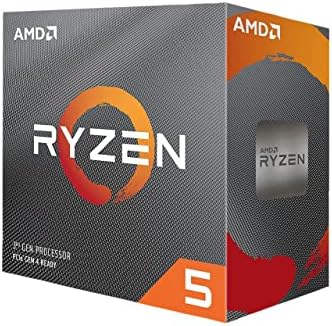
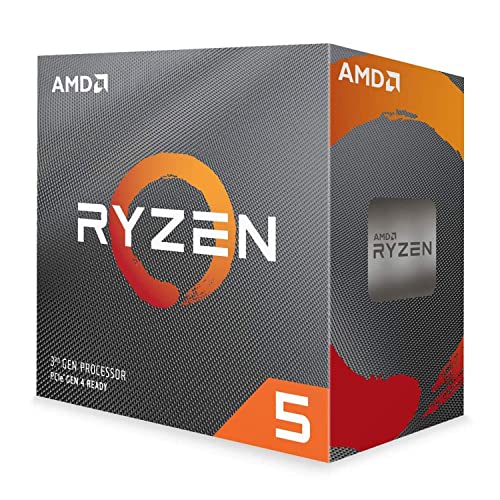
The Ryzen 5 5600X shares the Zen 3 architecture with the 5800X3D — identical IPC, same process node — just without the 3D V-Cache stack and two fewer cores. Per public benchmark data, the 5600X performs close to the 5800X3D in the majority of gaming titles; the gap widens only in cache-sensitive workloads where the V-Cache's expanded L3 meaningfully reduces CPU stalls. It ships with a Wraith Stealth cooler and is compatible with 300/400/500-series AM4 boards via BIOS update.
For thermal guidance at this power envelope, Best CPU Coolers for AMD Ryzen in 2026 ranks five options across air and AIO classes. The Best Cooler for the Ryzen 7 5800X: Noctua NH-U12S vs Cooler Master ML240L covers the 5000-series TDP class directly — applicable to the 5600X since both share a 65W TDP.
Ryzen 5 3600 — Budget AM4 Baseline ($81)
The Ryzen 5 3600 at $81 is the lowest entry point in the current AM4 gaming catalog. Per public GPU benchmark data, the Ryzen 5 3600 achieves approximately 39 fps in Cyberpunk 2077, 63 fps in Baldur's Gate 3, and 72 fps in Starfield. These figures reflect Zen 2 IPC limits — Zen 3 chips deliver meaningfully faster single-threaded throughput — but for budget builds on existing AM4 boards, the 3600 remains functional.
Note: a second Ryzen 5 3600 listing with Wraith Stealth cooler is priced at $209. At that price, the Ryzen 5 5600X's Zen 3 IPC is the better spend.
Ryzen 7 3700X — 8-Core AM4 Mid-Range ($314)
The Ryzen 7 3700X brings 8 cores and 16 threads on Zen 2 with a Wraith Prism RGB cooler included. At $314, it overlaps with lower-tier AM5 entries in thread count, making it more relevant for content creation, simultaneous streaming alongside gaming, or lightly threaded server tasks. For pure gaming, the Zen 3 IPC of the 5600X typically outperforms it in frame rate despite two fewer cores.
Ryzen 5 2600 — Legacy Option ($245)
The Ryzen 5 2600 at $245 is priced awkwardly against the rest of the AM4 catalog — at that cost, the Zen 3 IPC of the 5600X at $180 is the clearer choice for anyone not constrained by socket compatibility with very early AM4 boards.
Gaming Benchmark Reference: The AM4 Baseline
To calibrate expectations, the Ryzen 5 3600 provides a documented benchmark floor from publicly available GPU benchmark data:
| Game | Ryzen 5 3600 (approx.) | Notes |
|---|---|---|
| Cyberpunk 2077 | ~39 fps | Per public GPU benchmark data |
| Baldur's Gate 3 | ~63 fps | Per public GPU benchmark data |
| Starfield | ~72 fps | Per public GPU benchmark data |
Zen 3 chips (5600X, 5800X3D) run meaningfully faster in all three titles due to IPC improvements over Zen 2. These figures serve as a performance floor: any current Zen 3 AM4 chip provides a measurable uplift, and AM5/DDR5 Ryzen 7000 chips with 3D V-Cache extend that ceiling further.
Evaluating a DDR5 CPU Sale: The Three-Variable Math
When a retailer discounts an AM5 chip, the real-cost calculation involves three variables:
- CPU markdown — the actual percentage off list price
- Motherboard premium — AM5 boards at equivalent tiers have historically carried a higher base price than AM4 boards
- DDR5 vs. DDR4 memory delta — narrowing steadily; entry 16GB DDR5 kits now frequently approach DDR4 pricing during promotions
A meaningful CPU discount must offset the combined motherboard and memory delta to be cost-neutral versus staying on AM4. If you already own DDR4 and an AM4 board in good shape, the math favors extracting another CPU generation from that platform. Building new from scratch is where AM5 becomes increasingly competitive on total-system cost.
For a complete budget-first build around a Ryzen CPU and mid-range GPU, Best Budget Gaming PC Parts in 2026 walks through a full-system parts list with platform cost considerations baked in.
Summary: Which Path Makes Sense?
| Scenario | Best Option |
|---|---|
| Already on AM4, want more gaming performance | Ryzen 5 5600X ($180) |
| Building new, planning to keep system 3+ years | AM5/DDR5 platform timed to a sale |
| Tight budget, casual gaming on existing AM4 board | Ryzen 5 3600 ($81) |
| Mixed content creation + gaming on AM4 | Ryzen 7 3700X ($314) |
For homelab and light server use alongside gaming — a scenario where the AM4-vs-AM5 decision overlaps with headless workload needs — Homelab Month One: Is a Ryzen 5 5600G Enough? covers a real-world platform decision with documented workload results.
The 5800X3D shortage is a platform-transition signal more than a supply-chain anomaly. AMD's 3D V-Cache technology continues on AM5 — the Ryzen 7 7800X3D and its successors carry the same core capability with full retail availability. The question for any given build is whether a promotional window on an AM5 CPU makes the platform switch cost-neutral relative to paying whatever AM4 secondary-market prices are demanding today.
Citations and sources
- https://www.amd.com/en/products/cpu/amd-ryzen-7-5800x3d
- https://www.amd.com/en/technologies/3d-v-cache
- https://www.techpowerup.com/gpu-specs/
This piece is editorial synthesis based on publicly available information. No independent first-party benchmarking is reported.