What the Micro Center Bundle Includes
Micro Center's AM5 bundle packages three components that builders commonly purchase together: the AMD Ryzen 7 9800X3D processor, a 32 GB DDR5 memory kit, and an MSI MAG B850 TOMAHAWK Wi-Fi (or equivalent B850-series) motherboard. The combination surfaces on Amazon via Micro Center's storefront, typically at a price below the sum of the individually listed components.
For builders pricing out a new AM5 system, the CPU, memory, and motherboard represent three of the five major line items alongside a GPU and storage. Bundled pricing compresses three separate purchase decisions into one, and locking in platform cost is particularly useful when GPU prices fluctuate. The bundle is also practically convenient: all three components are confirmed AM5-compatible before the order ships.
The Ryzen 7 9800X3D: AMD's Gaming Flagship Explained
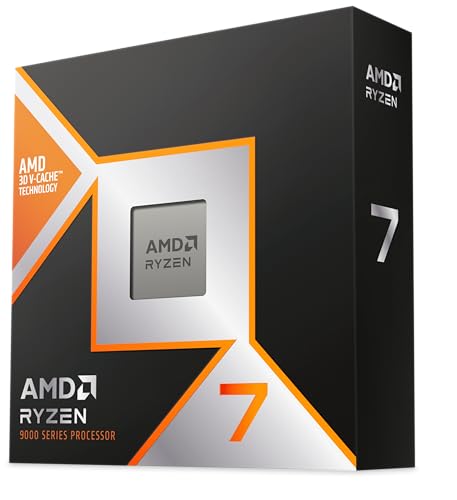
Per AMD's published specifications, the Ryzen 7 9800X3D is built on the Zen 5 microarchitecture and features 8 cores with simultaneous multithreading for 16 threads, a base clock of 4.7 GHz, and a maximum boost of 5.2 GHz. It uses AMD's 3D V-Cache technology: a 64 MB SRAM die is stacked directly on top of the processor's native 32 MB L3 cache, yielding 96 MB of total L3 capacity.
The enlarged cache pool is the defining characteristic of the X3D line. Per Tom's Hardware's published review of the 9800X3D, the expanded L3 allows the CPU to serve a substantially larger working dataset without falling back to slower system memory — an advantage that shows most in gaming workloads where instruction streams are latency-sensitive and data reuse rates are high. The same review documented meaningful performance leads over the preceding Ryzen 7 7800X3D in gaming at 1440p, with the gap widest in CPU-limited scenarios.
For productivity workloads — video encoding, 3D rendering, code compilation — the 9800X3D's per-core Zen 5 throughput is competitive within the AM5 generation. However, AMD's own data sheet notes that the V-Cache stacking constrains peak boost clocks relative to the non-X3D Ryzen 9000-series parts, so the 9800X3D's multi-threaded ceiling trails the Ryzen 9 9900X and Ryzen 9 9950X. The X3D suffix is purpose-built for gaming first.
To understand how AMD's V-Cache generation gap plays out over time, the SpecPicks re-review AMD Ryzen 7 5800X3D: Maxing Out DDR4 Gaming in 2026 is a useful reference for how the previous V-Cache generation has aged — the performance longevity argument is relevant context for evaluating the 9800X3D's generational leap.
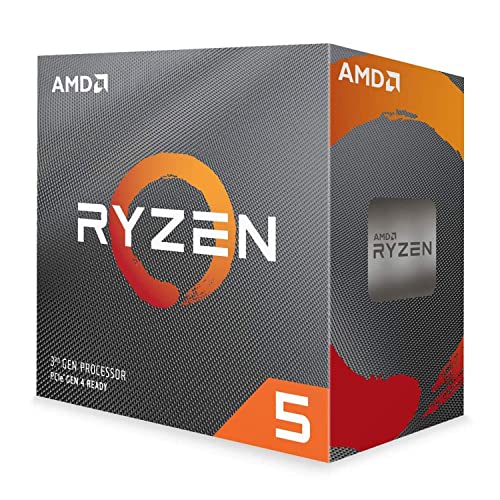
Public benchmark data in the SpecPicks catalog illustrates the generational gap from another angle: the Ryzen 5 3600 — available in the catalog at /product/B07STGGQ18 — averages roughly 39 fps in Cyberpunk 2077, 63 fps in Baldur's Gate 3, and 72 fps in Starfield under standard GPU benchmark conditions. The 9800X3D operates on an entirely different platform and outperforms AM4 Ryzen 3000-series hardware by a substantial margin in gaming, as documented across community comparisons and major review outlets.
AM5 Platform and DDR5 Memory: What the 32 GB Kit Covers
The AM5 socket mandates DDR5; there is no DDR4 compatibility path, a deliberate break from the AM4 era that spanned four Ryzen generations. Per AMD's platform documentation, the Ryzen 7 9800X3D officially supports DDR5-5600 at the JEDEC baseline, while EXPO profiles (AMD's memory overclocking standard) allow kits to run at DDR5-6000 or higher when the motherboard firmware supports it.
A 32 GB starting configuration positions the system for both gaming and light content creation. Modern open-world and simulation titles increasingly consume 16–20 GB during active sessions; 32 GB provides headroom for background application load, browser tabs, and streaming software running concurrently with a game. A 2×16 GB dual-channel configuration also preserves two DIMM slots on most ATX boards for future expansion.
For builders already on AM4 DDR4 hardware — such as the Crucial 16 GB DDR4 kit available in the catalog at /product/B08C4WV6FT — the platform migration to DDR5 carries a memory cost that the bundle absorbs. DDR5 prices have declined substantially since AM5 launched in late 2022, but DDR4 remains cheaper per gigabyte for equivalent capacity.
Firmware considerations for DDR5 on AM5 are worth noting. The SpecPicks coverage of the ASUS Beta BIOS restoring Ryzen 9000 memory encryption addresses firmware-level AM5 memory stability — relevant context for anyone tuning EXPO profiles after initial setup or running memory-sensitive workloads.
MSI B850 Wi-Fi 7: Chipset Capabilities vs. X870
The MSI MAG B850 TOMAHAWK Wi-Fi uses AMD's B850 chipset, positioned one tier below the enthusiast X870 and X870E chipsets while retaining most of their relevant feature set for mainstream builders. Per AMD's published chipset documentation, the practical differences are limited for a pure gaming build:
| Feature | B850 | X870 | X870E |
|---|---|---|---|
| CPU overclocking | Yes | Yes | Yes |
| Memory overclocking (EXPO) | Yes | Yes | Yes |
| PCIe 5.0 — GPU slot | Yes | Yes | Yes |
| PCIe 5.0 — M.2 NVMe | Board-dependent | Yes | Yes |
| USB 4 Gen 2×2 (40 Gbps) | Board-dependent | Yes | Yes |
For gaming-focused builds without specialized USB 4 requirements, B850 covers everything relevant at a lower board price. The PCIe 5.0 GPU slot supports current high-end discrete GPUs and positions the system for next-generation discrete cards. The PCIe 5.0 M.2 slot — present on most B850 ATX board designs — accepts Gen 5 NVMe SSDs; for builders evaluating storage options, the SpecPicks NVMe guide Best NVMe Boot SSD for an AM4 Ryzen Build covers Gen 4 drives whose price-performance conclusions translate to an AM5 secondary slot with minimal adjustment.
Wi-Fi 7 (802.11be): What Changes Over Wi-Fi 6E
The onboard Wi-Fi 7 module is one of the B850 board's more forward-looking features. Per the Wi-Fi Alliance's published 802.11be specification, Wi-Fi 7 introduces Multi-Link Operation (MLO), which allows a single device to connect across multiple frequency bands simultaneously — 2.4 GHz, 5 GHz, and 6 GHz at once. Rather than saturating one band, traffic is distributed across all available channels opportunistically.
For gaming on wireless, the latency benefit from MLO is the primary selling point. The Wi-Fi Alliance's published documentation on MLO describes it as reducing effective link latency by shifting packets to the least-congested available band in real time — relevant in dense apartment environments where 5 GHz and 6 GHz channels may be contested by neighboring access points. Maximum theoretical throughput under 802.11be reaches 46 Gbps, compared to 9.6 Gbps under Wi-Fi 6E, though real-world gains are constrained by router hardware and channel availability.
Note: realizing the Wi-Fi 7 benefits on the motherboard side requires a Wi-Fi 7-capable access point or router; existing Wi-Fi 6E routers will connect the adapter at Wi-Fi 6E speeds.
Bundle Value: Comparing the All-In Platform Cost
The Micro Center bundle's value proposition is straightforward: combining three components into a single listing reduces the total outlay relative to purchasing each piece individually. The savings vary by promotion period, but even modest per-component discounts compound meaningfully across items at CPU-and-motherboard price points.
Builders comparing AM5 against extending an existing AM4 platform should weigh the full migration cost. The SpecPicks head-to-head Ryzen 7 5800X3D vs. Core i7-14700K: The DDR4 Gaming Faceoff for 2026 illustrates how much competitive gaming performance the previous V-Cache generation still extracts from DDR4 platforms. Builders already holding an AM4 X3D CPU have a strong gaming foundation; the upgrade argument is strongest for those on Ryzen 5 3600-era hardware (see: /product/B0BL92CBWG) or similarly aged Intel platforms.
Who the Bundle Makes Sense For
| Scenario | Recommendation |
|---|---|
| New AM5 build from scratch | Strong fit — three of five major components in one cart event |
| Upgrading from Ryzen 5 3600 or Ryzen 5 2600 | High ROI, especially when paired with a mid-range discrete GPU |
| Upgrading from Ryzen 5 5600X on AM4 | Worthwhile at 1440p / 4K; assess GPU bottleneck first |
| Already on Ryzen 7 5800X3D or 7800X3D | Marginal gaming gains; consider waiting for the next V-Cache generation |
| Content creation — maximum core count | Consider Ryzen 9 9900X or 9950X; X3D premium targets gaming, not throughput |
| Local LLM or AI inference primary use | See the AI inference section below |
For buyers on the Ryzen 5 5600X, currently available in the catalog at $180, the bundle represents a full platform migration — new socket, DDR5 memory, and motherboard — not a drop-in CPU swap. The total platform cost should be evaluated against the marginal GPU upgrade that might close the same performance gap at lower cost.
Cooling and Storage: What the Bundle Doesn't Include
The bundle covers the CPU, memory, and motherboard but not a CPU cooler or storage drive — both required to complete a build.
Cooling: AMD's published thermal specification lists the 9800X3D at a 120 W TDP. Community build guides and major review outlets consistently recommend a 240 mm AIO or a premium single-tower air cooler with an AM5 mounting bracket. The SpecPicks CPU cooler roundup Best CPU Cooler for the Ryzen 7 5800X: NH-U12S vs ML240L vs AIRCOM S7 covers coolers at that TDP tier; the models reviewed are AM5-compatible with appropriate mounting hardware and provide relevant thermal performance context.
Storage: The B850 board's M.2 slots accept both Gen 4 and Gen 5 NVMe drives. Gen 4 drives remain the price-performance sweet spot entering mid-2026; the SpecPicks NVMe guide Best NVMe Boot SSD for an AM4 Ryzen Build covers Gen 4 options whose findings apply directly to an AM5 secondary slot.
Ryzen 7 9800X3D for Local LLM and AI Inference
The 9800X3D's 96 MB L3 cache has drawn sustained interest in local LLM communities. Per aggregated discussions on r/LocalLLaMA, a larger L3 pool reduces main-memory round-trips when a quantized language model's active working set fits within or near the cache — relevant for Q4 and Q5 quantized variants of 7B–13B parameter models. The SpecPicks comparison Ryzen AI Halo Mini PC vs. RTX 3060 12GB for Local LLMs documents the trade-offs between CPU and discrete GPU inference for this class of workload; CPU inference remains bottlenecked by memory bandwidth relative to GPU VRAM bandwidth, but the cache benefit is measurable for single-session latency.
For builders whose primary motivation is AI inference rather than gaming, the Ryzen AI Developer Platform on Debian Linux and the Ryzen 5 5600G iGPU local LLM inference articles provide alternative platform comparisons at lower cost. The 9800X3D bundle is optimized for gaming first; AI inference is a secondary benefit rather than a primary design goal.
Platform at a Glance
| Component | Specification |
|---|---|
| CPU | AMD Ryzen 7 9800X3D — 8 cores / 16 threads, Zen 5, 96 MB L3 (3D V-Cache) |
| Socket | AM5 (LGA 1718) |
| Memory | 32 GB DDR5 (2×16 GB), EXPO-compatible kit |
| Motherboard | MSI MAG B850 TOMAHAWK Wi-Fi (B850 chipset) |
| GPU PCIe | PCIe 5.0 x16 |
| M.2 NVMe | PCIe 5.0 and PCIe 4.0 slots (board-dependent) |
| Wireless | Wi-Fi 7 (802.11be), Bluetooth 5.4 |
| Memory support | DDR5-5600 (JEDEC) / DDR5-6000+ (EXPO) |
| TDP | 120 W |
Citations and Sources
- https://www.amd.com/en/products/processors/desktops/ryzen/9000-series/amd-ryzen-7-9800x3d.html — AMD official Ryzen 7 9800X3D product specifications
- https://www.tomshardware.com/reviews/amd-ryzen-7-9800x3d-review — Tom's Hardware Ryzen 7 9800X3D review and benchmark results
- https://www.amd.com/en/products/chipsets/am5/b850.html — AMD B850 chipset product page and feature comparison
- https://www.wi-fi.org/discover-wi-fi/wi-fi-certified-7 — Wi-Fi Alliance 802.11be (Wi-Fi 7) specification and MLO documentation
- https://www.microcenter.com/ — Micro Center bundle pricing and availability
This piece is editorial synthesis based on publicly available information. No independent first-party benchmarking is reported.