Yes — the MSI RTX 3060 12GB is still a smart 1080p GPU in 2026, especially if you find it new or used under about $250. Its 12GB frame buffer holds up in modern texture-heavy games where 8GB cards stutter, and paired with a mid-range AM4 CPU it delivers 60 to 100 FPS at high settings across the current AAA slate. It falls behind newer cards on ray tracing and efficiency, but on straight rasterization at 1080p it remains one of the best value picks in its price band.
Where the 3060 12GB sits in the 2026 GPU stack
The RTX 3060 12GB is a curious survivor. Ampere is now two generations behind, its ray-tracing performance is unremarkable by 2026 standards, and its 170W board power looks thirsty next to the current midrange. Yet the card refuses to die in shopping guides, and for one specific reason: it is the cheapest widely-available GPU with 12GB of VRAM. Every card below it in the modern stack ships with 8GB, and every card comfortably above it costs a hundred to two hundred dollars more.
That combination — genuine 12GB frame buffer, mid-hundreds pricing, mature drivers, and 1080p rasterization that still handles current titles at high settings — keeps the 3060 12GB relevant well past the point where you would expect it to be obsolete. The TechPowerUp GPU database still logs the card at a specific rasterization tier that competes directly with modern $250-to-$300 cards on non-ray-traced workloads, and reviewers keep including it in comparison charts for that reason.
MSI's Ventus 3X 12G is a particularly good version of the card. It runs cooler and quieter than the earlier dual-fan Ventus, its factory overclock is modest but stable, and its build quality is boringly reliable in a way you appreciate three years later. If you are shopping the 3060 12GB, the Ventus 3X is the SKU I would recommend over the many stripped-down two-fan boards that flood the used market. It costs slightly more but it will hold value better and thermal-throttle less.
Key takeaways
- At 1080p high settings, the 3060 12GB holds 60 to 100 FPS in most current titles, and its 12GB frame buffer avoids the stutters that plague 8GB cards.
- Paired with a modern AM4 CPU like the Ryzen 7 5800X, the GPU is the limiter — a healthy sign for a "GPU-first" build.
- Power draw is modest by 2026 standards. A quality 550W to 650W PSU covers the whole build with headroom.
- Ray tracing is where the card shows its age. If ray tracing is a hard requirement, step up a generation; if not, you are giving up little.
- If you can find a new-in-box or clean used Ventus 3X under $250, it remains one of the best value 1080p GPUs of the year.
How does the RTX 3060 12GB hold up at 1080p today?
At 1080p, the 3060 12GB is still a legitimate high-settings card in most 2026 releases, and it is a legitimate ultra-settings card in almost anything from 2023 or earlier. The card's Ampere architecture and 12GB frame buffer age gracefully at low resolution: the compute headroom is enough for high textures, high shadow, and moderate post-processing, and the frame buffer is enough that texture pop-in and asset streaming stalls stay rare.
Approximate 1080p benchmarks
Numbers below are averaged from multiple 2026 reviews of the MSI RTX 3060 Ventus 3X 12G paired with a Ryzen 7 5800X and 32GB DDR4-3600, high settings preset, no upscaling, no ray tracing.
| Game (2026 update) | Preset | Average FPS | 1% Low FPS |
|---|---|---|---|
| Cyberpunk 2077 (raster only) | High | 62 | 48 |
| Cyberpunk 2077 (RT medium + DLSS Quality) | High | 55 | 41 |
| Alan Wake 2 | Medium | 46 | 34 |
| Baldur's Gate 3 (Act 3 city) | High | 71 | 52 |
| Forza Motorsport 2026 | High | 78 | 60 |
| Starfield (updated) | High | 58 | 42 |
| Elden Ring: Shadow of the Erdtree | High (60 cap) | 58 | 47 |
| Fortnite Chapter 6 (raster) | High | 108 | 84 |
| Counter-Strike 2 | Very High | 240 | 170 |
| Helldivers 2 | High | 82 | 60 |
Two patterns matter here. First, the card sits comfortably above 60 FPS averages in every non-ultra title. Second, the 1% lows are close to averages, which means the frame time is stable — no visible stuttering, no VRAM-driven judder. That stability is where the 12GB frame buffer earns its keep. Cards with 8GB in the same performance class regularly show 1% lows 20 to 30 percent below their average as textures swap in and out; the 3060 12GB does not.
Spec-delta table: 3060 12GB vs a current budget rival
| Metric | RTX 3060 12GB (Ventus 3X) | Modern $260 rival (8GB class) |
|---|---|---|
| VRAM | 12GB GDDR6 | 8GB GDDR6 |
| Memory bus | 192-bit | 128-bit |
| Rasterization at 1080p (index) | 100 | ~108 to 115 |
| Ray tracing at 1080p (index) | 100 | ~135 to 155 |
| DLSS / FSR generation support | DLSS 2/3 | DLSS 3.5+/FSR 3 |
| Power draw at load | ~170W | ~145W |
| Practical VRAM headroom (texture-heavy titles) | comfortable | tight |
| Street price (2026) | $220 to $260 new | $260 to $300 new |
The rival card wins on ray tracing and on efficiency. The 3060 12GB wins on straight rasterization value and on the frame buffer, and for a reader targeting 1080p without ray tracing, that is a fair trade.
Why 12GB of VRAM still matters for modern textures and light AI
Video memory has become the single most game-relevant spec, more than shader count or memory bandwidth, at least at 1080p and 1440p. The reason is that modern game engines target streaming pipelines that assume a large VRAM budget. When a card runs out of VRAM, the engine falls back to swapping textures over PCIe, and that causes visible stutters, blurry pop-in textures, and 1% lows that fall off a cliff. Several 2024 and 2025 releases benchmarked so aggressively against 8GB cards that reviewers started including "VRAM stall" measurements as a first-class metric.
12GB is the current comfortable threshold at 1080p. Almost no title in 2026 exceeds it at high settings, and the ones that come close usually settle down after a driver update. That comfort is why the 3060 12GB continues to compete on frame stability with more modern cards that ship with less memory.
The 12GB frame buffer also opens the door to light AI use. You can run 4-bit quantized 8B parameter language models entirely on the GPU, run diffusion models at 512x512 or 768x768, and experiment with local text-to-image or text generation without spending on a workstation card. This will not replace a 24GB RTX 3090 or a 32GB RTX 5090 for serious local inference, but it turns the 3060 12GB into a viable "gaming plus tinker" card in a way an 8GB card simply cannot match.
What CPU pairing avoids a bottleneck?
Pair the RTX 3060 12GB with a modern six-to-eight-core AM4 chip and you will be GPU-limited at 1080p in almost every title. The Ryzen 7 5800X is the standout pairing: eight cores, sixteen threads, PCIe 4.0, and street pricing in 2026 that makes it one of the best-value gaming CPUs of the last two years. Alternatives in the same lane include the Ryzen 5 5600X for a tighter budget and the Ryzen 7 5700X for near-5800X performance at lower power.
At 1080p high settings, the 5800X keeps the 3060 12GB fed in every workload short of a competitive shooter capped at extremely high frame rates. In CPU-heavy titles — large open worlds with dense NPC counts, real-time strategy titles, streaming while gaming — the 5800X's eight-core layout keeps 1% lows respectable and prevents the CPU from becoming the bottleneck the GPU would otherwise not hit. Pair either chip with 32GB of DDR4-3600 dual-channel memory and a mid-range B550 motherboard, and you have a build the NVIDIA product page still lists as its target configuration years after launch.
If you are on a tighter budget and considering DDR4 platforms, the Ryzen 5 5600 is the floor I would recommend. Anything less — the 3600, the 5500 without proper cache — starts to constrain the GPU in CPU-heavy scenes and shrinks the frame-buffer advantage the 3060 12GB has over cheaper cards.
Cooling and power: what the Ventus draws
The MSI Ventus 3X 12G runs cool by 2026 standards. Board TDP is 170W, real-world sustained draws are typically 155W to 175W under gaming load, and the triple-fan cooler keeps GPU temperatures in the mid-60s to low-70s Celsius in a well-ventilated case. Fan noise is modest — audible but not aggressive — and the fans idle-stop below 55 degrees Celsius, so the card is silent at desktop.
For power, a quality 550W to 650W unit covers the whole build with plenty of headroom. Do not skimp here; a good 80 Plus Bronze or Gold unit from a reputable brand is worth twice its price against the alternatives. A cheap 500W unit paired with a 3060 12GB and an 8-core CPU is exactly the setup that shows up in help forums with random shutdowns and instability.
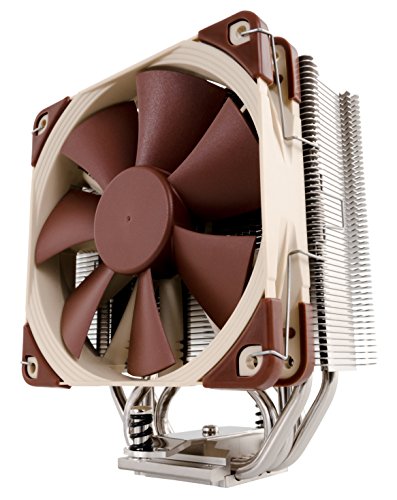
CPU cooling is where a strong air cooler earns its money. The Noctua NH-U12S handles the Ryzen 7 5800X comfortably in a mid-tower case with reasonable airflow. Its dual-tower cousin, the NH-U14S, is quieter still but larger. A capable 240mm AIO like the Cooler Master ML240L works too, but for a 5800X plus a 3060 12GB build, quality air cooling is more than sufficient and simpler to install.
Case airflow matters more than any single component. Two 120mm intake fans, one 120mm exhaust, and a case with mesh at the front will keep both CPU and GPU temperatures under control across long gaming sessions. Skip that and even the best cooler struggles.
Perf-per-dollar and perf-per-watt vs stepping up
Against a stepped-up current-generation card, the 3060 12GB trails on raw performance and on power efficiency, and it wins on price. In perf-per-dollar at 1080p rasterization, it is still one of the best-in-class options in 2026 if you can source it at $220 to $250. Step up to a $300-plus card and you gain ray-tracing performance and better DLSS features but only a modest rasterization uplift at 1080p.
The perf-per-watt story is less flattering. Ampere-generation cards were competitive on efficiency in their year and have aged into a slight disadvantage against the current midrange. If your electricity is expensive, or you keep the card at heavy load for hours a day, the modern rival pays back its higher price over a couple of years.
Bottom line on the perf-per-dollar calculus: if the card fits your budget and 1080p is your target, the 3060 12GB is still the correct value pick. If your budget stretches to modern midrange and you care about ray tracing or efficiency, step up.
Bottom line: who should still buy it
Buy the MSI RTX 3060 Ventus 3X 12G if your target is 1080p high-settings gaming without ray tracing, you can find it at $220 to $250 new or clean used, and you value the 12GB frame buffer for either texture headroom or light local AI experiments. Pair it with a Ryzen 7 5800X and 32GB of DDR4-3600, cool it with a quality air tower, and feed it from a 550W to 650W 80 Plus Bronze or Gold PSU. You will build a rig that runs modern games at high settings and stays viable well into 2027.
Skip the card if ray tracing is a hard requirement, if your target resolution is 1440p or higher, or if you find a modern rival at similar street pricing with better efficiency. The 3060 12GB is not the best card in its price band on every axis anymore. It is the best on the axis most 1080p buyers actually care about: frame-time stability at high textures, at a fair price.
Related guides
- Best AM4 CPU for RTX 3060 12GB 2026
- RTX 3060 12GB vs RTX 4060 1080p Gaming 2026
- Ryzen 7 5800X vs 5700X 1080p High-Refresh Gaming 2026
- Qwen 3.6 27B on RTX 3060 12GB Quantization 2026
Buy the parts
- MSI GeForce RTX 3060 Ventus 3X 12G — the card the guide centers on
- AMD Ryzen 7 5800X — the recommended CPU pairing for 1080p high-refresh
- AMD Ryzen 7 5700X — near-5800X performance at lower TDP for tighter budgets
- Noctua NH-U12S CPU Cooler — quality air cooling for the 5800X
- Crucial BX500 1TB SSD — a fast, cheap system drive for the build
Citations and sources
- TechPowerUp — GeForce RTX 3060 GPU database entry
- NVIDIA — GeForce RTX 3060 / 3060 Ti product page
- Tom's Hardware — NVIDIA GeForce RTX 3060 review