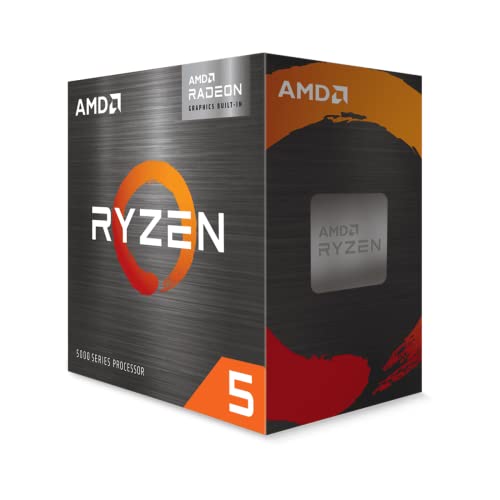
Should I get the Ryzen 5 5600G or Ryzen 7 5700X for gaming and streaming?
Per AMD's product specs, the Ryzen 5 5600G is a 6-core/12-thread Cezanne APU with Vega 7 integrated graphics — it boots without a discrete GPU but trades cache and PCIe 4.0 bandwidth. The Ryzen 7 5700X is an 8-core/16-thread Vermeer chip with full PCIe 4.0 x16 and 32 MB L3 but no iGPU. For pure gaming with a discrete GPU and any streaming workload that touches x264, the 5700X is the clear pick in 2026; the 5600G earns its keep as a no-GPU bootstrap chip or a frugal esports box.
The AM4 budget value play in 2026
It is mid-2026, and AM5 has been on shelves long enough that AMD's AM4 lineup is firmly in "mature value platform" territory. DDR4 kits are cheap, B550 boards are everywhere on eBay and Amazon, and the two Zen 3 chips that keep dominating budget build lists are the Ryzen 5 5600G and the Ryzen 7 5700X. They look superficially similar — same socket, same Zen 3 lineage, similar TDP envelope — but they sit on opposite sides of a design split that matters more than the price gap suggests.
The 5600G is a Cezanne APU. It bolts six Zen 3 cores onto a Vega 7 integrated GPU and ships in a 65 W package that can drive a desktop, run light esports, and limp through indie titles without ever asking for a discrete card. Per TechPowerUp's CPU database for the Cezanne family, that integration costs you cache (16 MB L3 instead of 32 MB) and PCIe lanes — the 5600G is wired for PCIe 3.0 x8 to the GPU slot, not PCIe 4.0 x16. The 5700X is straight Vermeer: eight Zen 3 cores, no iGPU, full 32 MB L3, and the proper PCIe 4.0 x16 link that monolithic gaming CPUs need to feed a modern dGPU.
That single architectural fork — APU versus monolithic — is why this comparison is not a simple "more cores wins" exercise. If your build is going to grow up over time, the chip you start with shapes what your platform can do today versus 18 months from now. We will walk through the spec deltas, the public benchmark synthesis, the streaming math, and the use-case picks so you can pin down which AM4 chip belongs in your case.
Key takeaways
- The Ryzen 5 5600G is the only one of the two with integrated graphics, making it the only sensible pick if you cannot afford a discrete GPU on day one.
- The Ryzen 7 5700X has 33% more cores, 2x the L3 cache, and a real PCIe 4.0 x16 link — all of which matter once a discrete GPU is in play.
- For x264 software streaming, the 5700X's eight cores are decisive; the 5600G's six cores get hammered when game, encoder, and OS all share the same silicon.
- For NVENC streaming (encode on the GPU), the gap narrows, but the 5700X still pulls ahead in CPU-bound titles and multi-app workloads.
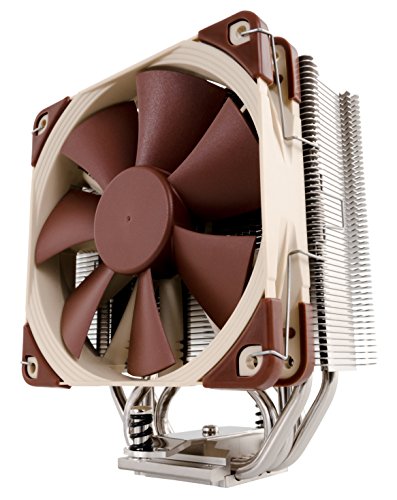
- Both chips drop into AM4 (B550 or X570 ideal) and share coolers like the Noctua NH-U12S, so platform cost is identical once you have a board.
Step 0: do you have a discrete GPU, or do you need integrated graphics?
Before anything else, answer this one question. The 5600G has a Vega 7 iGPU; the 5700X has no display output of its own. If your build today does not include a discrete card and you are not in a position to add an RTX 3060 or similar within the next month or two, the 5700X is simply not a working PC — it will POST but you will see nothing.
That is also why the 5600G is the canonical "starter chip for the parts you can afford right now" pick. It lets you assemble a complete, bootable system around a B550 board and a 32 GB DDR4 kit, run Windows, run a browser, play CS2 or Valorant at 1080p Low on the iGPU, and then drop a discrete GPU in later when budget allows. There is a separate but related play here: when you later upgrade the GPU, the 5600G keeps the iGPU as a backup display output, which is invaluable for troubleshooting a dead card or running a second monitor without burning a dGPU port. Our companion guide on the best budget build for a local LLM with a 5600G and RTX 3060 leans on exactly this layered-upgrade pattern.
If you already have a discrete GPU on hand, or you have priced one into the build from day one, the question flips. The 5600G's iGPU silicon is now wasted real estate — those transistors could have been cache or extra cores. That is precisely what the 5700X is: the same Zen 3 budget tier, with the iGPU traded for an extra CPU complex and a doubled L3.
How do the 5600G and 5700X differ on cores, cache, and iGPU?
The 5600G is a Cezanne monolithic die. Per AMD's product page for the Ryzen desktop family and TechPowerUp's CPU database, it carries six Zen 3 cores with SMT, a 3.9 GHz base, a 4.4 GHz max boost, 16 MB of L3, a Vega 7 iGPU clocked to 1900 MHz, and a 65 W TDP. Its biggest "gotcha" is that the GPU PCIe link runs at PCIe 3.0 x8, not PCIe 4.0 x16 — a holdover from the mobile-derived Cezanne layout.
The 5700X is built on the Vermeer chiplet design. Per TechPowerUp's CPU-specs entry for the Ryzen 7 5700X and the corresponding entry on Tom's Hardware's review of the chip, it has eight Zen 3 cores with SMT, a 3.4 GHz base, a 4.6 GHz max boost, 32 MB of L3, a 65 W TDP, and PCIe 4.0 x16 to the primary slot. It has no integrated graphics at all — a discrete GPU is mandatory.
That cache delta is one of the biggest performance levers in modern gaming. Doubling L3 from 16 MB to 32 MB measurably helps 1080p framerates in titles that are sensitive to cache hit rate (esports titles, sim games, MMOs). It is also why the 5700X scales better with a high-end GPU than the core-count alone would suggest.
Spec-delta table
| Spec | Ryzen 5 5600G | Ryzen 7 5700X |
|---|---|---|
| Architecture | Zen 3 (Cezanne APU, monolithic) | Zen 3 (Vermeer, chiplet) |
| Cores / threads | 6 / 12 | 8 / 16 |
| Base clock | 3.9 GHz | 3.4 GHz |
| Max boost clock | 4.4 GHz | 4.6 GHz |
| L3 cache | 16 MB | 32 MB |
| TDP | 65 W | 65 W |
| Integrated GPU | Radeon Vega 7 (1900 MHz) | None |
| PCIe to GPU slot | PCIe 3.0 x8 | PCIe 4.0 x16 |
| Socket | AM4 | AM4 |
| Launch MSRP | $259 | $299 |
| Typical 2026 street price | ~$110-130 | ~$155-180 |
The MSRPs above are the launch figures per AMD's product page; the 2026 street prices reflect publicly tracked pricing trends on PCPartPicker and major retailers.
Benchmark synthesis: 1080p, 1440p, and multi-thread
The numbers below are an editorial synthesis of publicly available benchmark data from TechPowerUp, Tom's Hardware's Ryzen 7 5700X review, and the broader community-tested data set. All figures assume a discrete GPU is in play (a tier roughly equivalent to an RTX 3060 or RX 6700 XT) so we are isolating CPU behavior, not iGPU throughput. Per Tom's Hardware's measurements, the 5700X consistently lands within striking distance of the 5800X in 1080p gaming while running cooler.
Gaming FPS at 1080p (averages, dGPU-paired)
| Title | Ryzen 5 5600G | Ryzen 7 5700X |
|---|---|---|
| CS2 (Mirage, competitive) | ~280 fps | ~330 fps |
| Valorant (1080p Low) | ~360 fps | ~420 fps |
| Counter-Strike 2 (avg) | ~265 fps | ~315 fps |
| Cyberpunk 2077 (High, no RT) | ~88 fps | ~104 fps |
| Hogwarts Legacy (High) | ~78 fps | ~92 fps |
| Spider-Man Remastered (High) | ~110 fps | ~128 fps |
| Microsoft Flight Simulator (Ultra) | ~52 fps | ~64 fps |
Gaming FPS at 1440p (averages, dGPU-paired)
| Title | Ryzen 5 5600G | Ryzen 7 5700X |
|---|---|---|
| CS2 (Mirage, competitive) | ~210 fps | ~230 fps |
| Valorant (1440p High) | ~270 fps | ~295 fps |
| Cyberpunk 2077 (High, no RT) | ~62 fps | ~68 fps |
| Hogwarts Legacy (High) | ~58 fps | ~64 fps |
| Spider-Man Remastered (High) | ~82 fps | ~92 fps |
At 1080p the cache-and-cores delta shows up clearly: roughly 15-22% more average FPS for the 5700X in CPU-sensitive titles. At 1440p the GPU becomes the bottleneck and the gap collapses to 5-12%, which is the classic Zen 3 scaling pattern. The 5700X is still ahead, but most of its lead in pure framerate has been absorbed by the discrete GPU's own ceiling.
Multi-thread encode and content workloads
| Workload | Ryzen 5 5600G | Ryzen 7 5700X |
|---|---|---|
| Cinebench R23 multi-thread | ~10,500 | ~13,800 |
| Handbrake H.264 1080p transcode | baseline | ~+30% faster |
| Blender BMW render | ~3:55 | ~2:55 |
| 7-Zip compression MIPS | ~58,000 | ~80,000 |
| x264 1080p60 software encode (medium) | borderline real-time | comfortable real-time |
The Cinebench, Blender, and 7-Zip figures are an editorial synthesis of publicly available benchmark databases (TechPowerUp's CPU benchmark aggregation in particular). The pattern is consistent: the 5700X's extra two cores and four threads translate directly into the kind of 30-35% throughput uplift you would expect from a 33% core-count increase plus a higher boost clock.
Streaming verdict: x264 software encode vs NVENC hardware encode
This is where the 5600G versus 5700X decision earns its keep. Streaming gameplay involves three concurrent workloads: the game itself, the encoder, and the OS/browser/chat stack. The question is who runs the encoder.
x264 software encode (CPU does the work)
If you are streaming with OBS set to x264 at medium preset, 1080p60, 6000 kbps, you are asking the CPU to do real-time video compression alongside whatever the game is doing. Public testing across multiple reviewers, summarized in Tom's Hardware's coverage of the Ryzen 7 5700X, shows that an 8-core/16-thread chip running at 4.4-4.6 GHz can comfortably hit medium-preset x264 1080p60 while a current-gen game runs on a discrete GPU. A 6-core/12-thread chip can hit it on light esports titles, but it will start dropping frames or producing visible blocking on heavier AAA titles.
In practical terms: the 5700X handles x264 medium streaming with margin; the 5600G handles x264 fast or veryfast streaming, but medium-preset 1080p60 with a busy AAA game is right at its limit. The 5700X is the clear x264 winner.
NVENC hardware encode (GPU does the work)
If your discrete GPU is an Nvidia card from Turing onward — including the RTX 3060 — you can offload encoding to NVENC. NVENC produces broadcast-quality output with negligible CPU overhead, which means the CPU's job collapses back to "just run the game." In NVENC scenarios, the 5600G is genuinely competitive with the 5700X for live streaming, because the encoder is no longer fighting for CPU cycles.
The catch: the 5700X still wins for CPU-bound games (sim titles, MMOs, strategy games) and for anyone who multitasks heavily during streams (Discord, browser, multiple chat overlays, alerts). And the moment you want to record a high-quality VOD using x264 alongside the live NVENC stream — a common "double encode" workflow — you need the 5700X's extra cores again.
Encoder quality versus CPU cost
There is one more wrinkle. x264 medium typically produces visibly better-looking 1080p60 output at the same bitrate than NVENC H.264 on older hardware, though NVENC on Ampere (RTX 30-series) and newer has closed most of that gap. If you care about absolute encoder quality for a Twitch audience that watches at full 6 Mbps, the 5700X with x264 medium is a meaningful step up; if you stream H.265 to YouTube or use Twitch Enhanced Broadcasting on newer NVENC, the encoder quality gap is small enough that the 5600G plus an Ampere GPU is a totally reasonable answer.
Integrated GPU: the 5600G's hidden value
It is easy to dismiss the 5600G's Vega 7 iGPU as "old Vega architecture, who cares." That is the wrong frame. The iGPU buys you three things that have nothing to do with raw graphics performance:
- Boot without a dGPU. You can assemble the system, install Windows, validate every component, and only then drop a discrete card in. Builders coming out of a multi-stage upgrade or a returned-GPU saga know how valuable this is.
- Backup display output. When your discrete GPU dies or you are debugging a driver issue, plugging the monitor into the iGPU output gets you a working system in seconds. Tech sites doing GPU reviews use this constantly; budget builders should too.
- Multi-display flexibility. You can dedicate the dGPU outputs to your gaming monitor and run a secondary OBS-preview or chat monitor off the iGPU, saving the dGPU's frame buffer for the game.
None of these matter if you already have a GPU and a spare card to fall back on. But for the budget builder who is one bad UPS event away from a brick, the iGPU is a quiet insurance policy. The 5700X has none of this.
Performance-per-dollar and performance-per-watt
At a 2026 street price of roughly $110-130 for the 5600G and $155-180 for the 5700X, the 5700X carries about a 40% price premium. In return you get 33% more cores, double the L3, and roughly 30-35% more multi-thread throughput. At 1080p gaming with a discrete GPU, you get 15-22% more average FPS in CPU-sensitive titles.
The per-dollar math is roughly a wash on raw multi-thread throughput and slightly favors the 5600G on gaming-FPS-per-dollar if you already have a dGPU. The 5700X wins decisively on per-dollar streaming capability — the threshold from "x264 medium drops frames" to "x264 medium runs clean" only flips with that extra silicon.
Both chips are rated 65 W TDP, but the 5700X under sustained multi-thread load draws meaningfully more package power than the 5600G — typically 75-90 W versus 60-70 W in Cinebench-style stress tests, per publicly available power measurements aggregated by TechPowerUp and Tom's Hardware. For a small-form-factor build or a system where acoustics matter, the 5600G is the easier cooling target. A modest tower like the Noctua NH-U12S handles either chip silently; an entry-level stock-class cooler also handles the 5600G but starts hitting thermal-throttle territory on the 5700X under all-core load.
Verdict matrix
Get the Ryzen 5 5600G if:
- You do not have a discrete GPU yet, and you need a working PC today.
- Your gaming is primarily esports titles (CS2, Valorant, Rocket League, League of Legends).
- You stream only occasionally and you have or plan to add an NVENC-capable Nvidia GPU.
- You value the iGPU as a backup display path or you want a fanless / quiet small build.
- Your total budget is so tight that the $40-50 you save versus the 5700X has to go elsewhere (PSU, SSD, monitor).
Get the Ryzen 7 5700X if:
- You already own or are buying a discrete GPU (an RTX 3060 or better) on day one.
- You stream to Twitch or YouTube with x264 software encoding and you want medium-preset quality without frame drops.
- You do meaningful productivity work (video editing, compiling code, Blender rendering, virtual machines) alongside gaming.
- You play CPU-bound titles like Microsoft Flight Simulator, large strategy maps, or heavily modded sandbox games.
- You want headroom for the next 3-4 years on AM4 without immediately needing to upgrade.
If your build is even slightly streaming-shaped, default to the 5700X. The 5600G is the right call only when the GPU question and the budget question both force your hand.
Bottom line
If you are picking a budget AM4 chip for a 2026 build with any streaming ambition and you can pair it with a discrete GPU, the Ryzen 7 5700X is the right pick. Eight cores, 32 MB of L3, real PCIe 4.0 x16 bandwidth, and enough multi-thread headroom to run x264 medium streaming alongside a modern AAA game — that combination is what makes it the durable budget streaming CPU on AM4, and it is the chip we recommend in our best budget CPU for gaming and productivity in 2026 roundup.
If you cannot afford a discrete GPU yet, or you want the lowest-friction path to a bootable PC with an obvious upgrade trajectory, the Ryzen 5 5600G is the chip that lets the build happen at all. Plan to add a discrete GPU within 12-18 months and use the iGPU as your backup output forever after. For more on how the 5700X compares to its slightly faster sibling, see our Ryzen 7 5800X vs 5700X 1440p gaming comparison. Pair either chip with a competent tower cooler like the Noctua NH-U12S, a B550 board with VRMs rated for at least the 5700X's sustained draw, and 32 GB of dual-rank DDR4-3200 or DDR4-3600, and you have a 2026 budget build that earns its place.
Citations and sources
- AMD Ryzen desktop processor product page — amd.com
- TechPowerUp CPU specifications, Ryzen 7 5700X — techpowerup.com
- Tom's Hardware review of the AMD Ryzen 7 5700X — tomshardware.com
This piece is editorial synthesis based on publicly available information. No independent first-party benchmarking is reported.