
YuanLey
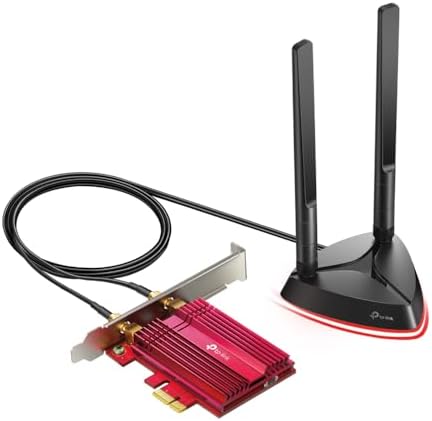
YuanLey 10G PCIe Network Card
Bottom line: The YuanLey 10G PCIe Network Card ($69.98 on Amazon as of 2026-11-21 17:25 UTC): Marvell AQC113 runs 10G, 5G, 2.5G and 1G over a single RJ45 port; main trade-off: single port only, so no link aggregation or failover from one card.
As an Amazon Associate, SpecPicks earns from qualifying purchases. Full disclosure →
*Price sourced from Amazon.com. Last updated 2026-11-21. Product prices and availability are accurate as of the date/time indicated and are subject to change. Any price and availability information displayed on Amazon.com at the time of purchase will apply to the purchase of this product.
Pros & Cons
Pros
- ✓ Marvell AQC113 runs 10G, 5G, 2.5G and 1G over a single RJ45 port
- ✓ Fits PCIe x1, x4, x8 and x16 slots, so your x16 slot stays free for a GPU
- ✓ Full-height and low-profile brackets included for ATX or SFF cases
- ✓ Standard RJ45 copper, no SFP+ modules or DAC cables to buy
- ✓ Wake-on-LAN and auto-negotiation for remote wake and mixed-speed networks
Cons
- ✗ Single port only, so no link aggregation or failover from one card
- ✗ PCIe 4.0 x1 link; a PCIe 3.0 x1 slot can cap throughput below 10Gbps
- ✗ Needs a 10GBASE-T switch or router to beat onboard 2.5G ports
- ✗ Listed OS support is Windows 10/11 and Linux; macOS is not stated
Manufacturer description
The YuanLey 10G PCIe network card brings 10GBASE-T Ethernet to a desktop, workstation or server through a single RJ45 port. It runs on the Marvell AQC113 controller over a PCIe 4.0 x1 interface and auto-negotiates down to 5G, 2.5G and 1G, so it still links up with the slower switches and routers already on your network. The card fits PCIe x1, x4, x8 and x16 slots. That leaves your x16 slot free for a GPU, and you can drop the card into a spare short slot instead. Both a full-height and a low-profile bracket come in the box, so the same card works in a standard ATX tower or a compact SFF…
SpecPicks Verdict
SpecPicks has no buyer-rating or benchmark data for YuanLey 10G PCIe Network Card, so this read rests on the manufacturer's listed specs and the current price in the retro networking cards category (how we evaluate). Compare with similarly-priced alternatives in the retro networking cards category before committing. On the listing's own facts, the case for it is "Marvell AQC113 runs 10G, 5G, 2.5G and 1G over a single RJ45 port"; the main trade-off is "Single port only, so no link aggregation or failover from one card". If those two points fit how you will use it, put it beside one or two close alternatives in the Compare tool to confirm the price.
Before ordering, confirm the board side: this card needs a free PCIe slot of the width the card uses. Your motherboard manual lists which slots share lanes with M.2 sockets or other slots. Prices and stock are set by the retailer and may have moved since this page was last updated.
Frequently Asked Questions
Will this 10G card fit in a PCIe x1 slot, or do I need an x16 slot?
It fits PCIe x1, x4, x8 and x16 slots. The card uses a PCIe 4.0 x1 interface, so a short x1 slot works and your x16 slot stays free for a graphics card.
Will I get full 10Gbps speed in an older PCIe 3.0 motherboard?
The card links at PCIe x1. A PCIe 4.0 x1 slot has enough bandwidth for 10GBASE-T, but a PCIe 3.0 x1 link carries about 8 GT/s, so throughput can top out below the full 10Gbps. Use a PCIe 4.0 slot for full line rate.
Does it work with my existing 1G or 2.5G router?
Yes. The Marvell AQC113 auto-negotiates 10G, 5G, 2.5G and 1G over RJ45, so it links at the fastest speed your switch or router supports.
Can I install it in a small form factor PC?
Yes. The box includes a full-height bracket for standard ATX cases and a low-profile bracket for compact SFF systems.
Which operating systems does it support, and does it have Wake-on-LAN?
The listing names Windows 10/11 and Linux and says setup is plug-and-play. It supports Wake-on-LAN. For any other OS, check the product listing for current driver availability.
Key Features
Quoted from the manufacturer's listing. Where it differs from the pros and cons above, those note the conditions the listing leaves out.
- Ultra-Fast 10GBASE-T Performance – This 10G/10Gb/10Gbps NIC network card uses the Marvell AQC113 chipset and PCIe 4.0 x1 interface to deliver 10GBASE-T, 5G, 2.5G, and 1G speeds over standard RJ45, making it an ideal network ethernet adapter for gaming, streaming, and data-intensive workloads.
- Broad Compatibility & Flexible Installation – Supports PCIe X1, X4, X8, and X16 slots, ensuring this 10Gb network card fits a wide range of desktops, workstations, and servers. Works perfectly as both an ethernet card and a high-speed network ethernet adapter in home or enterprise environments.
- Dual Brackets for Any Build – Comes with full-height and low-profile brackets so this 10Gbps ethernet card installs easily in standard ATX cases or compact SFF systems, allowing flexible use of your 10G network card in any PC build.
- Plug & Play with WOL Support – Quick to set up on most operating systems, this 10G/10Gb NIC supports Wake-on-LAN and auto-negotiation, making it a hassle-free network ethernet adapter for upgrading your wired connection.
- Stable, Reliable, and Efficient – Gold-plated connectors, solid capacitors, and an optimized PCB ensure this 10Gbps network card delivers stable low-latency performance, giving your 10GBASE-T ethernet card maximum bandwidth and long-term durability.
- Lifetime Support & Professional Service – Engineered for durability and long-term use, this 5G network card is backed by lifetime technical support. Our expert team provides setup guidance and responsive service to ensure a smooth, high-speed networking experience from day one.
Full Specifications
| Brand | YuanLey |
|---|---|
| Weight | 10g |
| Model Number | 10G NIC |
| Compatibility | PC, Linux |
| Built-In Media | User Manual, YuanLey 10G AQC113-X1 Network Card, Dual Brackets |
| Connection Type | Wired |
| Mfr Part Number | AQC113-X1 |
| Number of Items | 1 |
| Compatible Devices | Desktop, Laptop |
| Data Link Protocol | lEEE 802.3az/an/bz/ab/u/x/lEEE 802.3 Q |
| Data Transfer Rate | 10 gigabits_per_second |
| Hardware Interface | PCI Express x1, PCI Express x16, PCI Express x4, PCI Express x8 |
| Warranty Description | 1 year warranty |
| Full listing title | 10G PCIe Network Card, YuanLey 10G Base-T Ethernet Card with Marvell AQC113 Conrtoller, PCIE to 10Gb RJ45 Ethernet Adapter NIC Compatible with PCI Express X1,X4,X8,X16, for Windows 10/11, Linux OS |
Ready to buy?
10G PCIe Network Card, YuanLey 10G Base-T Ethernet Card with Marvell AQC113 Conrtoller, PCIE to 10Gb RJ45 Ethernet Adapter NIC Compatible with PCI Express X1,X4,X8,X16, for Windows 10/11, Linux OS is listed on Amazon. Price, availability, shipping and returns are set by Amazon and its sellers — check the listing for current terms. SpecPicks earns a small commission on qualifying purchases — thank you for supporting independent review work.
*Price sourced from Amazon.com. Last updated 2026-11-21. Product prices and availability are accurate as of the date/time indicated and are subject to change. Any price and availability information displayed on Amazon.com at the time of purchase will apply to the purchase of this product.
Related Retro Networking Cards


More guides & deep dives from the SpecPicks archive
Browse all articles & guides →- Best Retro Handhelds in 2026: Pocket, Mid-Tier and FPGA Picks
- Emulation Hardware in 2026: FPGA, Software, and Cart-Reader Ecosystems
- Best 1440p Gaming GPUs in 2026
- How to Build a Windows 98 Retro PC in 2026
- RTX 4070 Super vs RX 7800 XT — Which to Buy in 2026
- Best Budget Gaming PC Build 2026 — ~$1,000 Parts List
- The Complete Voodoo5 5500 AGP Driver Guide (2026 Edition)
More reviews from the SpecPicks archive
Browse all reviews →- Motherboard Sales Fell 33% in 2026: Is DIY PC Building Dying?
- LongCat-2.0: A Frontier Model Trained Without Nvidia GPUs
- Imaging Big-Box CD-ROMs to CompactFlash for a Windows 98 Retro PC
- Imaging Vintage IDE & SATA Drives in 2026: USB Adapters
- Best Parts for a Local RAG Document-QA Workstation in 2026
- llama.cpp Vulkan vs CUDA on a 12GB RTX 3060: Which Backend Wins?
- Local LLM in VSCode: The 2026 Setup Guide
- Best Monitor for Color Grading Under $500 in 2026
- Best Mini PC Deals 2026 for Local AI and Home Labs
- DeepSeek V4 on an RTX 3060 12GB: What Actually Fits Locally
- Best CPU Cooler for 2026: 5 Picks for Air, AIO, and Silent Builds
- Sega's $5M Bet Saved Nvidia in 1996 — Jensen Heads to Tokyo
- Best Nintendo Switch Accessories for Handheld and Docked Play in 2026
- llama.cpp vs vLLM for Single-User Local Chat in 2026: Which Wins on a 12GB GPU?
- Best Wireless Gaming Controllers for PC and Console in 2026
- Beyond LLMs: How Agent Logic Scales Enterprise AI
- Building a 1998 Voodoo2 SLI Gaming PC With CF Storage in 2026
- Best Racing Wheel for Forza Horizon 6 on PC (2026)
- KOORUI 27-inch 4K QD-Mini LED: A Budget HDR Gaming Monitor?
- MiniMax-M3 Scores 55 on AA Index: Can You Self-Host It?
- Best SSD for a Raspberry Pi 5 Boot Drive in 2026
- Best Hardware for Running Small Language Models Locally in 2026
- Anthropic Backs Off Billing Overhaul as Price War Heats Up
- Building a 2001 Pentium III + GeForce 3 Win98SE Gaming Rig: A 2026 Build Log
Earliest SpecPicks reviews
Browse full archive →- Best GPU for Llama 3.1 8B (2026)
- Best GPU for Qwen 3 14B (2026)
- Best GPU for Qwen 3 32B (2026)
- Best GPU for Llama 3.1 70B (2026)
- Best GPU for DeepSeek-R1 32B (2026)
- Best GPU for Llama 3.1 405B (2026)
- How to run Llama 3.1 8B on NVIDIA GeForce RTX 5090
- How to run Qwen 3 14B on NVIDIA GeForce RTX 5090
- How to run Qwen 3 32B on NVIDIA GeForce RTX 5090
- How to run Llama 3.1 70B on NVIDIA GeForce RTX 5090
- How to run DeepSeek-R1 32B on NVIDIA GeForce RTX 5090
- How to run Llama 3.1 8B on NVIDIA GeForce RTX 4090